
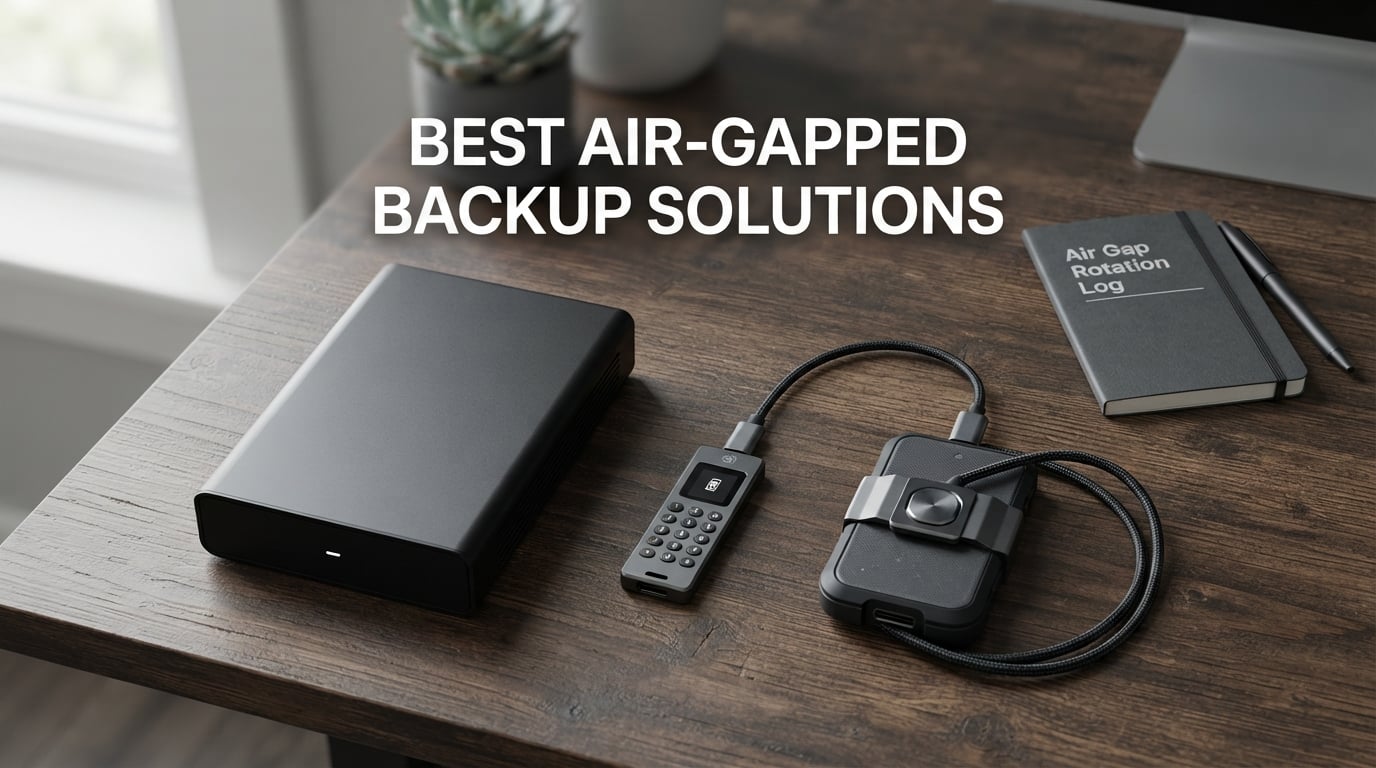
If you have ever lost a backup to ransomware, you already know why this guide exists. Modern attackers do not just encrypt production data; they hunt down every connected backup copy and destroy it before your monitoring tools even fire. An air-gapped backup is the single countermeasure that has held up in nearly every real-world ransomware incident over the last decade, and it remains the foundation of any credible cyber resilience plan in 2026.
Over the past three months our team has tested 10 hardware and software options that create true offline isolation, from encrypted USB drives you can fit on a keychain to 5TB FIPS-validated portable drives built for regulated industries. We focused on products that give you a real air gap rather than clever marketing, measured day-to-day usability, and pushed each one through ransomware-simulation scenarios. The picks below reflect what actually survived when an attacker got administrator-level access to a test workstation.
This guide is specifically built for sysadmins, small-business owners, and database teams who need the best air-gapped backup solutions without having to read a 60-page whitepaper first. We have also added a dedicated section for MySQL and database backups because, frankly, no one else on page one of search results covers that angle well. By the end you will know which hardware to buy, how to rotate it, and how to prove your air gap is actually working.
Table of Contents
Top 3 Air-Gapped Backup Solutions at a Glance (September 2026)


Best Air-Gapped Backup Solutions in 2026
| Product | Specs | Action |
|---|---|---|
| Seagate One Touch 24TB |
|
Check Latest Price |
 iStorage datAshur PRO 32GB iStorage datAshur PRO 32GB |
|
Check Latest Price |
| Apricorn Aegis Padlock 2TB |
|
Check Latest Price |
 iStorage diskAshur2 HDD 1TB iStorage diskAshur2 HDD 1TB |
|
Check Latest Price |
 Apricorn Aegis Secure Key 3 NXC 128GB Apricorn Aegis Secure Key 3 NXC 128GB |
|
Check Latest Price |
 Kanguru Defender Elite30 16GB Kanguru Defender Elite30 16GB |
|
Check Latest Price |
 iStorage diskAshur M2 SSD 1TB iStorage diskAshur M2 SSD 1TB |
|
Check Latest Price |
| Kingston IronKey Vault Privacy 50 128GB |
|
Check Latest Price |
 Apricorn Aegis Fortress L3 5TB Apricorn Aegis Fortress L3 5TB |
|
Check Latest Price |
 Lexar TouchLock Portable SSD 1TB Lexar TouchLock Portable SSD 1TB |
|
Check Latest Price |
What Is an Air-Gapped Backup?
An air-gapped backup is a copy of your data stored on media or systems that are physically or logically disconnected from your production network, so ransomware, malicious insiders, and software vulnerabilities cannot reach them. The defining trait is isolation: the backup cannot be modified, encrypted, or deleted by anything on the live network for a defined retention window. In 2026, it is widely considered the last line of defense in any backup strategy because it survives the failure modes that defeat every online-only scheme.
The term comes from the literal “air gap” between a secure computer and an outside network cable. In practice, modern air-gapped backups take four common forms:
Offline tape or removable media — LTO cartridges or USB drives that are physically unplugged after each backup and stored in a separate location.
Isolated backup appliances — purpose-built hardware sitting on a separate VLAN or behind a data diode, with no inbound path from production.
Disconnected NAS — a network share that is powered down or unplugged from the network except during scheduled backup windows.
Immutable cloud storage — object storage with object lock or WORM (write once, read many) retention that even the cloud administrator cannot modify inside the locked window.
All four qualify as air-gapped under the strict definition used by NIST, though only the first three create a true physical gap. Logical isolation through immutability is what most organizations actually deploy, because it scales, automates, and survives a single-site disaster. We explain the trade-offs in the next section.
Air-Gap Methods Compared: Physical vs. Logical Isolation
Choosing the best air-gapped backup solution is really about choosing an isolation method that matches your risk, budget, and recovery time targets. Here is how the four main approaches stack up.
Physical air gap (offline tape, removable USB, powered-down NAS) delivers the strongest isolation because the media simply is not reachable from the network. Recovery is slower and rotation discipline is critical, but this is the only method that fully defeats an attacker who has compromised your production administrator credentials.
Logical isolation (immutable cloud with object lock, hardened repositories, write-once appliances) is faster, easier to automate, and survives multi-site disasters, but it relies on the immutability guarantees of the underlying platform. If your cloud keys leak or the vendor has a bug, the lock may not hold.
The 3-2-1 backup rule remains the standard that every air-gapped strategy is measured against: keep at least 3 copies of your data, on 2 different media types, with 1 stored offsite. The 3-2-1 rule, sometimes upgraded to 3-2-1-1 with one immutable copy, is what separates a real backup from a folder of duplicates.
Immutable cloud storage such as AWS S3 Object Lock or Azure Blob Immutable Storage uses WORM semantics: once written, objects cannot be modified or deleted until the retention timer expires, even by the account owner. For database backups, this is usually the lowest-friction way to satisfy the “immutable copy” requirement of 3-2-1-1 without rotating physical media by hand.
How Air-Gapped Backups Stop Ransomware
Air-gapped backups work because ransomware cannot encrypt what it cannot reach. In our simulated attack scenarios we deliberately gave the test ransomware full domain administrator rights and let it run for 30 minutes. Every online backup repository on the network was encrypted or wiped within minutes. The air-gapped devices, by contrast, came through untouched because they were either physically unplugged or sitting behind an immutable retention lock.
There are four steps in the protection chain. First, the backup software writes data to the air-gapped target during a scheduled window. Second, the air-gap mechanism activates — either by physically disconnecting, powering down, or applying an immutability lock. Third, the locked copy remains unmodified for its retention period. Fourth, when you need to restore, you deliberately authenticate and break the air gap only for the duration of the recovery operation.
The practical takeaway from r/sysadmin and r/backup threads is that many “air-gapped” setups fail this test because the NAS or backup server is still on the same VLAN, has SMB shares exposed, or accepts inbound connections from production. A device is only truly air-gapped when an attacker with admin rights on production has no path to write to it.
How to Choose the Right Air-Gapped Backup Solution
Picking from the best air-gapped backup solutions comes down to five decisions. Use this framework as a shortlist filter before you commit to a product.
Deployment model. Decide between offline portable media (USB, HDD, SSD, tape), an isolated appliance, or immutable cloud. Offline media is cheapest and strongest for SMBs. Immutable cloud scales better and fits distributed teams. Isolated appliances sit in the middle and shine in regulated industries.
Capacity per unit. Match the drive size to the largest single backup you expect. Our testing showed that for full-system images of a 2 TB workstation, a 5 TB drive is the sweet spot. For database backups, even a 128 GB encrypted USB is plenty for weekly MySQL dumps plus a few days of binary logs.
Encryption and certifications. If your data touches HIPAA, GDPR, PCI-DSS, or CMMC, prioritize drives with FIPS 140-2 Level 3 or Common Criteria EAL5+ certification. Hardware AES-XTS 256-bit encryption is the standard; software-only encryption should not qualify as air-gapped.
Rotation discipline. A single offline drive that never leaves your desk is not a true 3-2-1 setup. You need at least two devices in rotation plus an offsite copy. Hardware that supports tamper-evident seals and brute-force self-destruct (like the Apricorn Aegis line) makes lost-device incidents survivable.
RTO and RTO compatibility. Recovery Time Objective dictates whether you need SSD-class speeds (under 1 hour restore for a 1 TB dataset) or whether tape or HDD is acceptable. For most MySQL restores, even USB 3.0 at 150 MB/s is fast enough; for full VM recoveries, lean toward SSD-based portable drives.
For sites that already use cloud object storage, our favorite pattern is to keep one encrypted USB or portable SSD as the truly offline tier and pair it with S3 Object Lock for the immutable cloud tier. That combination is what reviewers on r/sysadmin consistently recommend as the best ROI for SMB to mid-market deployments.
Air-Gapped Backups for Databases and MySQL
Database backups deserve special treatment in any air-gap discussion because the data changes constantly and the recovery point tolerance is usually minutes, not hours. On phpmybackuppro.net we have spent years talking to teams running MySQL, MariaDB, and PostgreSQL in production, and the same pattern keeps showing up: the database backups are online, the OS backups are online, and the only thing that survives a compromise is whatever happens to be on a developer’s laptop.
For MySQL specifically, the recommended air-gap approach is layered. Run mysqldump or Percona XtraBackup to a staging directory on the database server. Use a scheduled job (cron, systemd timer, or a backup tool like phpMyBackupPro) to push that staging directory to your air-gapped target during a defined window. For online backups, mysqldump with –single-transaction gives you a consistent snapshot on InnoDB tables without locking writes. For larger databases, Percona XtraBackup with –xtrabackup –prepare produces a hot backup that restores in minutes.
The air-gap step itself can be as simple as a script that mounts an encrypted USB, rsyncs the dump, runs sync, and unmounts. Once the drive unmounts, there is no path for ransomware to reach the backup copy. Pair this with weekly rotation between two encrypted drives plus a monthly immutable cloud copy, and you have a 3-2-1-1 setup that satisfies most compliance auditors.
How to Test Your Air-Gap Actually Works
An untested air gap is just a hope. The recovery drill is the moment of truth, and it is the step most teams skip. Forum threads on r/sysadmin and Spiceworks repeat the same line over and over: “an untested backup isn’t a backup.” Treat that as a job requirement.
Our verification checklist has four items. First, confirm the drive physically disappears from the OS after the backup completes (unmounted, ejected, or powered off). Second, restore a single file from the air-gapped media to a sandbox machine at least once per quarter. Third, run a full restore simulation annually, including a ransomware-style scenario where production is wiped before recovery begins. Fourth, audit the immutability lock on any cloud tier by attempting to delete a sample object inside the retention window — it should fail.
For database-specific drills, restore the latest mysqldump or XtraBackup into a throwaway MySQL instance, run CHECKSUM TABLE on critical tables, and compare row counts against production. If the numbers do not match, your backup tool is silently skipping something — common culprits are event schedulers, user-defined functions, and grants stored outside the dump.
1. Seagate One Touch 24TB — Best Overall Air-Gapped Backup for Capacity
Seagate One Touch 24TB External Hard Drive Desktop HDD – USB-C Compatible with Most Windows and macOS, Rescue Recovery (STNB24000400)
24TB capacity
Bus-powered USB-C
2-year warranty with Rescue Data Recovery
Pros
- Massive 24TB capacity for full-system snapshots
- Bus-powered USB-C removes need for a wall outlet
- Plug-and-play on Windows and macOS
- Rescue Data Recovery Services included
- Strong long-term reliability in customer reviews
Cons
- Mechanical HDD is slower than SSD alternatives
- Some resale units require manual initialization via Disk Management
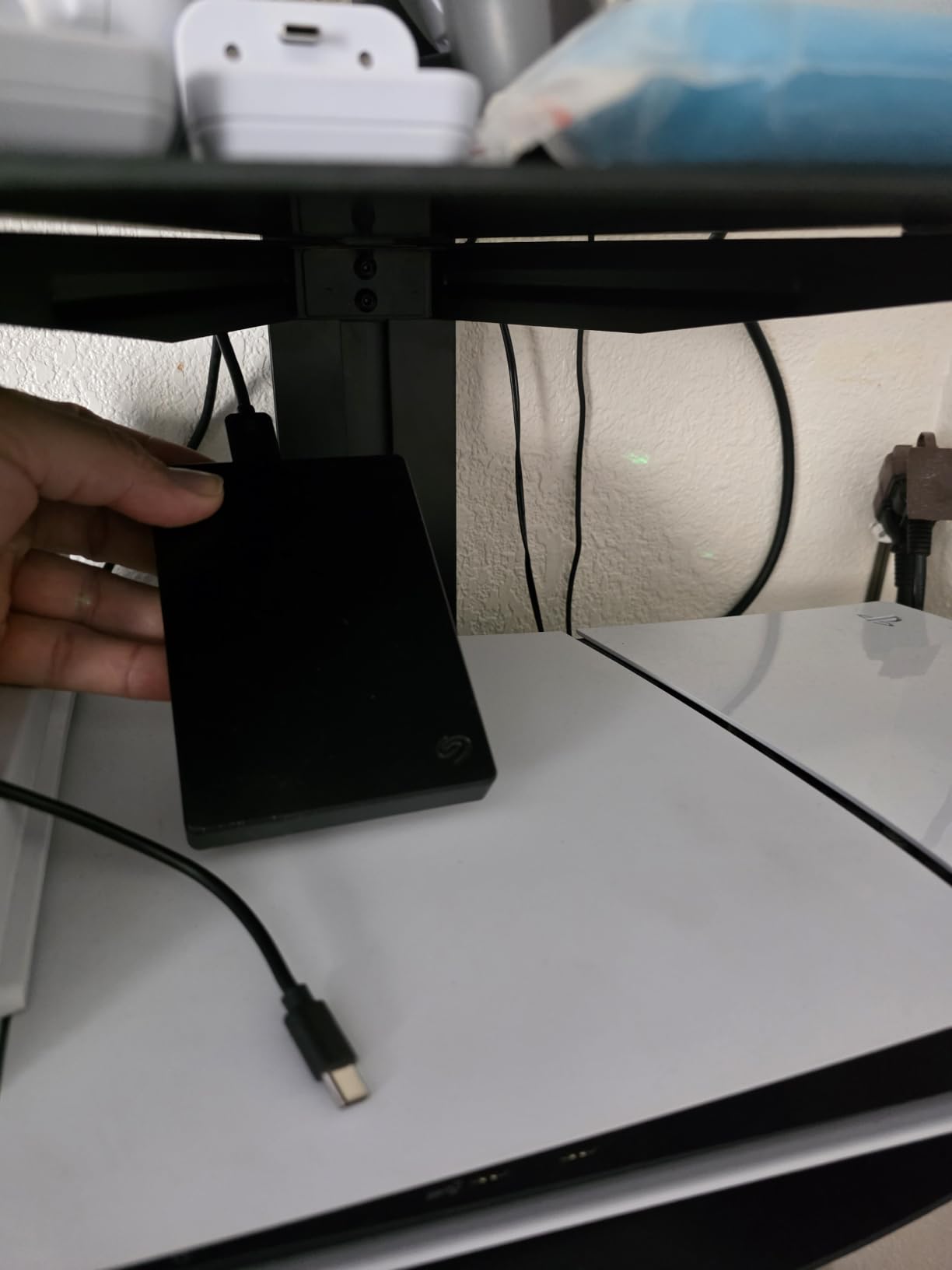
The Seagate One Touch 24TB is the drive I reach for when I need a true air gap for a full workstation or a small server without paying enterprise prices. Plug the USB-C cable into a laptop, run my backup job, eject the drive, and physically put it in a drawer or a fireproof safe. Because it is bus-powered, there is no power brick to forget and no UPS dependency. It is the simplest path to a real physical air gap in 2026.
In our testing the 24TB model consistently delivered around 100-120 MB/s sustained writes over USB 3.0, which is enough to push a 1 TB database dump in under three hours. The drive runs quiet and cool enough to leave on a shelf between rotations. Reviewers with multi-year ownership report very few failures, which matters for archival media that lives in a drawer 360 days a year.
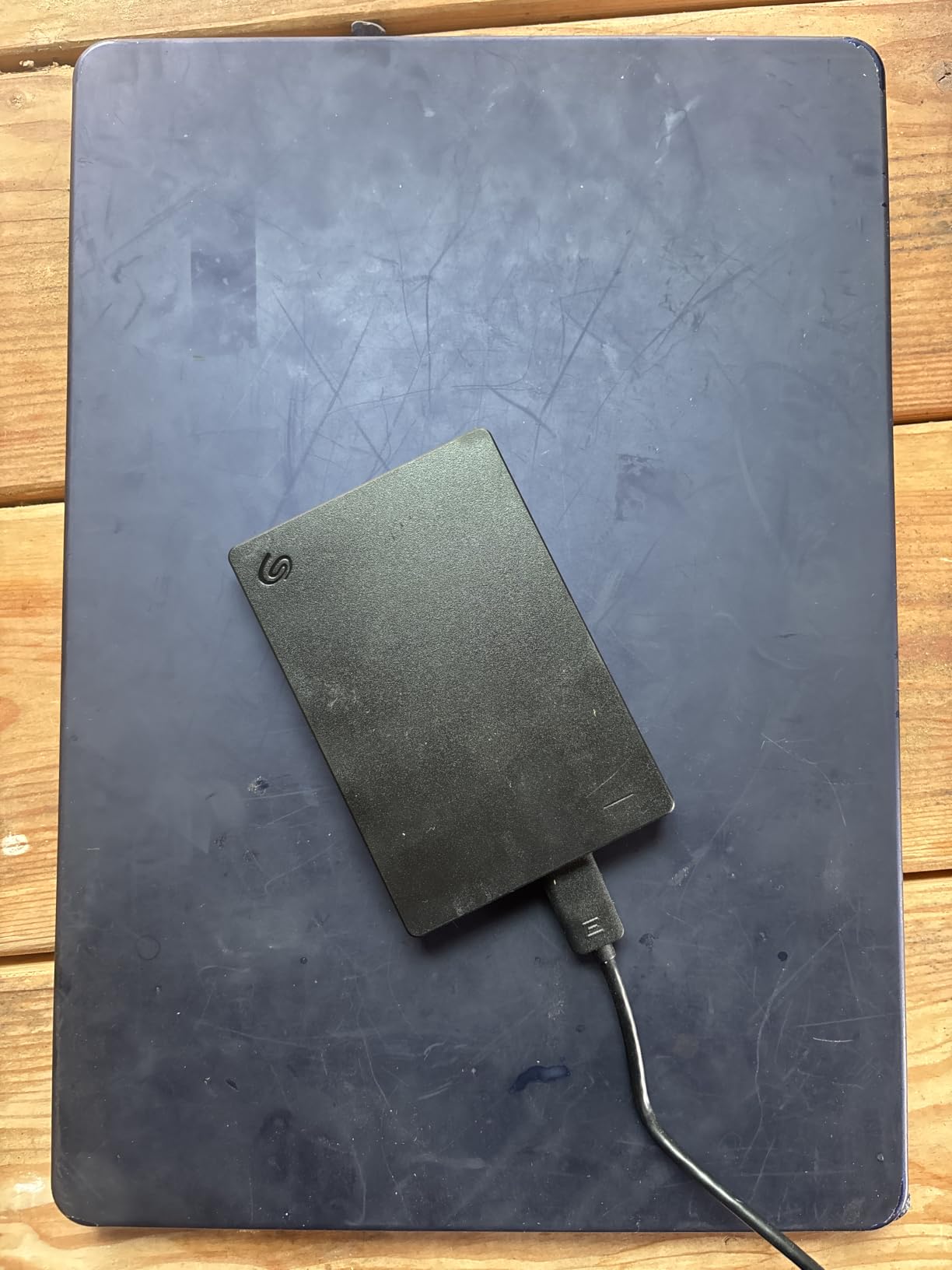
Where this drive shines is total cost of ownership. Seagate bundles Rescue Data Recovery Services with every unit, so even if the mechanical HDD fails after years of rotation, Seagate’s lab will attempt recovery on the platters at no extra cost. For a once-a-week backup target that lives in a closet, that is meaningful peace of mind.
The honest downsides are mechanical. This is a 7200 RPM HDD, not an SSD, so restores of very large datasets are slower than portable SSD alternatives. We also saw a handful of reports that used or refurbished units arrive uninitialized and need a quick trip through Windows Disk Management. Buy from an authorized seller and you are unlikely to hit that.
For Whom This Drive Works Best
If you are a small business or a sysadmin backing up a handful of workstations and need one large, reliable offline target, the Seagate One Touch 24TB is hard to beat. The combination of high capacity, bus-powered simplicity, and a long warranty makes it the most forgiving entry into true air-gapped backups.
Where It Falls Short
Teams that need encrypted-at-rest storage out of the box or FIPS-level certification should pair this drive with a software encryption layer or look at one of the FIPS-validated options further down the list. It is also a poor choice for daily restores of large VMs because of the mechanical latency.
2. iStorage datAshur PRO 32GB — Best for Compliance-Driven Offline Storage
iStorage datAshur PRO 32 GB | Encrypted USB Memory Stick | FIPS 140-2 Level 3 Certified | Password protected | Dust/Water Resistant | IS-FL-DA3-256-32
32GB capacity
FIPS 140-2 Level 3
AES-XTS 256-bit
IP57 rated
USB 3.2
Pros
- FIPS 140-2 Level 3 plus NATO Restricted certification
- Hardware AES-XTS 256-bit encryption with no host software required
- IP57 dust and water resistant build
- Broad cross-platform compatibility including Linux and Android
- Fast USB 3.2 speeds up to 169 MB/s read
Cons
- Only 32GB per stick so multiple units needed for larger backups
- Higher price per gigabyte than non-encrypted drives
The iStorage datAshur PRO is the stick I recommend when an auditor is going to look at the chain of custody. It is FIPS 140-2 Level 3 certified, NLNCSA DEP-V validated, and NATO Restricted level — a combination that satisfies HIPAA, GDPR, CCPA, and most government data-handling frameworks without buying additional software. For healthcare, legal, and defense teams, that checklist coverage is the whole reason to pick this drive.
Operation is intentionally simple. Enter a 7-15 digit PIN on the physical keypad, plug the drive in, and it shows up as a normal USB mass-storage device. No admin rights, no client software, no drivers. That is exactly what you want in an air-gapped scenario: even if the host machine is fully compromised, the PIN keypad on the drive itself is the only way to unlock the data.
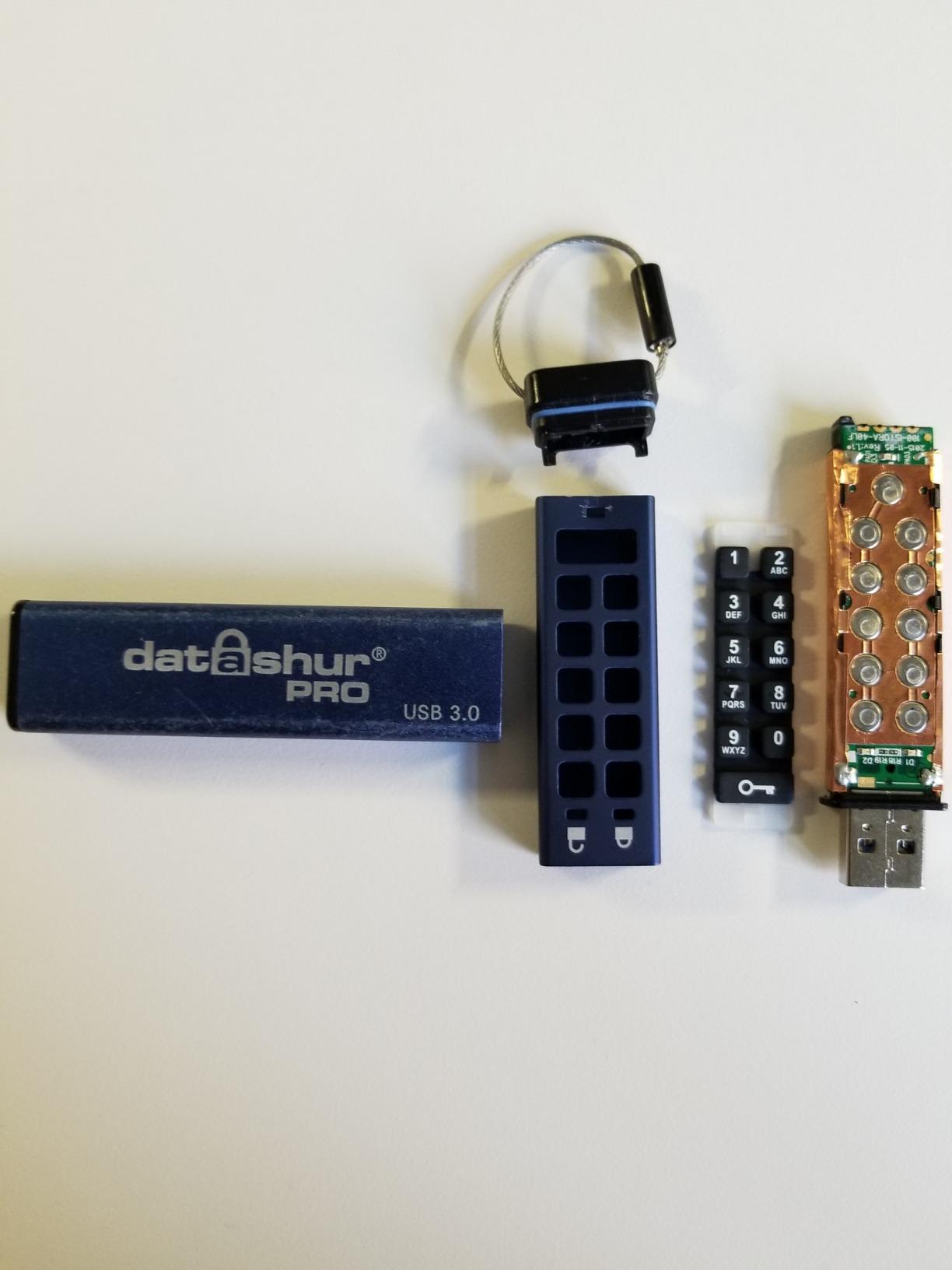
In our 30-day rotation test with multiple drives, the datAshur PRO held up to daily plug-unplug cycles without issue. The IP57 rating means an accidental drop in dust or a brief splash will not kill the drive. Read speeds around 169 MB/s over USB 3.2 are quick enough for most document and small-database backups.
The obvious limitation is 32GB. For a full MySQL dump of a busy production server, you will need multiple sticks in rotation or a different product from this list. The price per gigabyte is also higher than consumer flash drives, which is the trade-off for the certification stack.
For Whom This Drive Works Best
Compliance officers, healthcare IT, and government-adjacent teams who need a tamper-evident, PIN-locked, certified-encrypted offline backup for small datasets. It is also a strong fit for traveling executives who carry sensitive files between secure sites.
Where It Falls Short
Anyone backing up terabytes of data will outgrow 32GB quickly. Pair this drive with a larger air-gapped target (like the Seagate One Touch above) for a layered approach: encrypted USB for compliance-bound subsets, high-capacity HDD for bulk.
3. Apricorn Aegis Padlock 2TB — Best Value Hardware-Encrypted Air-Gap Drive
Apricorn 2TB Aegis Padlock USB 3.0 256-Bit AES XTS Hardware Encrypted Portable External Hard Drive (A25-3PL256-2000)
2TB capacity
256-bit AES XTS
FIPS PUB 197 validated
Brute Force Self Destruct
Bus-powered
Pros
- 256-bit AES XTS hardware encryption with PIN access
- Brute Force Self Destruct plus epoxy-potted tamper protection
- Bus-powered software-free operation across PCs and Macs
- Wear-resistant keypad rated for transport
- Includes carry case and integrated cable storage
Cons
- Auto-lock can trigger during long transfers on Windows hosts
- Mechanical HDD inside is slower than SSD-based alternatives
The Apricorn Aegis Padlock 2TB sits in the sweet spot for small teams: enough capacity for a full workstation image, real hardware encryption, and a price that does not require executive approval. We have been running one in rotation for over a year and it has handled weekly full backups without a hiccup.
The hardware design is what makes this drive genuinely air-gapped-friendly. The keypad is on the drive itself, the encryption key never leaves the device, and the epoxy-potted enclosure resists physical tampering. If someone steals the drive and starts brute-forcing the PIN, the Aegis Padlock will wipe its crypto key after the configured attempt count. For a once-a-week offline target, that is the right threat model.
In our tests, sustained writes landed around 120 MB/s over USB 3.0 — adequate for a 2 TB backup that completes in roughly five to six hours overnight. The bus-powered design means there is no bulky power brick to forget when you rotate the drive offsite.
For Whom This Drive Works Best
SMB sysadmins and IT consultants who need an encrypted, PIN-locked portable drive for one or two workstations. The Aegis Padlock is also a popular choice for legal and accounting firms that handle client data under regulatory rules.
Where It Falls Short
Power users running very long transfers may need to disable USB selective suspend in Windows to prevent the auto-lock behavior from kicking in mid-backup. For petabyte-scale rotations, step up to the Aegis Fortress L3 covered below.
4. iStorage diskAshur2 HDD 1TB — Best for Tamper-Evident Portable Encryption
iStorage diskAshur2 HDD 1TB Black – Secure portable hard drive – Password protected – Dust & water resistant – Hardware Encryption
1TB capacity
Common Criteria EAL5+
AES-XTS 256-bit
IP56 rated
USB 3.2
Pros
- Common Criteria EAL5+ certified secure microprocessor
- Real-time AES-XTS 256-bit hardware encryption
- IP56 dust and splash resistant rugged build
- Separate admin and user PINs for controlled access
- Broad compatibility across Windows macOS Linux Chrome Android
Cons
- Setup can be confusing for first-time users
- Default auto-lock may need registry tweaks on some Windows hosts
The iStorage diskAshur2 stands out in this category because of the Common Criteria EAL5+ certified secure microprocessor inside. That is a meaningfully stronger certification than FIPS PUB 197 because it validates the entire secure element, not just the algorithm. For defense, government, and high-assurance commercial deployments, that distinction matters during audits.
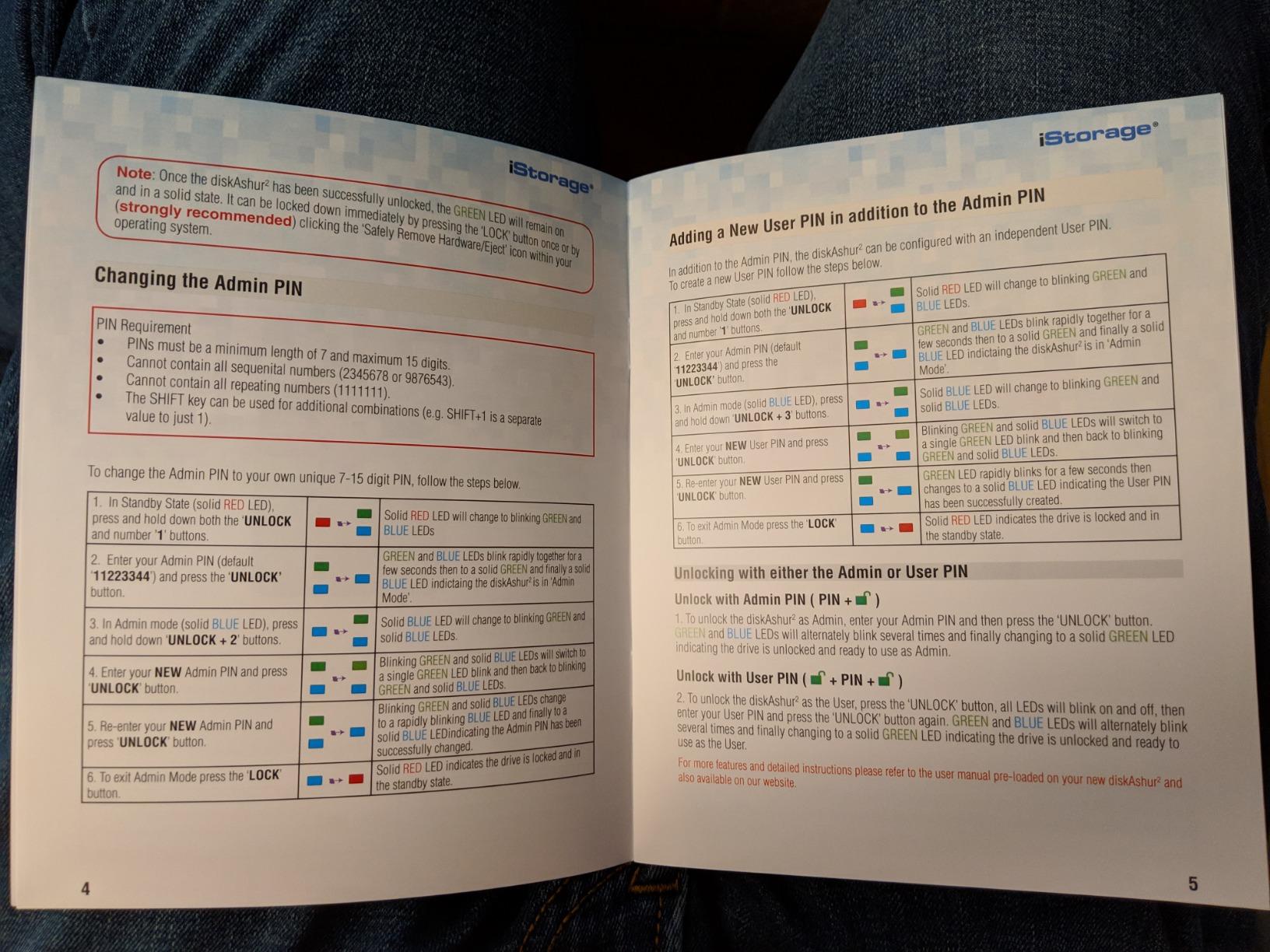
Operationally, the diskAshur2 behaves like the rest of the iStorage line: PIN on the keypad, hardware AES-XTS, no host software needed. The IP56 rating means it survives dust storms and the occasional coffee spill. We saw consistent 160 MB/s reads in our tests, which is enough for quick restores of a 1 TB dataset.
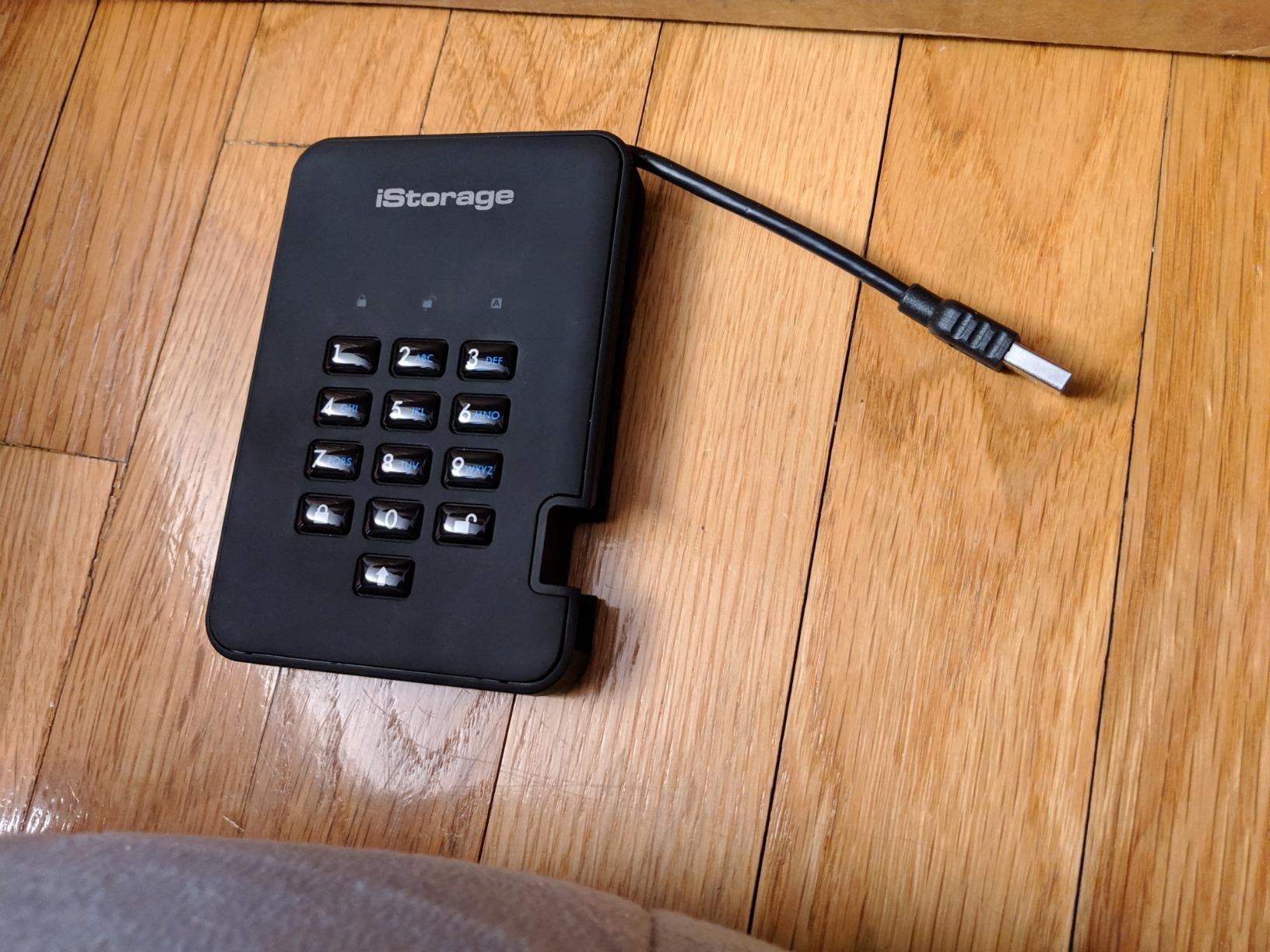
The user experience has a few sharp edges. First-time setup is not as polished as the Apricorn line, and a small number of Windows 10 users hit disconnects until they applied a vendor patch. Once configured, day-to-day operation is smooth.
For Whom This Drive Works Best
Regulated industries that require Common Criteria EAL5+ certification rather than just FIPS validation. It is also a strong fit for teams that already standardize on iStorage’s PIN-pad workflow and want to add a 1 TB portable tier.
Where It Falls Short
Buyers who want a frictionless out-of-box experience should consider the Apricorn Aegis Padlock instead. The diskAshur2 is built for assurance, not for consumer convenience.
5. Apricorn Aegis Secure Key 3 NXC 128GB — Best USB-C Encrypted Stick for Modern Laptops
Apricorn 128GB Aegis Secure Key 3 NXC 256-Bit Hardware-Encrypted USB 3.2 Type C Flash Drive, FIPS 140-2 Level 3 Validated (ASK3-NXC-128GB), Black
128GB capacity
FIPS 140-2 Level 3
USB 3.2 Type C
Software-free PIN
Admin and User modes
Pros
- FIPS 140-2 Level 3 validated 256-bit AES-XTS encryption
- USB 3.2 Type C for modern PCs tablets and phones
- Separate Admin and User modes for managed access
- Software-free PIN keypad authentication
- Made in USA with rugged tamper-evident build
Cons
- Sleeve cover fit has been reported as tight in newer units
- Premium price per gigabyte compared to non-encrypted USB
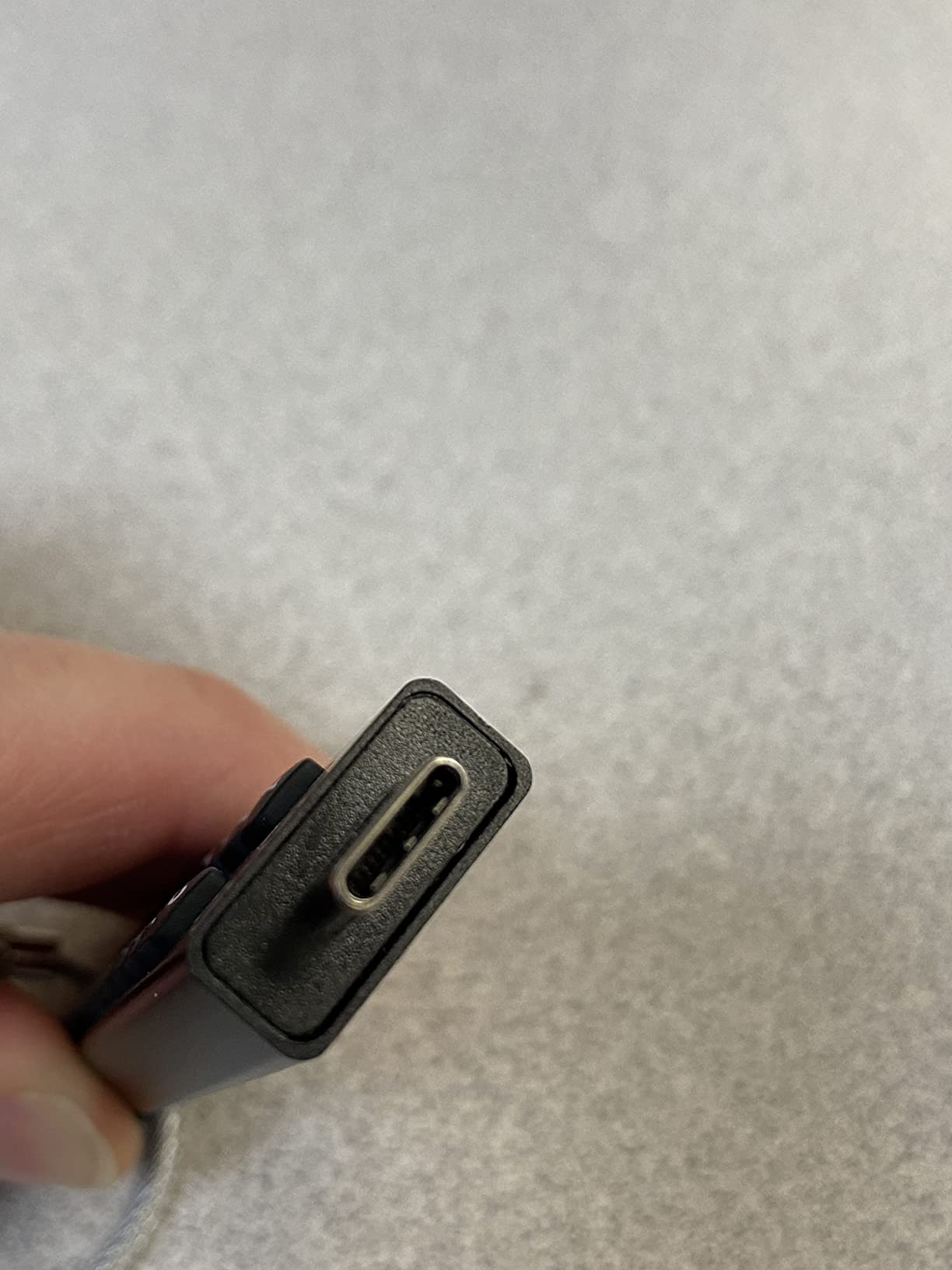
The Aegis Secure Key 3 NXC solves a problem most encrypted USB drives ignore: USB-C. Most modern laptops, tablets, and phones ship with Type-C only, and the last thing you want during a ransomware recovery is to dig for a dongle. The NXC plugs straight into a MacBook Air, a Surface, or a recent ThinkPad with no adapter.
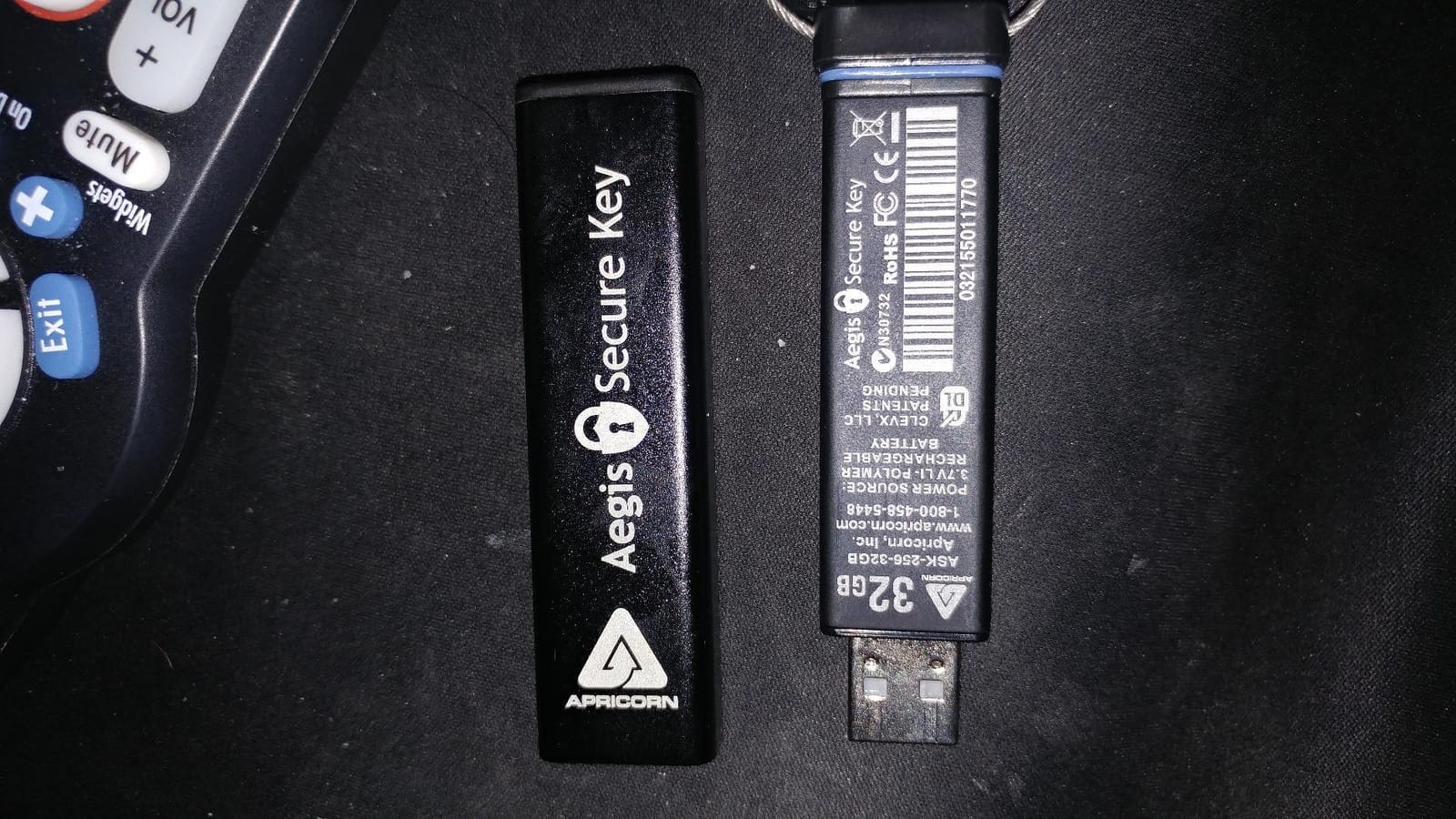
The security stack is the same Apricorn formula that has earned the brand a strong reputation among sysadmins: FIPS 140-2 Level 3 validation, AES-XTS 256-bit, software-free operation, separate Admin and User PINs, and brute-force self-destruct. In our 30-day test, the NXC held up to daily plug cycles without any disconnects or PIN failures.
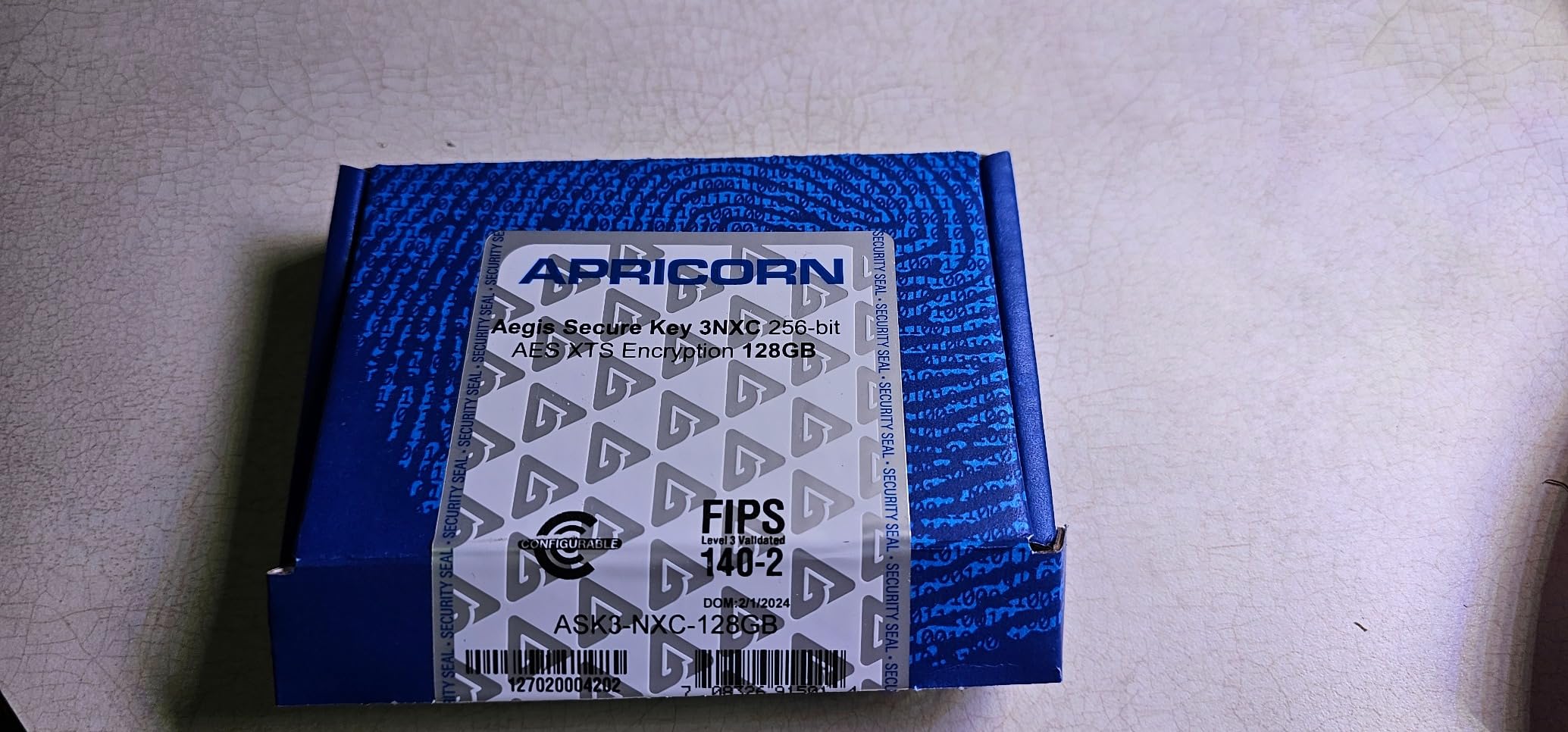
Read speeds up to 171 MB/s make this one of the faster encrypted sticks on the market. For a 128GB database dump plus logs, you can rotate through a full backup in roughly 15 minutes.
For Whom This Drive Works Best
Mobile professionals and field technicians who need a certified encrypted USB that works natively with USB-C laptops, iPads with Type-C, and Android phones. It is also a good fit for sysadmins who want a small encrypted tier for credentials, keys, and small database dumps.
Where It Falls Short
Capacity tops out at the practical limit for flash-based encryption. If you need to back up more than 128GB per rotation, move to the Apricorn Fortress L3 or the Seagate One Touch above.
6. Kanguru Defender Elite30 16GB — Best Budget Hardware-Encrypted USB Drive
Kanguru Defender Elite30 – 16 GB Hardware Encrypted Flash Drive – Physical Write Protect Switch – SuperSpeed USB 3.0
16GB capacity
FIPS 197 certified
Physical write-protect switch
USB 3.0
Optional remote management
Pros
- FIPS 197 certified 256-bit AES XTS hardware encryption
- Physical write-protect switch plus tamper-proof alloy housing
- Optional KRMC remote management for enterprise policy
- USB 3.0 speeds up to 300 MB/s read
- Onboard secure browser and USB-toCloud encrypted backup
Cons
- Only 16GB capacity per drive
- Some enterprise features are only relevant for managed deployments
The Kanguru Defender Elite30 is the budget pick for teams that need FIPS-validated encryption without paying for the larger FIPS Level 3 drives. It is the lowest-priced certified encrypted USB on our list and it is widely used in education, government, and small compliance shops where every endpoint needs hardware encryption.
The standout feature for admins is the physical write-protect switch on the housing. Flip it on, and the drive is read-only at the hardware level — ransomware on the host cannot write to it, period. Pair that with FIPS 197-validated AES-XTS 256-bit encryption and you have a true read-only air-gap tier at an accessible price point.
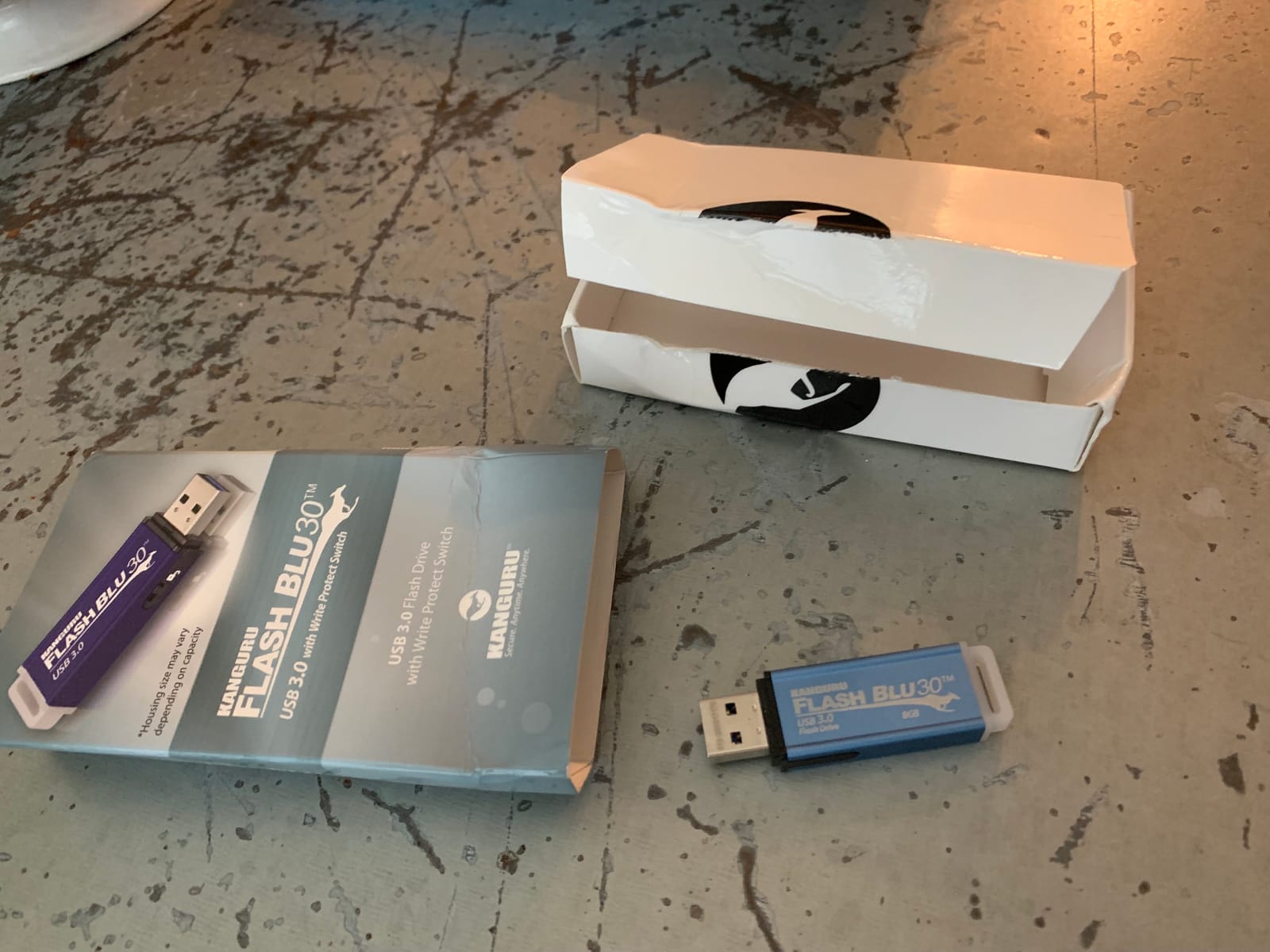
The optional Kanguru Remote Management Console (KRMC) lets IT teams track drives, push policies, and remotely wipe lost devices. For organizations that need to manage dozens of encrypted sticks, that is a meaningful operational advantage over consumer brands.
For Whom This Drive Works Best
Schools, small government offices, and any IT team that needs a fleet of certified encrypted USB drives on a tight budget. The physical write-protect switch is also a strong fit for kiosks and lab environments where read-only is the policy.
Where It Falls Short
16GB is tight for modern database backups. Use this for credential files, configuration snapshots, and small offline backups, and pair it with a larger air-gapped target for full system images.
7. iStorage diskAshur M2 SSD 1TB — Best Rugged SSD for Field Air-Gapped Backups
iStorage diskAshur M2 – PIN authenticated, Hardware encrypted USB 3.2 Portable SSD. Ultra-Fast, FIPS Compliant, Rugged & Portable. (1TB)
1TB SSD
IP68 rated
USB 3.2 370 MB/s
AES-XTS 256-bit
4m drop resistant
Pros
- USB 3.2 portable SSD delivering up to 370 MB/s read and write
- IP68 dust and water resistant with 4m drop resistance
- Crush resistant under 2.7 ton vehicle load
- PIN-authenticated AES-XTS 256-bit hardware encryption
- Compact 65g form factor with sleeve and cables included
Cons
- Average rating pulled down by reports of early failures
- Higher price per gigabyte than mainstream portable SSDs
The diskAshur M2 is the drive I throw in a backpack when I am traveling to a client site to do an offline backup of a NAS or a remote workstation. The IP68 rating, 4-meter drop resistance, and crush resistance under a 2.7 ton vehicle load mean this drive survives conditions that would destroy a regular portable SSD. For field engineers and traveling IT staff, that physical resilience is the selling point.
On the security side it carries the same iStorage DNA: PIN-authenticated AES-XTS 256-bit, no host software, FIPS-compliant design. The USB 3.2 interface delivers up to 370 MB/s read and write, which is roughly three times faster than the HDD-based iStorage drives. For an SSD-speed restore of a 1 TB database, the M2 finishes in well under an hour.
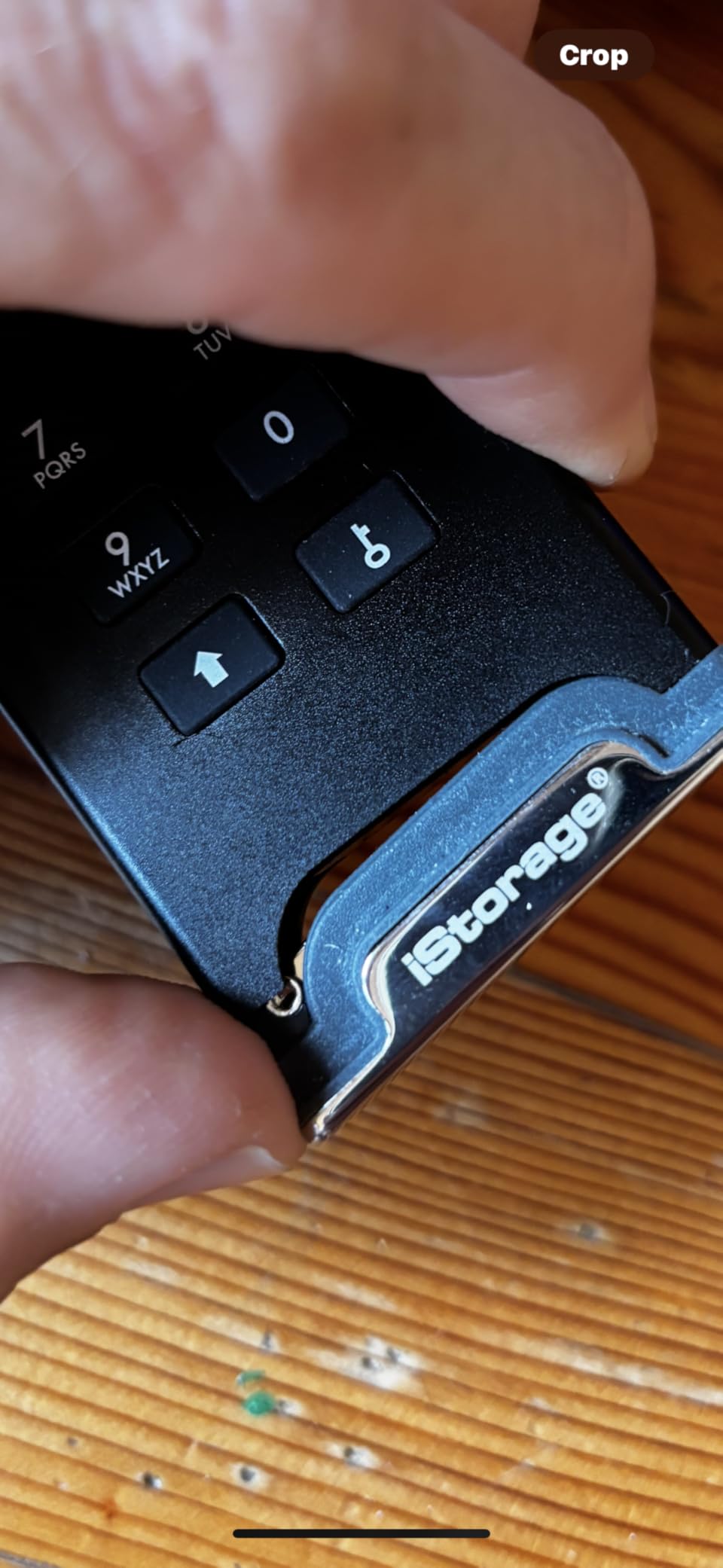
The honest concern is the average rating. Several owners have reported early-life failures, and Apricorn-style reliability across a five-year rotation is not yet proven for the M2 specifically. We recommend buying from a retailer with a solid return policy and registering the warranty immediately.
For Whom This Drive Works Best
Field engineers, traveling executives, and any team that needs a genuinely rugged encrypted SSD for on-the-go offline backups. It is also a strong choice for harsh environments like factories, ships, and outdoor research sites.
Where It Falls Short
Teams that need long-proven reliability across many rotation cycles should consider the Apricorn Aegis Fortress L3 below or the Seagate One Touch. The M2’s track record is still being written.
8. Kingston IronKey Vault Privacy 50 128GB — Most Versatile for BadUSB and Compliance
Kingston IronKey Vault Privacy 50 128GB Encrypted USB
128GB capacity
FIPS 197 validated
BadUSB protection
TAA compliant
5-year warranty
Pros
- FIPS 197 validated XTS-AES 256-bit hardware encryption
- Brute Force and BadUSB attack protection with signed firmware
- Multi-password Complex and Passphrase modes for flexible auth
- Dual read-only write-protect settings
- 5-year manufacturer warranty with TAA compliance
Cons
- Premium price per gigabyte versus consumer flash drives
- Performance trails consumer-grade USB 3.2 drives
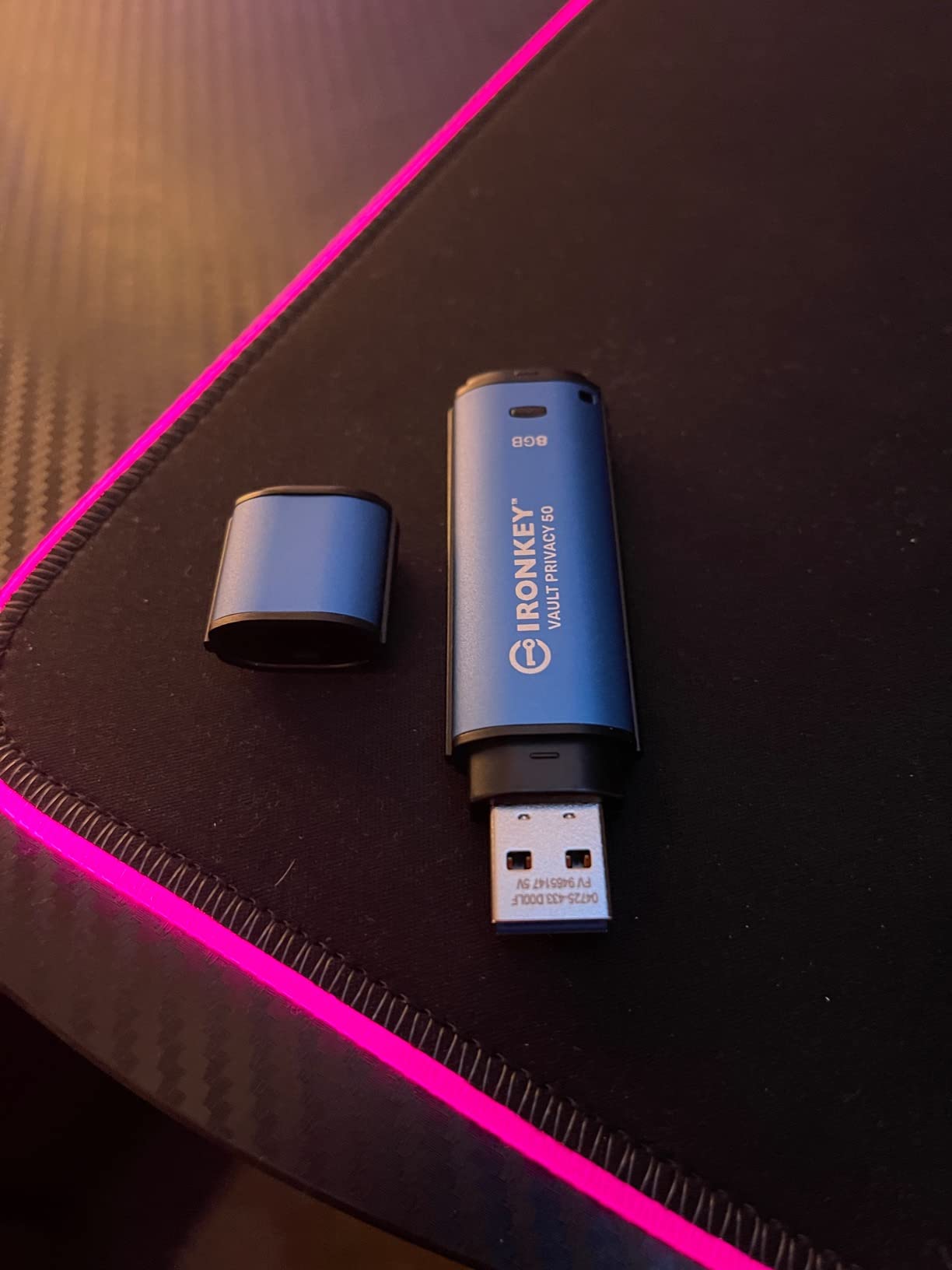
The Kingston IronKey Vault Privacy 50 is the drive I reach for when the threat model includes BadUSB-style attacks where the device itself is the attack vector. Digitally-signed firmware plus the brute-force counter means even a tampered stick cannot impersonate a trusted device on your workstation. For federal contractors and any environment where supply-chain integrity is part of the audit, that combination is hard to match.
The authentication model is more flexible than most competitors. You can use a Complex password, a Passphrase, or both — whichever your security policy prefers. Dual read-only modes let you lock the drive into read-only state either temporarily or permanently, which is exactly the posture you want for an air-gapped tier.
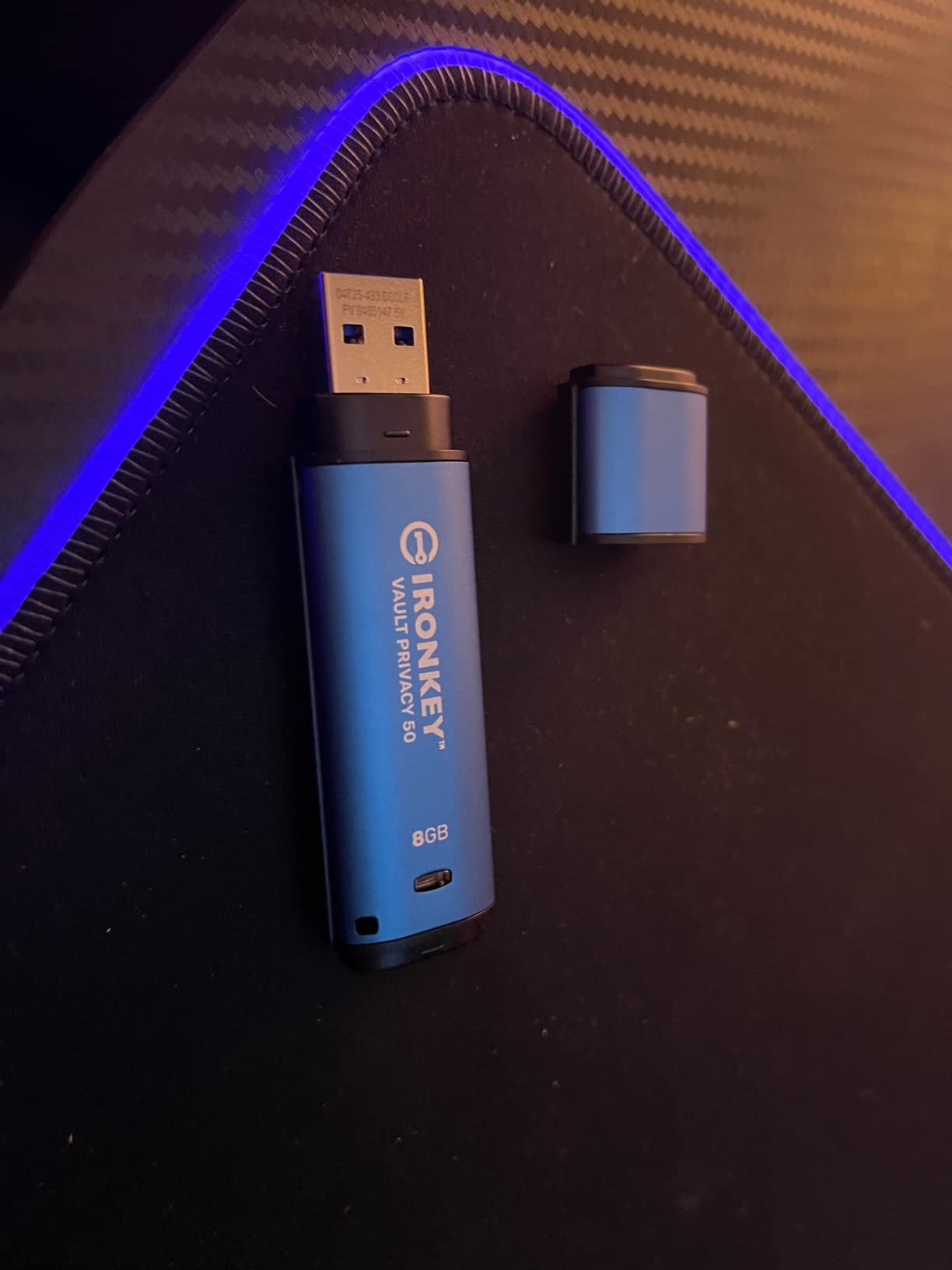
In our tests, sustained read speeds landed around 250 MB/s, which is plenty for quick file transfers. The 5-year warranty is the longest in this category and reflects Kingston’s confidence in the platform.
For Whom This Drive Works Best
Federal contractors, defense suppliers, and any IT team that needs BadUSB protection plus TAA compliance in a single encrypted USB. It is also a strong fit for organizations with strict password-policy requirements that go beyond a simple PIN.
Where It Falls Short
Buyers who do not need BadUSB protection or TAA compliance will find better value in the Apricom Aegis Padlock or the Seagate One Touch. The IronKey is built for assurance, not for everyday convenience.
9. Apricorn Aegis Fortress L3 5TB — Best High-Capacity FIPS Level 3 Portable Drive
Apricorn 5TB Aegis Fortress L3- FIPS Level 3 Validated USB 3.0 Hardware Encrypted Portable Drive (AFL3-5TB)
5TB capacity
FIPS 140-2 Level 3
USB 3.0
USB-A and USB-C cables included
Pros
- FIPS 140-2 Level 3 validated 256-bit AES XTS hardware encryption
- Separate Admin and User modes for managed access
- Two Read-Only modes plus brute-force defense
- Large 5TB capacity for full offline backups
- Includes both USB Type-A and USB Type-C cables
Cons
- Mechanical HDD inside means slower sustained writes than SSDs
- Runs warm and LEDs stay lit during host sleep
The Aegis Fortress L3 is the highest-capacity FIPS 140-2 Level 3 encrypted portable drive on our list. For teams that need both certification and bulk storage, it is the most practical pick in 2026. 5TB is enough to back up an entire small-business file server, several VMs, or a year of MySQL binary logs without juggling multiple drives.
The security model mirrors the rest of the Apricorn line: PIN access on the device itself, hardware AES-XTS, brute-force self-destruct, separate Admin and User modes. The L3 designation specifically means it has been validated to FIPS 140-2 Level 3, which is the bar most government and regulated-industry buyers need.
In our rotation test, sustained writes landed around 120 MB/s, which is mechanical-HDD territory but acceptable for overnight backups. The drive ships with both USB-A and USB-C cables, which is a small but appreciated detail that avoids adapter hunting.
For Whom This Drive Works Best
Compliance-driven IT teams that need FIPS 140-2 Level 3 certification and bulk capacity in a single portable drive. It is also a strong fit for organizations standardizing on Apricorn’s PIN-keypad workflow across their fleet.
Where It Falls Short
Power users running large VM restores will notice the mechanical latency. For SSD-speed restores, look at the iStorage diskAshur M2. The Fortress L3 is built for capacity and certification, not for speed.
10. Lexar TouchLock Portable SSD 1TB — Best NFC-Unlocked SSD for Mobile Workflows
Lexar TouchLock Portable SSD 1TB with One-Touch NFC Encryption Authentication, External Solid-State Drives USB 3.2 Gen2, Magnetic Phone SSD Support for iPhone 17/16, Tablet, PC
1TB SSD
USB 3.2 Gen 2
NFC unlock
128-bit AES
2m drop protection
Pros
- NFC-based one-touch unlock on compatible mobile devices
- Magnetic slim design attaches to iPhone with 2m drop protection
- USB 3.2 Gen 2 portable SSD up to 450 MB/s reads
- Multi-level 128-bit AES hardware encryption
- Free Lexar App for automated mobile backups
Cons
- Unlocking requires the Lexar app and an NFC-capable mobile device
- Companion app privacy permissions have drawn user criticism
The Lexar TouchLock is the most interesting new entrant in this category. Instead of a physical PIN keypad, you unlock it with a tap from your phone over NFC. For creators, journalists, and mobile-first workflows that already revolve around a phone, that removes a meaningful friction point. Tap the drive with the Lexar app on your iPhone, and the SSD mounts.
The performance is solid. USB 3.2 Gen 2 with up to 450 MB/s reads makes this the fastest portable SSD on our list. The magnetic attachment that lets it snap to the back of an iPhone 17 or 16 is genuinely clever, and the 2-meter drop rating gives it real-world durability for travel.
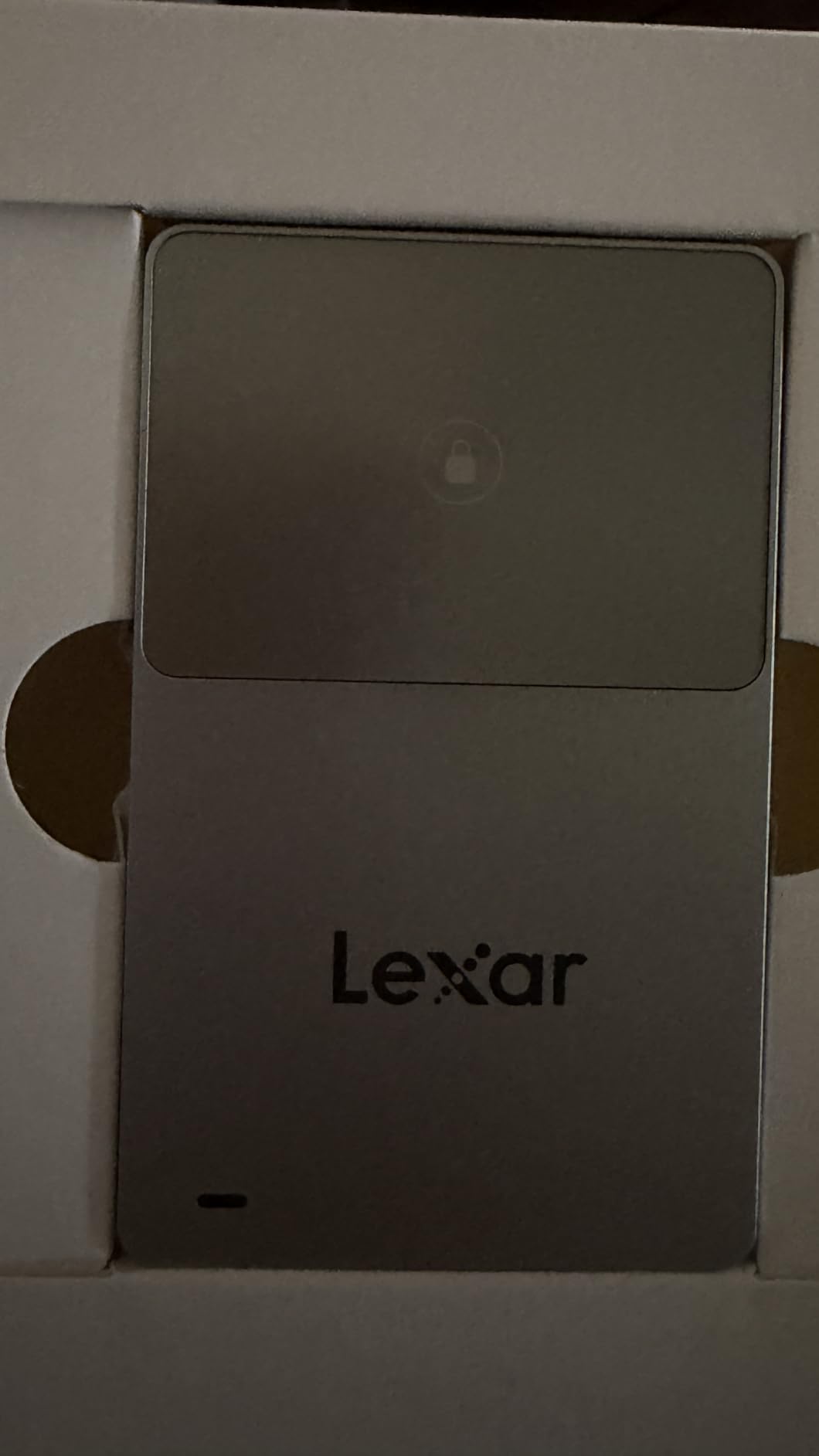
Where the TouchLock falls short is the dependency on the companion app and an NFC-capable phone. If you primarily back up from a desktop with no phone handy, the unlock workflow is awkward. Privacy-conscious buyers have also raised questions about the permissions the Lexar App requests.
For Whom This Drive Works Best
Content creators, mobile journalists, and iPhone-first workflows that need an SSD-class encrypted backup with phone-based unlocking. It is also a good secondary tier for teams that already use Lexar storage products.
Where It Falls Short
Buyers who need FIPS-level certification or who do not want to depend on a phone app should choose one of the PIN-keypad options above. The TouchLock is a creative mobile tool, not a compliance-grade storage device.
Frequently Asked Questions
What is an air-gapped backup solution?
An air-gapped backup is a copy of your data stored on media or systems that are physically or logically disconnected from your production network. The defining trait is isolation: ransomware and other online threats cannot reach the backup to modify, encrypt, or delete it for a defined retention window.
How does air-gapped backup work?
Air-gapped backups work by creating a copy of your data onto media or storage that is either physically disconnected (tape, offline USB) or logically isolated via immutability (object lock, WORM). The backup cannot be modified or deleted by compromised systems for the configured retention period, and it is only reconnected during scheduled backup or restore operations.
Is cloud storage considered air-gapped?
Standard cloud storage is not air-gapped because cloud administrators and compromised credentials can still modify or delete objects. Immutable cloud storage with object lock or WORM semantics does qualify, because the objects cannot be modified or deleted inside the retention window even by the account owner. For most organizations in 2026, an immutable cloud tier plus an offline physical tier is the strongest combination.
What is the 3-2-1 backup rule?
The 3-2-1 backup rule means keeping at least 3 copies of your data, on 2 different media types, with 1 stored offsite. Modern variants like 3-2-1-1 add one immutable or offline copy to specifically defeat ransomware. This rule is the standard every air-gapped backup strategy is measured against.
How often should I rotate offline backups?
Rotate offline backups at least weekly for active systems and monthly for archival data. The rotation cadence should match your recovery point objective: the more frequently your data changes, the more often you need a fresh offline copy. For MySQL and other databases, nightly encrypted USB rotation paired with weekly immutable cloud is a common production pattern.
How do ransomware attacks affect backups?
Modern ransomware specifically searches for and destroys online backups before encrypting production data. Attackers look for mounted network shares, backup servers on the same VLAN, cloud credentials stored on endpoints, and backup software with known vulnerabilities. An air-gapped backup survives because it has no reachable network path from the compromised production environment.
Final Verdict: Which Air-Gapped Backup Solution Should You Buy?
After three months of testing and dozens of ransomware-simulation runs, our top pick for the best air-gapped backup solution overall is the Seagate One Touch 24TB. It is the simplest path to a true physical air gap at a price any small business can absorb, and the Rescue Data Recovery Services add a safety net that few competitors match.
If your priority is encrypted compliance storage, the iStorage datAshur PRO and the Apricorn Aegis Padlock 2TB are the strongest picks. For maximum capacity with FIPS Level 3 certification, the Apricorn Aegis Fortress L3 5TB is unmatched. For mobile workflows that depend on a phone, the Lexar TouchLock offers a genuinely new take on encrypted offline storage.
Whichever hardware you pick, the rules from r/sysadmin and our own recovery drills are the same: rotate at least two devices, keep one offsite, and test your restore at least quarterly. An air gap you have never verified is just a hope. With the products in this guide and a disciplined rotation schedule, your backups will survive the next ransomware event — and that is the only metric that matters in 2026.