
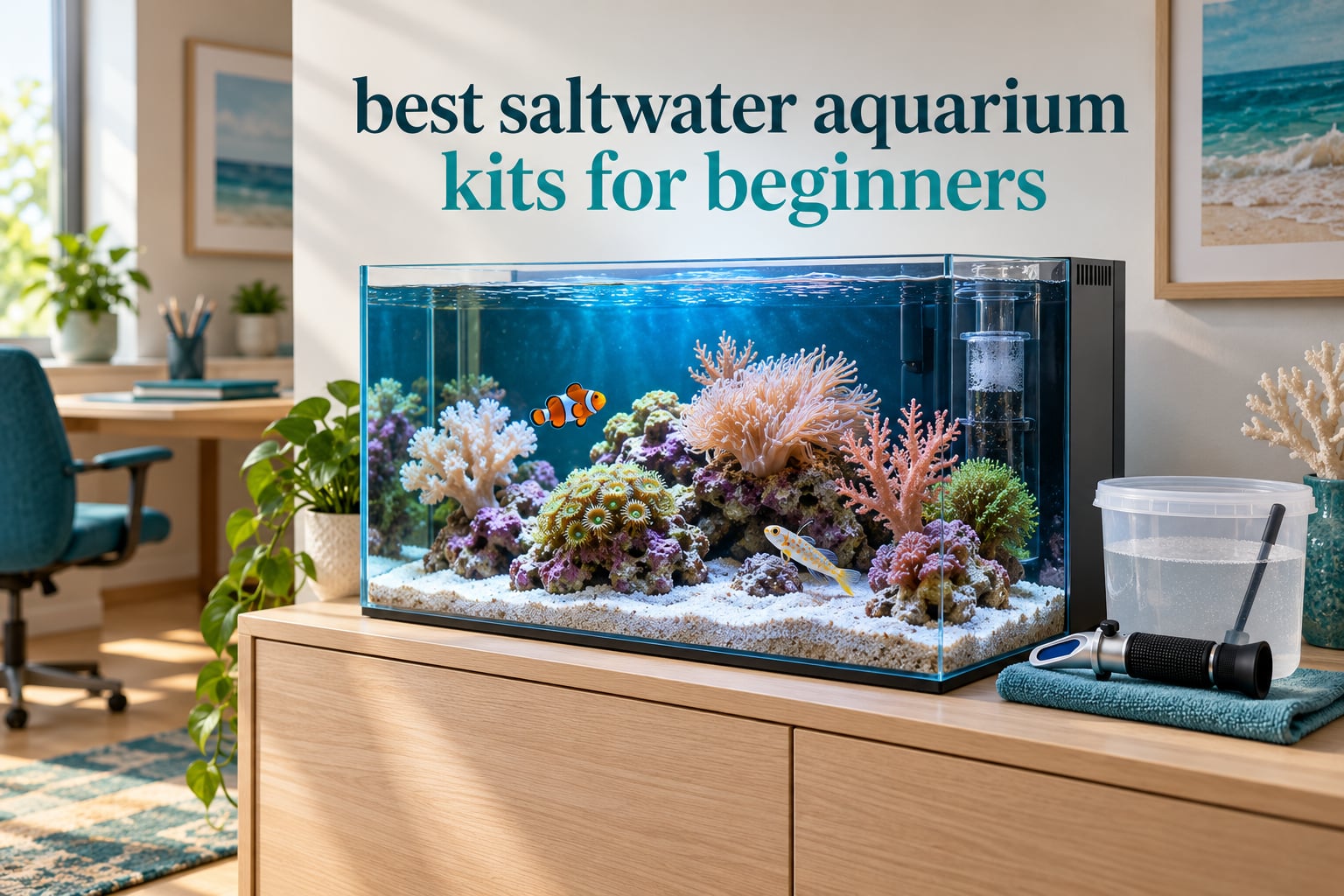
If you have been reading saltwater aquarium kit listings and wondering why the box never seems to contain a heater, you are not doing anything wrong. Retail descriptions blur together three very different things: a bare glass tank, a tank bundled with a light and a return pump, and a true all-in-one marine kit with a working filter compartment behind the display. The gap between those three is where most first-tank budgets blow up.
That is why the best saltwater aquarium kits for beginners shortlist below matters more than any other aquarium buying guide we have written. We looked at what each kit physically includes, how the filtration is built, whether the lighting can keep coral, and what you still have to buy before the tank can hold a single fish. Six complete saltwater aquarium kits made the cut, and every one of them is a real kit rather than a loose accessory dressed up as a bundle.
One thing to say plainly up front: a kit almost never includes a heater, an auto top-off system, a protein skimmer, salt mix, live rock or sand, RO/DI water equipment, or a test kit. Add those to any price you see and the real starting number changes a great deal. We flag what is missing for every pick so you can budget before the box arrives.
Every kit here also shares one limit worth naming early. A nano tank is not an easier first aquarium than a 20 gallon. Smaller water volumes swing in temperature and salinity faster, and beginners on nano-reef forums repeatedly describe the constant monitoring that comes with a 6 or 8 gallon system. Buy smaller for the space you have, not because the tank itself is friendlier.
Table of Contents
Top 3 Beginner Saltwater Aquarium Kits (October 2026)
These three are the picks we would put in front of a first-time marine keeper. The Fluval Evo 13.5 is the most proven, the Coralife BioCube 32 gives you the most room to grow, and the Fluval Flex 32.5 is the strongest display tank here if your stand can carry the weight.

Fluval Evo 13.5 Gal
- Marine-rated 13.5 gal glass tank
- 3-stage Fluval media filtration
- Honeycomb rear compartment
- 16W touch LED with day and night modes

Coralife BioCube 32
- Built-in filtration chamber
- Three-channel LED with sunrise and sunset
- 24-hour programmable timer
- Expandable accessory range
Fluval Flex 32.5 Marine
- 123 L display volume
- 7500K white and RGB LEDs
- FluvalSmart app control
- 3-stage filtration
Best Saltwater Aquarium Kits for Beginners in 2026: Side by Side
Every kit in this table is built for marine use and includes glass, lighting and circulation. The filtration column tells you what you are actually relying on between water changes.
| Product | Specs | Action |
|---|---|---|
| Fluval Evo 13.5 Gal Saltwater Kit |
|
Check Latest Price |
| Coralife BioCube 32 Gallon |
|
Check Latest Price |
| Fluval Flex 32.5 Marine Kit |
|
Check Latest Price |
 LANDEN EzFlux 40 Rear Filtration 16 Gal LANDEN EzFlux 40 Rear Filtration 16 Gal |
|
Check Latest Price |
 Empire USA 24 Gallon All-in-One Empire USA 24 Gallon All-in-One |
|
Check Latest Price |
 Ultum Nature Systems Dual AIO 6 Gal Ultum Nature Systems Dual AIO 6 Gal |
|
Check Latest Price |
1. Fluval Evo 13.5 Gal: the Most Proven First Marine Kit
Fluval Evo XII Saltwater Aquarium Kit, 13.5 Gal.
13.5 gal marine glass
3-stage Fluval media filtration
Honeycomb rear compartment
16W 1383 lumen touch LED
Pros
- Marine-rated glass built for saltwater
- Compact footprint suits a desk or cabinet
- Concealed rear compartment keeps the waterline clean
- Touch LED with separate day and night modes
- Large installed owner base for parts and advice
Cons
- 13.5 gallons is easy to outgrow
- LED is bright enough for fish but modest for coral
- Heater skimmer and ATO all sold separately
We have watched more first-time marine keepers keep this tank alive than any other kit on this list, and the reason is unglamorous: it is the one people already know how to fix. The tank is a 13.5 gallon marine-rated glass box measuring 22 L by 11.5 W by 15 H inches with a 16 watt LED putting out 1383 lumens. Fishlore has an active owner base running multi-month build journals on the Evo 13.5, which is exactly the kind of long-form documentation beginners usually do not get.
The honeycomb back panel hides the filter compartment and the water line, so the display still looks clean once the plumbing and heater are tucked behind it. Circulation comes from Fluval’s own 3-stage media setup using oversized mechanical, chemical and biological media. That is the biggest reason to buy this kit over a generic rimless cube: the media is sized for the tank, and the replacement media is a standard cartridge you can order again in a year.
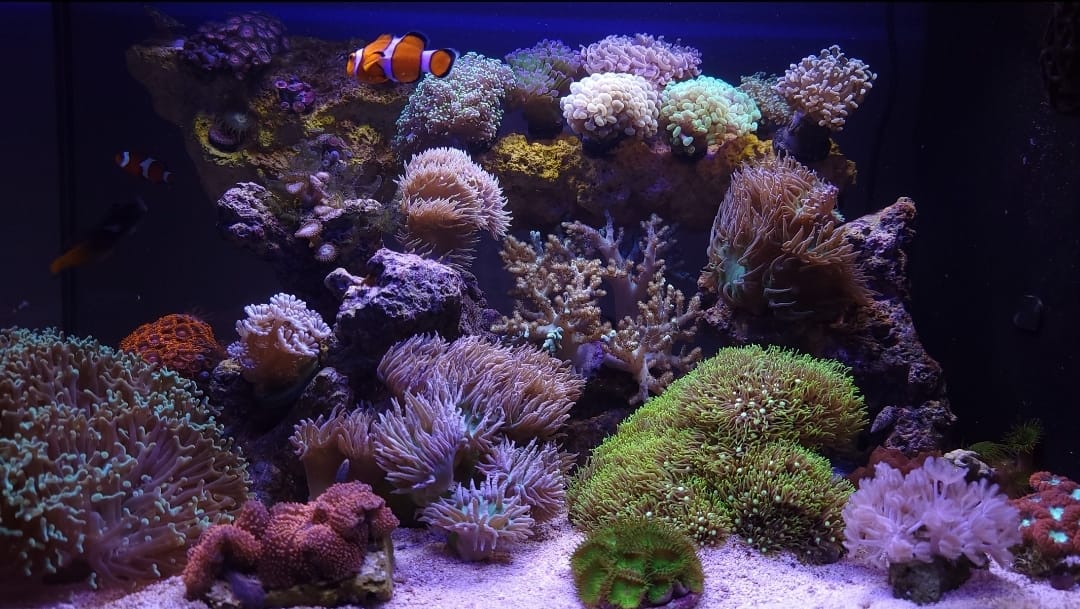
What we like most is the ceiling on the learning curve. A 13.5 gallon system is small enough that a beginner can wrap a towel around it and move it, and the light is touch-started with separate day and night illumination, so there is no app to learn. Owners consistently mention the multifunctional canopy with the feed door as the small convenience they notice every single day.
Owners also consistently mention the limit. Once you want more than a clownfish and a goby, the volume forces a move, and many people end up upgrading within their first year. That is a reasonable first-tank failure, but it is worth pricing in if you can see yourself keeping marine fish for a decade.
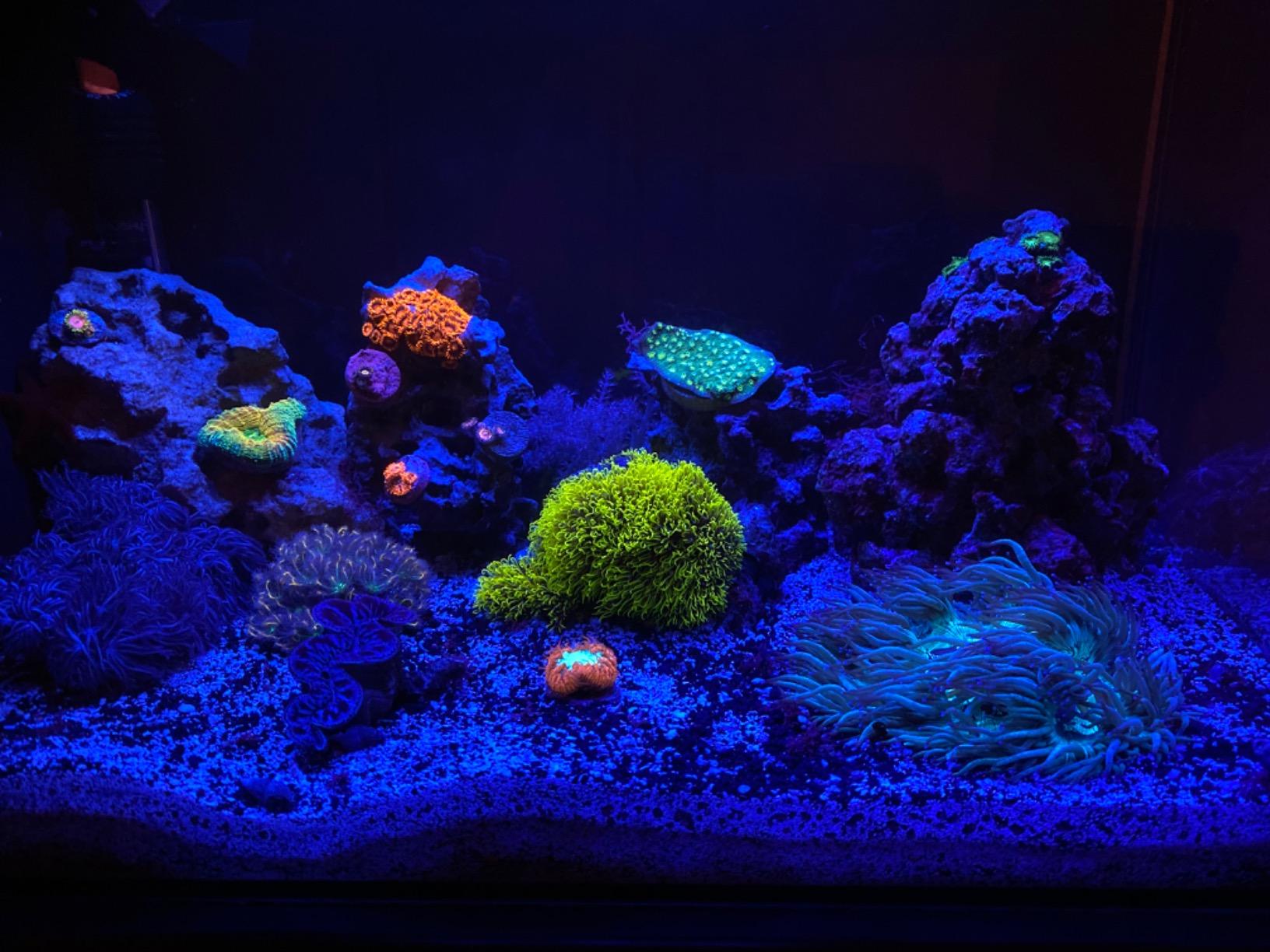
Is the Fluval Evo 13.5 right for your first reef?
Choose it if your first goal is a fish-only marine tank with a clownfish, a goby and maybe a few hardy soft corals, and if you want the fewest possible failure points. The hidden compartment, the sized media and the huge owner base all reduce the number of decisions you have to make in month one.
Its 1383 lumen LED is a genuine constraint. That output suits fish and very low light coral, so if your plan is a mixed soft coral reef you will be replacing the light within a year. Budget for that swap now rather than treating it as a surprise.
When the Fluval Evo 13.5 is the wrong choice
Skip it if you want to keep a meaningful display of corals, or if you are already an experienced freshwater keeper who knows how to plumb a sump. There is no upgrade path on the filtration here, so growth means buying a different tank rather than adding equipment.
Also skip it if evaporation is a worry in your room. An open-top 13.5 gallon in a warm, bright room loses water fast enough that you will want an auto top-off system, which none of the kits in this guide supply.
2. Coralife BioCube 32 Gallon: the Most Room to Grow
Coralife BioCube, Aquarium Kit, Integrated 24-hour Timer, Customizable LED Lighting, for Saltwater and Freshwater Environments, 32 Gallon
32 gallon display
Built-in filtration chamber
Three-channel LED
24 hour programmable timer
Pros
- Largest display volume per footprint here
- Three independently controlled light channels
- Sunrise sunset and moonlight programs built in
- Quiet submersible pump with adjustable return
- Works with the existing BioCube accessory range
Cons
- Back chamber is tight for maintenance
- Stock media rack is flimsy
- No heater skimmer or ATO included
- Many owners replace the light for coral
The BioCube 32 is the kit most beginners end up recommending a year later, and the reason is headroom. At 32 gallons you can start with a clownfish and a goby, add soft corals when the tank settles, and never have to move tanks. The box measures 27.5 by 25.5 by 27 inches and weighs 62 pounds empty, so plan the stand and the floor path before it arrives.
The lighting is the real headline. Three independent channels cover bright white, sparkling blue and colour-enhancing output, and the built-in timer runs automatic 30 minute sunrise and sunset ramps plus a 60 minute moonrise and moonset program. For a beginner, having a believable day and night cycle handled by the tank itself removes one more thing to get wrong.
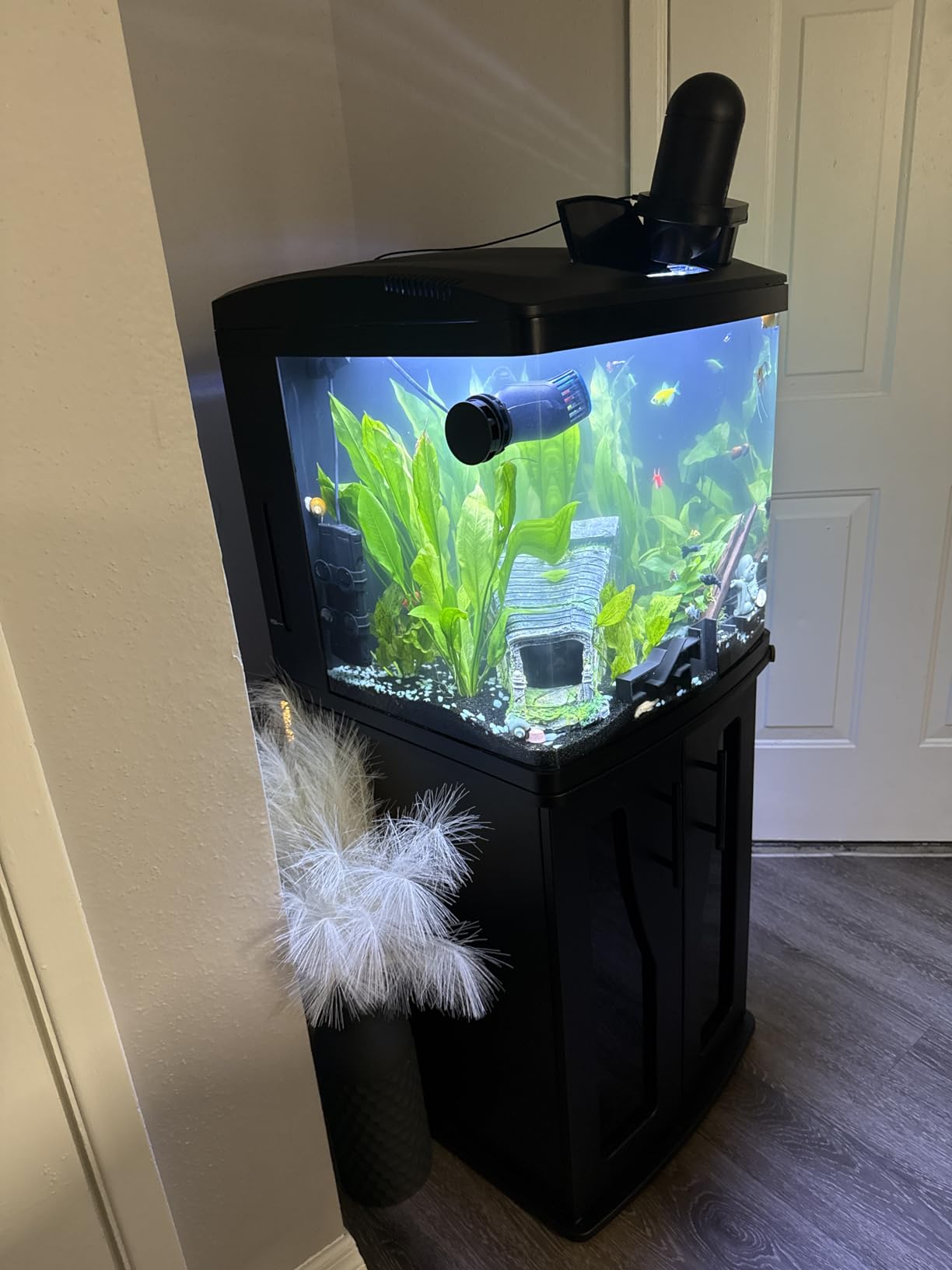
The filtration chamber is built into the back of the aquarium with dual intakes, a quiet submersible pump and an adjustable return nozzle. It is compact and customisable, and the tank is compatible with the wider BioCube accessory range, which is genuinely useful when you are ready to add a skimmer or a channelless system later.
The honest caveat, and it is repeated often in owner reviews, is that the back chamber is small. The stock media rack is described as flimsy by plenty of long-term owners, and many of them upgrade to an InTank media basket as the first modification. The lid also lacks a piston support, so it has to be propped open. Both are minor and fixable, but they are modifications you will do yourself.
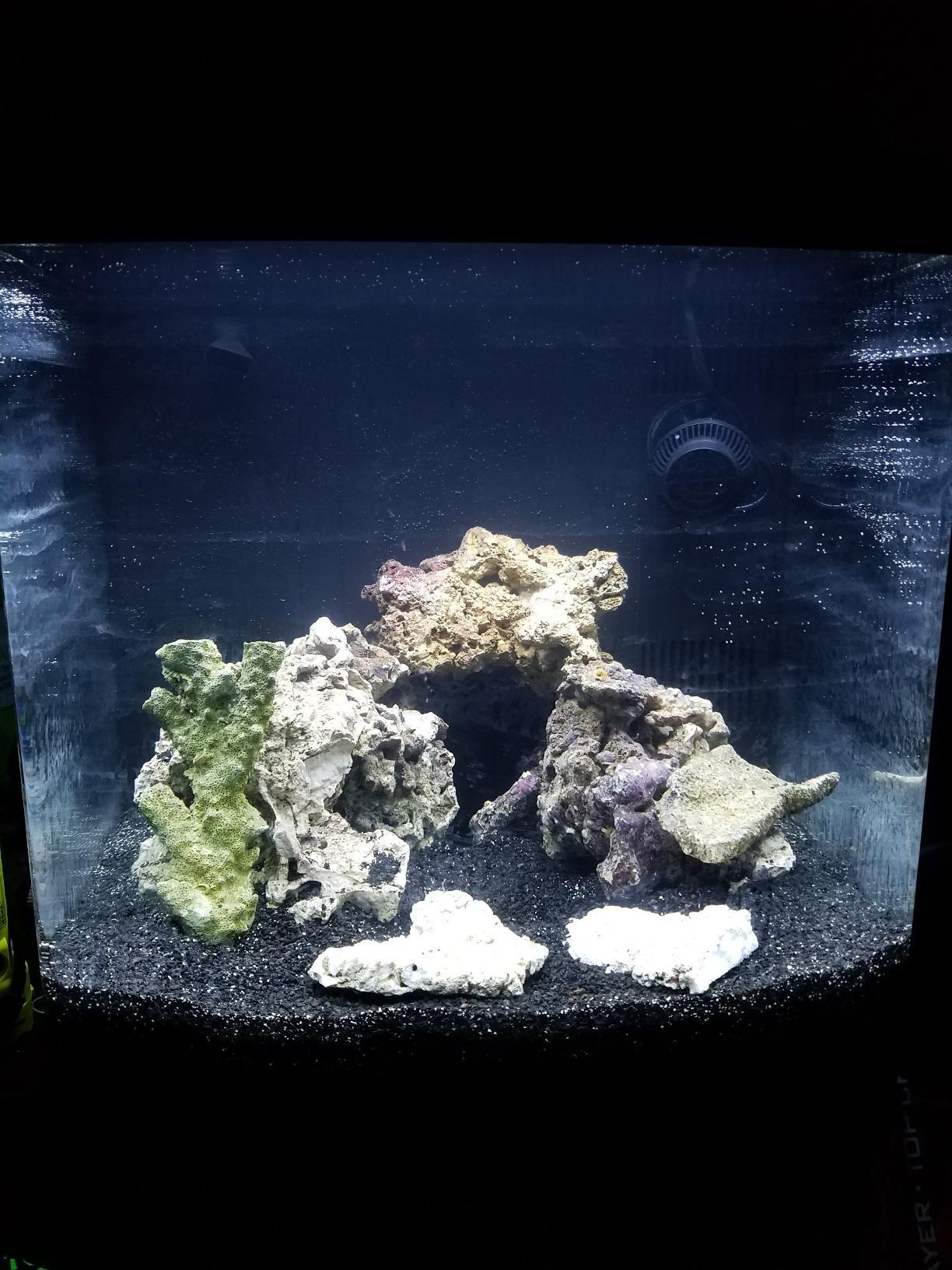
What the BioCube 32 does better than the smaller kits
The 32 gallon volume means temperature and salinity move more slowly than in a nano, which is precisely what makes a first tank less demanding day to day. You also have enough water volume to add a cleanup crew and a few soft corals without stressing the system.
Programmable lighting with a real moon cycle is the second advantage. Several beginners end up buying a second light anyway because the stock unit is too weak for their stocking plan, so match your lighting choice to the livestock you want before the tank arrives rather than after.
Where the BioCube 32 disappoints owners
Many reviewers report outgrowing the 32 gallon within a year, and the tight rear chamber is the reason maintenance takes longer than it should. Several owners report that an aftermarket protein skimmer can push microbubbles into the display, which looks like a fault when it is really a compatibility issue.
Small volume also means strict water change discipline. Treat the weekly change as non-negotiable from week one, because an AIO tank with a limited sump has no buffer for missed maintenance.
3. Fluval Flex 32.5 Marine: the Biggest Display Tank Here
Fluval Flex 32.5 Marine Salt Water Aquarium Kit – Fish Tank for Fish, Coral & More – Comes with LED Lights, Filtration System & More – 32.5″ x 15.75″ x 15.35″ – 123 L, 32.5 Gal. – Black
123 L display volume
7500K white and RGB LEDs
FluvalSmart app control
3-stage media filtration
Pros
- Largest display in this guide at 123 litres
- App-controlled colour blending and scheduling
- Contoured front and honeycomb wrap hide the water line
- Dual multi-directional outputs for adjustable flow
- Feed door in the top cover
Cons
- Heaviest kit listed at 48.75 pounds
- Huge sump volume demands frequent manual top-off
- Highest commitment of the six
- Not a nano-scale first tank
At 32.28 by 15.75 by 15.35 inches and 123 litres, the Flex is the only kit here that behaves like a display aquarium rather than a starter box. If you have the stand, the floor strength and the patience for a large water change every week, this is the tank that stops you from having to move up in two years.
The lighting is a step up from everything else in this guide. Fully adjustable 7500K white plus RGB LEDs are controlled through the FluvalSmart app, so you can dial intensity, spectrum and schedule for whatever you are keeping. That flexibility is what stops the usual beginner pattern of buying a second light six months in.
Filtration is Fluval’s 3-stage setup with oversized mechanical, chemical and biological media, and the return uses multi-directional dual outputs so you can aim flow away from the front glass. A contemporary curved front with a honeycomb wrap conceals the water line and the sides of the filter compartment, which is where the premium look comes from.
The catch is the size of the commitment. 48.75 pounds of glass needs a stand rated for it, and a sump this large evaporates quickly, which makes an auto top-off system close to mandatory rather than optional. Budget for dedicated RODI water production and a two bucket change routine from the start.
Why the Flex 32.5 rewards a patient beginner
App-controlled spectrum means you can start with fish and low light, then raise the intensity as you add soft coral or LPS without touching hardware. The dual directional outputs also let you tune flow for a LPS display rather than living with a single fixed jet.
Large volume is a stability advantage. More water moves more slowly between changes, so a missed evening of feeding is a far smaller event here than in a 6 gallon nano.
Reasons to choose a smaller kit instead
Choose smaller if your stand cannot carry it, if the tank has to move through doorways or stairs, or if you are not ready to produce RODI water for a two bucket weekly change. This is also not the kit to buy if you might lose interest within the first few months.
The most common owner regret we see in this category is not the tank. It is the sump volume forcing daily manual top-off before an ATO is installed.
4. LANDEN EzFlux 40 16 Gallon: the Best Built Rear Filtration
LANDEN EzFlux 40 Rimless 16 Gallon Rear Filtration Tank, Pump Included
16 gallon total volume
All-glass dividers
Biosmo 700 pump included
Low-iron beveled glass
Pros
- Glass chamber dividers instead of plastic parts
- Three separated rear chambers for media pump heater or skimmer
- Included BIOSMO 700 pump with remote and feed mode
- Low-iron ultra-clear beveled glass
- Arrives in a steel-framed wooden crate
- EVA foam leveling pad included
Cons
- No lid included
- Filter outlet sits opposite the product photos
- Large intake grates suit adult fish not fry
- Chamber cover is glued to the tank bottom
About 10.5 of the 16 gallon total volume is display, with the remainder in the rear chambers. That is the number to focus on if you are comparing it to a 16 gallon nano, and it is the honest way to think about stocking. The tank itself is a 15.8 inch cube built from 6 mm low-iron glass with beveled edges.
What separates this kit from the others is the filtration construction. The three rear chambers are divided by glass rather than plastic, which reviewers specifically call out as resistant to warping, and the layout is configurable enough to hold media, a heater and a small skimmer. The included LANDEN BIOSMO 700 return pump moves up to 700 litres per hour with a 2.5 metre head on 9 watts, and it comes with a remote control and a feeding mode.
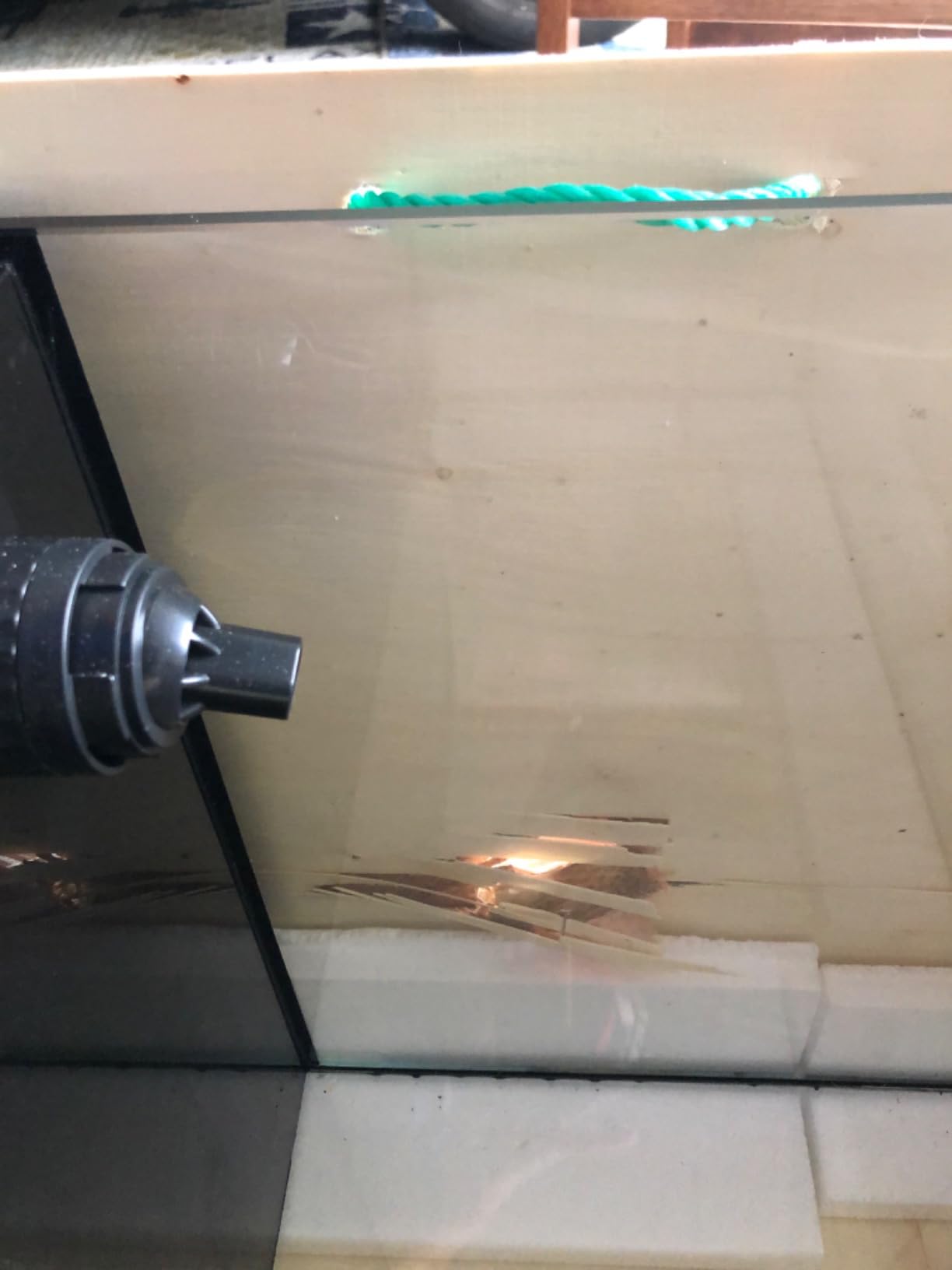
Packaging matters more than it sounds for a rimless glass cube, and this one arrives in a steel-framed wooden crate rather than a thin box. Several owners also report fast pump replacements from customer service when a unit arrived faulty, which is the kind of long-horizon reliability signal we look for when a pump is bundled rather than bought separately.
Two practical warnings. The filter outlet is positioned opposite to the product images, so plan your return direction before you set the tank on its stand. And the filter chamber cover is glued to the tank bottom, which leaves adhesive you may want to remove carefully rather than scrape.
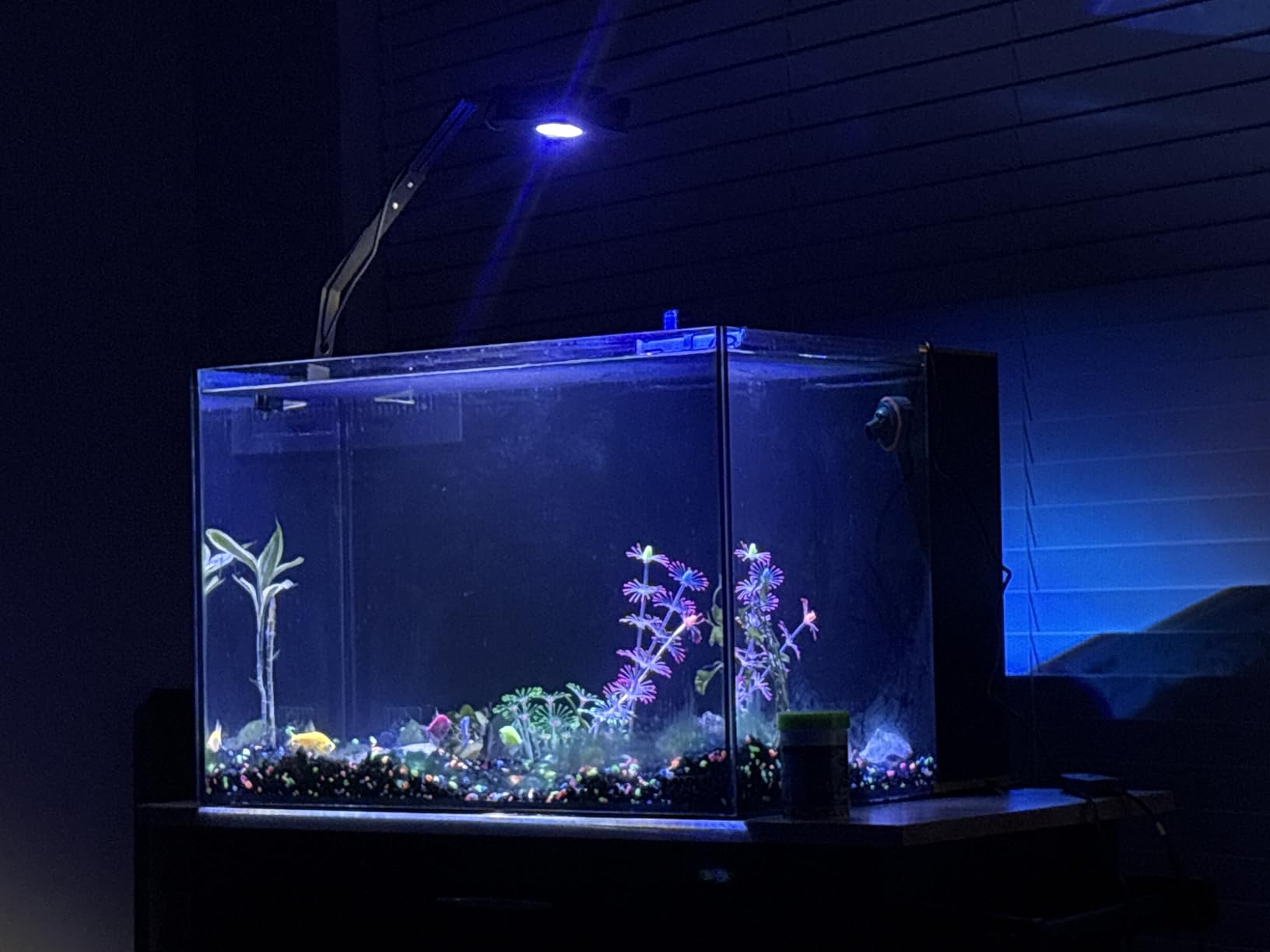
Why the rear chamber layout matters for a first tank
Having three separate chambers means you can dedicate one to mechanical filtration, one to chemical and biological media, and one to the pump. That separation is what makes a routine water change fast instead of an afternoon of disassembly.
Because the dividers are glass, there is no plastic part in the wetted path to warp, crack or degrade. For a marine system that is a real long-term advantage, and it is why this kit ages better than plastic-divided competitors.
Where the EzFlux 40 falls short
There is no lid, and a rimless tank without a lid in a bright room means fast evaporation and a real chance of a jumping fish ending up on the floor. Budget for a lid or a DIY mesh solution before the tank holds livestock.
Owners also report large intake grates. Those are fine for adult clownfish and gobies, but they are a genuine risk for small fish and shrimp, so add intake guards on day one.
5. Empire USA 24 Gallon All-in-One: a Big Cube for a First Reef
Empire USA – 24 Gallon All-in-One Aquarium Kit, Rimless Low Iron Glass AIO Saltwater & Freshwater Fish Tank, Complete Nano Reef Tank Setup for Home or Office
24 gallon rimless cube
Low iron glass
Integrated filtration chamber
24 x 15 x 15 inches
Pros
- 24 gallons of display in a compact cube
- Rimless low iron glass with minimal distortion
- Integrated filtration and return in one shell
- Marketed for nano reef and saltwater builds
- Compact enough for a bedroom or office
Cons
- Only 26 reviews so far
- Less established brand and thinner parts catalogue
- No published pump or media capacity specs
- Heater skimmer and ATO not included
At 24 by 15 by 15 inches and 51.85 pounds, this is the largest display volume per unit of counter space in the guide, and the manufacturer states plainly that it is intended for saltwater, nano reef, planted and freshwater use. That versatility makes it a safe first reef if you are still deciding how seriously you will take coral.
The rimless low iron glass gives you a clean, distortion-free view, which is the whole point of buying a display tank. Filtration, the return system and the display are combined in one shell with an integrated chamber for circulation, so there is no separate sump cabinet to plan for.
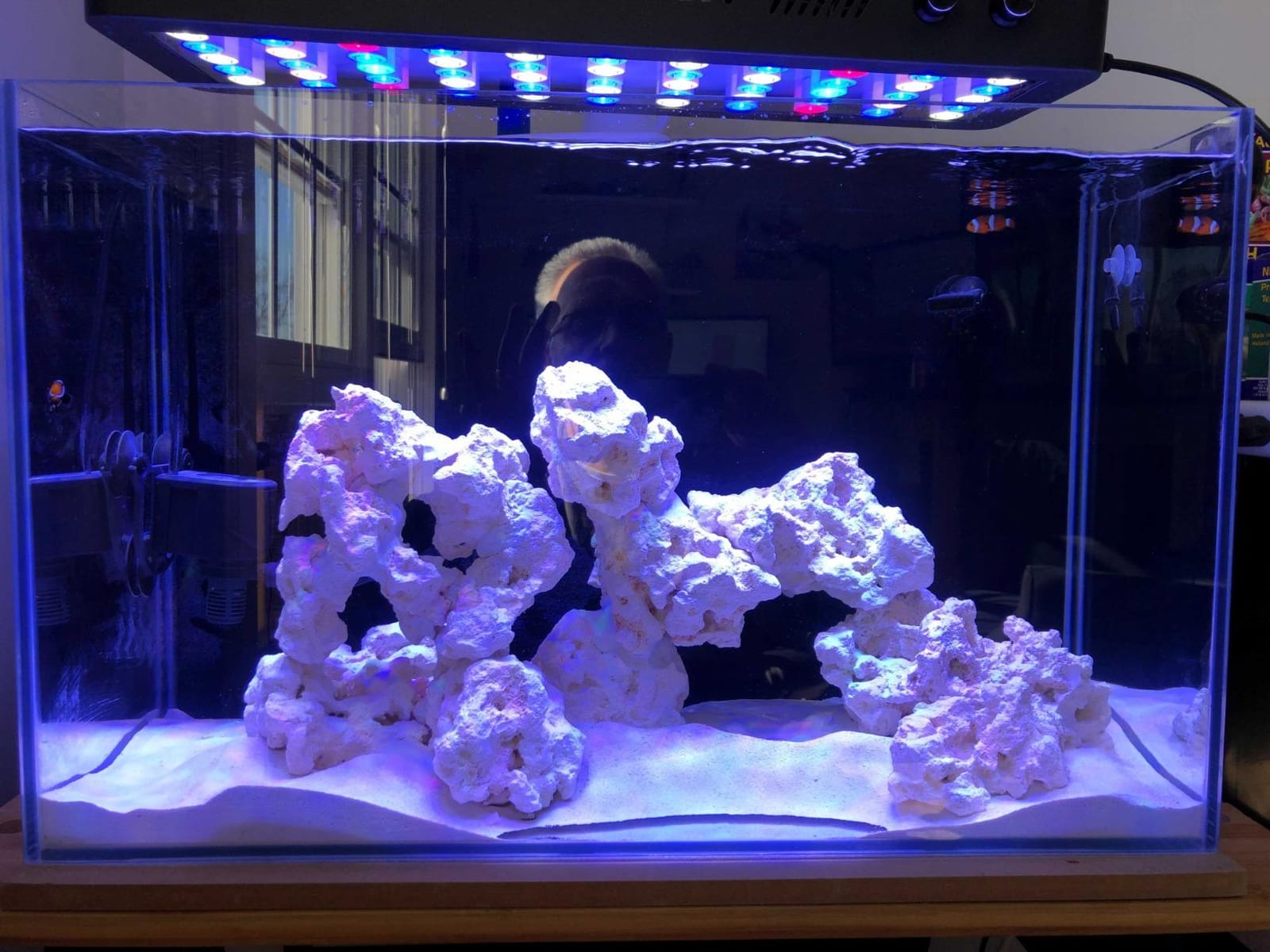
Our honest caution here is about the evidence, not the tank. With 26 reviews behind it, there is no long-term owner history to draw on, and a lower sales rank in its category means replacement parts and advice are thinner than for the Fluval or Coralife kits. You are buying a well-made box with a promising design, not a proven platform.
There is also no published specification for pump output or media capacity. Ask for both before you commit, because an undersized return pump on a 24 gallon system is the one omission you cannot work around with an accessory later.
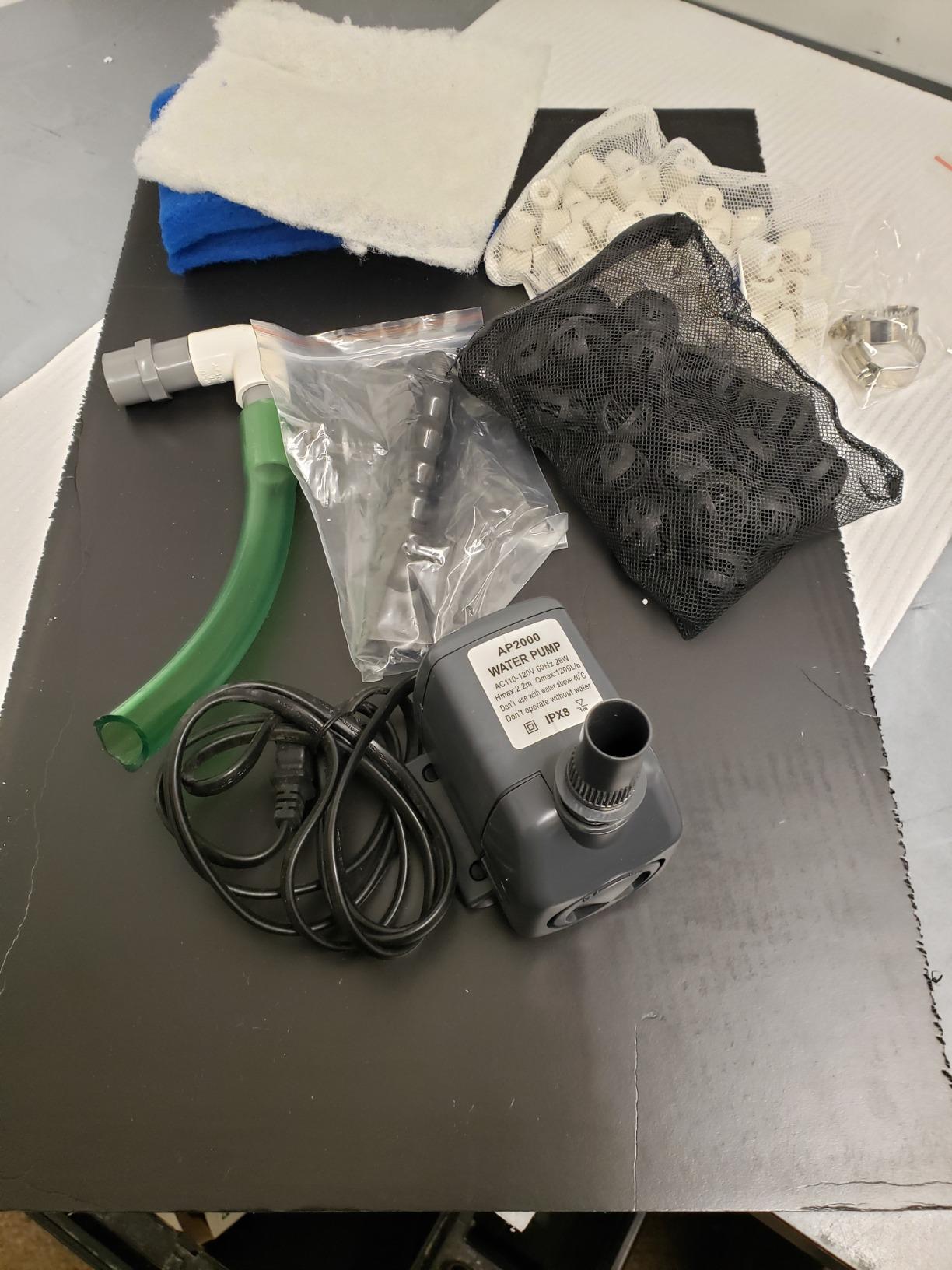
Who this 24 gallon cube suits
It suits a beginner who wants enough volume to hold a proper cleanup crew and several soft corals but still has limited floor space, and who will be happy upgrading the pump and adding a skimmer later as the tank grows.
It also suits anyone upgrading from freshwater. The stated suitability for both environments means you can run it as a fish-only marine tank first and decide about coral later without changing tanks.
Reasons to pick a more established brand
If you want a large accessory ecosystem, an established owner base and easy parts replacement, the Coralife BioCube 32 is the safer bet. Twenty-six reviews is simply not enough history to promise how a pump or a filter chamber performs after a year of daily service.
We would also want to see the return pump flow rating in writing before buying. Undocumented circulation is the one gap that turns a promising kit into a frustrating first reef.
6. Ultum Nature Systems Dual AIO 6 Gallon: the Premium Desktop Nano
Ultum Nature Systems Dual AIO – Freshwater/Saltwater Compatible, All in One Rimless Tank with Triple Chamber Filtration System, Integrated Filter Aquarium with Leveling Mat – 6 Gallon, 45SA, Black
6 gallon rimless tank
Triple chamber filtration
91 percent diamond glass
Leveling mat included
Pros
- Excellent optical clarity from 91 percent diamond glass
- 45 degree mitered edges on low iron glass
- Triple chamber filtration with bio media included
- Leveling mat supplied in the box
- Quiet operation reported by owners
Cons
- Intake holes are large enough to lose small fish
- No lid so evaporation is rapid
- Water level must stay high or the pump draws air
- Pump reliability issues reported by some owners
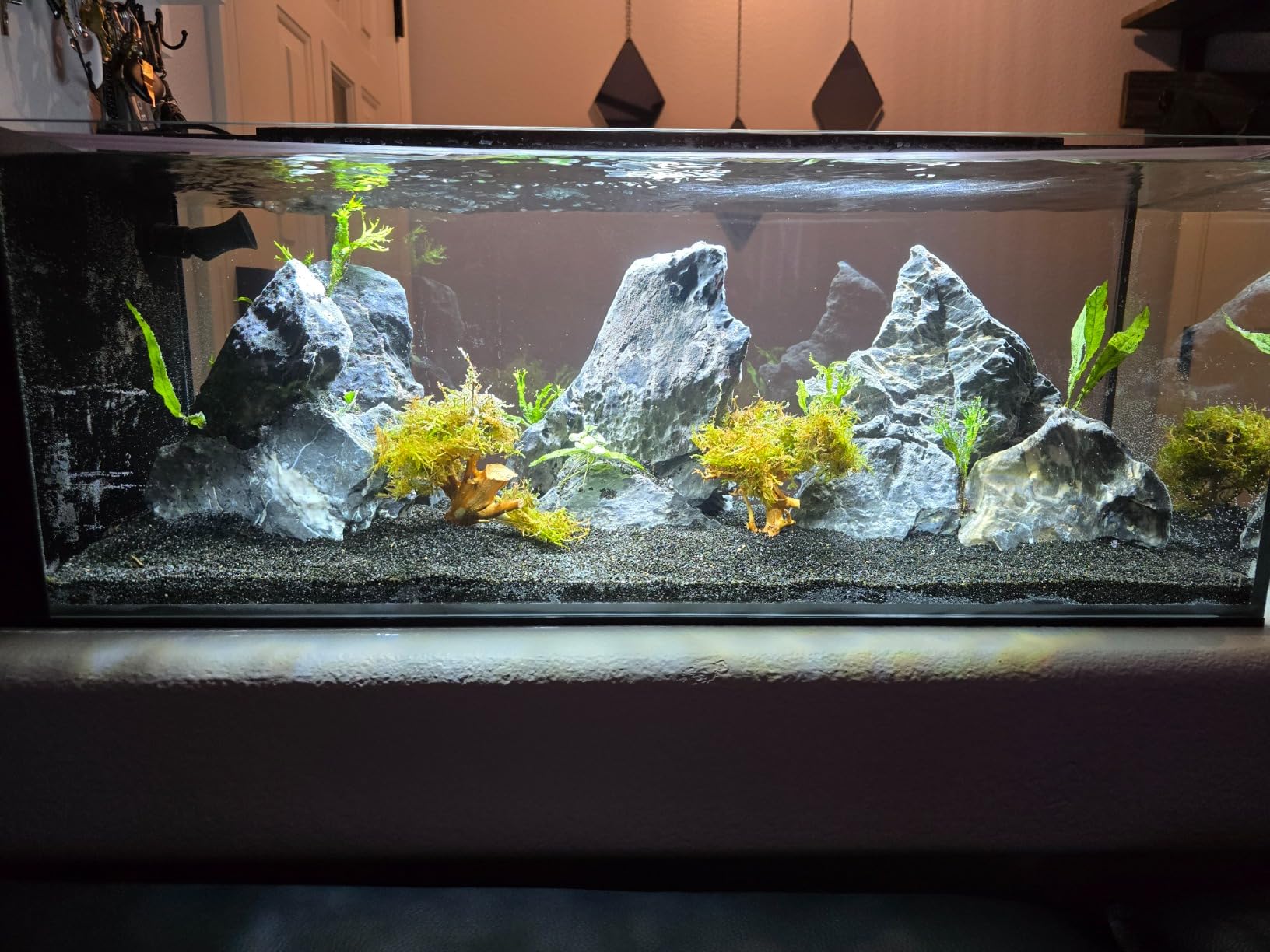
This is the newest kit in the group and the least forgiving. At 17.71 by 11.02 by 7.08 inches it is a true desktop nano, built around unobtrusive silicone seams, 91 percent diamond glass and 45 degree precision-cut mitered edges on a patented low iron formula. The tank measures 6 gallons in the 45SA configuration, and a leveling mat is included.
Filtration is a triple-chamber system with a coarse sponge, specialised bio media and a quiet pump, and the tank is rated for both freshwater and saltwater setups. Build quality is the consistent theme in owner reviews, along with how quiet it runs on a desk next to a monitor.
Now the design flaws, which are real and which you must design around. The intake holes are large enough that small fish can be drawn in, and an intake guard is not included. There is no lid, so evaporation is rapid and a jumping fish has nowhere to be stopped. Owners also report that the water level has to stay near the top or the pump draws air, and some report receiving multiple failed pumps.
Owners describe modifying this tank heavily after arrival. That is fine if you enjoy the tinkering and expect to change the lid, add a guard and monitor the pump. It is a poor fit for a first-time keeper who wants to set it up once.
What the Dual AIO does well on a desk
The glass quality is the best in this guide, and in a small tank optical clarity matters more because you are close to it. The 45 degree mitered edges and minimal silicone give it a finish no plastic-framed nano in this list can match.
For a shrimp and soft coral display with careful top-off discipline, it looks superb. That is a legitimate second aquarium rather than a bad first one.
Why we would not start a beginner here
A 6 gallon volume loses water quickly and swings in temperature quickly, so the top-off discipline is daily rather than weekly. Combined with no lid, mandatory near-full water level and an unguarded intake, that is a lot of things to get right in your first month.
There is also a cost-per-gallon reality here that reviewers themselves flag. You are paying a premium for glass finish on a very small volume, and a first reef usually needs more water than that to stay stable.
What a Saltwater Aquarium Kit Actually Includes?
Every kit in this guide gives you three things: a glass tank, a light, and a pump with some media. That is genuinely useful, because those are the three pieces with the most compatibility risk. What none of them give you is the equipment that decides whether a marine tank stays healthy, and that is where beginners overspend at the wrong moment.
All-in-one or reef-ready: which one suits a first tank?
An all-in-one aquarium puts a filter chamber or small rear sump behind the display, with the pump, heater and skimmer living inside the stand footprint. A reef-ready aquarium is an empty glass box that accepts a separate sump full of plumbing, baffles and refugium space. Every kit on this list is an all-in-one.
For a first reef, all-in-one wins on cost and on speed, and it removes the single hardest beginner task, which is plumbing a sump correctly. Reef-ready wins when you already know what you are doing, because the sump gives you far more filtration headroom, more equipment space and a bigger reservoir for water changes. The forum debate around this choice is endless because both answers are correct for different keepers.
The decision rule we would give a beginner: choose all-in-one unless you have kept a freshwater tank with a sump already. Choosing reef-ready first is choosing a plumbing project first and a reef second.
How much tank size actually matters
Water volume is the single biggest factor in how forgiving a marine tank is. The kits here span roughly 6 gallons of display up to 123 litres, and that is the difference between a daily top-off routine and a weekly water change with two buckets.
Beginners on nano-reef forums consistently describe 8 gallon systems as requiring careful monitoring, and that experience matches the physics: a 6 gallon tank moves several degrees in an afternoon near a window. Our rule is that 20 gallons and above is a comfortable first reef, 13 to 16 gallons is a manageable learning tank, and anything under 10 gallons is a display choice made for space reasons, not difficulty reasons.
Matching the lighting to what you will stock
Most beginners overpay for lighting or underbuy it, usually because the listing never says what the light can actually grow. Fish-only marine tanks need very little. Soft coral mixed reefs need a programmable light with a real blue spectrum and a moon cycle, which is why the BioCube 32 and the Flex 32.5 stand out here.
SPS and demanding LPS need a light with serious intensity and a controller, and no stock light in this guide should be assumed to reach that level. Decide your stocking level before you pick a kit, then check the lumens or PAR figures rather than the marketing words.
The six things you still have to buy
Add these to any kit before the box ships, because they are the items that make a marine system survivable.
Heater. Match wattage to volume. 50 to 75 watts suits a 13 to 20 gallon tank, and 100 watts or more suits a 32 gallon. Buy a reef-safe model with a digital readout.
Salt mix and a refractometer with ATC. You cannot manage salinity with test strips alone. Aim for a specific gravity of 1.020 to 1.025 for a mixed fish-only or soft coral tank.
RO/DI water setup. Every saltwater change needs it, and tap water is not a substitute.
Protein skimmer. Small nano skimmers exist for the 6 to 16 gallon kits. The larger AIO tanks can run for a while on media alone, then add one as stocking increases.
Auto top-off or a disciplined top-off routine. AIO tanks with small sumps especially need this within the first month.
Test kits and rock or sand. Alkalinity, calcium and magnesium for reef work, plus ammonia and nitrite for cycling, plus dry rock or live rock to provide surface area.
Your first 90 days, in order
Rinse the tank with fresh water only, never soap, and leak-test it in place with the substrate you will use before anything electrical goes near it. Then set the stand, level it, and confirm the tank is plumbed and draining correctly.
Install the heater and pump, fill with premixed RO/DI and salt at your target specific gravity, and add rock. Then cycle. Plan for four to six weeks, test ammonia and nitrite twice a week, and do not add livestock just because the tank looks clear.
Add your first fish slowly, one species at a time, two to three weeks apart, and keep your nitrite kit close for the first month. Beginners who stock a newly cycled tank all at once are the reason nitrite spikes show up so often in the first month of reef forums.
Frequently Asked Questions
What is the best saltwater tank kit for a beginner?
The Fluval Evo 13.5 Gal is our top pick for a first marine tank because it is purpose-built for saltwater, includes sized Fluval filter media, and has a large installed owner base for spares and advice. The Coralife BioCube 32 is the better choice if you want more volume and programmable lighting with a moon cycle. Neither includes a heater, skimmer, auto top-off, salt or test kits.
What is the best all-in-one saltwater aquarium kit for beginners?
All-in-one means the filter chamber and pump sit behind the display, so nothing needs to be plumbed. The Coralife BioCube 32 is the strongest all-in-one for a first reef at 32 gallons with three-channel programmable lighting. The Fluval Evo 13.5 is the more compact option, and the LANDEN EzFlux 40 stands out for all-glass chamber dividers and an included remote-controlled pump.
What size saltwater aquarium is best for a beginner?
Around 20 gallons and above is the most forgiving range for a first tank, because temperature and salinity move more slowly in a larger volume. A 13 to 16 gallon AIO is a manageable learning tank if your space is limited. Tanks under 10 gallons are harder to keep stable, not easier, since evaporation and heat changes happen faster per gallon.
What is the first thing to put in a saltwater tank?
After the tank is rinsed, leak-tested and filled with premixed RO/DI and salt at 1.020 to 1.025 specific gravity, the first addition is rock, either dry or live. Rock gives bacteria and coral somewhere to attach and keeps your cycle moving. Livestock comes later, and only after the tank has finished cycling over roughly four to six weeks.
What is the best saltwater testing kit for aquariums?
A temperature-compensated refractometer is the only tool that measures salinity accurately, and it is the first purchase for any marine keeper. For reef work add a colorimetric alkalinity kit and separate calcium and magnesium tests. Test strips are useful as a quick weekly check, but many experienced hobbyists treat them as a supplementary screen rather than a primary measurement tool.
Can I use freshwater equipment in a saltwater tank?
Only equipment rated for marine use. Pumps, heaters, filter media and any metal part that contacts saltwater must be corrosion resistant, because salt water attacks cheaper alloys quickly. Never carry over freshwater filter sponge or floss without rinsing it thoroughly, and replace it with marine-rated media if it has been in service for months.
Conclusion: Which Beginner Saltwater Aquarium Kit Should You Buy
For most first-time marine keepers, the Fluval Evo 13.5 Gal is the right entry point: it is purpose-built for saltwater, it is small enough to move, and its owner base means help is easy to find. If you have the space, the Coralife BioCube 32 is the stronger long-term choice, because 32 gallons gives you real stability and a programmable light with a moon cycle. The Fluval Flex 32.5 is the display option for anyone with a proper stand and an RODI routine already in mind.
Whatever you choose from the best saltwater aquarium kits for beginners above, budget the six missing items in the same week you order. That list, more than the tank itself, is what determines whether a first marine tank is a hobby or a series of expensive mistakes.