
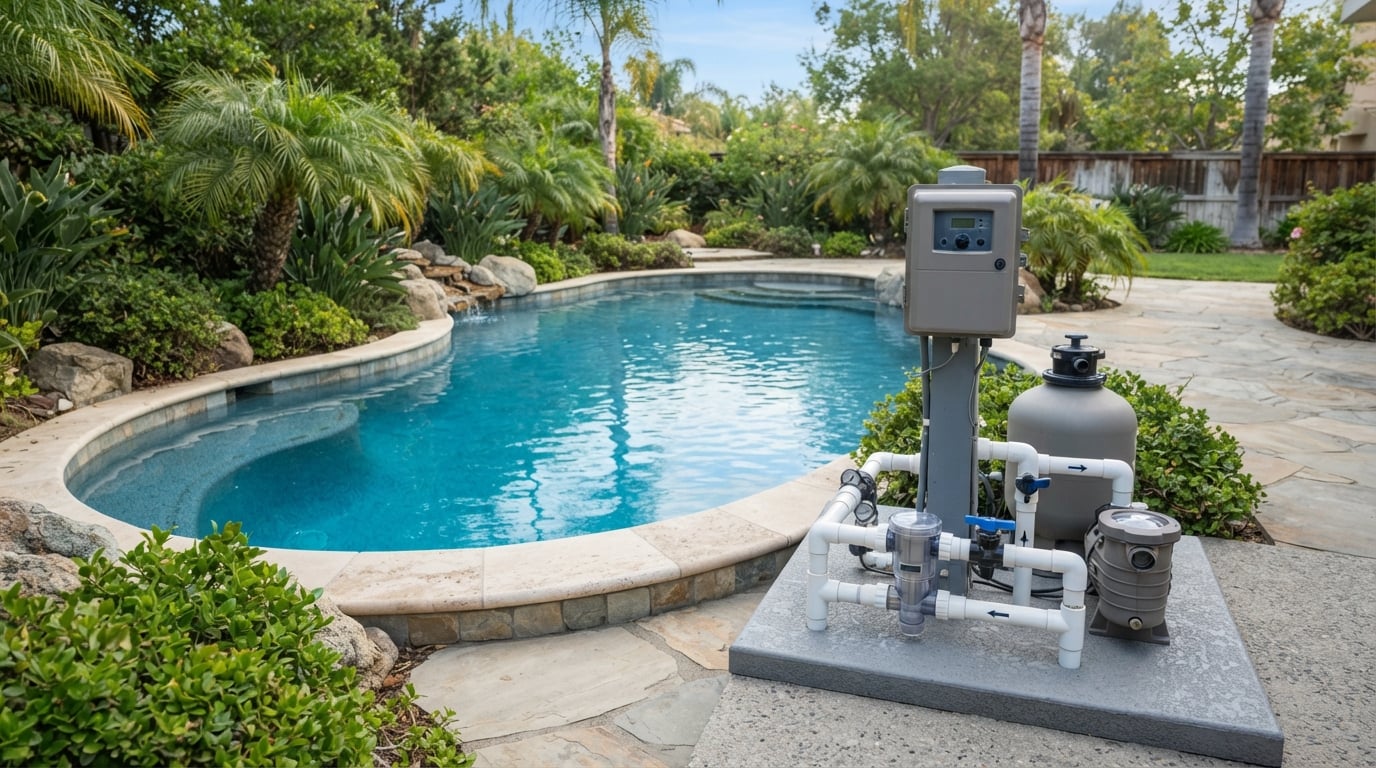
If you own an in-ground pool and you are done carrying jugs of liquid chlorine to the equipment pad, the best salt water chlorinators for inground pools are the units that generate their own chlorine from dissolved salt and hand it back to you on a timer. My pick for most people is the Hayward AquaRite W3AQR15, rated for in-ground pools up to 40,000 gallons. Two rules drive everything else on this list: always oversize the cell to roughly 1.5 to 2 times your actual pool volume, and match the chlorinator brand to the pump and automation hardware already on your pad.
That second rule is where most buying guides go quiet. Every other roundup I read mixes in above-ground units that will never touch a 2-inch return line, and none of them explain what happens on your equipment pad when you bolt a new chlorinator next to a controller you already own. I spent the last few months reading the service literature, comparing published chlorine output, and cross-checking owner reports on pool forums for the eight systems below.
Scope note before we start: this is an in-ground guide only. Above-ground chlorinators run on 120V inline plumbing and rarely exceed 15,000 gallons, so none of them appear here even though most competing lists rank them highly. Everything below is rated for a real residential in-ground shell, which means 2-inch plumbing, a real equipment pad and a return line with room for a cell.
One more thing before the picks. We earn a commission when you buy through the links on this page, and it does not change the order below. Every rating and review count shown is copied straight from the retailer listing at the time we checked it, and every spec is what the manufacturer publishes, not what we measured. Where owners report failures, we say so plainly, because the recurring theme on Trouble Free Pool and r/swimmingpools is that the control box, not the cell, is what usually dies.
Table of Contents
Top 3 Picks for Inground Pool Salt Water Chlorinators (October 2026)

Hayward AquaRite W3AQR15
- Rated for in-ground pools up to 40000 gallons
- LED monitor with service alerts
- Retrofits existing pool systems with no extra plumbing

CircuPool CORE35
- 8 year limited warranty that survives DIY install
- Up to 1.4 lb of chlorine per day
- Smart sensors track flow salinity temperature and cell life

APX Performance E-CHLOR
- 32000 gallon maximum for in-ground pools
- Plugs into any 110V outlet
- Works with variable speed pumps and winter operation
The 8 Best Salt Water Chlorinators for Inground Pools in 2026
Here is the full lineup at a glance. Every unit below is a complete system for an in-ground pool, which means the cell, the control box and the plumbing pieces are in one box unless noted. The one thing none of these listings state outright is how much space the cell loop needs, so we covered pad footprint in the buying guide further down.
| Product | Specs | Action |
|---|---|---|
| Hayward AquaRite W3AQR15 |
|
Check Latest Price |
| CircuPool CORE35 |
|
Check Latest Price |
| APX Performance E-CHLOR |
|
Check Latest Price |
 CircuPool EDGE40 CircuPool EDGE40 |
|
Check Latest Price |
 Troxlly TP30 Troxlly TP30 |
|
Check Latest Price |
 Westaho EL-032 Westaho EL-032 |
|
Check Latest Price |
 EverCrystal ECLI40-1T EverCrystal ECLI40-1T |
|
Check Latest Price |
 Bonvoisin LC-300A Bonvoisin LC-300A |
|
Check Latest Price |
1. Hayward AquaRite W3AQR15 – The Industry Standard for a 40,000 Gallon Inground Pool
Hayward Aquarite Salt Chlorine Generator for Swimming Pools 40,000 Gallons
For in-ground pools up to 40000 gallons
LED monitor with service alerts
Model W3AQR15
24.3 pounds
Pros
- Steady chlorine output for pools up to 40000 gallons
- Retrofits into existing pool systems with no extra plumbing
- LED monitor cuts down on manual measuring and mixing
- Chlorine made from salt is gentler on skin and swimsuits
- Complete system with cell and control box in one box
Cons
- Owner manual is dense and written near professional pool chemistry level
- Some reports of cell or board failures before expected lifespan
- Some owners say warranty service is hard to get without an authorized installer
The W3AQR15 is the model that keeps showing up in shopping carousels and retailer guides, and it earns that attention. It is a complete salt chlorination system rated for in-ground pools up to 40,000 gallons, which covers the large end of what most residential owners actually build. The number matters because this is the largest in-ground rating in our roundup alongside the EDGE40 and the TP30, and it is the one most pool techs already have a service manual open on their tablet for.
What owners like most is that it drops into an existing return line without extra plumbing, provided you already have a Hayward cell footprint or an equivalent spot in the cell loop. The control box carries an LED monitor that flags service conditions rather than making you run a test strip ladder to find out what is happening at 9pm.
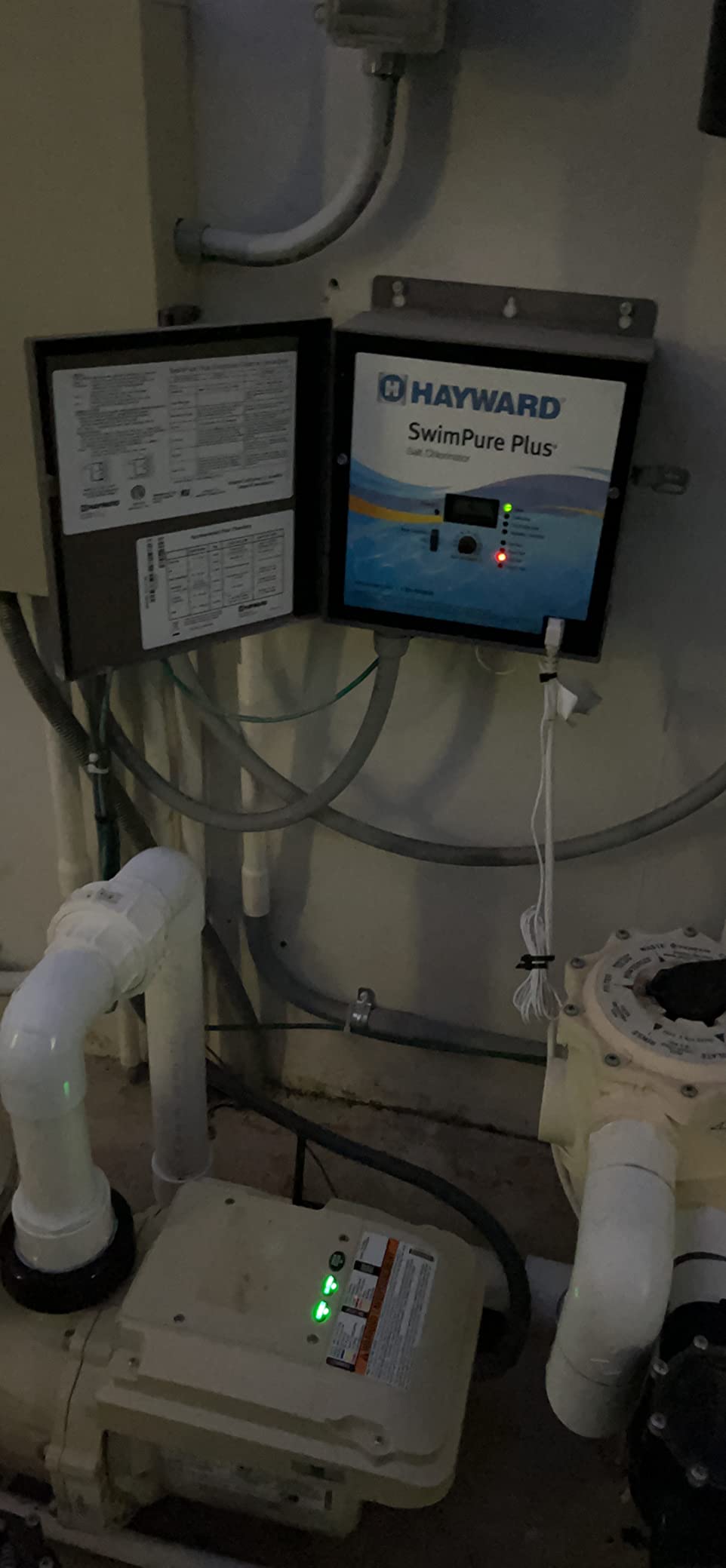
Across just under a thousand ratings the sentiment lands around 4.2 stars, and the positive notes cluster around three things: steady chlorine output, easy installation over an existing system, and noticeably lower ongoing chemical spending. Owners also point out that chlorine made from salt is gentler on skin and does not fade swimsuits the way tablet chlorine does.
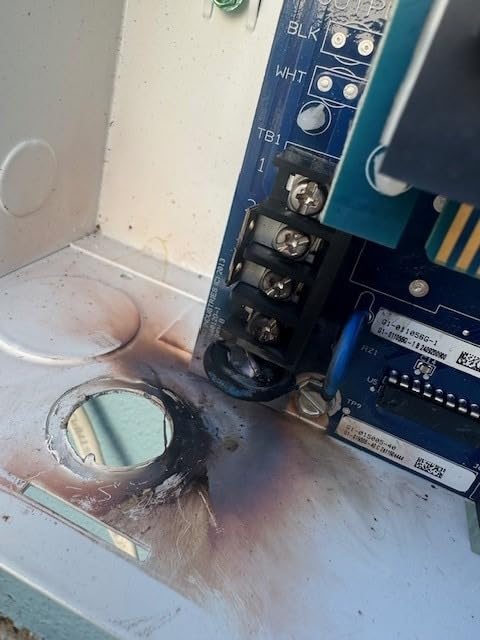
The honest downside is the failure tail. A recurring theme in the reviews is a salt cell or a control board giving out well before the expected service life, and several owners describe frustration getting warranty service unless the unit was installed by an authorized shop. If you plan to install it yourself, that is a real consideration rather than a footnote.
What you get for your money on the pad
You get a cell, a control box and the monitoring LEDs in one enclosure, and the listing carries three size variants so you are not forced into a 40,000 gallon unit on a 20,000 gallon pool. The system is designed to be gentle on swimmers and to reduce the manual work of measuring and adding chlorine every week.
Because the cell is a separate replaceable wear part, the total cost of ownership is a system cost plus a cell cost several years down the road. Buyers on pool forums treat the cell as the consumable and the control box as the part most likely to fail, which is a useful frame when you are budgeting.
Who should look elsewhere
If warranty service only flows through an authorized installer, or if you want smart app control and readable alerts rather than a row of LEDs, this is not the right fit. It is also a poor match for a small above-ground pool, and it costs more than the compact and aftermarket options later in this list.
For a straightforward in-ground pool in the 15,000 to 40,000 gallon range with existing Hayward equipment, though, it remains the safest recommendation we can make. Widely available replacement cells and installer familiarity are genuine advantages that no price comparison will show you.
2. CircuPool CORE35 – Best Warranty and the Cleanest DIY Install
CircuPool CORE35 Salt Chlorine Generator System | 35,000 Gallon Pool Max
35,000 gallon pool maximum
Up to 1.4 lb chlorine per day
8 year limited warranty
11 pounds
Pros
- 8 year limited warranty that survives DIY installation
- All-in-one controller and cell design with no complicated wiring
- Smart sensors track flow salinity temperature scaling and cell life
- IP66 weatherproof housing for years of outdoor service
- Eliminates routine buying and adding of chlorine or shock
Cons
- Output of 1.4 lb per day is below the larger 40000 gallon units
- Warranty and support depend on keeping the cell clean and unscaled
The CORE35 exists to answer one specific objection that comes up constantly in DIY pool forums: does installing it yourself destroy the warranty. CircuPool publishes an 8-year limited warranty and states plainly that self installers keep their coverage. For owners converting an existing inground pool on a weekend, that single policy removes the biggest reason people hesitate.
The second selling point is physical. The controller and cell are one compact assembly with no complicated wiring, so the install is two unions, a short plumbing run and a wall or pad mount. Buyers repeatedly mention that the all-in-one design goes in faster than a split-box unit.
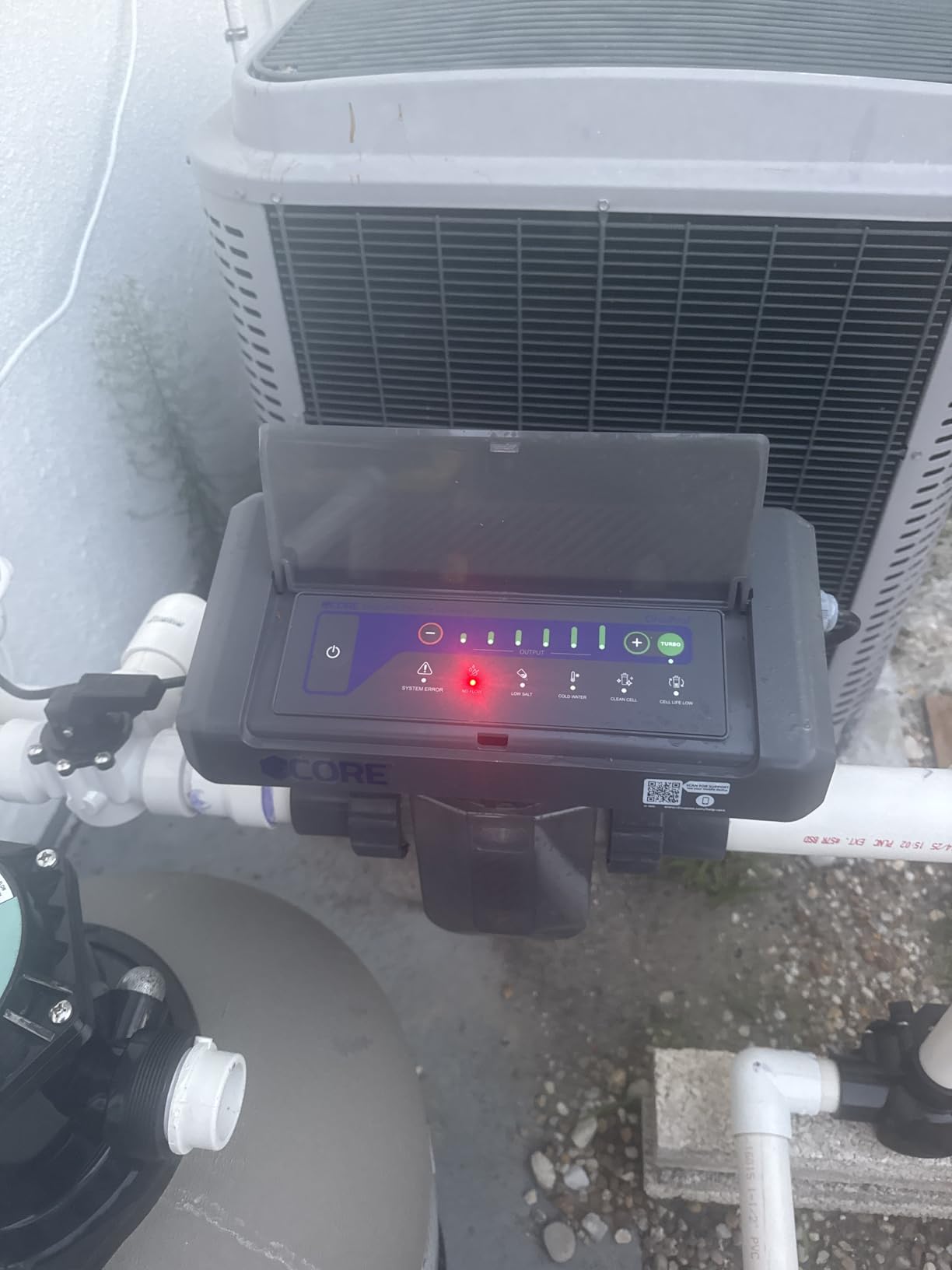
Rated at 35,000 gallons maximum with up to 1.4 lb of chlorine per day, it is sized for the middle of the in-ground market rather than the very top of it. The sensor suite is genuinely useful: it monitors water flow, salinity, temperature, internal operation, cell scaling and cell lifespan, so the display can tell you a problem instead of just showing a light.
At 4.1 stars across 276 ratings, the top complaints are predictable. The 1.4 lb per day output means a pool near 35,000 gallons will need longer pump runtime to hold target chlorine, and owners are reminded that the warranty presumes a clean, unscaled cell.
Why the warranty length actually matters here
Cell life is the number that drives long-term cost, and a longer warranty on the electronics is what protects you when the cell is still fine. The 8-year term on the CORE35 is the longest in this roundup, and the DIY coverage is the only one here that we could verify directly from manufacturer copy rather than secondhand reports.
For a 20,000 to 30,000 gallon in-ground pool with a moderate bather load, that combination of warranty, size and install simplicity makes this an easy recommendation. Pair it with a pool tech for the electrical connection even if you do the plumbing yourself, and check the cell scale every season if your calcium hardness runs high.
Who should skip it
Pools at or near 40,000 gallons should look at a higher-output unit, because 1.4 lb per day will ask more of your pump runtime. It is also not the right call for anyone who wants app-based remote control, since the CORE35 reports through its own panel rather than a phone.
Owners worried about long-term parts availability should weigh the brand against the big three, because a warranty is only as good as the company behind it a decade from now. The sensors do most of the talking for you, and the IP66 housing is a genuine plus in a climate that sees full sun and rain for eight months.
3. APX Performance E-CHLOR – Best Compact Plug-In Install for a 32,000 Gallon Pool
E-CHLOR Plug-in Salt Chlorine Generator | 32,000 gal Max | APX Performance
32,000 gallon maximum
Plug-in install on 110V
3 year manufacturer warranty
Smart sensor array
Pros
- Plug-and-play install with two unions and any 110V outlet
- Highest star rating among the units with meaningful review volume
- Works with variable speed pumps and in winter operation
- Sensors track salt temperature cell scaling and cell lifespan separately
- Includes a cleaning plug for sealing the cell during service
Cons
- Power cord is short and may not reach an existing panel outlet
- Output is slightly lower than a comparable Pentair IC40 class unit
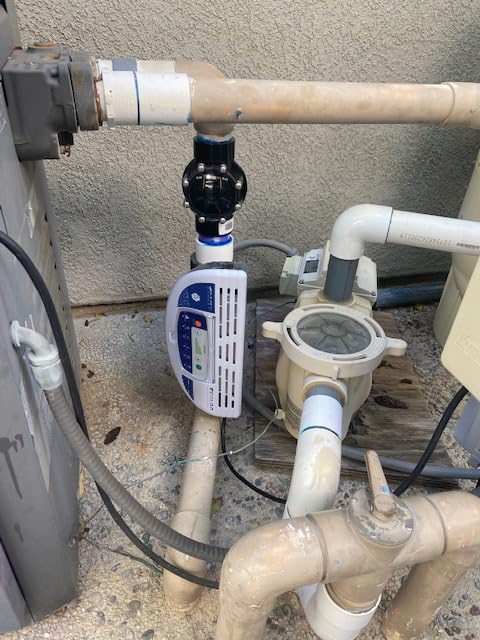
This is the unit I would hand to an owner who wants salt without a project. The E-CHLOR is a plug-in design: you cut the template, glue two unions into the return line, and plug the controller into any 110V outlet on the equipment pad. There is no separate power center to mount, no RS-485 cable to run and no panel to wire into.
At a 32,000 gallon maximum it is sized for the middle-to-large in-ground pool, and the manufacturer claims up to 15 percent more output than other compact salt chlorinators. Owners report that the cut template is accurate enough that the plumbing lines up on the first attempt, which is the single biggest time saver in a retrofit.
The rating profile is the strongest here: 4.5 stars across 54 ratings with a very small share of one-star feedback. Owners describe steady generation at moderate output in hot climates with a variable-speed pump running low almost continuously, and several report using it well below its 32,000 gallon rating at 50 percent output without trouble.
The sensor array is separate rather than combined, so salt level, temperature, cell scaling and cell lifespan each get their own reading, and the alerts name a cause instead of flashing a bare error code. A 3-year manufacturer warranty and an included cleaning plug round out a package built around serviceability.
Variable speed pumps and cold water
Two operating conditions decide whether a compact unit works for you, and the E-CHLOR handles both. It is rated for use with variable-speed pumps, which matters because a salt cell needs steady flow and a lot of owners have already slowed their pump down. It is also rated for winter operation rather than shutting down the moment the water gets cold.
Owners on forum threads who came from a Pentair unit note the output is slightly lower, so some pools need to dial the percentage up a notch. Others note that fresh output can over-chlorinate a pool whose chemistry is already off balance, which is a real and under-discussed first-week issue.
Who should skip it
If your equipment pad has no spare 110V outlet within reach, the short power cord is a genuine problem, and owners do mention buying a timer if they want to cut power to the generator. It is also a poor match for a pool above 32,000 gallons, and the 3-year warranty is the shortest among the premium picks here.
For an in-ground pool under about 30,000 gallons, an owner comfortable doing basic plumbing, and anyone who would rather not pay a technician for a two-hour install, this is the strongest value in the roundup on our shortlist.
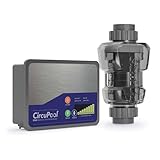
4. CircuPool EDGE40 – Highest Published Chlorine Output at 1.7 lb/Day
CircuPool EDGE40 Salt Chlorine Generator | USA-Made | 40,000 gal Max
40,000 gallon maximum
Up to 1.7 lb chlorine per day
7 year limited warranty
Automatic voltage sensing
Pros
- Highest published chlorine output in this roundup at 1.7 lb per day
- 7 year limited warranty with DIY coverage
- Automatic voltage sensing works on 120V or 240V
- Includes 2 inch PVC fittings and a cleaning cap
- Built-in diagnostics confirm chlorine generation is happening
Cons
- Professional grade pricing sits above generic salt generators
- Replacing a non-CircuPool unit means new plumbing in the cell loop
Output is the whole argument for the EDGE40. At up to 1.7 lb of chlorine per day from a long-lifespan titanium cell, it is the highest published production figure of any unit in this guide, and it is paired with a 7-year limited warranty. For a 40,000 gallon in-ground pool with a heavy bather load, that headroom is worth planning for.
The installation details are unusually well thought out. Automatic voltage sensing means the box adapts to either 120V or 240V supply, and the package includes 2-inch PVC fittings and a cleaning cap, so the parts you need for a standard 2-inch return line are in the box. Built-in diagnostics confirm that chlorine generation is actually occurring rather than just telling you the system is powered.
It is also made in America with IP-rated weatherproof outdoor electronics, which matters on a pad that sees full sun and standing rain all season. Compatibility with virtually any existing pump and filter is claimed, and the fitting kit supports that claim for standard plumbing.
At 4.2 stars from 67 ratings, roughly seven in ten ratings are five stars, and the sentiment centers on American manufacturing, output capacity and warranty length. The two consistent gripes are straightforward: it costs more than generic units, and swapping out a non-CircuPool cell means re-plumbing the loop.
When the extra output earns its place
Output headroom is most valuable in a large in-ground pool, a hot climate, or a house where the pool gets used daily. A cell that can push more chlorine at peak demand recovers faster after a storm, a party or a heavy rain week, and it gives you a shorter super chlorination cycle when you need one.
The 7-year warranty also compares favorably with the 8-year term on the CORE35, and both CircuPool units carry DIY coverage, which is unusual enough to matter. If you already have CircuPool hardware, this slots into the same ecosystem and the plumbing question disappears.
Who should skip it
A pool under about 20,000 gallons will not use 1.7 lb per day, and a smaller cell will do the same job. Owners replacing a Hayward or Pentair unit also need to budget for new plumbing in the cell loop, since the fittings are not shared across brands even when the pipe size is the same.
The smaller review pool compared with the Hayward also means less long-term owner data behind the electronics. For a large in-ground pool where chlorine headroom is the priority, though, this is the one to buy.
5. Troxlly TP30 – Best App Monitoring on a Retrofit Plumbing Layout
TP30 Salt Chlorine Generator for Pools up to 40,000 Gallons, Smart Salt Chlorinator with App Monitoring, ETL Listed, Auto Reverse Polarity Cell, Standard Plumbing Fit
Up to 40,000 gallons
App and panel monitoring
ETL Listed system
Retrofit plumbing fit
Pros
- App and panel monitor output salinity flow and water temperature
- Retrofit-ready plumbing layout reduces replumbing on compatible installs
- Transparent cell with automatic reverse polarity fights scale
- ETL Listed for applicable safety standards
- Strong value versus big brand wall mounted systems
Cons
- Cannot be installed vertically with a downward flow
- 2 inch unions only so smaller plumbing needs a separate adapter
- Salt readings reported 500 to 600 ppm off versus independent testing
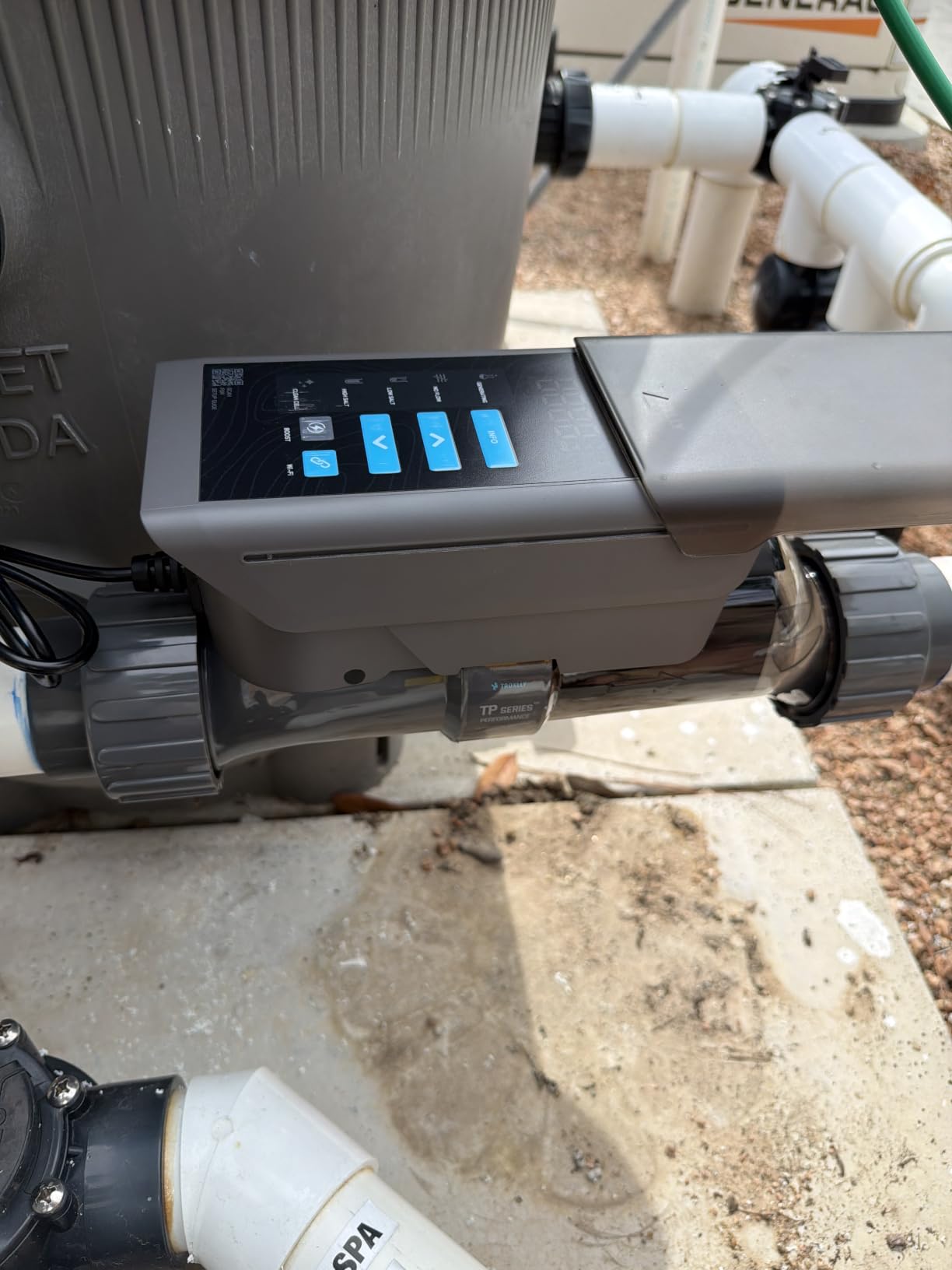
The TP30 is the pick if remote monitoring matters to you more than brand pedigree. A smartphone app plus the on-panel display report chlorine output, salinity, flow and water temperature, and the app carries system alerts. That is the level of visibility owners get from a full automation hub, without the hub.
The physical design is the other argument. The cell is transparent so you can watch it work, automatic reverse polarity strips scale, and the plumbing layout is retrofit-ready with a matching installed length and threaded unions. The listing states compatibility with Pentair IntelliChlor IC20, IC40 and IC60 plumbing layouts, which is a meaningful saving if your pool already has that footprint.
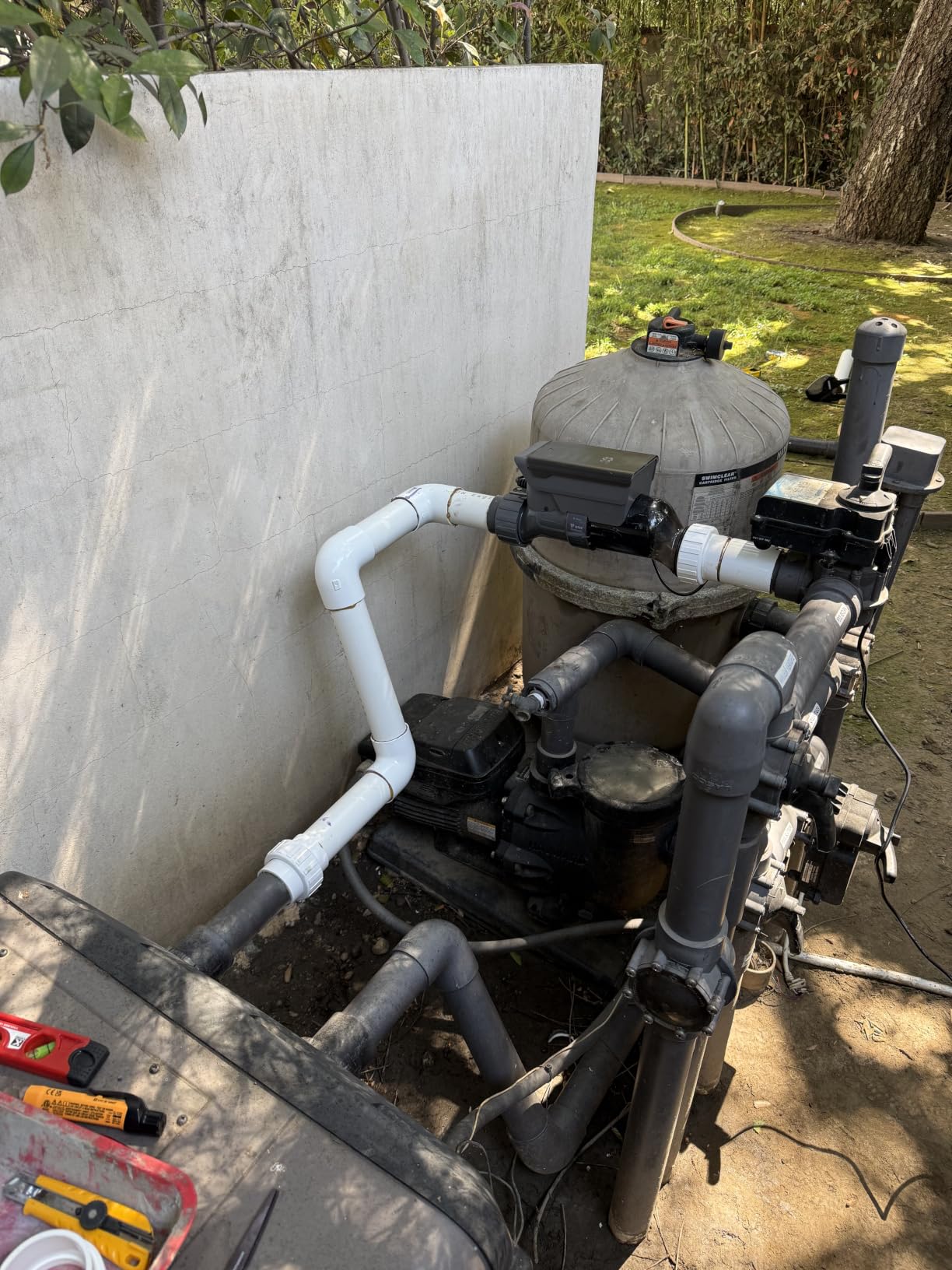
At up to 40,000 gallons it covers the full residential in-ground range. The system is ETL Listed for applicable safety standards, which is the certification mark to look for when a product is not from one of the three legacy equipment brands.
At 4.3 stars from 17 ratings, the reviews are young but consistent. Owners praise build quality, the app and the value relative to premium brands. The criticisms are specific and worth repeating: it cannot be installed vertically with a downward flow, and the unions are 2 inch only, so a 1.5 inch loop needs an adapter you source separately.
Why the retrofit layout matters more than the app
On an existing inground pool, the cell loop is the expensive part of the install. If the new cell matches the length of the unit already in your plumbing and uses threaded unions you already own, you are looking at a short swap rather than cutting into return piping and adding couplings.
The app is genuinely useful for seasonal owners who are not at the house daily, because it turns a silent fault into a notification. The caveat owners report is that the app can desync from the unit and that salinity readings have come in 500 to 600 ppm off against independent test kits, so verify with a real meter before you dose more salt.
Who should skip it
If your existing cell loop runs vertically with water flowing downward, this unit is not a candidate and you should look at a horizontal-mount design instead. Support is email-only with inconsistent response times, which matters if you want a company answer on a warranty claim, and the small review pool is thinner than the big three.
Owners who already have Pentair-style plumbing and a variable-speed pump are the ideal buyers, and anyone comfortable verifying salinity with an independent meter will be happy with the reporting.
6. Westaho EL-032 – Built-In Power Supply and a Cold Climate Cutoff
Salt Chlorine Generator, Westaho Pool Salt System for Inground Pools Up to 40,000 Gallons, 1.4 lb Chlorine Output, USA Titanium Cell with 10,000-Hour Lifespan, Built-in Power Supply
Up to 40000 gallons
Up to 1.4 lb chlorine per day
Built-in power supply
IP66 waterproof
Pros
- Built-in power supply removes the need for an external power unit
- Low temperature protection shuts the system down below 52F
- Cell uses 11 USA made titanium plates rated for up to 10000 hours
- Magnetic flow switch is more sensitive and durable than a mechanical switch
- Display shows salt level temperature cell usage voltage and current
Cons
- 1.4 lb per day output is modest for pools near the top of the 40000 gallon range
- Highest share of one-star ratings among the units we reviewed
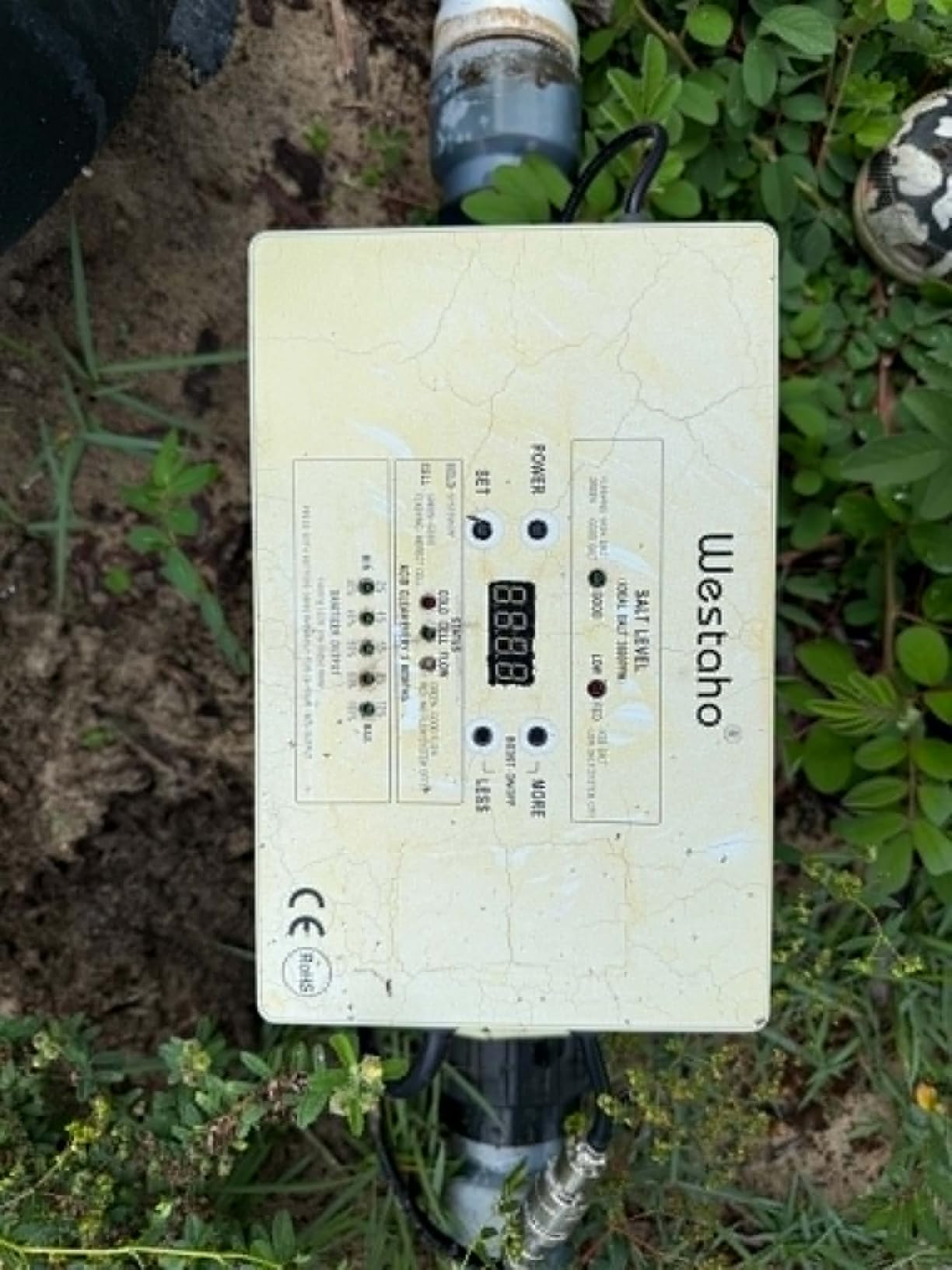
Two design choices set the EL-032 apart. The power supply is built into the unit, so there is no separate power box to mount, wire or find space for on a crowded pad, and the flow detection uses a magnetic flow switch instead of a mechanical one, which is the part most likely to stick or fail on a cheaper system.
It is also the most explicitly cold-climate unit in this roundup. Low-temperature protection shuts the system down below 52F, and the cell is built from 11 titanium plates made in the USA rated for up to 10,000 hours, roughly seven years. The IP66 waterproof rating is for year-round outdoor operation rather than a seasonal install.
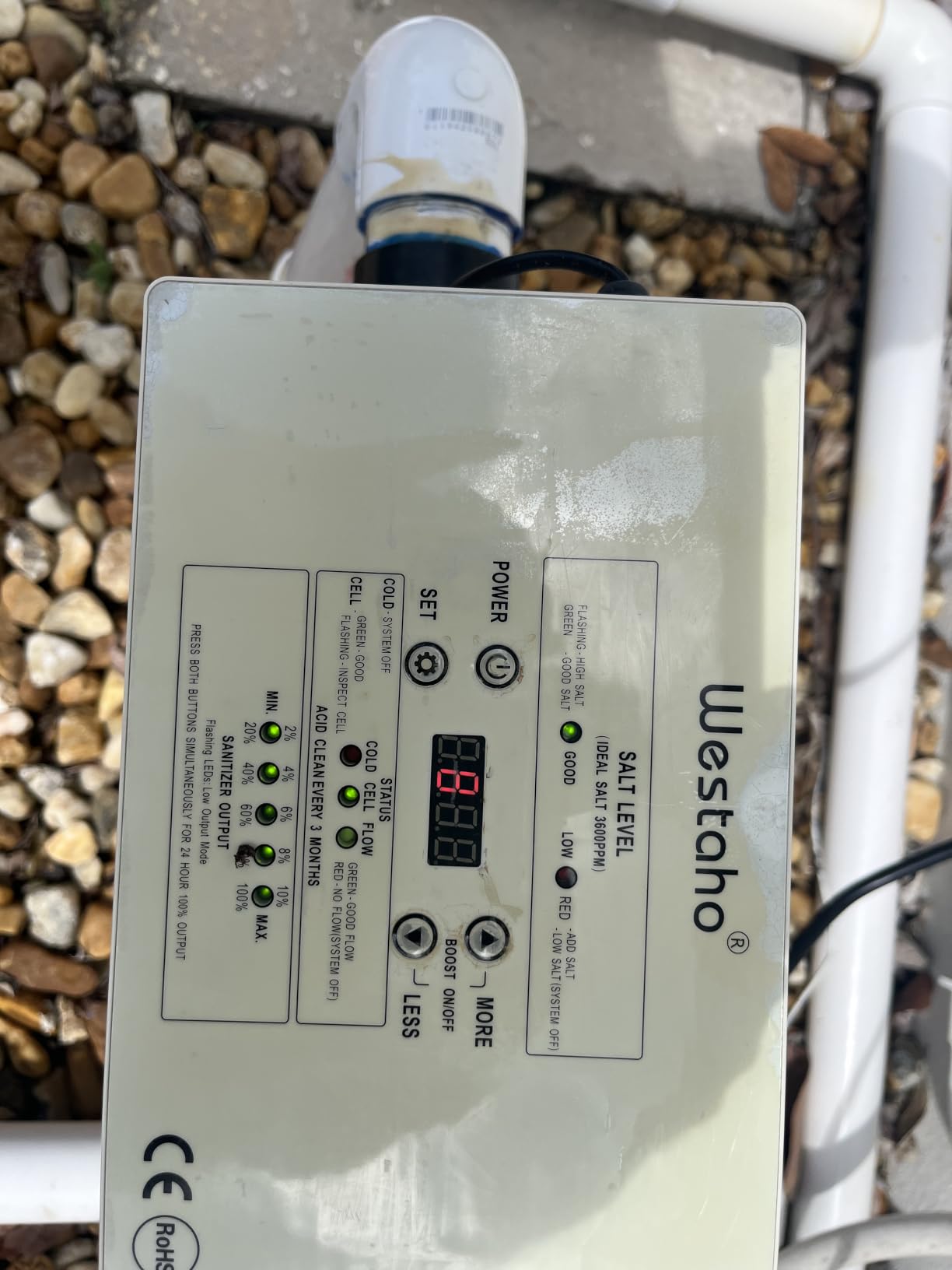
The display is informative for the price point: salt level, water temperature, cell usage, voltage and current, all in one readout. A 2-inch to 1.5-inch adapter is included, which is a small detail that saves a trip to the supply house on a pad plumbed with 1.5-inch pipe.
At 4.0 stars from 30 ratings, roughly one in five ratings is a single star, the highest one-star share we saw. Buyers like the built-in power supply, the monitoring and the long-rated cell. The complaints center on output adequacy for a pool at the top of the 40,000 gallon range and on how little history a newer brand has.
Why the temperature cutoff protects your cell
Chlorine production slows as water gets cold, and running a cell below roughly 52F wastes hours of rated cell life on very little output. A hard cutoff is the difference between a cell that sleeps in winter and one that burns rated hours producing almost nothing.
Owners in colder regions treat the cutoff as a genuine advantage, particularly when paired with a freeze-protected pad. The 10,000 hour rating is a manufacturer figure rather than an observed one, so treat it as a ceiling and expect less if your pool runs a long season at high output.
Who should skip it
A 40,000 gallon pool with a heavy bather load is a poor match, because 1.4 lb per day is not much headroom and the negative reviews point at exactly that. The brand is also newer, and buyers on forums raise a fair concern about whether a young manufacturer will still be shipping replacement cells in five years.
If you are on a tighter budget, in a cold climate, and installing on a pad with 1.5-inch plumbing, the built-in power supply and included adapter are real reasons to pick this one anyway.
7. EverCrystal ECLI40-1T – Best Cell Visibility and Real-Time Readings
EverCrystal Salt Water Pool Chlorinator System – Up to 40,000 Gallons
For in-ground pools up to 40000 gallons
Clear housing and self-cleaning cell
800 ppm salt calibration
Model ECLI40-1T
Pros
- Clear housing lets you visually confirm chlorine production
- Real-time display shows salinity voltage current temperature and cell operation
- Salt calibration to within 800 ppm for more accurate dosing
- Metal control box is sturdier than a typical plastic housing
- Plug and play install with union fittings and wall mount option
Cons
- Operating manual reportedly not included in the package
- Support channel is thin compared with established pool brands
- Only a 1 year warranty period
Most salt cells are a sealed black or grey canister. The EverCrystal has a clear housing, which means you can look at the plates and see bubbles forming, and the self-cleaning cycle works on the same visible cell. For an owner trying to learn what a chlorinator actually does, that transparency is worth more than it sounds.
The display is the strongest feature. It shows salinity, voltage, current, temperature and cell operation in real time, with built-in salt calibration of plus or minus 800 ppm, which is a meaningful improvement over a two-LED salt light that only tells you low or not low.
The build details are good for the money. The control box is metal rather than plastic, the install is plug-and-play with union fittings, and the unit can be wall-mounted instead of sitting on the pad. It is sized for in-ground pools up to 40,000 gallons and comes in white or clear with 25,000 and 40,000 gallon variants.
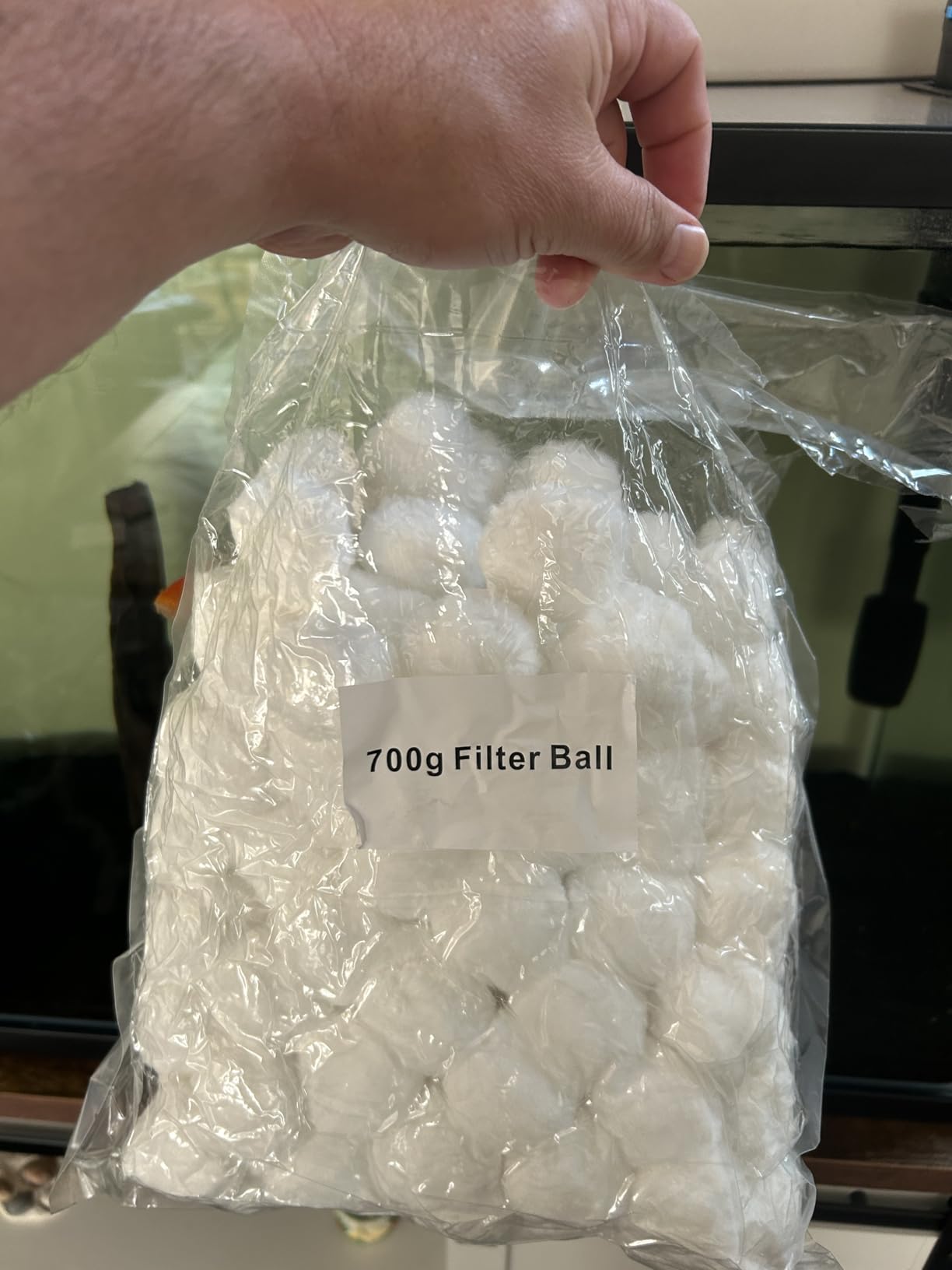
At 4.8 stars from 18 ratings, the rating is the highest in the roundup, but you should read the review pool carefully. A number of the reviews attached to this listing describe pool filter balls rather than the chlorinator itself, which inflates the apparent volume of owner feedback for the unit. What the chlorinator-specific reviews do say is positive.
Seeing the cell is a real maintenance tool
Scale on the cell plates reduces output, and the usual way you find out is a chlorine reading that will not come up no matter how high you set the percentage. A clear housing shortens that diagnosis, and the real-time current and voltage readouts tell you whether the problem is the cell or the water.
The 800 ppm calibration tolerance also matters for dosing. Coarse salt readings are a common source of over-salting or under-salting a new pool, and a display that narrows the tolerance helps you land inside the band on the first pass.
Who should skip it
The 1-year warranty is the shortest here by a wide margin, and the operating manual is reportedly not in the box, so plan on finding the documentation yourself. Support is thinner than the established brands, and the small review pool that is actually about this chlorinator is very small.
If you want a long warranty or a deep support bench, pick something else. If you want to see your cell work and you are comfortable with a newer brand, the visibility and the readout justify the pick.
8. Bonvoisin LC-300A – Finest Output Control and Both Pipe Adapters Included
Bonvoisin Salt Water Pool Chlorinator System Salt Chlorine Generator for Inground Pools Saltwater Pool System with Titanium Cell, LED/APP Control, Up to 40,000 Gallons Pool
Up to 40000 gallons
2.4 GHz app control
4.7 x 13 inch unit
7.2 pounds
Pros
- App control of chlorine production level and run time over 2.4 GHz WiFi
- Output adjustable from 5 to 100 percent in 5 percent steps
- Self-cleaning titanium plate reverses polarity every 4 8 or 12 hours
- Includes both 1.5 inch and 2 inch pipe adapters
- Compact unit mounts horizontally or vertically
Cons
- 2.4 GHz WiFi only
- which does not reach every home network
- Compact 4.7 x 13 inch cell may limit output at the top of its range
The Bonvoisin is the smallest and most adjustable unit here, and both of those facts matter on a crowded equipment pad. The generator measures 4.7 by 13 inches, the whole body weighs 7.2 pounds, and it mounts either horizontally or vertically, which gives you options when pad space is tight.
Output control is the detail that separates it. Chlorine production is adjustable from 5 to 100 percent in 5 percent steps, and a 2.4 GHz app lets you set the production level and the run time from your phone while also reporting water temperature and salinity. The self-cleaning titanium plate reverses electrode polarity every 4, 8 or 12 hours, and a cleaning icon flashes after 500 hours.
Plumbing is the other strength. Both 1.5 inch and 2 inch adapters are included, so an older pad with 1.5 inch pipe does not need a separate trip for a coupling, and the integrated LED and app controller runs the unit daily at a set time.
At 4.2 stars from 27 ratings, the sentiment is broadly positive on the all-in-one form factor, the adjustable output and the included adapters. The two gripes are the 2.4 GHz only WiFi band and the fact that a compact cell may not have enough output for a pool at the very top of the range.
Why 5 percent output steps are useful
Most chlorinators give you a handful of coarse settings. A 5 percent step means you can trim chlorine generation to match a real change in demand, which matters in a small in-ground pool where full output on a sunny day will push free chlorine higher than you want.
The reverse polarity schedule is also adjustable, so if your calcium hardness runs high you can set it to reverse more often and stay ahead of scale. The 500-hour cleaning reminder is a useful prompt for the seasonal muriatic acid soak described later in this guide.
Who should skip it
If your home network is 5 GHz only, the app will not connect and the LED panel is your only interface. A pool above roughly 30,000 gallons is also a stretch for a cell this compact, and the same 5 GHz limitation has been the most common complaint in the reviews.
For a mid-size in-ground pool on older 1.5 inch plumbing, with an owner who wants phone control and fine output adjustment, it is a good fit. Everyone else should weigh the output ceiling before buying.
How to Size a Salt Cell for Your Inground Pool?
Oversize your salt chlorinator. That is the single rule that shows up in retailer guidance and owner advice alike, and the standard multiplier is 1.5 to 2 times your actual pool volume. The reason is chlorine demand, not salt: a larger cell produces more per day, so it recovers faster after rain or a party and needs less pump runtime per week.
Worked out against the ratings in this roundup, here is what we would choose for common in-ground volumes. A 15,000 gallon pool is well served by a 25,000 gallon cell. A 20,000 gallon pool wants 30,000 gallons of capacity. A 25,000 gallon pool should step up to 40,000. A 30,000 gallon pool is served by a 40,000 gallon unit with realistic expectations on run time. A 40,000 gallon pool needs a unit rated for 40,000, and there is no oversize margin left above that.
Two more sizing inputs that get ignored. First, count the real volume, not the number on the brochure, and add for a raised waterline or a deep end. Second, factor bather load: a pool used every day in a hot climate generates far more chlorine demand per gallon than a seasonal pool, which is the argument for going to the top of a rating band rather than the bottom.
Finally, check the plumbing before you fall in love with a unit. Standard in-ground return lines are 2 inch, and several of the units below need a 2-inch to 1.5-inch adapter or a specific union type. Measure the space between your pump and the pool wall and confirm the cell length plus unions will actually fit.
Matching the Chlorinator to Your Pump, Automation and Power
Match the brand of your chlorinator to your pump and automation system. This is the compatibility rule that separates a clean swap from a re-plumb, and it comes down to three things: the control box mounting style, the plumbing footprint, and the power supply arrangement.
Split-box systems, which is the traditional Hayward and Pentair layout, put the cell in the return line and the control box on a wall with a multi-pin cable between them. That cable has to reach, which is why an eight-foot set-back between the box and the cell is a recurring install instruction. A plug-in or all-in-one unit has no such cable, so it is the easier option on an older pad with no available wall space.
Separate power centers are the other trap. Some chlorinators run a dedicated low-voltage supply that has to be mounted and wired to a dedicated circuit with a GFCI, while all-in-one designs fold the supply into the cell housing. If you already have a panel outlet within reach, a plug-in unit finishes the job; if you do not, budget for a new circuit before you buy.
If your pool already runs a full automation system, match the chlorinator to that controller rather than adding a second one. Owners on Trouble Free Pool and r/swimmingpools consistently recommend keeping one automation ecosystem rather than bolting an aftermarket unit onto a Hayward or Pentair network, because a mismatched controller is the classic source of integration arguments several years later.
Converting an Existing Inground Pool to Salt, Step by Step
Converting a chlorine pool to salt is more approachable than most people expect, but the order of operations matters. Get the salt concentration right before you start the cell, because a cell running on under-salted water will complain immediately and may shorten its own life.
First, measure your actual pool volume and choose a cell oversize by 1.5 to 2 times. Second, confirm the cell loop has room: measure the length of the existing plumbing run, check the pipe diameter, and verify you have two unions and enough clear space on the pad or wall. Third, confirm the electrical supply, including a GFCI-protected outlet and, for split-box units, a nearby wall location with the specified cable distance.
Fourth, drain the pool down for the conversion work and remove the old chemical dosing equipment, or bypass it rather than leaving a chlorinator feeding a cell. Fifth, plumb the cell into the return line in a horizontal flow orientation, following the manufacturer’s arrow. Sixth, add pool-grade salt to reach roughly 3,000 to 3,400 ppm, which usually takes several days of circulation and repeated testing to dial in.
Seventh, balance the water before the cell ever energizes, because freshly added salt and a brand-new cell will both stress unbalanced water. Eighth, start the cell at a moderate output percentage and let free chlorine build, rather than cranking it to 100 percent and hoping. Ninth, confirm the flow switch reads flow, then watch the fault indicators until the unit settles into a normal generating state.
Two cautions on new plaster. If your in-ground pool was just resurfaced, wait for the plaster cure to finish before adding salt, and if white flaking appears in the first weeks, the usual explanation is curing calcium precipitating against the cell rather than a defective unit. Owners on pool forums also note that salt pools are not maintenance-free: phosphates still need managing and salt pools still need shocking after storms.
Cell Care, Fault Lights and Troubleshooting
How to tell if a salt cell needs replacing comes down to four signals, in order of reliability. The first is rising free chlorine demand at maximum output: if the cell is set to 100 percent and your free chlorine will not hold, the plates are scaled or worn. The second is an inspect cell or service alert light. The third is a visible scale crust when you look at the plates. The fourth, for units with a meter, is the cell usage or lifespan readout.
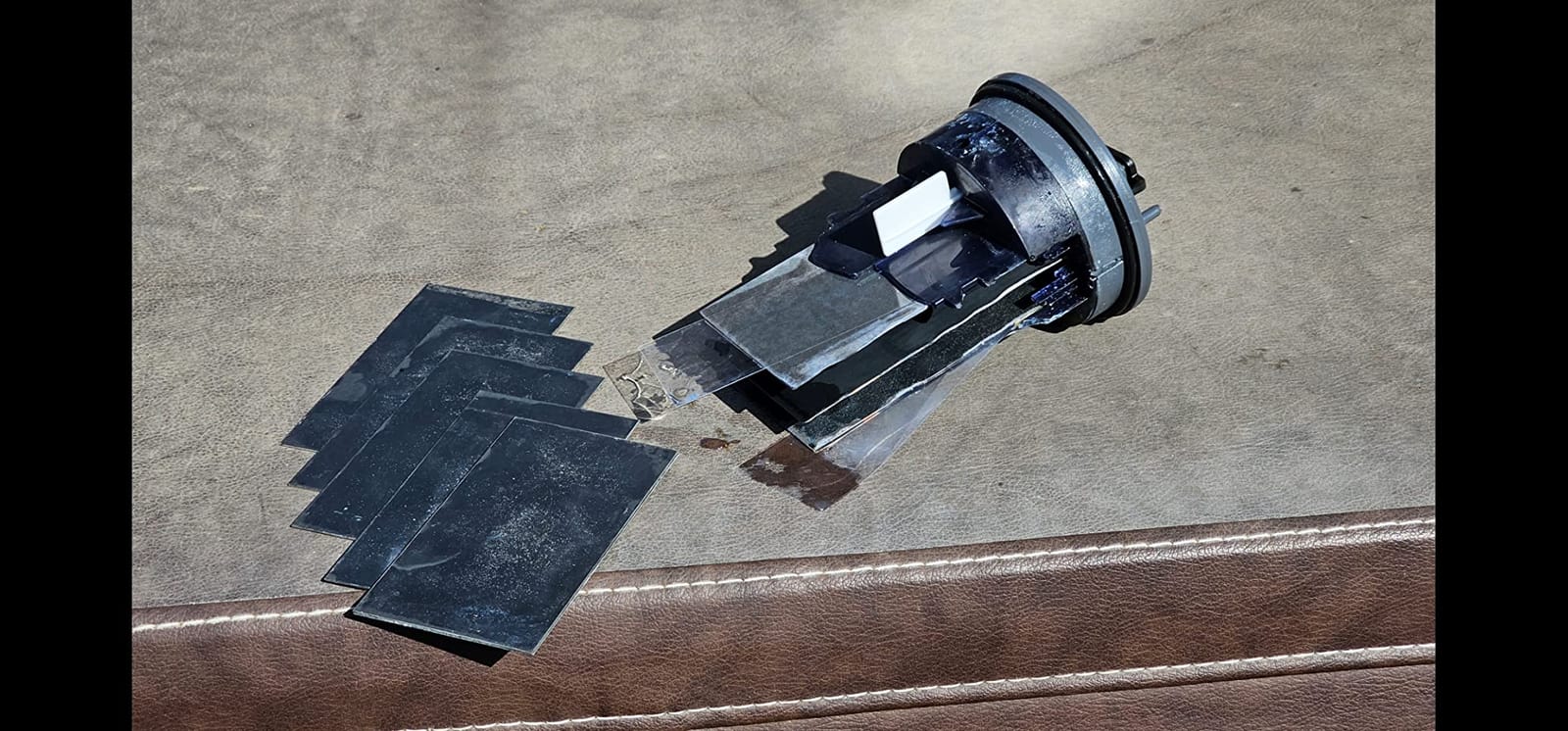
Before you buy a replacement, clean the cell. Take it out of the unions, soak it in a solution of roughly four parts water to one part muriatic acid, scrub the titanium blades with a nylon brush, rinse thoroughly and reinstall. Owners routinely recover several months of output from a soak, and it is the cheapest intervention available. Never use metal tools or a wire brush on titanium.
On the fault side, the most common states across these brands follow a pattern. A no-flow indication almost always means the pump is off, the filter is clogged or the cell loop valve is shut, not that the cell is dead. A low or high salt reading usually means the salt sensor is uncalibrated or the salt is genuinely outside the band. A temperature indicator in cold weather is the unit protecting itself, and the fix is not a repair.
The failure people do not expect is the electronics. Owners on forum threads report control boards and power supplies dying at two to three years while the cell was still good, and dead LED panels with no power despite a good fuse. That is the argument for buying a unit with a longer warranty on the electronics, and it is the single most useful warranty term to compare when shopping.
Cell life is usually quoted in hours, and 10,000 hours is a common ceiling. Translate that into calendar years by how long you run your pump: a pool circulating eight hours a day will consume rated cell hours much faster than a pool on a four-hour cycle. Expect to plan a cell replacement somewhere between year three and year seven, and check your calcium hardness, because hard water scales the plates faster than soft water.
The Only Salt You Should Put In the Pool
Use pool-grade sodium chloride at 99 percent purity or better, and nothing else. This is where a lot of published salt advice goes wrong, so it is worth being precise. The bag should say sodium chloride, be food grade or pool grade, and be free of iodine, anti-caking agents, yellow prussiate of soda and any added fragrance or colorant.
Never use water softener pellets. They are not the same product, they dissolve unpredictably and they can leave residues that no salt cell will tolerate. Coarse solar salt and rock salt are also wrong, even though some guides recommend them, because impurities and anti-caking additives accumulate in the cell. If a bag does not say sodium chloride with a purity figure, do not put it in the pool.
Target roughly 3,000 to 3,400 ppm salinity, which is about the saltiness of human tears, which is why swimmers do not perceive the pool as salty. If your chlorinator has a display, use it for a first read, but confirm with an independent meter or a proper titration test before adding more, since displayed readings on several of the units above have been reported off by several hundred ppm.
Frequently Asked Questions
What size salt cell do I need for my inground pool?
Oversize by 1.5 to 2 times your actual pool volume. A 15,000 gallon pool suits a 25,000 gallon cell, a 20,000 gallon pool suits 30,000 gallons of capacity, and a 25,000 to 30,000 gallon pool should step up to a 40,000 gallon unit. A pool already at 40,000 gallons has no oversize margin left, so buy the highest rating you can find.
How long does a salt cell last, and how do I know when to replace it?
Cells are usually rated near 10,000 operating hours, which works out to roughly three to seven calendar years depending on how long your pump runs daily. Replace when free chlorine will not hold at 100 percent output, when an inspect cell alert appears, or when you see scale on the plates. Clean the cell in a diluted muriatic acid soak before buying a replacement, since scale mimics a dead cell.
Do I need a separate power center for a salt chlorinator?
It depends on the design. Split-box systems use a separate power center that mounts on a wall and feeds the cell low-voltage current, and it must sit within the cable length the manufacturer specifies. All-in-one and plug-in designs fold the power supply into the cell housing, so no separate box is needed. Check the installation sheet before you plan your pad layout.
What are the most common problems with salt water chlorinators?
The most common issues are scale buildup on the titanium plates, which cuts chlorine output and is fixed with a diluted muriatic acid soak, and a salt sensor reading that is uncalibrated. Control boxes and circuit boards are the most common failure point over time, often at two to three years, while the cell itself usually lasts much longer. No-flow and low-temperature alerts are usually protective, not faults.
Can I install a salt system myself without voiding the warranty?
It depends entirely on the brand’s policy. CircuPool publishes an 8-year and a 7-year limited warranty that explicitly covers self installers, which is why both of its units earn recommendations here. Other brands require installation by an authorized dealer, and owners report difficulty getting warranty service otherwise. Confirm the DIY policy in writing before you buy, not after.
Is a salt pool cheaper than a chlorine pool?
Over time, usually yes. A salt system makes its own chlorine from salt you buy in bulk, so you stop paying premium prices per pound for liquid chlorine and stop handling it. The offsetting costs are the system itself, a cell replacement every three to seven years, and roughly 500 watts of extra electricity while the cell runs. You still balance the water and still shock after storms.
Final Verdict: Which Inground Pool Chlorinator to Buy
If you want one answer, take the Hayward AquaRite W3AQR15. It is rated for in-ground pools up to 40,000 gallons, drops into an existing loop without extra plumbing, and has the deepest owner review history of anything in this roundup, which matters when your control box fails in year three. Oversize it if your pool is smaller than its rating suggests, and match it to existing Hayward equipment if you can.
If you are installing it yourself and refuse to lose warranty coverage over a weekend project, take the CircuPool CORE35. The 8-year warranty that survives DIY install is the deciding factor for most people, and 1.4 lb per day covers pools up to 35,000 gallons. Go to the EDGE40 instead if you need 1.7 lb per day of headroom on a 40,000 gallon pool.
If you want the least invasive install and you have a 110V outlet on the pad, take the APX Performance E-CHLOR for a pool up to 32,000 gallons. If you want app control, the Troxlly TP30 is the better pick but only if your cell loop is horizontal. If you are in a cold climate with 1.5 inch plumbing, the Westaho EL-032 solves the adapter and power supply problems in one box.
Whichever one you choose, get the volume right, buy 99 percent pure pool-grade salt, and clean the cell once a season. Those three habits matter more to how long the system lasts than the badge on the box.