
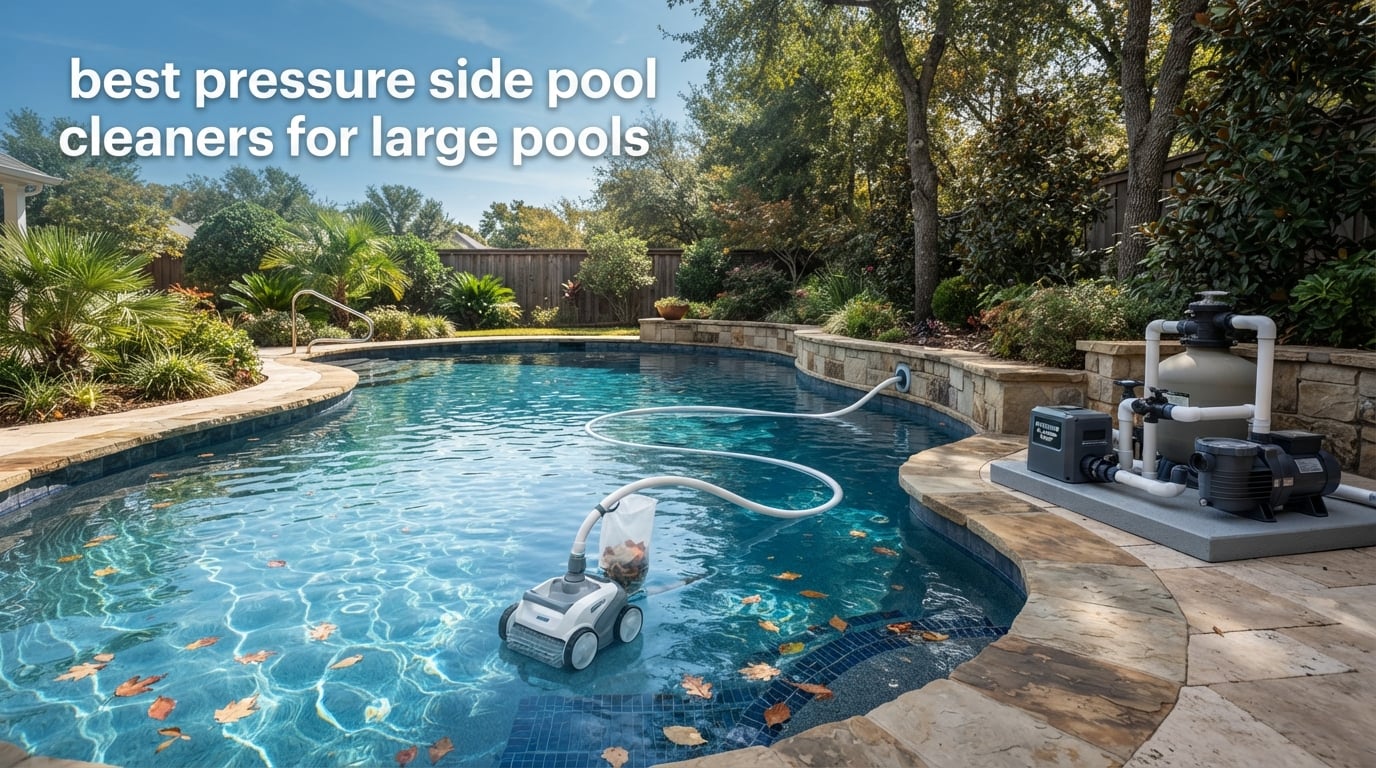
A pressure side pool cleaner is an automatic cleaning device that attaches to your pool’s water return line and uses water pressure to scrub surfaces and trap leaves in an attached bag. That one sentence covers the mechanism, but it leaves out the part that actually decides your purchase: whether the cleaner can cover a big pool in one cycle without tangling, filling its bag, or needing a second pump plumbed into your equipment pad.
We updated this roundup in 2026 after working through the specs, the owner reviews and the plumbing prerequisites of every pressure side unit we could verify for a large in-ground pool. The category is smaller than the marketing suggests. Amazon’s live catalog carries only a handful of genuinely distinct pressure-side cleaners right now, and everything else that ranks for this query is a suction-side unit, a robot, a replacement part, or the same machine under a different badge.
So rather than pad the list to hit a round number, this is the honest set. We also include one suction-side cleaner, because a common mistake among large-pool owners is buying suction for leaf load and then wondering why the cleaner stalls on the main drain. If your pool collects twigs and acorns, that mistake is expensive. The other five are true pressure-side units, and each one is labeled with whether it needs a booster pump.
Table of Contents
Top 3 Pressure Side Pool Cleaners for Large Pools (October 2026)

Polaris Vac-Sweep 280
- 2.25-inch inlet for large debris
- 31 feet of feed hose
- Cleans in 3 hours or less
- Works on vinyl
- fiberglass
- gunite
- pebble and tile

Polaris Vac-Sweep 380
- Triple venturi jets
- 2.25-inch inlet
- 3 hour floor and wall cycle
- 31 feet of feed hose

MAKHOON MPC2 Pressure Sweeper
- Four-wheel base
- Needs 1.5 inch inlet at 4 bar
- Adjustable backup valve jet direction
Two Polaris units and one four-wheel sweeper make the top three, and that tells you something about the category. The Polaris 280 earns the Editor’s Choice on the strength of the largest review base in the group and the highest average rating in the roundup. The 380 trades a little of that reliability margin for noticeably stronger suction. The MAKHOON makes the list because its adjustable jet direction is a deliberate answer to the tangling problem that owners complain about most.
Pressure Side Pool Cleaners for Large Pools in 2026
| Product | Specs | Action |
|---|---|---|
| Polaris Vac-Sweep 280 |
|
Check Latest Price |
| Polaris Vac-Sweep 380 |
|
Check Latest Price |
 Pentair Kreepy Krauly Kruiser K60430 Pentair Kreepy Krauly Kruiser K60430 |
|
Check Latest Price |
| MAKHOON MPC2 Pressure Sweeper |
|
Check Latest Price |
 Polaris Vac-Sweep P39 Polaris Vac-Sweep P39 |
|
Check Latest Price |
 Pentair Kreepy Krauly Platinum LL505PMG Pentair Kreepy Krauly Platinum LL505PMG |
|
Check Latest Price |
Every unit in that table except the Kreepy Krauly Kruiser needs its own water source at the pool wall. That single column, whether a booster pump is required, splits this list into two groups that behave nothing alike, so we walk through it properly below the reviews.
1. Polaris Vac-Sweep 280 – the confident all-rounder for big in-ground pools
Polaris Vac-Sweep 280 Pressure-Side In-ground Pool Cleaner
2.25-inch inlet
31 ft feed hose
6.2 lb body
3 hour cycle
Single chamber bag
Pros
- 2.25-inch inlet swallows leaves and acorns whole
- Cleans an entire in-ground pool in about 3 hours
- Works on vinyl
- fiberglass
- gunite
- pebble and tile
- 31 feet of feed hose included
- Holds the #1 best sellers rank in Pressure Pool Cleaners
Cons
- Requires a separate Polaris booster pump to operate
- Installation is generally professional rather than a plug-in setup
- Single chamber bag needs frequent emptying on leaf-heavy pools
This is the cleaner we keep coming back to for large in-ground pools, and the reason is unglamorous: volume of feedback. It carries 5.4k+ reviews and the highest average rating of anything in this roundup, and when we read the complaints the pattern is consistent rather than alarming. Owners report reliable whole-pool cleaning on a three-hour cycle, and the review summary for the 280 says 84% of reviews are four and five stars, so the complaints that do appear are scattered rather than concentrated.
The mechanical side is simple in a way that matters. Dual venturi jets give it enough thrust to move a loaded bag across a deep end, and the 2.25-inch inlet is the width that decides whether a wet oak leaf goes in or rides around the shell. The 31 feet of feed hose is sized to reach a wall fitting on a 20×40 pool with slack to spare, which is the sizing sweet spot for large residential work.
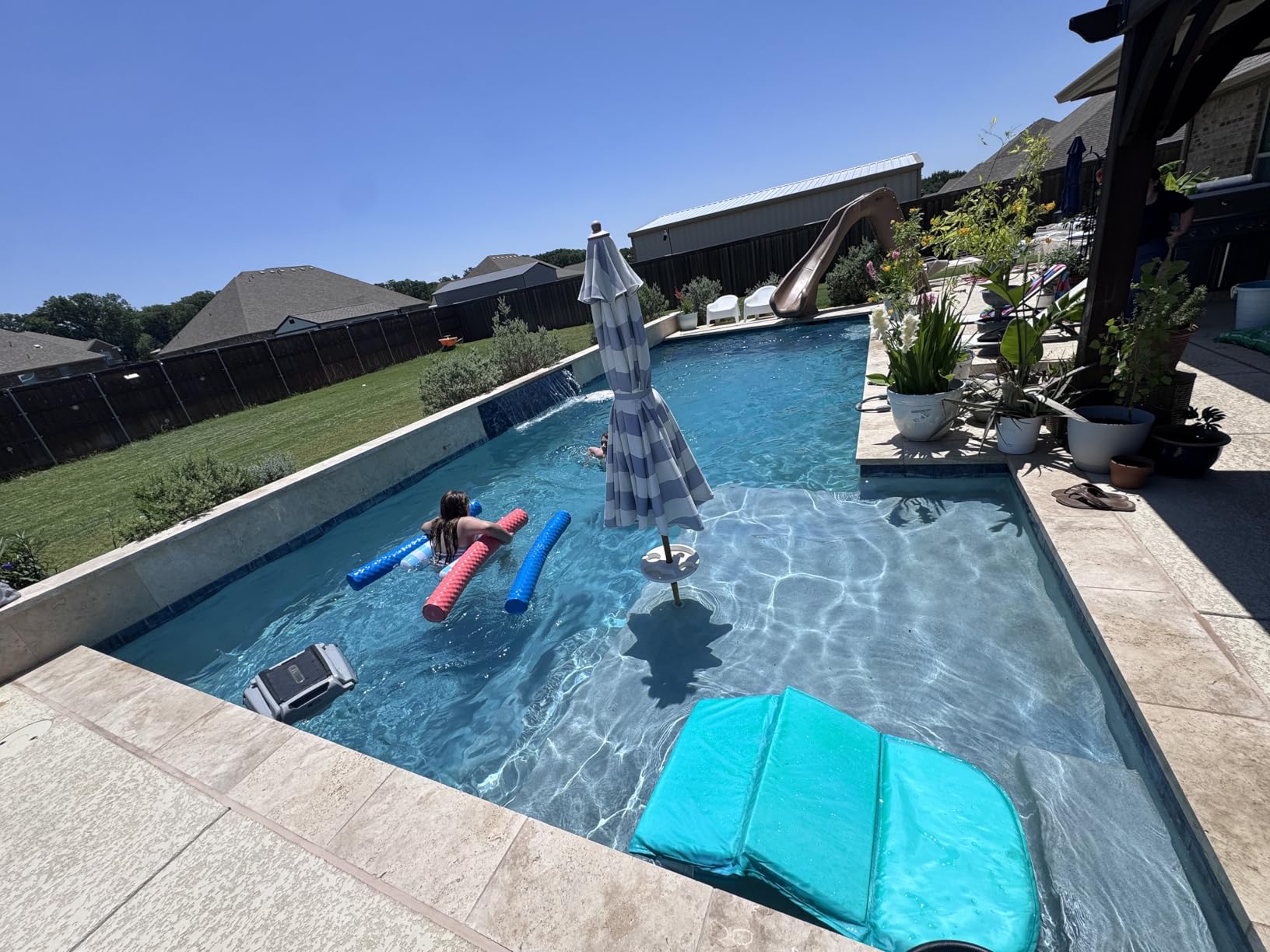
Where it earns its keep on a large pool is the surface list. Polaris rates it for vinyl, fiberglass, gunite, pebble and tile, so nobody has to guess whether their finish is approved. It sweeps and scrubs floors and walls rather than the floor alone, and at a listed 6.2 pounds it is manageable to lift out for a bag clean, which matters more than it sounds in shoulder season.
The single chamber bag is the real limit. There is one bag, not two, so a heavily wooded lot will fill it faster than a dual-chamber design and you will be swimming over to the cleaner more often. We also want to be straight about the installation: the listed installation type is professional, because the booster pump connection is plumbing and electrical work, not a plug-in.
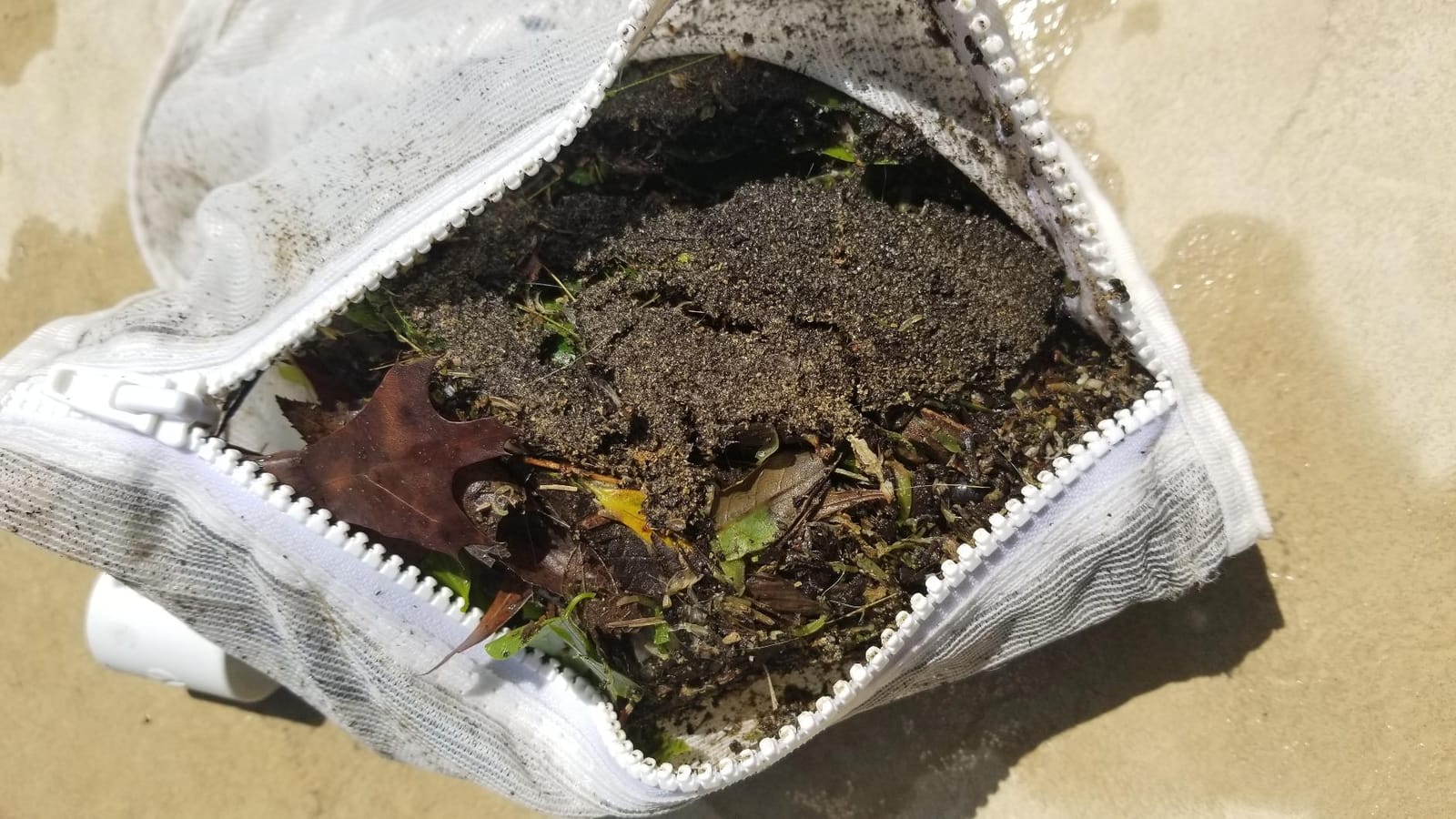
What you get with the 280 at the equipment pad
You get the cleaner, 31 feet of feed hose and a single chamber filter bag. You do not get the booster pump, and the model number is F5 if you need it for parts. The body measures 23 by 20 by 10 inches.
On a large pool, most owners settle into a daily or alternate-day schedule rather than a single weekly run, partly because the bottom circulation helps with algae and partly because the three-hour cycle is short enough to fit around a work schedule. Reviewers also credit the single bag for catching both fine sediment and whole leaves.
Who should skip the 280
Skip it if you will not install a booster pump, because it will not move without one. Skip it if your pool collects a heavy weekly leaf load and you are not willing to empty the bag midweek, since one chamber fills faster than two.
Skip it if you need a dedicated wall climber on a steep-sided deep end, because the 280 is rated to scrub floors and walls rather than climb them. And skip it if you want the newest hardware; this design has been in the catalog long enough that it is proven rather than exciting.
2. Polaris Vac-Sweep 380 – more vacuum power for floor and wall coverage
Polaris Vac-Sweep 380 Pressure Side Pool Cleaner, Triple Jet Powered
Triple venturi jets
2.25-inch inlet
31 ft feed hose
9.75 x 20 x 22.5 in
Pros
- Triple venturi jets pull harder than dual-jet Polaris models
- Covers floors and walls in about 3 hours
- 2.25-inch inlet handles large leaves
- User-installable and self-propelled
- Same 31 foot feed hose length as the 280
Cons
- Requires a separate booster pump
- Single chamber bag fills quickly on debris-heavy pools
- Weaker durability profile than the 280 in owner reviews
The step up from the 280 is the jet count, and on a large pool that difference is not cosmetic. Three venturi jets instead of two gives noticeably stronger vacuum power, and the result is faster floor and wall coverage on pools with a lot of surface area to cross. Roughly 77% of its reviews sit in the four and five star range.
Everything that makes the 280 a safe pick carries over. Same 2.25-inch inlet for large debris, same 31 feet of feed hose, same in-ground surface compatibility across vinyl, fiberglass, gunite, pebble and tile. The model number is F3, and it is listed as user installed and self-propelled, which is unusual for a pressure-side machine in this bracket.
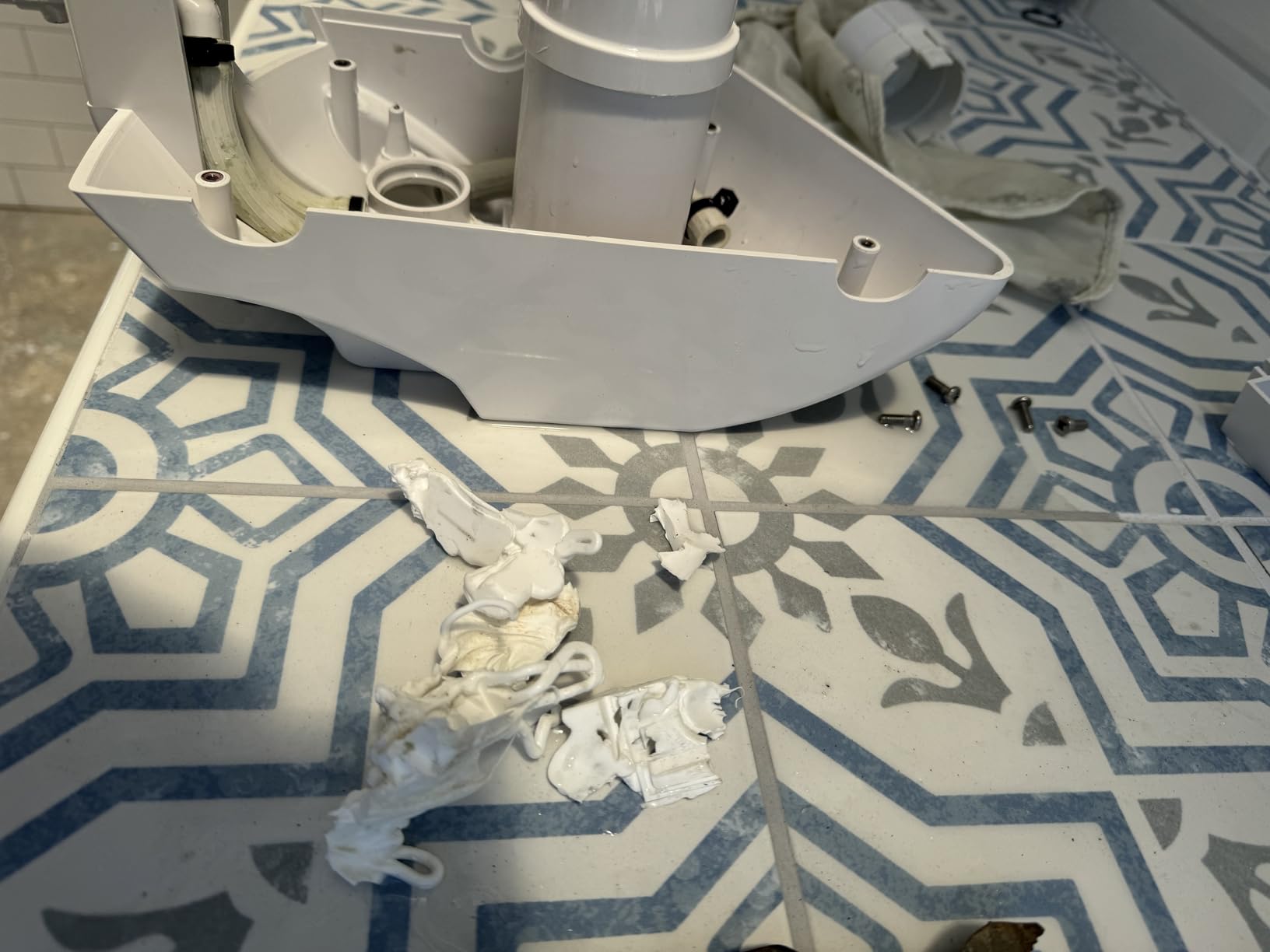
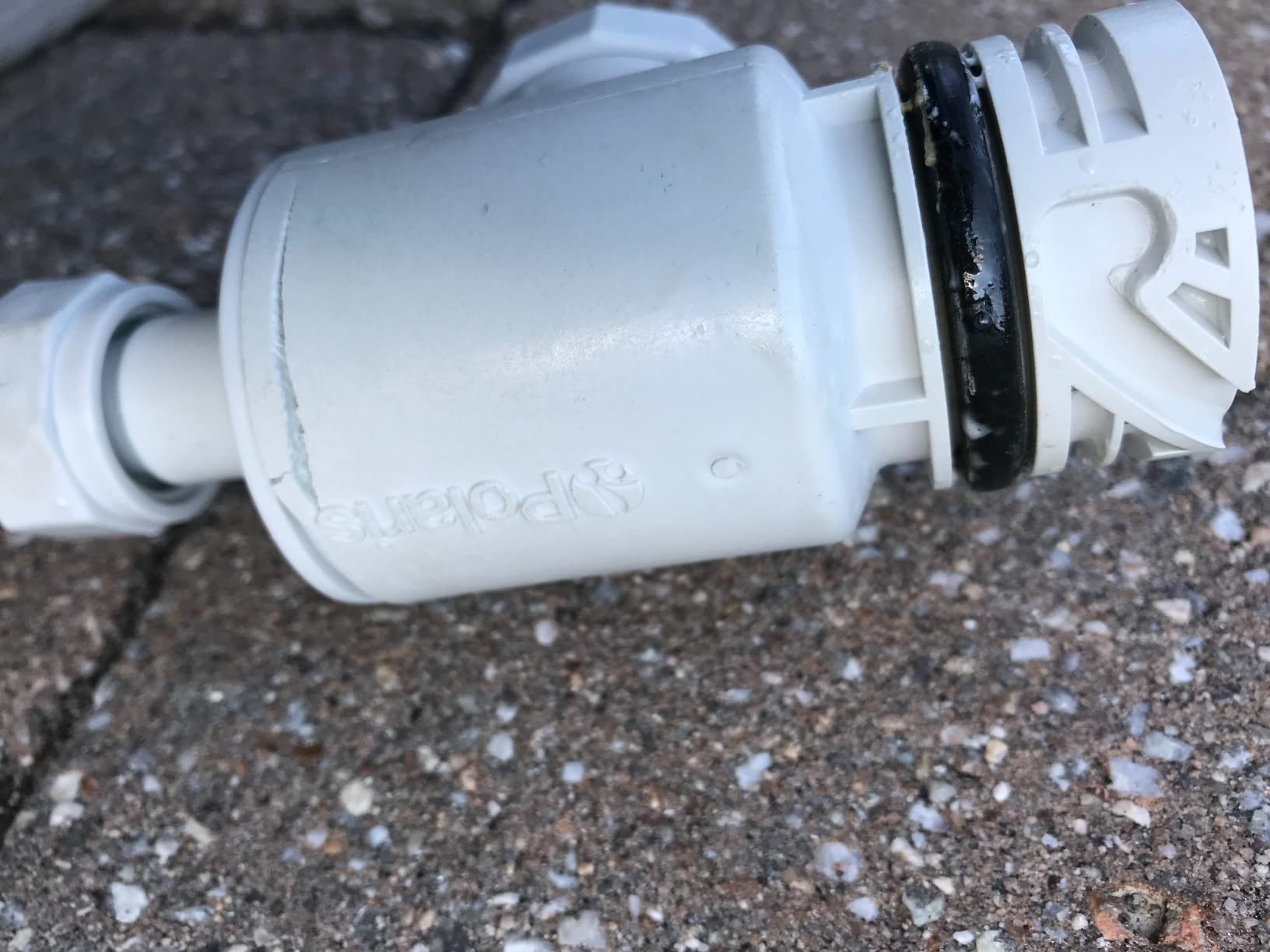
The durability picture is where the 380 trails its cheaper sibling, and reviewers are open about it. About 13% of reviews are one star, and those complaints cluster around long-term wear rather than cleaning performance. If you keep a pressure-side cleaner for five or six seasons, that difference compounds.
For a very large pool where suction power is the binding constraint, though, that tradeoff can be worth taking. The body is a boxy 9.75 by 20 by 22.5 inches, so it is taller than the 280, and the included components list the cleaner only, so confirm the feed hose is in the box before you plan the plumbing run.
When the 380 beats the 280
It beats the 280 when your pool is at the upper end of large, when the surface is gunite or tile with lots of grout lines to scrub, or when you run it on a shorter schedule and need the extra suction to finish. Triple jets pull harder through a loaded bag, which is exactly the situation on a leaf-heavy cycle.
It also wins on installation flexibility. This one is listed as user installed, so an owner who is comfortable with a garden hose and a wall fitting can set it up without scheduling a technician, as long as the booster pump is already plumbed.
When the 280 is the smarter buy
Buy the 280 instead if reliability over a long ownership horizon matters more than cycle speed, or if your pool is large but not enormous. It carries more than five times the review volume of the 380 and a better average rating, and that is the single best predictor of how your own unit will behave in year four.
Buy the 280 if you want the deepest parts catalog for the platform. A well-worn model is easier to find replacement bags and jet assemblies for than a newer listing with a thin sales history.
3. Pentair Kreepy Krauly Kruiser K60430 – the suction-side cross-check
Pentair K60430 Kreepy Krauly Kruiser Automatic Inground Pool Cleaner
Suction-side unit
Wide mouth intake
32 ft hose
18 lb
Climbs walls
Pros
- Wide mouth intake takes large and small debris
- Climbs pool walls for extra scrubbing
- Only one moving part so maintenance is minimal
- Integrated bumper with no removable wings
- 32 feet of hose for larger in-ground pools
Cons
- Manufacturer lists it as suction-side
- not pressure-side
- Needs a few tuning sessions before it runs correctly
- Can hang on the main drain or stick at steps
- Hose can kink in shallow ends
Before anything else, the honest disclosure: Pentair’s own product data lists the K60430 Kreepy Krauly Kruiser as a suction-side cleaner, not a pressure-side unit. It is in this roundup because a lot of large-pool owners buy it expecting pressure-side behavior, and understanding the mechanical difference is more useful than quietly leaving it out.
The distinction is mechanical and it decides everything downstream. A suction-side cleaner hangs off the skimmer or a dedicated vacuum port and uses your filter pump’s suction to pull debris in, with a diaphragm as its only moving part. A pressure-side cleaner is pushed along by a water jet and holds its debris in a bag. That means the Kruiser loads your main filter, and it will not handle the whole-leaf debris that makes people choose pressure-side in the first place.
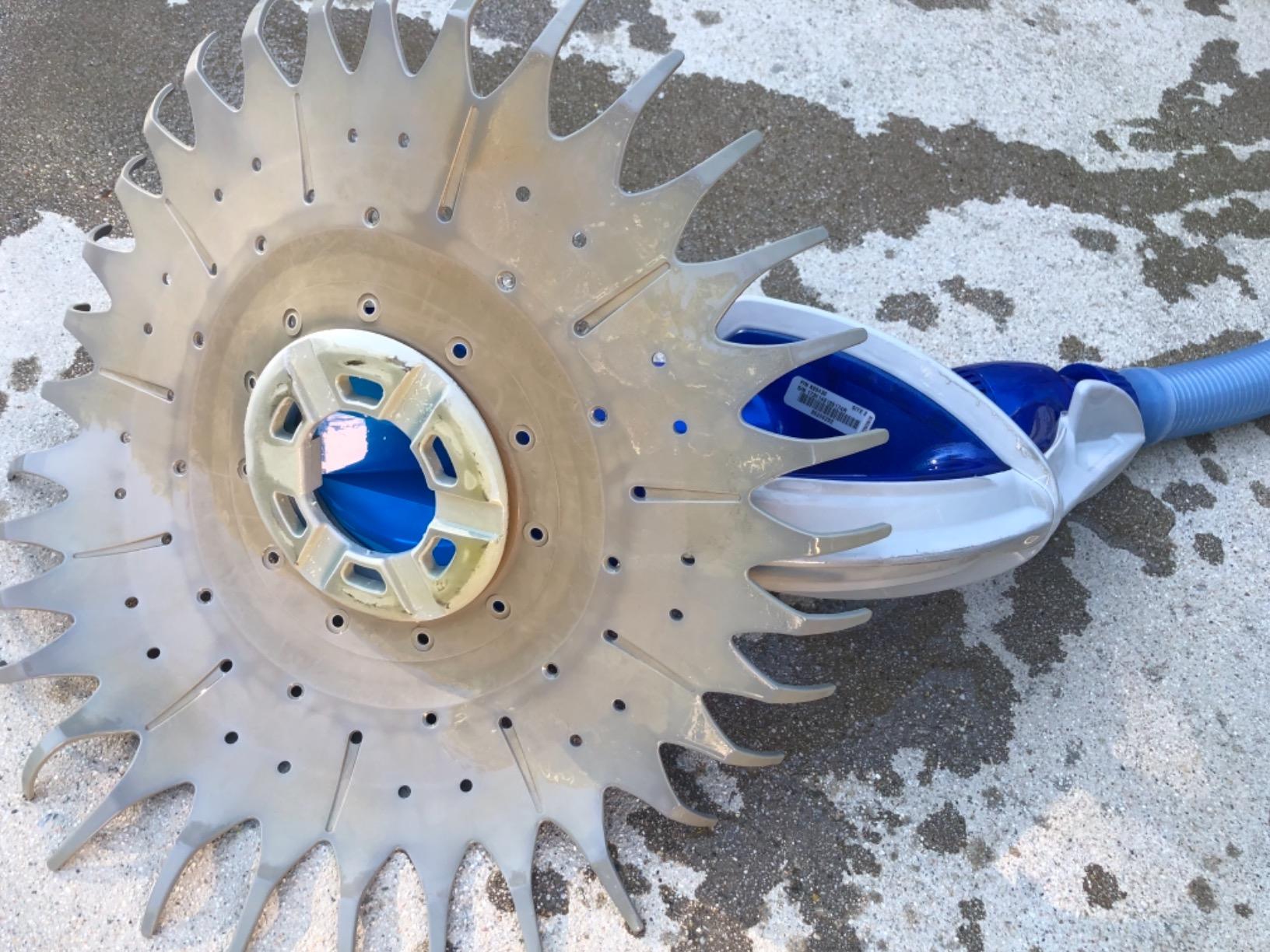
Where it earns a place is wall climbing and low upkeep. Owners report that it climbs pool walls for extra scrubbing, runs quietly compared with older Kreepy Krauly models, and needs little service because the single moving part is the diaphragm. It has 32 feet of hose, which is sized to reach a wall fitting on most large in-ground pools, and it is rated for 4.2 stars across 794 reviews.
The catch is setup patience. Reviews repeatedly describe a tuning period where you adjust the water flow attachment and the hose weight before it will track properly, and that can take a few sessions. Owners also report occasional sticking at steps, near the main drain, and hose kinking at the shallow-to-deep transition, which is a common complaint in shallow-end geometry.
When the Kruiser is the right tool for a large pool
Choose it when your pool has a steep wall transition and you want genuine wall scrubbing, or when wall climbing is a priority you cannot get from a floor sweeper. Quiet operation and a single moving part matter if the cleaner runs daily in a pool near a bedroom wall.
Choose it when debris is small. Sand, silt and moderate sediment are exactly the debris a suction unit with a wide mouth intake is built for, and in that use case loading the filter is a fair trade rather than a flaw.
When it is the wrong tool for a large pool
Do not choose it for a leaf-heavy pool. Whole leaves and twigs are the failure case for suction-side units, and a large pool with overhanging trees produces exactly that. It also cannot run without your main pump drawing suction, so it competes with filtration and water chemistry work on the same run time.
And do not choose it expecting pressure-side benefits you have read about elsewhere on the internet. The debris bag, the booster pump independence and the main-filter protection are all features this machine does not have. A TroubleFreePool discussion recommends the Zodiac G3 alongside pressure-side models for large debris, which is the same lesson in a different package.
4. MAKHOON MPC2 – four-wheel traction for rough and older pools
MAKHOON Upgrade Pool Pressure Side Sweeper: Professional Solution for Cleaning Your Swimming Pool (Four Wheels are Better Than Three) Need 1.5″ Female Thread Pool Booster Pump Inlet, 4 Bar Pressure
Four-wheel base
1.5 inch inlet at 4 bar
Adjustable backup valve
8.19 kg
Pros
- Four-wheel base holds traction better than three-wheel sweepers
- Covers more ground per pass on long pool passes
- Upgraded hose and component plastics reported to hold up
- Jet direction adjustable to suit the pool layout
Cons
- Needs a 1.5 inch female thread inlet at 4 bar
- Plumbing and booster pump install can be time-consuming
- Quality and missing-parts complaints in a share of reviews
- Hose arrives coiled and needs a day or two to relax
This is the budget end of the pressure-side category and the one unit here described as a four-wheel design. That extra wheel matters on a large pool with a rough or patched floor, where a three-wheel sweeper can hop or lose contact, and reviewers single out the traction and the long cycles as the reason they keep it running.
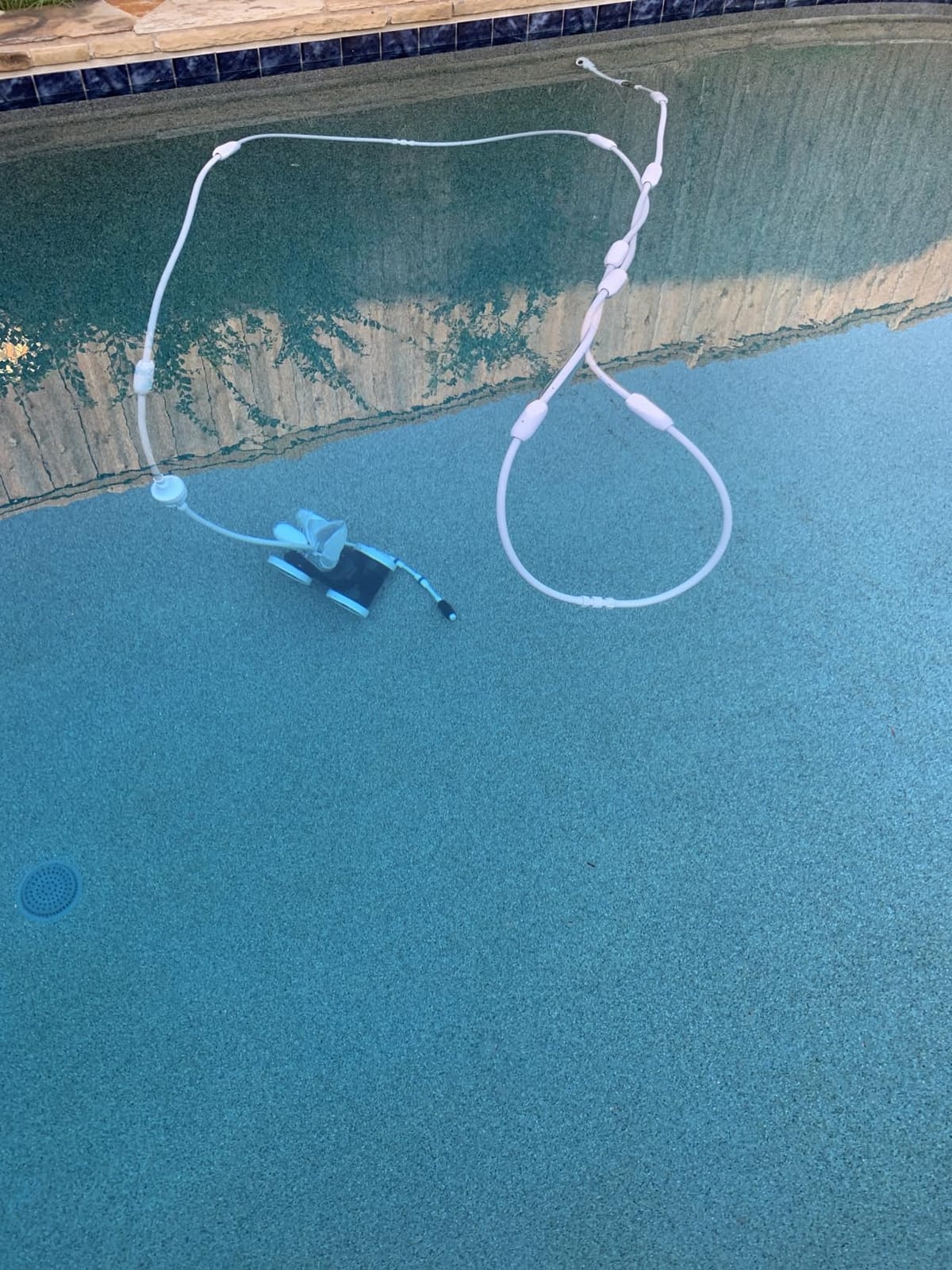
The adjustable backup valve is the feature we would point an owner toward first. By changing the valve orientation you change the jet direction, which is a direct mechanical answer to the tangling complaint that shows up again and again in pool forums. It is not a guarantee against tangling, but it gives you a tuning knob that most units in this price range simply do not offer.
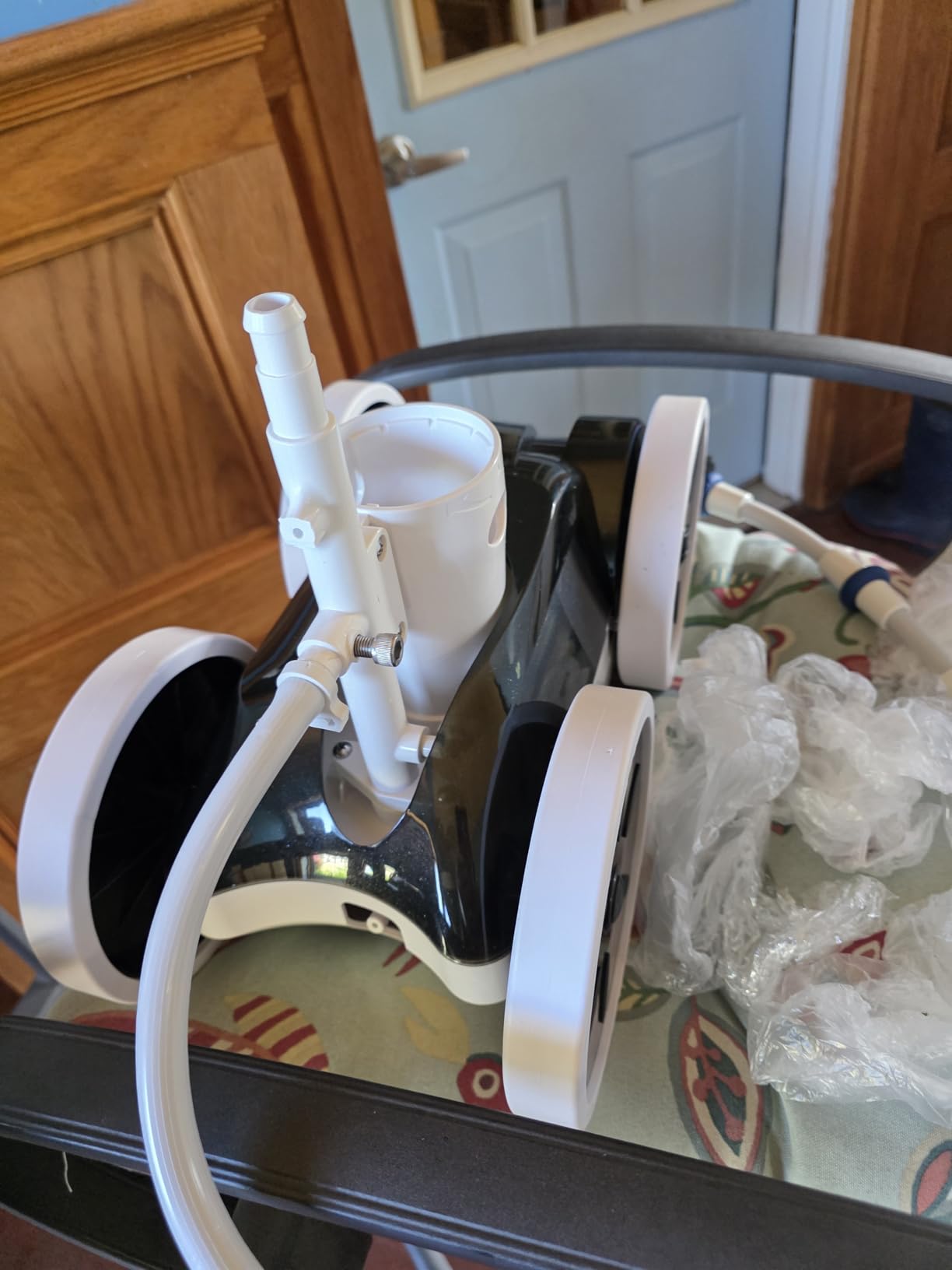
The prerequisites are the reason this one does not rank higher. It requires a dedicated 1.5-inch female thread water inlet and 4 bar of pressure at that inlet, which is a specification check, not a preference. Plenty of older pools already have exactly that plumbing, and for those pools the install is close to a hose and a fitting. Newer pools often do not, and the install can be time-consuming and costly.
Reliability is average at 3.9 stars across 394 reviews, with 70% of reviewers in the four and five star range. The failure reports lean toward build quality and missing components rather than cleaning failures. One practical note: the hose arrives coiled, and owners report leaving it in the sun for a day or two to relax before connecting it.
Where the MAKHOON earns its place
It is a sensible pick for a large older in-ground pool that already has 1.5-inch threaded plumbing and a booster pump, especially if your floor surface is rough enough that traction is the limiting factor. Long passes down a 40-foot pool are where four wheels pay for themselves.
It is also a pick with a documented anti-tangle control. If hose tangling has ended previous cleaners for you, having something you can adjust is worth more than a feature list full of things you cannot change.
Where it falls short
It falls short on warranty reassurance and parts confidence. No limited warranty is stated in the product documentation, and reports of missing parts are harder to resolve on a lesser-known brand.
It also falls short if your pool lacks the required inlet or you cannot deliver 4 bar at the wall. Confirm the plumbing before you order, because the hardware is cheap relative to the labor if the prerequisite is missing.
5. Polaris Vac-Sweep P39 – a dual chamber bag for leafy pools
Polaris Vac-Sweep P39 Pressure Inground Pool Cleaner, Triple Jet Powered
2.5-inch inlet
5 liter dual chamber bag
31 ft feed hose
TailSweep PRO included
Pros
- 2.5-inch extra-large inlet takes bigger debris than the 280 and 380
- 5 liter dual chamber bag carries more between empties than the single chamber designs
- TailSweep PRO stops overspray onto decks and windows
- Triple jets with all-wheel PosiDrive traction
- Safe on vinyl
- fiberglass
- gunite
- pebble and tile
Cons
- Weakest satisfaction score in this roundup at 3.5 stars
- 25 percent share of one-star reviews
- Only 73 reviews so long-term data is thin
- Requires a separate booster pump connection
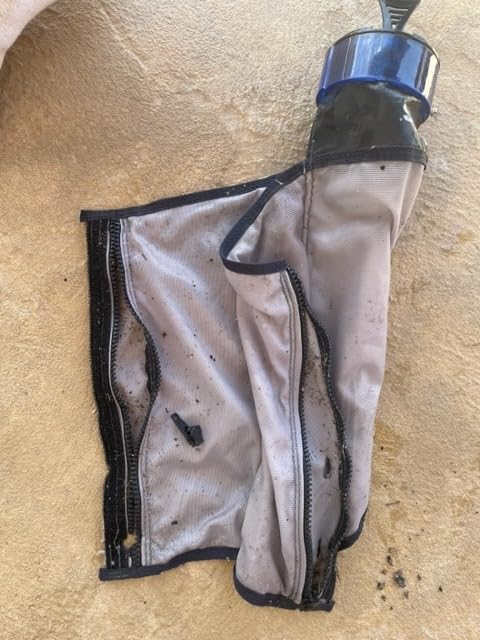
On paper this is the cleaner with the most debris capacity for a big, heavily planted pool, and the bag is the reason. A 5 liter dual chamber bag carries more between empties than the single chamber designs in this roundup, which on a leaf-heavy large pool reduces how often you have to swim over and empty it.
The 2.5-inch inlet is a step up from the 2.25-inch inlet on the 280 and 380, and it is paired with triple venturi jets plus all-wheel PosiDrive traction. The included TailSweep PRO accessory redirects the rear jet so overspray does not hit windows and walkways, a small detail that decides whether owners keep running the cleaner in shoulder season.
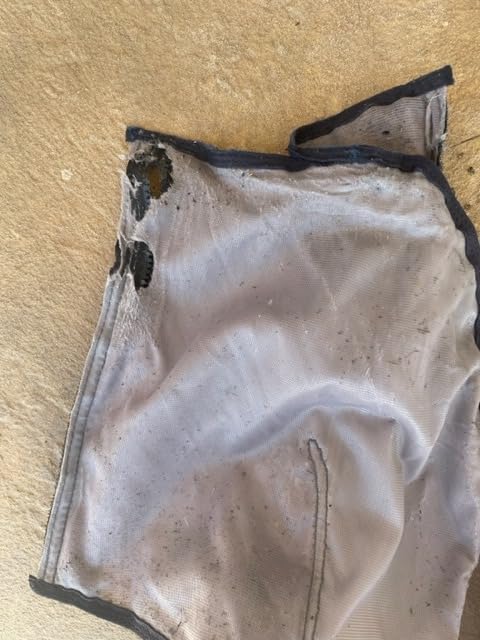
Then there is the rating, and we are not going to bury it. At 3.5 stars across 73 reviews this is the lowest average in the roundup, and 25% of those reviews are one star. That is a polarized distribution rather than a few scattered complaints, and the sample is small enough that individual experiences vary widely in both directions.
So this is a specification purchase, not a safe purchase. If you can verify a good return window, the debris capacity and inlet width are real advantages for a large pool under trees. If you want the choice with more owner history behind it, the 280 has better data, and the 280’s 2.25-inch inlet still handles whole leaves well.
Why the dual chamber bag changes large-pool routines
A single chamber bag stops accepting debris when it is full, so you empty on a schedule tied to debris rather than to need. A dual chamber bag separates smaller material from larger material, and the capacity figure means fewer trips. On a 20×40 pool ringed by trees, that is the feature you will notice first.
The all-wheel PosiDrive also helps on walls, which matters on a large pool with a deep end and a transition wall. Owners credit it with tracking walls consistently, though the material listing and the stated item weight are inconsistent in the product data, so do not plan around either figure.
Who should pass on the P39
Pass if reliability history is your first priority. With 73 reviews and a quarter of them at one star, you are taking a bet on the platform rather than following a well-worn path, and the one-year limited warranty does not soften that.
Pass if you are on a tight parts timeline. This model is a lower-volume listing in the pressure cleaner category, ranked well below the 280 and 380, so replacement bags and jet assemblies are less certain to be on a shelf when you need one.
6. Pentair Kreepy Krauly Platinum LL505PMG – easy to lift, easy to live with
Pentair LL505PMG Kreepy Krauly Platinum Pressure-Side Inground Automatic Pool Cleaner, Gray
1 to 3 hour floor and wall cycle
33 feet of hose
Fiberglass body
Gray
Pros
- Cleans floors and walls in a 1 to 3 hour cycle
- Works on concrete
- vinyl-lined and fiberglass pools
- 33 feet of hose suits a large in-ground pool
- Lightweight fiberglass body is easy to lift out
- Sixth best seller in the Pressure Pool Cleaners category
Cons
- 17 percent share of one-star reviews
- Only 62 reviews so owner feedback is thin
- Requires a separate booster pump and pool inlet connection
- Basic single-bag filtration with no dual chamber capacity
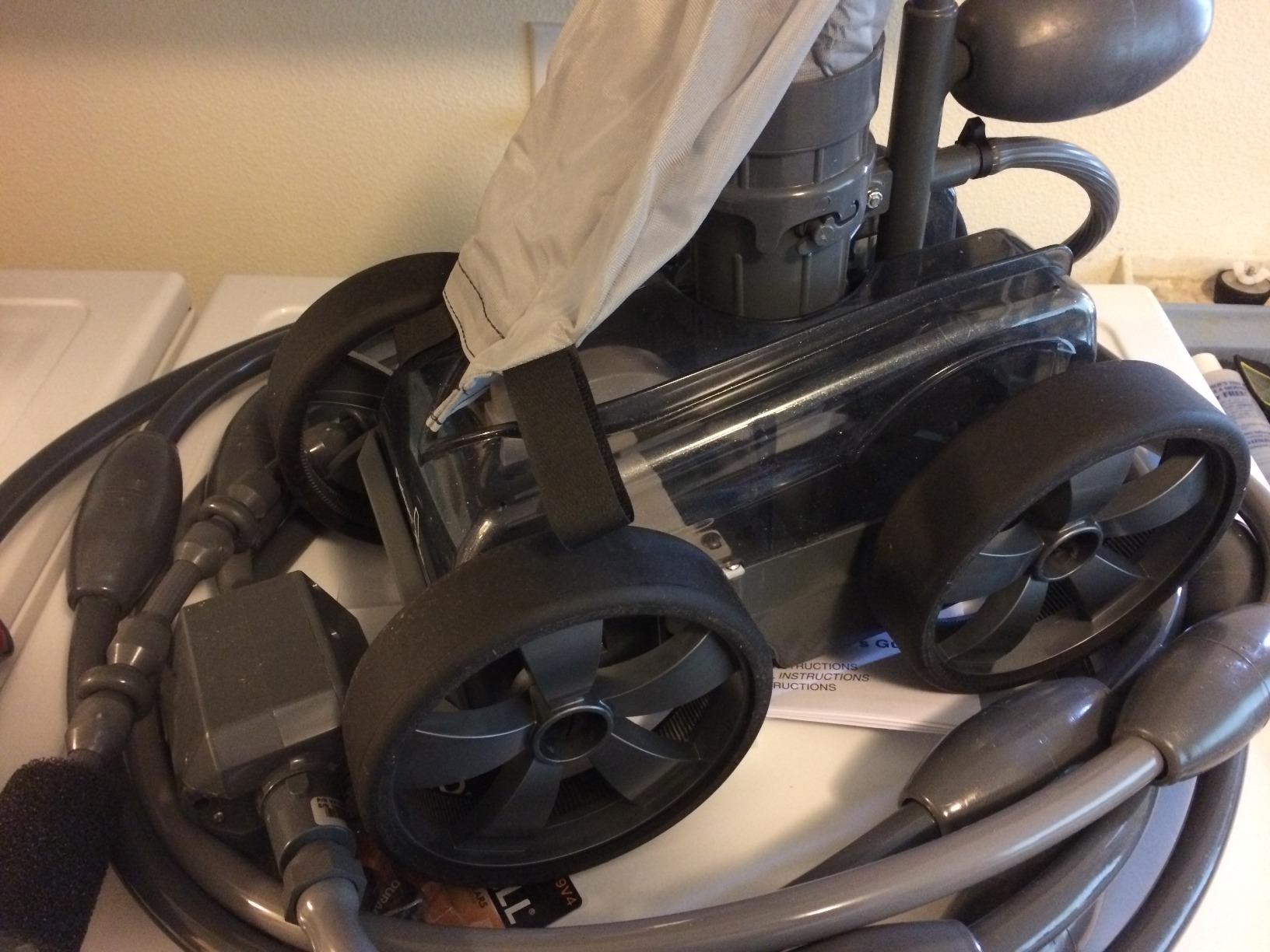
This Pentair is the opposite trade to the P39. It has a basic single-bag design, but it is a light machine to live with, and on a large pool that ergonomics can matter more than capacity. The body is fiberglass and the listed weight is 16 ounces, so it is the easiest unit in this roundup to lift out for a bag clean.
Cleaning performance is where it is genuinely competitive. It cleans floors and walls in a 1 to 3 hour cycle, and Pentair rates it for concrete and gunite, vinyl-lined and fiberglass pools, which covers the common large-pool finishes. It ranks sixth in the pressure cleaner category on its listing.
The hose is the quiet strength. The specifications list 30 feet and the included components note 33 feet of feed hose, and either figure is sized to cover a wall fitting on a large in-ground pool. The model number is LL505PMG, warranty is a one-year limited, and the maintenance instruction is simply to clean the filter and winterize the unit.
The reliability record is mixed rather than poor. About 73% of the 62 reviews are four and five stars, and the remaining complaints include inconsistent suction. With 17% of reviews at one star and only 62 reviews total, this is the thinnest evidence base here, so read the star figure as a signal about feedback volume, not about a settled verdict.
When the Pentair Platinum fits a large pool
It fits when you are tired of hauling a heavy cleaner out of the deep end. A light body changes how often you will realistically empty the bag, and on a large pool the bag gets full on a schedule you do not control.
It also fits when you want a short 1 to 3 hour cycle and broad surface compatibility, particularly on concrete and vinyl-lined builds where wall and floor scrubbing both matter. Kreepy Krauly is a long-running name in in-ground cleaning, which helps when you need to ask about parts.
When you should keep looking
Keep looking if your pool is under heavy tree cover, because basic single-bag filtration with no dual chamber is the wrong architecture for that debris load. Also keep looking if you want a dedicated wall climber, since this is rated to scrub floors and walls rather than climb them.
And keep looking if you dislike a thin warranty. One year limited is standard in this category, but it is one year, so budget for a float, a bag or a jet assembly as a likely expense rather than a surprise.
Do You Need a Booster Pump for a Large Pool?
Almost certainly, yes, and this is the single biggest reason large-pool owners get stuck. A pressure side pool cleaner needs water pushed to it with more force than a main filter pump sends through a standard return. On a large pool the extra distance makes that worse, not better, because every foot of feed hose adds head loss between the pad and the wall fitting.
The standard answer in the industry is a 3/4 horsepower booster pump. In practice, here is what that involves: a pump mounted on the equipment pad, a tee or valve at the pad that splits flow, a dedicated line running to a pool wall inlet fitting, and a feed hose from that inlet to the cleaner. A long-running thread on TroubleFreePool documents exactly this two-pump pad arrangement, with the booster switched on only when the cleaner is in use.
There are costs beyond the pump itself, and they are the reason people hesitate. You are looking at pump hardware, plumbing labor, an electrician if a new circuit is needed, and ongoing electricity for a second motor running several hours a day. Some owners on variable-speed main pumps also wonder whether their filtration suffers when the booster is drawing.
The no-booster-pump path
There is one real alternative, and it comes down to plumbing rather than equipment. A dedicated return line, sometimes called a dedicated pressure line, gives a cleaner its own water source fed straight from the equipment pad, so the main pump alone can push enough flow to drive a unit designed for it. If your pool was plumbed with that line and a matching wall inlet, some models will run without any booster pump at all.
The catch is that retrofitting a dedicated line on an existing pool means cutting into the shell or deck, which is a much bigger job than swapping a pump. If you already have the line, this path costs almost nothing. If you do not, the booster pump is the cheaper option, and that is why most large-pool recommendations assume you will add one.
Where a large pool makes the decision for you
On a big pool, most owners end up buying the booster. The longer the run from pad to cleaner, the more flow you need at the wall, and the whole point of choosing a pressure-side cleaner over a suction-side one is the suction power to grab leaves out of a loaded bag. Cleaners that run for hours without tangling are what owners actually ask for in pool forums, and hands-off reliability tends to beat a long feature list.
Before you buy any cleaner in this roundup, check what your plumbing already gives you. Look for a dedicated wall inlet near the shallow end, confirm the diameter, and confirm whether a booster pump is already on the pad. That single afternoon of checking will tell you which of these models are actually eligible for your pool.
The trade-off in one place, so you can decide fast:
With a booster pump
Most in-ground pressure cleaners need one, including the Polaris 280, 380 and P39 and the Pentair LL505PMG.
You get the flow and suction power that large debris and wall contact require.
You pay for pump hardware, plumbing labor and running electricity for a second motor.
Without a booster pump
Only viable if a dedicated return or pressure line already reaches a pool wall inlet.
No second pump on the equipment pad, and no extra electricity while it runs.
You give up some suction power, which is the trade you feel most on a large pool.
What to Look for in a Pressure Side Pool Cleaner
Start with throat size, which is the inlet opening that decides what physically fits inside. The 2.25-inch inlet shared by the 280 and 380 takes whole leaves and acorns, and the P39’s 2.5-inch inlet takes more. If your debris is twigs and oak leaves, a narrow throat is the first thing to rule out, and no amount of suction compensates for debris that never enters.
Next look at bag capacity and chamber count. A single chamber bag is simpler and cheaper to replace, and a dual chamber bag carries more between empties. On a large pool under trees, chamber count matters more than bag material, because the number of trips to the deep end is what you are really trying to reduce.
Then look at drive design. Wheel count changes traction on rough surfaces, and the four-wheel MAKHOON holds contact better on a patched floor than a three-wheel design. Triple venturi jets pull harder than dual jets, which shows up when the bag is already half full. All-wheel drive on the P39 helps it track walls rather than slide off them.
Hose length is the sizing number that trips up large-pool owners. The 31 and 33 foot hoses in this roundup cover typical 20×40 in-ground pools with slack to spare. A hose that is exactly the right length tangles, because there is no slack for the cleaner to turn on, and a long hose that kinks adds head loss that reduces the flow you paid a booster pump to create.
Surface compatibility is a checkbox, not a preference. Confirm your finish against the rated list, whether vinyl, fiberglass, gunite, pebble or tile. An unrated surface is how warranty claims get denied, and these machines put real load on a liner or a fiberglass step.
Finally, think about parts and warranty before you fall for a feature list. One-year limited warranties are standard here, which means floats, bags, backup valves and jet assemblies are consumables you will replace. Prefer a model whose parts are easy to source, and prefer a model you can lift out of the water without a ladder, because the bag will need emptying whether or not the warranty covers it.
The forum complaint we hear most often in pool threads is a well-set-up Polaris 280 that tangles anyway, on a pool where the hose length was already correct. If that is your situation, look for a unit with an adjustable jet direction like the MAKHOON, budget for a swivel on the feed hose connection, and route the hose so it runs along one wall rather than across the deep end.
Frequently Asked Questions
What is the best pressure side pool cleaner?
For most large in-ground pools, the Polaris Vac-Sweep 280 is the best all-round pressure side pool cleaner. It has the widest review base in this category, a 4.3 average rating, a 2.25-inch inlet that swallows whole leaves, and 31 feet of feed hose that covers a typical 20×40 pool. It needs a separate booster pump. If you need more suction power than the 280 gives, step up to the Polaris Vac-Sweep 380.
What pressure side pool cleaner can I use without a booster pump?
You can only skip the booster pump if your pool has a dedicated return or pressure line plumbed to a wall inlet, and even then only with a model designed for low-flow operation. Check the installation type on the listing first. Most in-ground pressure cleaners, including the Polaris 280, 380 and P39 and the Pentair LL505PMG, require a booster pump connection. Adding a 3/4 HP booster pump at the equipment pad is far cheaper than retrofitting a dedicated line into an existing pool.
Which type of pool cleaner is better, robotic or pressure side?
Robotic cleaners win on fine silt, powder and sand, and they filter the water as they clean without any plumbing changes. Pressure side cleaners win on large debris, because a wide throat and a debris bag handle whole leaves and twigs that a robot’s canister and fine filter will not. For a large pool with heavy leaf load, pressure side is the better answer. For a silt-heavy pool with few trees, a robot is the stronger choice and costs less to run.
Why does my pool cleaner keep going on its side?
Five causes account for most cases. First, uneven weight or balance on the cleaner body. Second, insufficient flow at the wall fitting, often from a clogged filter or a kinked feed hose. Third, a full debris bag shifting the center of gravity, which is common on single chamber models. Fourth, a failed float that lets the cleaner tip when the bag fills. Fifth, a floor slope or step that catches the body. Clear the bag, check the hose for kinks, confirm the float is seated, and test flow with the filter clean.
How long does a pressure side pool cleaner take to clean a large pool?
Most units in this roundup are rated for three hours or less on a typical in-ground pool, and the Pentair LL505PMG is rated at one to three hours for floors and walls. On a large pool, budget closer to the top of that range, and expect to empty the bag during the cycle. Longer run times on big pools are a function of surface area and debris load rather than a fault, so give it a full cycle before judging the result.
The Bottom Line for Large Pools
For most large in-ground pools, the Polaris Vac-Sweep 280 is the best pressure side pool cleaner you can buy, because it pairs the deepest review base in the category with an inlet wide enough for whole leaves and a hose long enough for a 20×40. Budget for a 3/4 horsepower booster pump, and check that the single chamber bag is emptied on a schedule you can keep.
If suction power is your binding constraint on a very large pool, the Vac-Sweep 380 pulls harder and is worth the slightly weaker durability record. If debris capacity is the constraint under heavy tree cover, the P39’s 5 liter dual chamber bag is the right architecture even though its 3.5 star rating is the weakest here and its review base is thin. If hose tangling has ended previous cleaners, the MAKHOON’s adjustable jet direction is a control the other units here do not offer.
Two caveats worth stating plainly. The Pentair Kreepy Krauly Kruiser is a suction-side cleaner by its manufacturer’s own listing, so it does not deliver the debris handling people expect from pressure-side. And every true pressure-side unit here needs water pressure at the wall that a main pool pump alone will not supply, unless your pool already has a dedicated return line plumbed in. Check that plumbing first, then pick from the list with confidence.
This roundup was last updated in 2026, and every rating and review count above reflects the product listings as we found them at that time.