
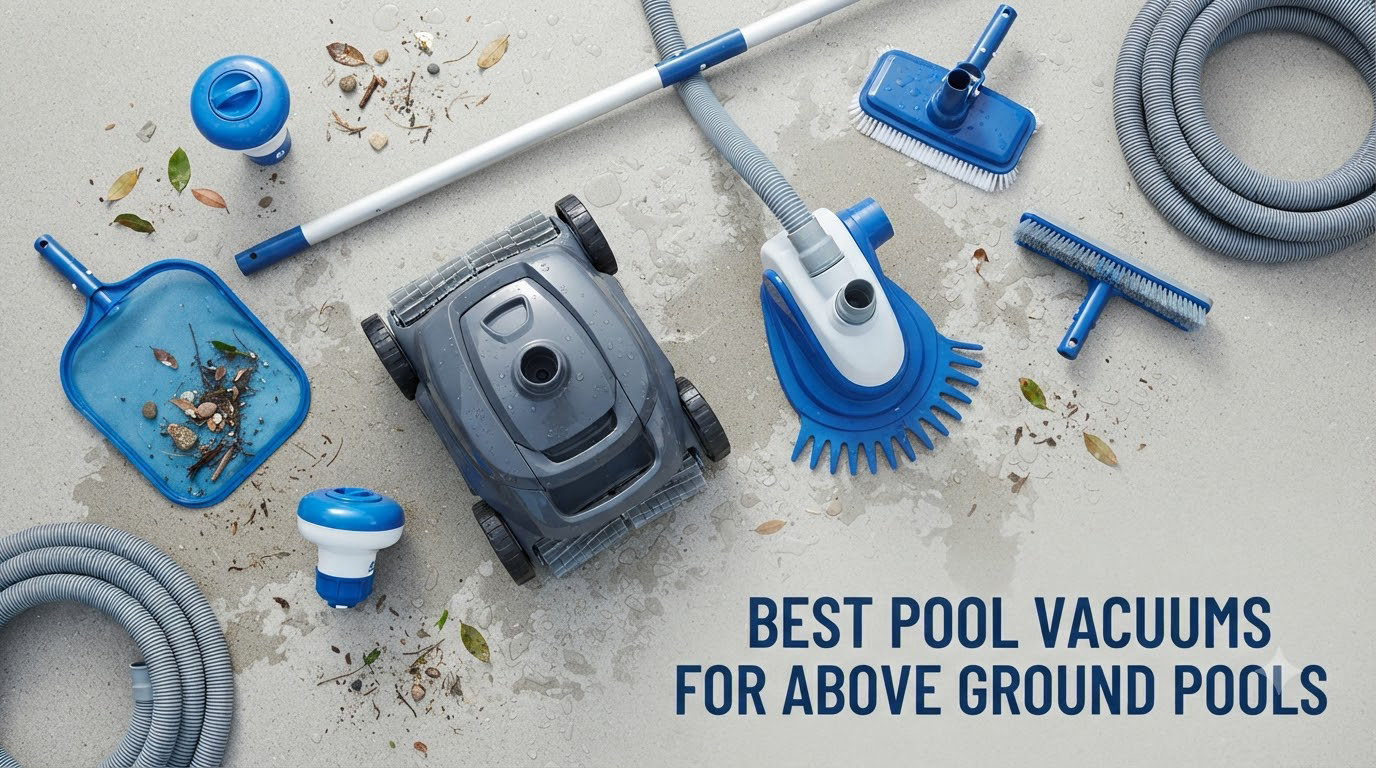
Every above-ground pool turns into a debris trap by the second week of summer. Leaves blow in, sand settles into the liner’s seams, and pollen coats the floor in a film you can see but barely feel through your feet. The fix is a pool vacuum built for the job, and the wrong one costs you an afternoon of frustration every single week.
We pulled specs and owner feedback on the best pool vacuums for above ground pools and sorted them by the things that actually matter on a pool that sits six feet off the ground, outside, with a soft or rigid liner. Nine picks, covering corded robots, cordless robots, suction-side cleaners, and cordless handhelds.
Two rules shaped this list. First, pressure-side cleaners are out entirely, because above-ground pools have no water return line to push them. Second, we treated wall climbing as a low-value feature, because the bottom-to-wall transition on an above-ground pool is a hard 90-degree corner that a scrubber brush cannot round. We also weighed retrieval weight heavily, since pulling a soaked robot over a pool wall is the part of the job nobody mentions until you own one.
Table of Contents
Quick Picks: The Best Above-Ground Pool Vacuums
Best Overall: Dolphin Nautilus CC — Corded robotic. Why it’s great: it runs 90-minute-equivalent cycles on a floating power cable with no charging, no battery, and a top-load filter basket you can rinse in seconds.
Best Cordless Robot for Big Pools: Beatbot Sora 10 — Cordless robotic. Why it’s great: 6,800 GPH suction and up to 300 minutes of runtime cover pools up to 3,229 sq ft in one charge, and it parks at the waterline so you are not fishing for it.
Best Value: Teguy V40 — Cordless handheld. Why it’s great: an 18.5 GPM flow rate, a 1.5-hour full recharge, and 60 minutes of runtime with no hose to drag through the water.
Best for Fast Turnarounds: Enhulk PC10 — Cordless handheld. Why it’s great: 60 minutes of runtime with a 1.5-hour recharge and four filter bags in two mesh sizes so you match the bag to the debris.
Best for Stairs, Benches and Spa Spillways: Pool Blaster Max HD — Cordless handheld. Why it’s great: the removable spade-shaped head reaches the tight corners a full-pool machine cannot, and the chamber holds 40% more than the standard Pool Blaster Max.
Best for Hot Tubs and Shallow Water: AQUAFYSH AQ10 Pro — Cordless handheld. Why it’s great: the spa head works in water as shallow as 0.6 ft, which is shallower than most vacuum heads can operate.
Best Suction-Side Pick: Zodiac Ranger — Suction-side automatic. Why it’s great: no battery and no charging, and it arrives pre-assembled with 32 feet of feed hose attached to your skimmer.
Best Robot for Small Flat-Bottom Pools: WYBOT A1 — Cordless robotic. Why it’s great: a dual-layer 180µm filter plus foam catches fine dirt, and self-parking at the wall ends the retrieval hunt.
Best Robot to Lift: PoolMr YM-RPC01 — Cordless robotic. Why it’s great: a quick-drain body releases stored water in seconds, so the unit weighs almost nothing when you grab the hook.
Top 3 Above-Ground Pool Vacuums, Ranked (October 2026)
Dolphin Nautilus CC
- Corded robotic
- No charging needed
- Top-load filter basket
- 2-hour cleaning cycle


All 9 Above-Ground Pool Vacuums Side by Side (October 2026)
| Product | Specs | Action |
|---|---|---|
| Dolphin Nautilus CC |
|
Check Latest Price |
| Beatbot Sora 10 |
|
Check Latest Price |
| Teguy V40 |
|
Check Latest Price |
 Enhulk PC10 Enhulk PC10 |
|
Check Latest Price |
 Pool Blaster Max HD Pool Blaster Max HD |
|
Check Latest Price |
 AQUAFYSH AQ10 Pro AQUAFYSH AQ10 Pro |
|
Check Latest Price |
 Zodiac Ranger Zodiac Ranger |
|
Check Latest Price |
 WYBOT A1 WYBOT A1 |
|
Check Latest Price |
 PoolMr YM-RPC01 PoolMr YM-RPC01 |
|
Check Latest Price |
1. Dolphin Nautilus CC – Best Overall Corded Robot for Above-Ground Pools
Dolphin Nautilus CC Automatic Robotic Pool Vacuum Cleaner, Wall Climbing Scrubber Brush, Top Load Filter Access, Ideal for Above/In-Ground Pools up to 33 FT in Length
Corded robotic
33 ft pool length
22.2 x 17.6 x 12.8 inch
2-hour cleaning cycle
1 year warranty
Pros
- Handles irregular shapes and built-in benches
- Active scrub brush is gentle on liner and tough on debris
- Top-load basket lifts straight out for rinsing
- No charging or battery degradation
- Quiet operation with no assembly
Cons
- Floating power cord tangles and kinks over time
- Filter basket clogs every one to two cycles
- No app or remote control
- Will not clean stairs or sharp 90-degree corners
The Nautilus CC is the one I keep coming back to because it removes the single most annoying variable in pool care: a battery. It plugs into a low-voltage power supply on your deck, and that is the entire charging ritual. My own routine is drop, press, walk away, come back in two hours, pull the basket, rinse it under the hose, and drop it back in.
Cleaning performance is genuinely good on above-ground pools. The active scrub brush is soft enough for vinyl liner and stiff enough to lift sand and silt, and the floating power cable keeps the unit from dragging a tight loop across the floor. Owners with built-in benches and irregular shapes report it handles those transitions without getting stuck, which is more than several competing robots manage.
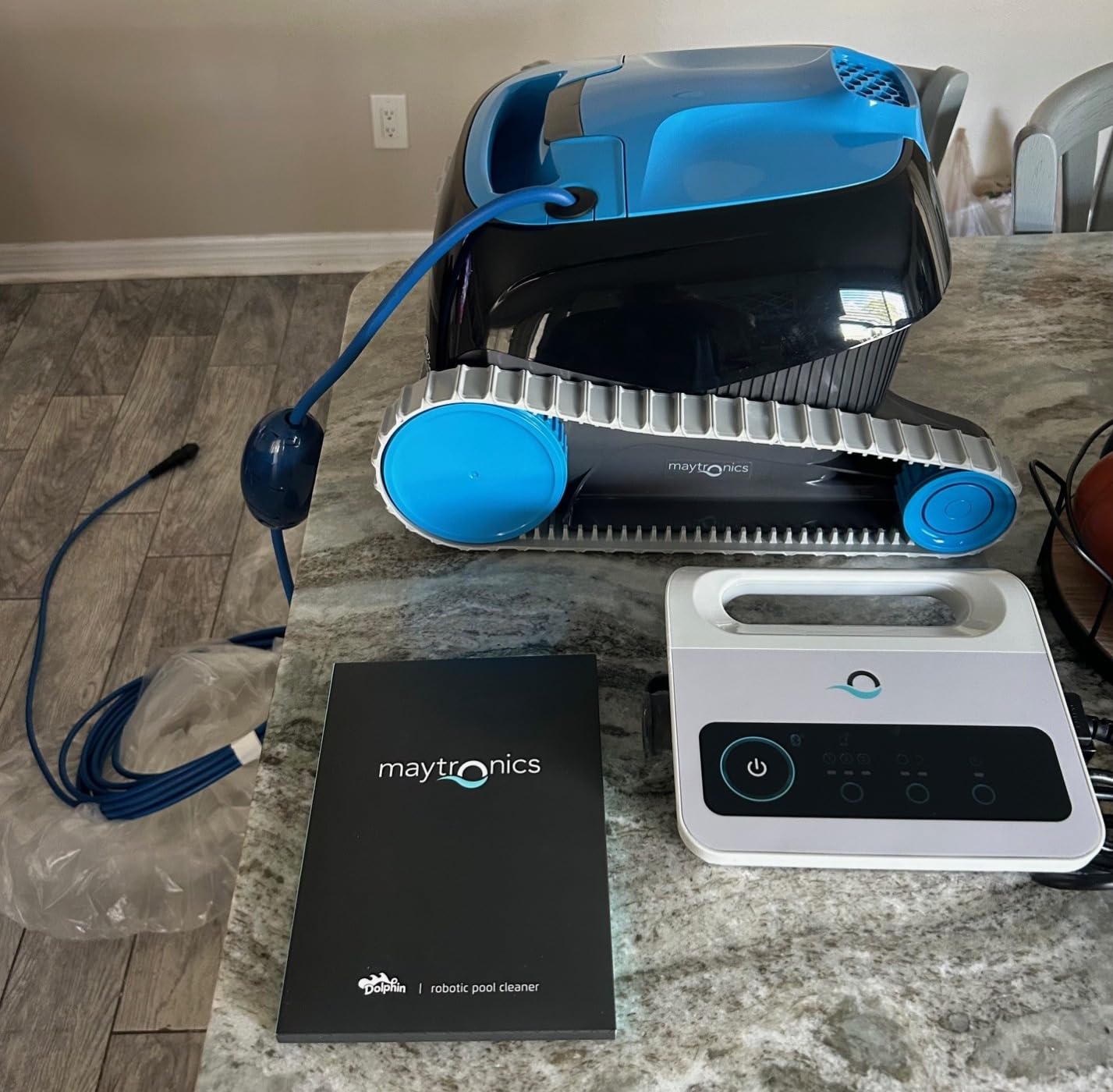
The trade-offs are all maintenance details rather than performance gaps. The cord does tangle and kink over time, so a weekly check before you drop it in saves an afternoon of untangling later. The fine-mesh basket needs a rinse every one to two cycles or suction drops noticeably, and there is no app, no remote, and a weekly scheduler that only holds for a single week. A minority of owners also report early power-supply or drive failures and a shortened lifespan of around four years.
One detail worth planning for is weight. The unit is listed at 6.71 kg, and that is dry. Let it sit at the surface for a minute before you lift and much of the water comes out with the return flow, which makes the difference between a one-handed lift and a two-person wrestling match over a pool wall.
Is it worth the cord on an above-ground pool?
Yes, if your pool is rigid-walled, roughly rectangular, and you want reliability over convenience. Ten thousand-plus reviews means an enormous pool of long-term owners, and the recurring praise is about it simply working every time you turn it on. A cord that tangles once a month is easier to live with than a battery that ages and a runtime that shrinks.
The Nautilus CC is the wrong pick if your pool has a deep end with steps, a sun shelf, or a shape full of tight corners. It will not climb stairs, and no robot in this group will, so those areas need a handheld pass afterward.
Who should skip it?
Skip it if you cannot route a power cable from a dry outlet to the pool wall without a trip hazard, or if you rent and cannot drill for an outlet. It is also the heaviest-lift option here, so anyone with limited back or shoulder strength should look at a cordless robot with a quick-drain body instead.
Skip it if your pool is a soft-sided Intex or Bestway inflatable and your skimmer port is awkward to reach, since the cable has to reach the waterline cleanly. The cordless robots in this list are built around exactly that situation.
2. Beatbot Sora 10 – Best Cordless Robot for Large Above-Ground Pools
Beatbot Sora 10 Cordless Pool Vacuum Robot for Inground & Above Ground Pools, 6800 GPH Suction, Floor/Wall/Waterline/Shallow Area Cleaning, Waterline Parking, 300 Mins Runtime Royal Blue
Cordless robotic
300 min runtime
3229 sq ft coverage
5L basket
2-year protection
Pros
- 300 minute runtime covers very large pools in one charge
- 6800 GPH suction captures leaves sand and fine debris
- Waterline parking ends the retrieval problem
- 5L basket holds up to 650 leaves
- 4-zone cleaning down to 12 inch shallows
Cons
- Waterline parking holds at the surface only 10 to 15 minutes
- Coverage can be uneven in slanted pools
- No dock so the charging port must be dried
- Heavier than smaller robots
The Sora 10 solves the problem that pushes most people off cordless robots: runtime. Up to 300 minutes per charge on a 7310mAh battery, with a rated coverage area of 3,229 sq ft, which means most above-ground pools are finished in a single run. There is no hovering over a half-clean pool while you wait for a charger.
Suction is the highest figure in this group at 6,800 GPH through the HydroBalance structure, and the 5L debris basket is listed as holding up to 650 leaves. Four-zone cleaning covers the floor, walls, waterline, and shallow tanning ledges down to 12 inches, so it handles sun shelves that floor-only robots skip entirely. Owners upgrading from decades-old pressure cleaners describe the switch as decisive: no pump, no hose stretched across the water.
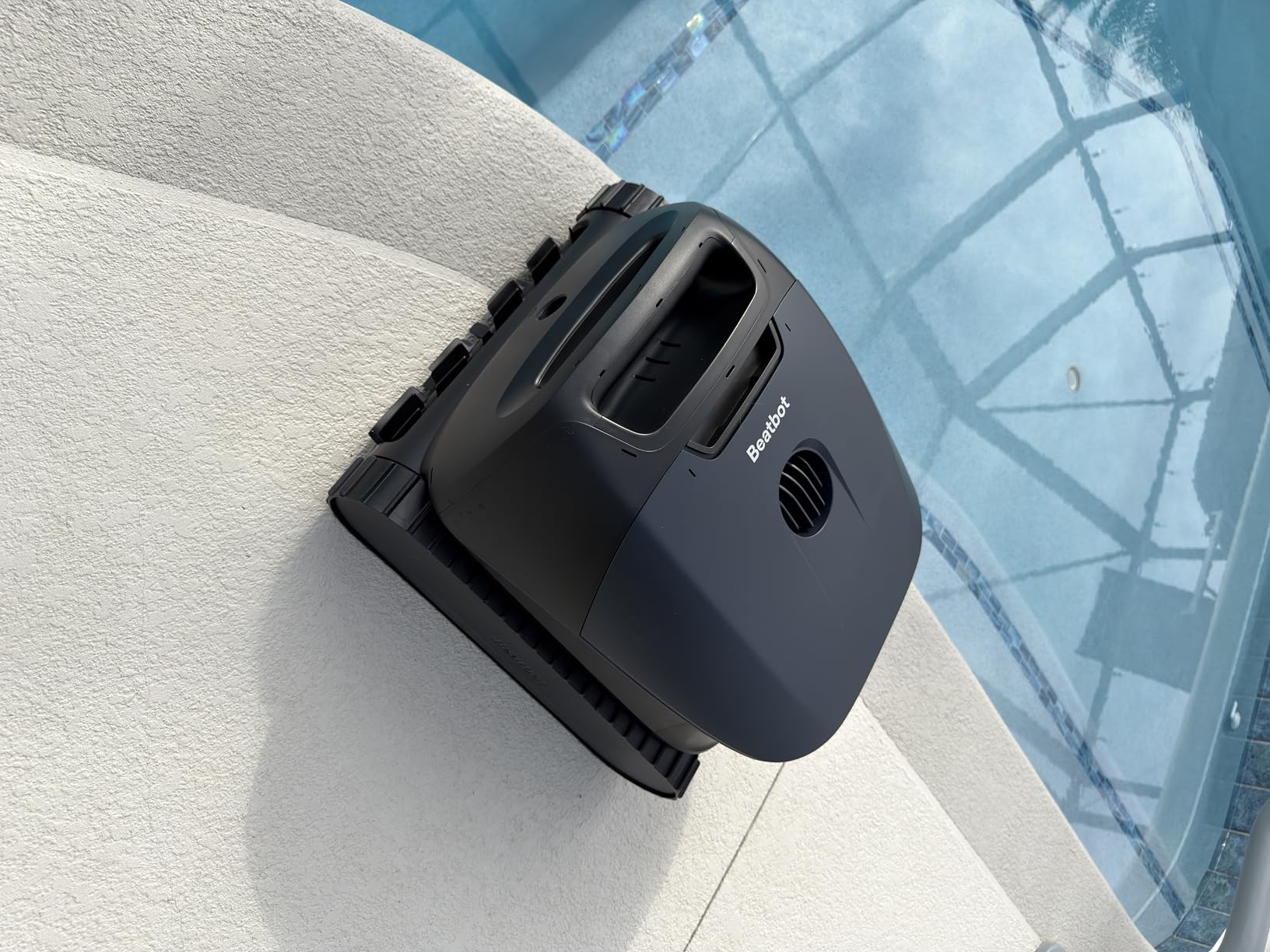
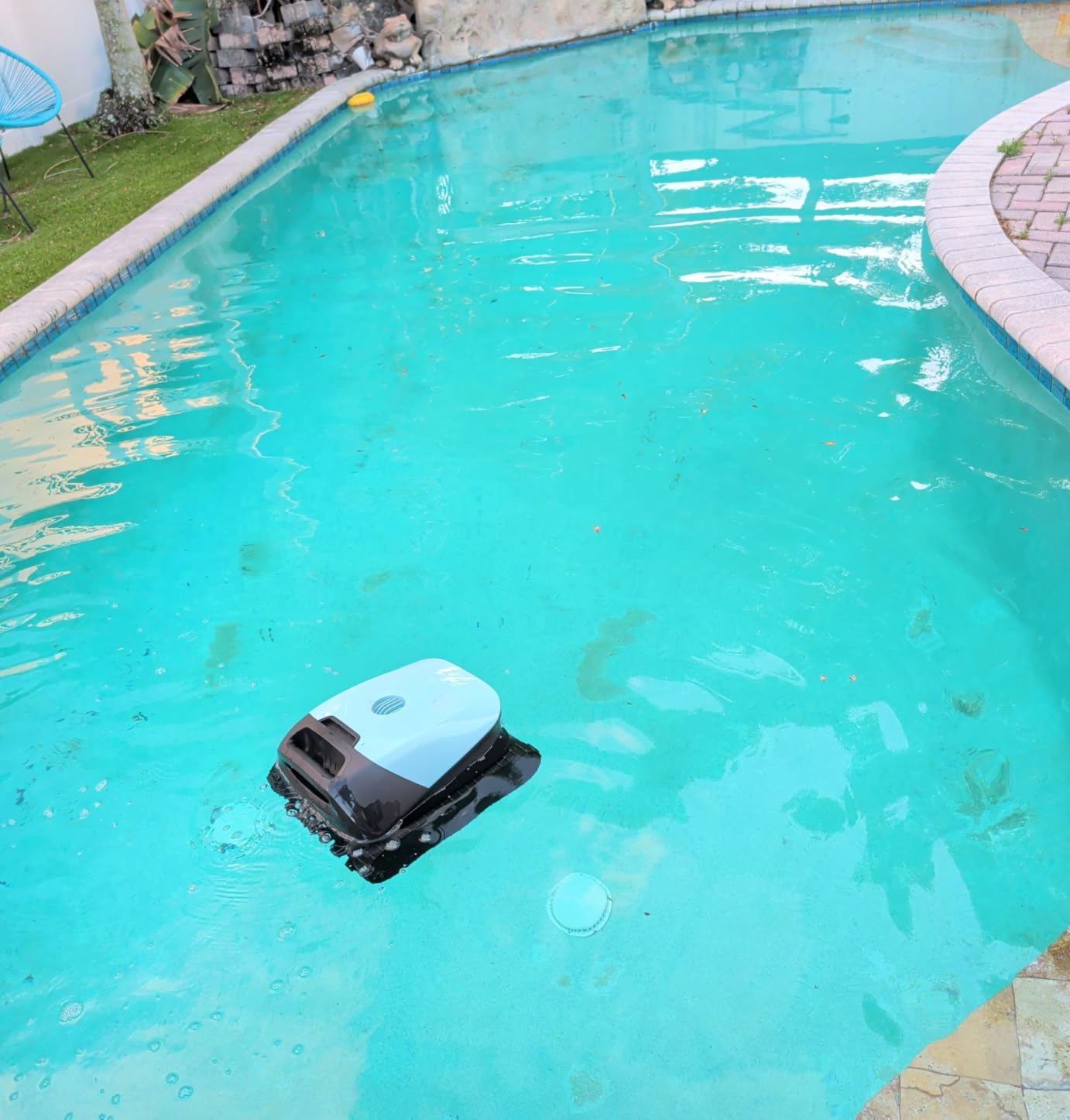
Two caveats stand out. Waterline parking holds the unit at the surface for roughly 10 to 15 minutes at the end of a cycle before it sinks back, so you have a window rather than an indefinite float. Some owners also report inconsistent or slow coverage in irregular and slanted bottoms, which matters if your above-ground pool has a dished floor rather than a flat one.
Also worth noting for retrieval: the listed weight is 10.5 kg. Beatbot distributes that mass internally so the unit is easier to lift than heavier robots of similar size, but it is still the second-heaviest item on this list. There is no dock, so the charging port has to be dry before you plug in.
Is 300 minutes of runtime worth the price tier?
If your pool is larger than about 16 feet across, or if you have ever had a cordless robot stop mid-cycle, yes. The whole cordless category lives or dies on finishing a pool in one pass, and this is the pick that removes the anxiety. Its rated 6,800 GPH also means fine sand and silt stay in the basket rather than recirculating.
For a 10 to 12 foot inflatable, the extra capacity goes unused and the weight becomes a drag. In that case the lighter options later in this list make more sense.
Who should skip it?
Skip it for small pools, where a 10.5 kg unit is more effort than the job deserves. Also skip it if slanted or dished pool bottoms are a real feature of your setup, since coverage reports there are mixed and you may end up re-running sections.
Owners who want a maintenance-free landing spot should know there is no dock. And if you store the robot through winter in an unheated shed, park it fully dry first. Battery longevity suffers when a unit sits wet.
3. Teguy V40 – Best Value Cordless Handheld Vacuum
Cordless Pool Vacuum with Telescopic Pole, 18.5 GPM Powerful Suction, 1.5H Supercharge Technology, Handheld Pool Vacuum Cleaner for Above Ground/Inground Pools, Hot Tubs, Blue
Cordless handheld
18.5 GPM flow rate
60 min runtime
1.5 hour recharge
IPX8 waterproof
Pros
- Strongest flow rate in the handheld group at 18.5 GPM
- Refills in 1.5 hours for a fast turnaround
- Included 7 ft telescopic pole plus fits any standard pole
- IPX8 waterproofing and auto shutoff out of water
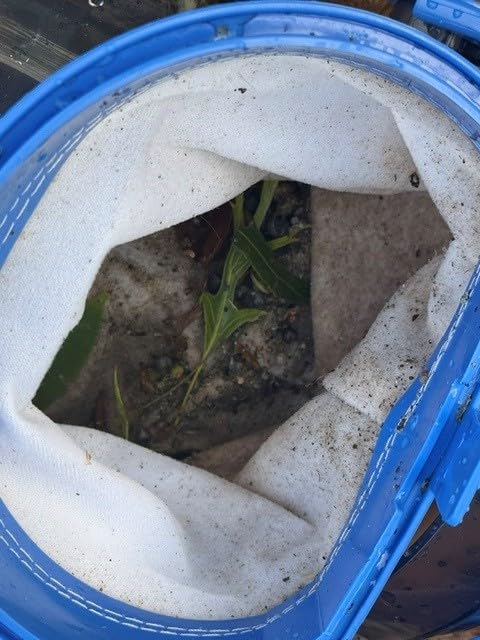
- Four reusable 500-mesh bags that rinse clean fast
Cons
- Supplied pole is too short for the deep end
- Large maple and oak leaves are better handled by a net
- Small filters need regular rinsing
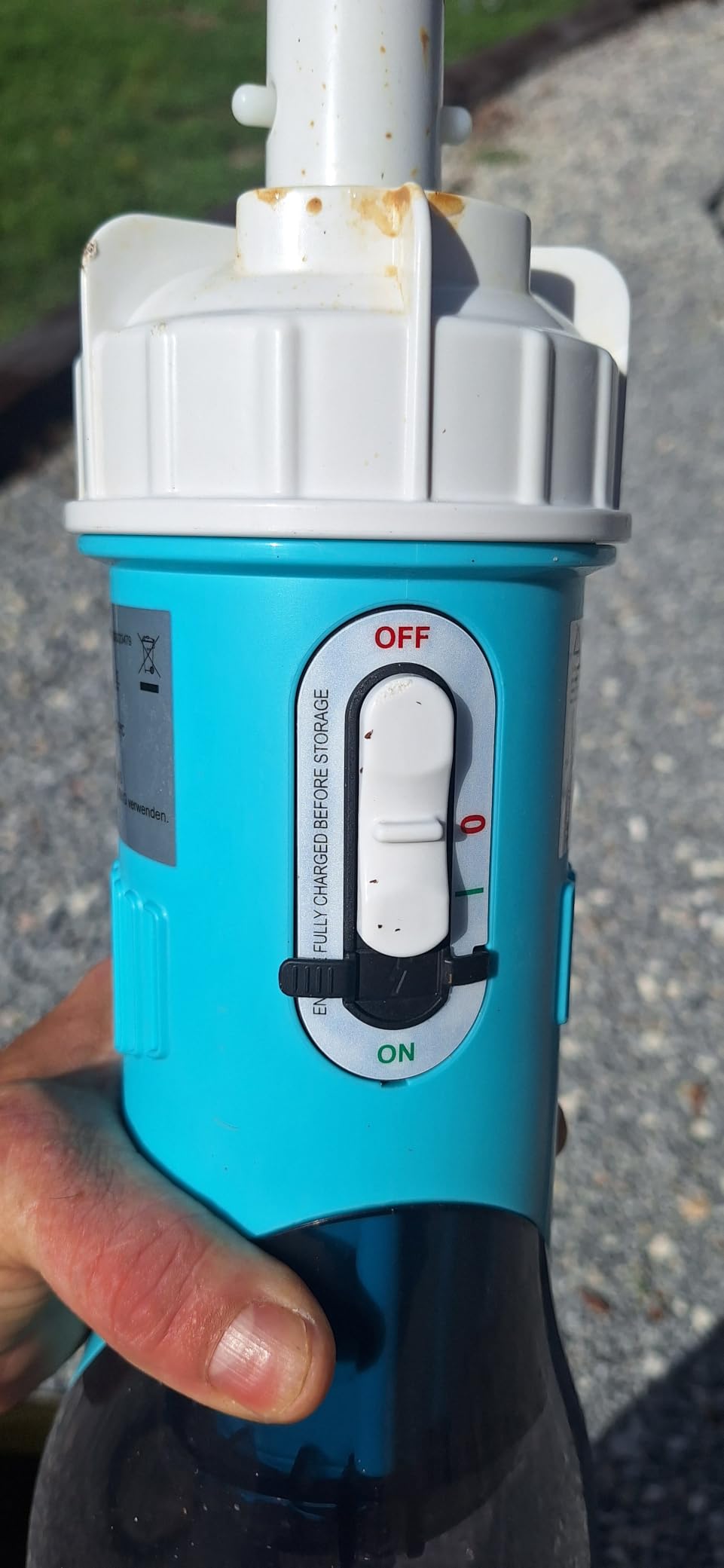
The Teguy V40 is the one I recommend when someone asks for a single tool that handles most of an above-ground pool without a big commitment. A 40W motor moves 18.5 GPM, which is the highest flow rate among the handheld units here, and owners describe vacuuming a 15 by 30 foot pool twice on a single charge.
Runtime is up to 60 minutes and the full recharge takes 1.5 hours, so the charge-to-work ratio is unusually good. That matters more than it sounds: the common complaint about cordless tools is sitting by a charger for hours to get 30 minutes of use. An IPX8 waterproof rating and an automatic shutoff after one minute idle out of water add confidence around a wet deck.
The consistent weakness is the supplied pole. It extends to 7 feet, and several owners work around the limit by using a longer standard pole, which the unit is compatible with. Big leaves are also out of scope: an 18.5 GPM flow moves sand, pine needles, and small debris well, but maple and oak leaves are a net job, not a vacuum job.
Weighing it at 6 pounds, it is light enough for older users and quick to disassemble for cleaning. The four reusable 500-mesh bags rinse clean in minutes, though you will swap them more than once during a heavy session.
Do you need a robot or will this handheld cover it?
For a pool up to about 15 feet with moderate debris, this handheld genuinely competes with an entry robot. Suction is strong enough for sand, silt, and small leaves, and there is no charging marathon between cleans. You will still sweep, which is the part robots save you from.
Add a robot if you want set-and-forget cleaning or if your pool is 18 feet or larger. The handheld wins on cost per session and on storage; the robot wins on effort per week.
Who should skip it?
Skip it if you rely on a single pole to reach the deep end, since the included one runs short. Buy it with a plan to pair it with your own longer pole if your pool is deeper than about 5 feet.
Skip it for leaf season with overhead trees, and skip it if you need to handle large debris in volume. Anything bigger than a quarter needs a net or a skimmer first, and no handheld changes that.
4. Enhulk PC10 – Best Cordless Handheld for Fast Recharge Cycles
Pool Vacuum for Above Ground Pool with a Telescopic Pole, Running time up to 1H, Handheld Rechargeable Pool Cleaner with Powerful Suction up to 18.5 gallons/min, Ideal for Leaves & Debris, PC10
Cordless handheld
4200L/h flow
60 min runtime
1.5 hour recharge
2 year warranty
Pros
- 60 minutes of runtime from five 2000mAh batteries
- Full recharge in only 1.5 hours
- Four filter bags in two mesh sizes let you match bag to debris
- Swaps between a short handle and 7.3 ft telescopic pole
- Two-year manufacturer warranty
Cons
- Filter bags fill quickly on larger cleans
- Needs full cleaning and drying after each use
- Best on spots rather than whole-pool cleaning
- Manual assembly required
The PC10’s distinguishing feature is the filter bag system. It ships with four reusable bags, two 180-mesh and two 500-mesh, so you can use the tighter weave for fine silt and the open weave for leaves without hunting for the right part. Motor output is a 20V 40W unit rated up to 4,200 L/h, which is a solid figure for a handheld in this group.
Owners on r/AboveGroundPools who bought it for a Bestway pool report being wildly impressed, specifically calling out the four filters in two styles and the suction power. That matches our own read of the spec sheet, and it is why this one shows up repeatedly in owner threads rather than only in editorial roundups.
Runtime is up to 60 minutes from five 2000mAh lithium-ion cells, and the full recharge is 1.5 hours. The telescopic pole ranges from 3 to 7.3 feet and the short handle swaps in for close-up work, so one unit covers both the deep end and the bench corners. At 6.4 pounds, it is comfortable for a full session.
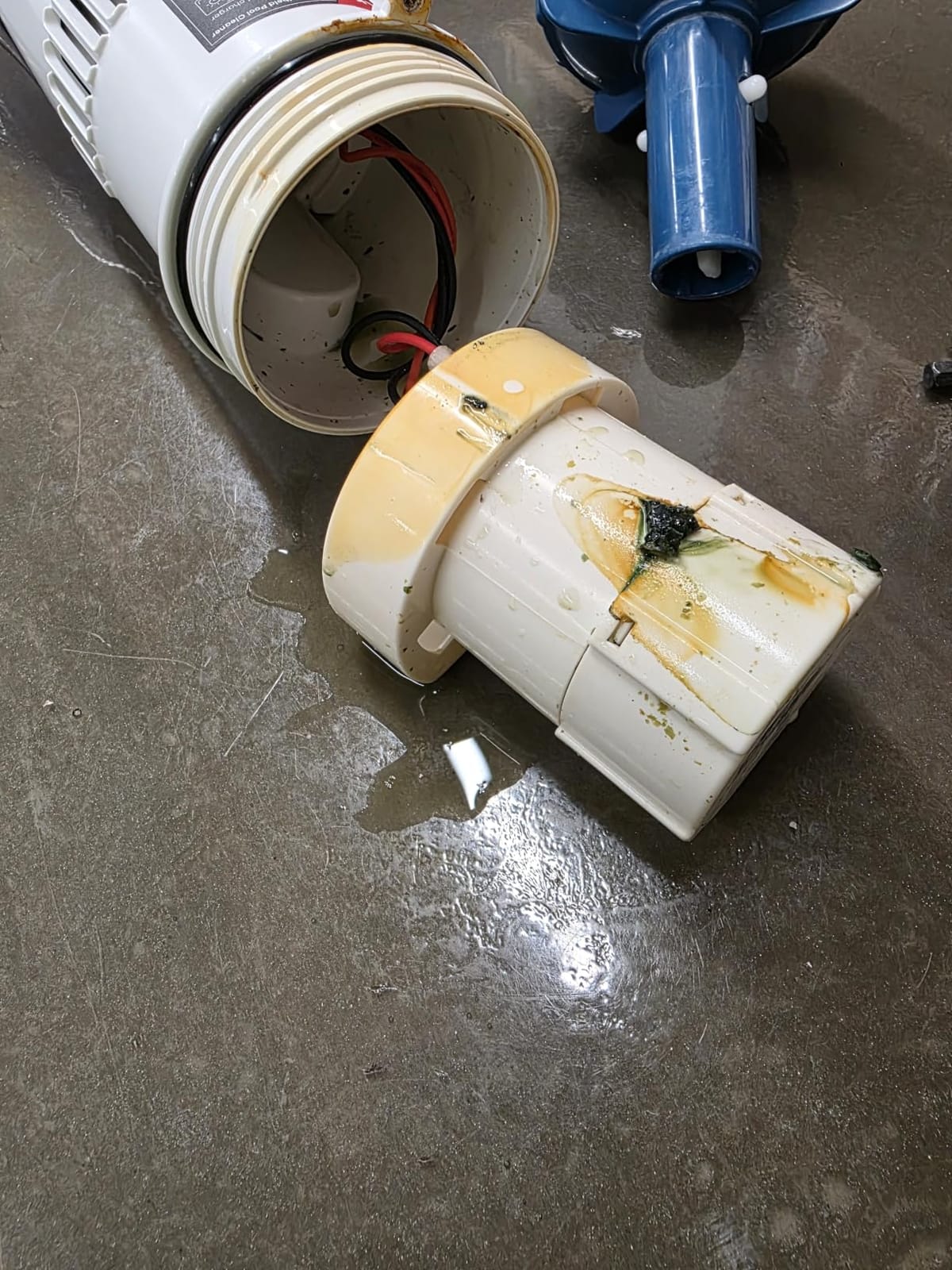
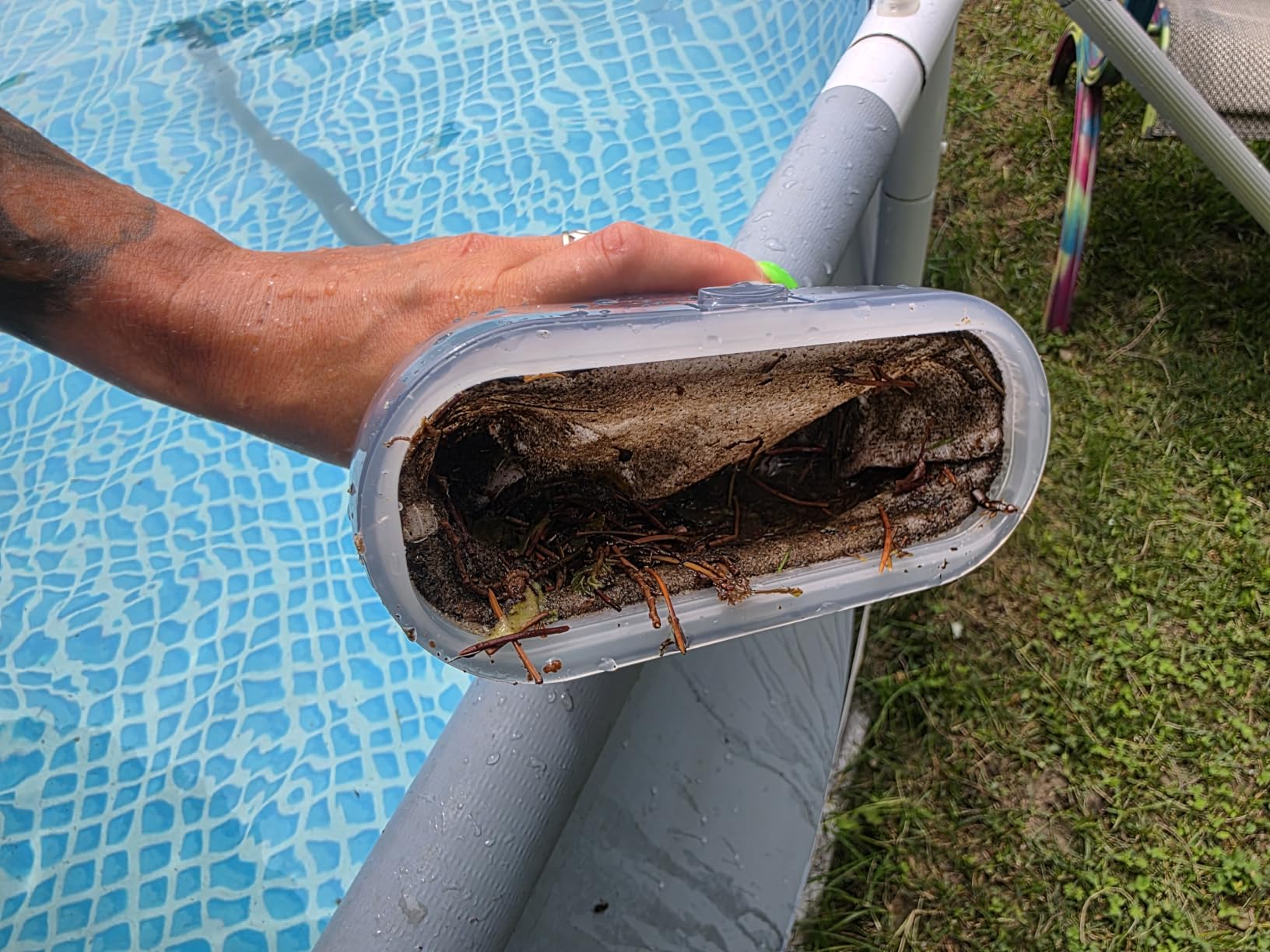
The recurring friction is capacity. The bags fill quickly, and owners emptying one partway through a larger clean is a common routine. The unit also needs to be cleaned and fully dried after each use, which sounds obvious until you are doing it in the dark after a swim.
Is it the right handheld for a soft-sided pool?
Yes. Nothing about this unit depends on a skimmer port, a return fitting, or a rigid wall, which is exactly what soft-sided Intex and Bestway frames lack. Bring it in, put it in, pull it out, rinse the bag. That simplicity is the argument for it.
If your pool is inflatable and mostly flat, this is a strong pairing with a small robot: robot for the open floor, handheld for steps, corners, and the waterline shelf.
Who should skip it?
Skip it if you want one tool to vacuum a large pool start to finish without stopping. At 60 minutes of runtime with bags that fill fast, you are running a spot cleaner with real whole-pool capability, not a set-and-forget machine.
Skip it if you dislike a wash-and-dry routine after every session, and note that assembly is manual. The two-year warranty is longer than most rivals offer, which partly offsets the extra upkeep.
5. Pool Blaster Max HD – Best Cordless Handheld for Stairs and Benches
POOL BLASTER Max HD Cordless Pool Vacuum – Heavy-Duty Cleaning with High Capacity, Handheld Rechargeable Swimming Pool Cleaner for Inground & Above Ground Pool, Hoseless Design by Water Tech
Cordless handheld
1 hour runtime
4 hour charge
10.5 inch scrub head
5.8 pounds
Pros
- Spade-shaped head reaches stairs benches spas and tight corners
- Strong suction on silt dirt gravel and dead algae
- Works fully independent of the pool filtration system
- Light at 5.8 pounds and simple to assemble and store
Cons
- Small debris bag with no fill indicator
- Loses suction when the head breaks the surface
- Dirty water backflows out when lifted
- Quarter-size inlet struggles with large leaves
- Battery durability is the main long-term complaint
The Max HD is the oldest design in this roundup and it has earned its place through owner loyalty, with several reviewers reporting buying a second unit. The P30 motor design delivers noticeably stronger suction than entry-level cordless tools, and the reported pickup covers everything from fine silt and dead algae to gravel and pine needles.
The removable 10.5 inch scrub brush head is the feature that separates it from the generic handhelds here. Its spade shape fits into stairs, built-in benches, spa spillways, and tight corners that a full-pool robot physically cannot enter. That makes it the natural partner to any robot on this list rather than a competitor to one.
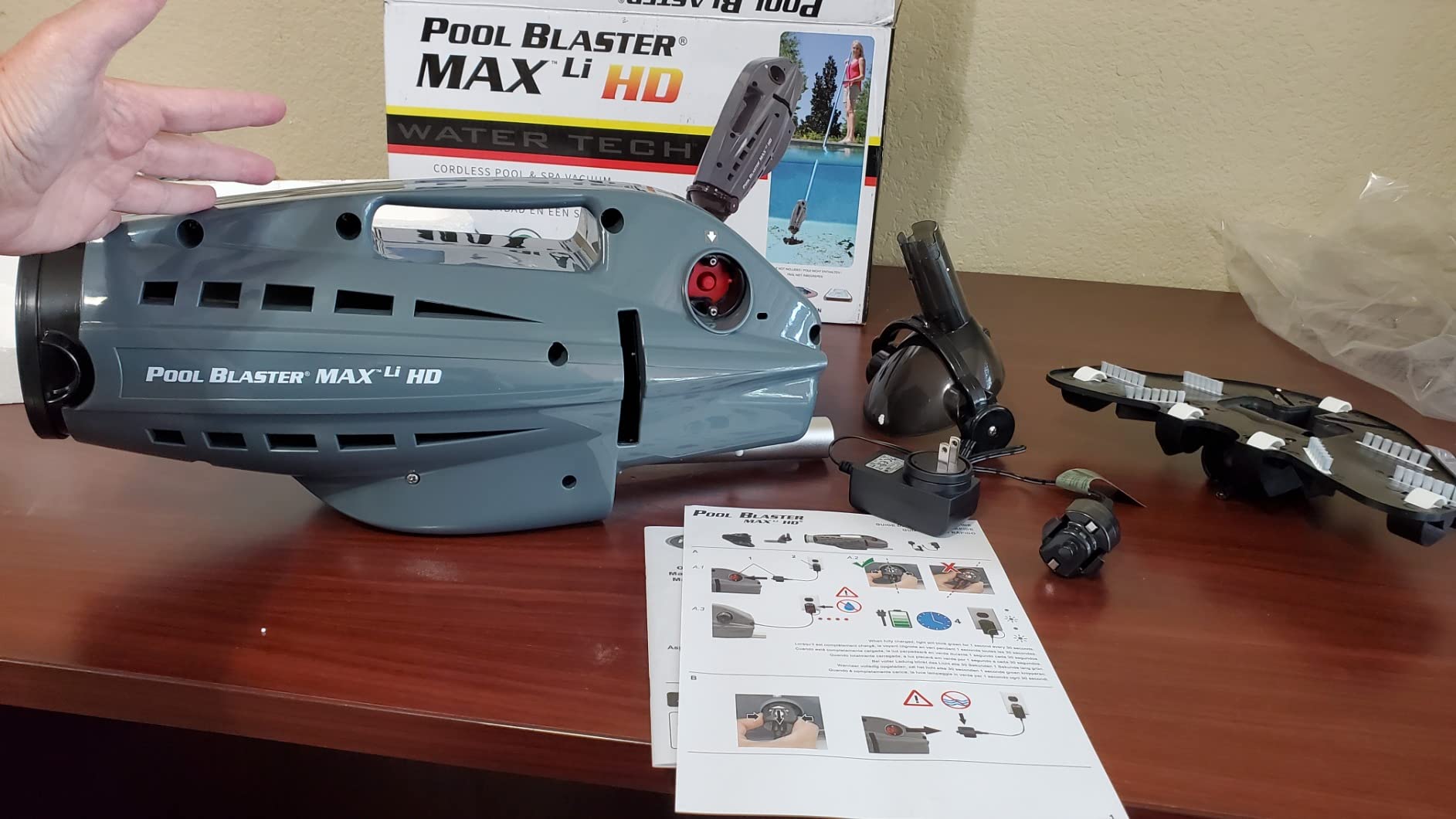
Now the honesty part. The debris bag is small and has no fill indicator, so it fills mid-job. When you switch the unit off and lift it out, dirty water and debris backflow onto your deck, which several owners call out as the messiest part of the experience. The suction inlet is roughly a quarter inch across, so large maple leaves are a poor match.
It also needs to stay submerged to hold suction, which rules out shallow steps. Runtime is up to one hour of lithium-ion use with a 4-hour charge, the longest charge in the handheld group, and battery durability over two to three seasons is the most common long-term complaint. At 5.8 pounds it is the lightest full-size unit here.
Why pair it with a robot instead of choosing one?
Because the failure modes are opposite. A robot covers open floor while you do nothing; a handheld reaches the places a robot cannot. Together they cover an entire above-ground pool, including stairs and the shelf, without buying two expensive machines.
Owners running this combination report the floor stays visibly cleaner between full cleans. If your pool has steps, a bench, or a sun shelf, this is the piece that finishes the job.
Who should skip it?
Skip it if you need large-leaf pickup in volume, and skip it if a mess-free deck matters more than raw suction, because backflow is a consistent report. Anyone wanting to charge overnight and clean in the morning should look at a faster-charging handheld instead.
Skip it for hot tubs and shallow water, where the design needs full submersion. A pole is not included, so budget for a standard telescopic pole if you want reach on a deep pool.
6. AQUAFYSH AQ10 Pro – Best Vacuum for Spas and Shallow Water
Rechargeable Pool & Spa Hot Tub Vacuum Cleaner – Dual Mode & Magnetic Drive System, 25µm Ultra Fine Mesh Filters for Hot Tub, Small Above Ground Pools – 70 Mins
Cordless handheld
0.6 ft minimum depth
70 min runtime
3.5 hour charge
2 pounds
Pros
- Spa head works in water as shallow as 0.6 ft
- Best rated average in the handheld group at 4.3
- 70 minute runtime for routine spa and pool upkeep
- Includes a pole reaching 6.7 ft and three filter socks
- Very light at 2 pounds
Cons
- 12.8 GPM flow rate is well below the class leaders
- 3.5 hour charge is the longest here
- 0.1 gallon capacity suits spas not whole pools
- 25 micron mesh needs frequent rinsing
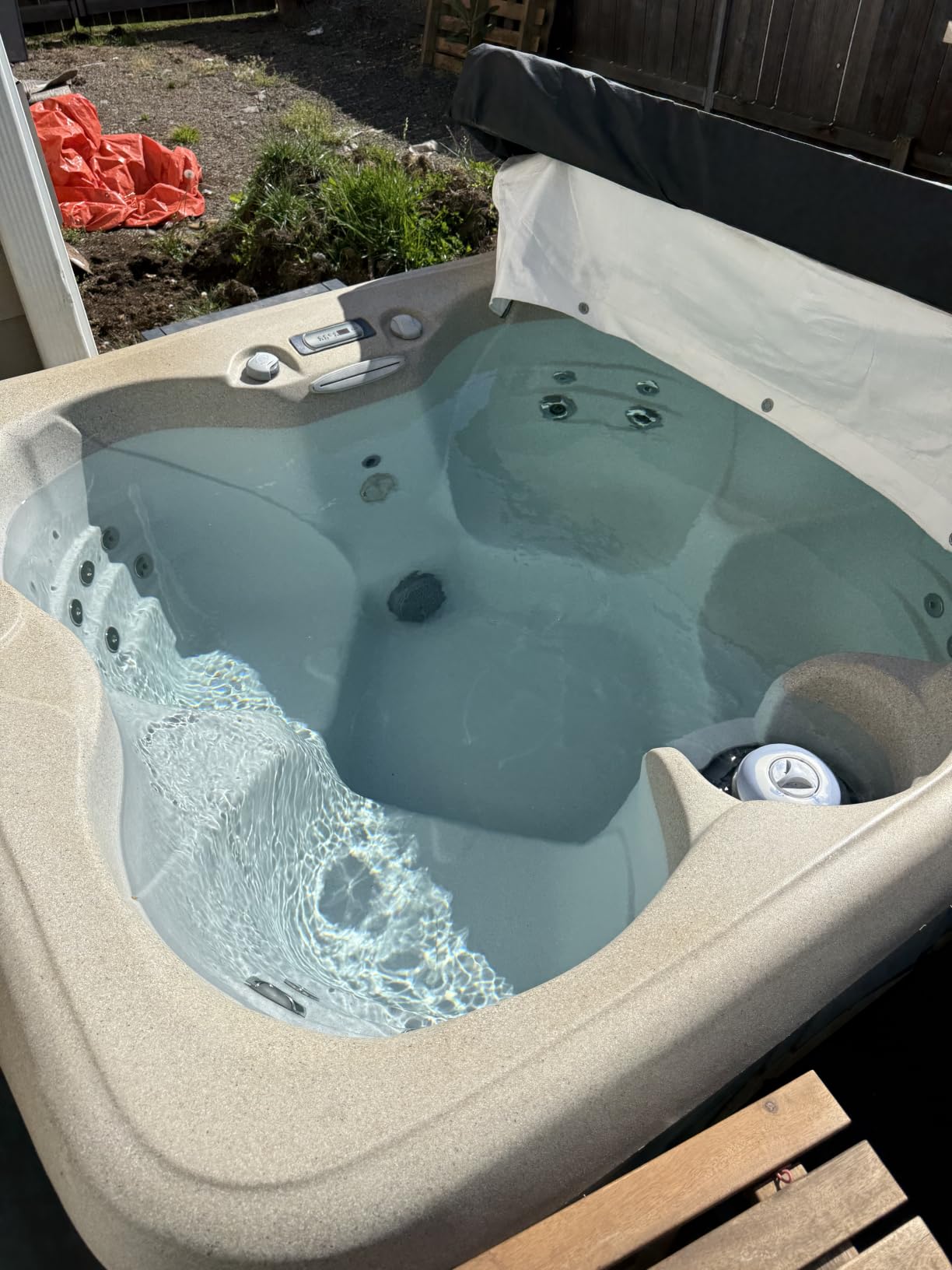
This is the specialist pick, and the specialty is shallow water. The low-water spa head operates in water as shallow as 0.6 ft, which is shallower than the standard head on most competing handhelds can manage, and the design is claimed to boost suction by about 20% in those conditions. If you have a hot tub, a kiddie pool, or the shallow tanning ledge of an above-ground pool, this reaches where others stall.
It also carries the highest average rating in the handheld group at 4.3 across 989 ratings, with about 70% five-star. Owners frame it as a specialist companion to a larger machine rather than a replacement, using it on spas, inflatable pools, and small above-ground setups, or on corners and steps alongside a robot.
The scale limit is real. Maximum flow is 12.8 GPM, well below the 18.5 GPM class leaders, and capacity is listed at 0.1 gallons. The 25 micron ultra-fine mesh filters are excellent for fine particles but need regular rinsing to avoid clogging. Charging takes 3.5 hours for up to 70 minutes of runtime, the least favourable ratio in this group.
The magnetic drive system is a durability story rather than a performance one. It is designed to reduce seal wear and leakage, and at 2 pounds the unit is light enough to move around a hot tub steps without thinking about it. A pole is included, giving an assembled reach of up to 6.7 feet.
When does shallow-water capability actually matter?
More often than expected on above-ground pools. A sloped or dished inflatable bottom means the shallow end is often under 1 foot of water, and that is exactly where sand and pollen collect against the wall. Standard heads either break the surface and lose suction or simply will not sit flat.
If you have a hot tub, an above-ground pool with a sun shelf, or a shallow inflatable, this is the pick. If your pool is a flat 4 feet throughout, you are paying for a feature you will not use.
Who should skip it?
Skip it for a full-size above-ground pool. At 12.8 GPM and 0.1 gallons of capacity, you would refill the filter several times in a single session, and a 3.5-hour charge makes the routine a chore.
Skip it if you want one tool that handles leaves in bulk. The ultra-fine mesh is built for particles, not for a maple pile, so a net still comes first in heavy leaf fall.
7. Zodiac Ranger – Best Suction-Side Cleaner for Rigid Above-Ground Pools
Zodiac Ranger Suction Side Automatic Above-Ground Pool Cleaner
Suction side
32 ft of feed hose
Self propelled
Connects to skimmer
1 year warranty
Pros
- No battery no charger and no power cord to route
- Arrives pre-assembled with 32 feet of feed hose
- One-moving-part design runs quietly with no hammer noise
- Deflector Wheel glides past steps ladders and corners
- Self-adjusting flow valve keeps it moving as the bag fills
Cons
- Will not run at all without a working skimmer and adequate pump flow
- Not recommended for Intex or soft-sided vinyl pools
- Performance is tied to your pump and filter capacity
- Feed hose can snag across larger pools
The Ranger is the different option in this list. It borrows suction from your existing pump and filtration system, which means no battery, no charger, and no cable across the deck. It also arrives fully assembled with 32 feet of feed hose included, so setup is connecting the hose to the skimmer and dropping it in.
Owners who already have a strong pump and a good filter frequently argue that a suction-side cleaner is the smarter purchase, and the spec sheet supports that framing. The AG Disc glides along the bottom, up the sides, and around steps, and the one-moving-part design means no hammer or flapper noise while it works. A self-adjusting Flowkeeper valve keeps it moving as the debris bag fills.
The Deflector Wheel is the small feature that earns its place. It helps the unit pass steps, ladders, and corners instead of catching on them, which is the usual reason suction-side cleaners stall halfway through a run. Owners in pool forums describe a suction-powered Baracuda as a serviceable upgrade path from a manual head, and the Ranger is the model they are describing.
Two constraints decide this for you. It needs a working skimmer and adequate pump flow, or it does not run at all, and it is built for rigid above-ground pools up to 72 inches of depth with dished-out bottoms, with soft-sided Intex liners specifically not recommended. At 15 pounds on a pool wall, retrieval is a genuine effort. And everything it pulls ends up in your pool filter, so backwash afterward rather than waiting.
Is a suction-side cleaner better than a robot?
For a rigid-walled pool with a good pump and filter system, it is a defensible first choice and owners on forums make that argument often. You add no battery to age, no charging routine, and the running cost is water you are already moving.
A robot is better if you want to leave the pool unattended while you work. A suction-side cleaner needs your pump running for the full cycle, and its debris is trapped in your filter until you backwash.
Who should skip it?
Skip it for soft-sided Intex or Bestway pools, where the manufacturer does not recommend it. Also skip it if your filter is undersized or your pump is marginal, because performance and even operation depend on flow rate.
Skip it if hose management bothers you. The 32 feet of feed hose has to cross the pool, and on wider setups it can snag. And at 15 pounds, it is the second-heaviest unit here, so plan how you get it back over the wall.
8. WYBOT A1 – Best Robot for Small Flat-Bottom Pools
WYBOT A1 Cordless Pool Vacuum Robot for Above Ground Pool, Greyblue
Cordless robotic
130 min runtime
1100 sq ft coverage
2280 GPH suction
2-3 hour recharge
Pros
- Cordless and tangle-free with no cable to manage
- Self-parking at the wall makes retrieval simple
- Dual-layer 180 micron filter and foam improve fine pickup
- Edge cleaning boost helps along pool walls
- Compact and light with a simple set and launch
Cons
- 2280 GPH suction is the lowest among these robots
- Not rated for slopes over 15 degrees or wrinkled bottoms
- Not rated for water deeper than 2.5 meters
- 130 minute runtime means a recharge between big cleans
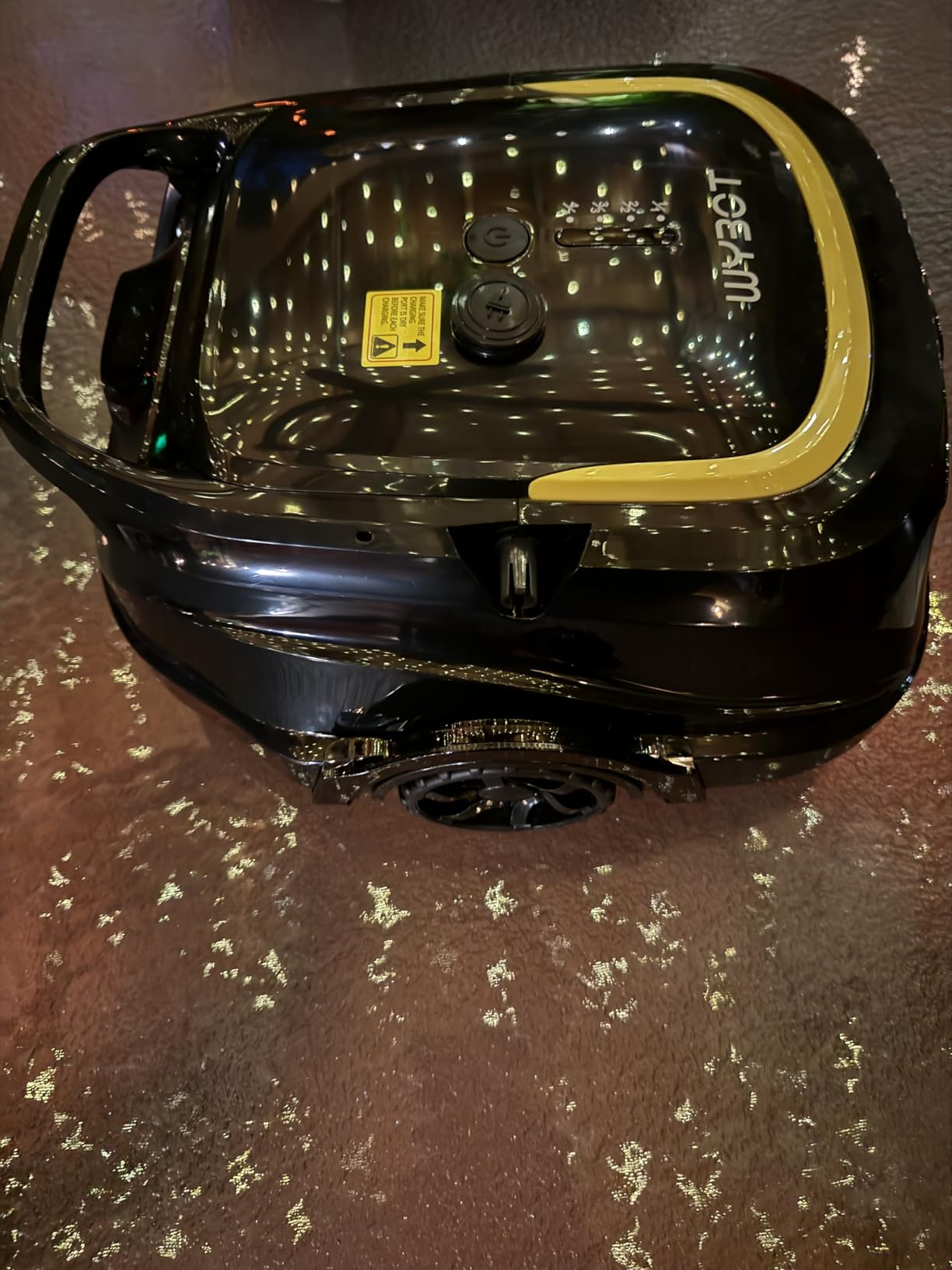
The A1 is built for the most common above-ground shape there is: a flat bottom with a vinyl liner and no slope to speak of. It is explicitly designed for above-ground pools, and its 2 to 3 hour recharge and 130 minute runtime are sized for a pool where one pass is enough. The 369 g battery keeps the whole unit light to lift, which matters a great deal over a pool wall.
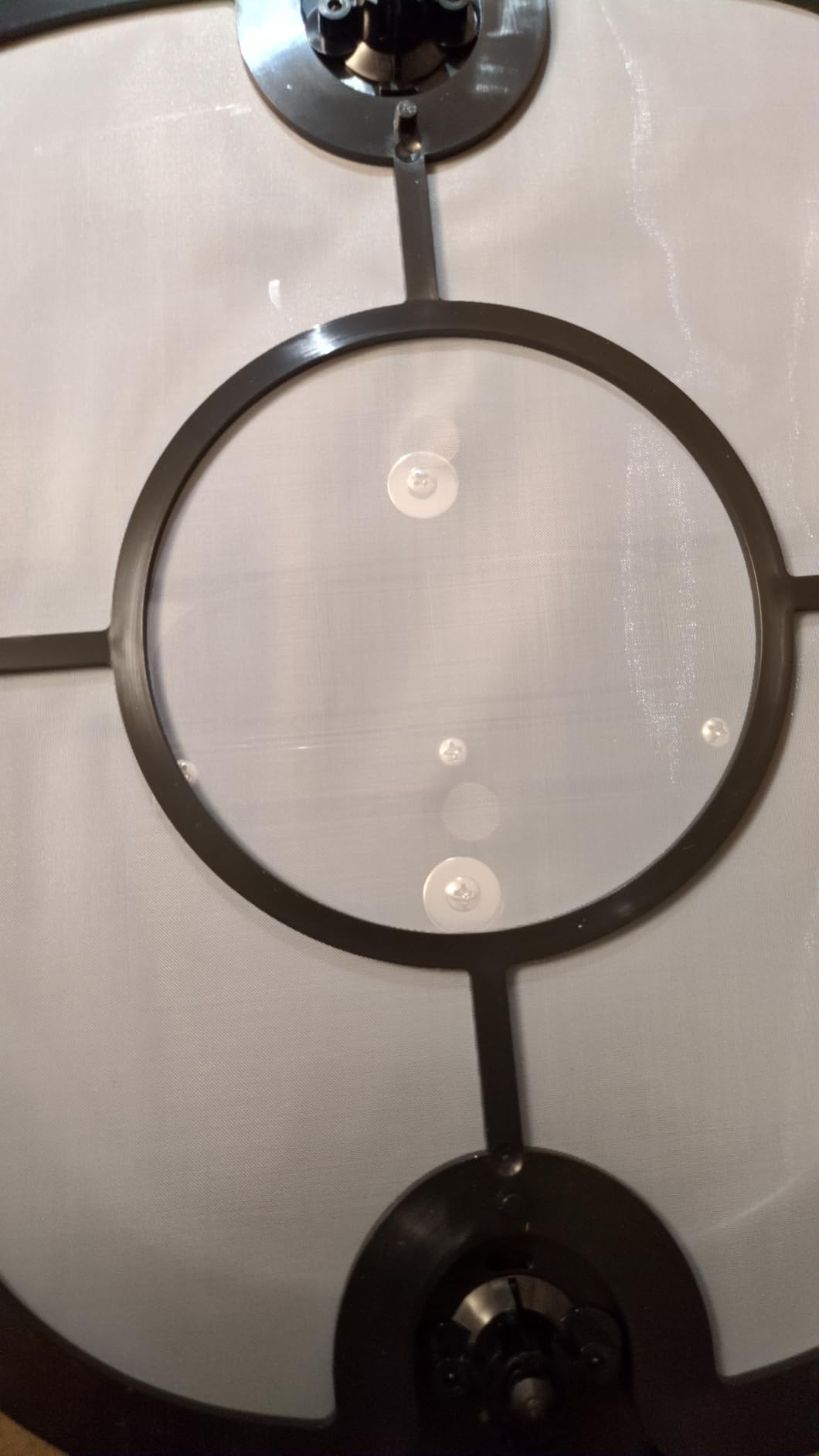
The filtration is the part worth paying attention to. It pairs a 180 micron precision filter with a textured foam layer, which the manufacturer rates as improving filtration efficiency by up to 50% compared with a standard single-layer setup. In practice that is the difference between picking up fine silt and pushing it back into the water, and 2,280 GPH of suction clears leaves, sand, and dirt from a floor this shallow.
Be clear about the limits in the spec sheet. It is not rated for pool slopes over 15 degrees or significant bottom wrinkles, and not for water deeper than 2.5 meters. Many inflatable frames wrinkle as they settle, so check your pool before assuming it applies. If your bottom is dished or sloped, this is the wrong robot.
Suction of 2,280 GPH is the lowest among the cordless robots here, and 130 minutes will not cover a large pool in one pass. Self-parking at the wall when the battery is low is a genuine saving grace, since you go to the edge rather than scanning the floor.
Is a robot sensible on a small above-ground pool?
For a 10 to 12 foot pool that is in use most days, yes, and this is the size where the trade-off tips in the robot’s favour. The pool is small enough that one charge covers it, and the unit is light enough that retrieving it is a non-event.
For a compact inflatable used a few weekends a summer, a skimmer and a net are often enough. The robot becomes a luxury, not a necessity.
Who should skip it?
Skip it if your pool bottom is sloped more than 15 degrees, wrinkled, or deep. Skip it if you have a large pool and a 130-minute runtime, because you will be recharging mid-season instead of finishing in one pass.
Skip it if fine sand is your main problem and you need the strongest suction available. At the low end of the flow figures here, heavier debris is what it handles best.
9. PoolMr YM-RPC01 – Best Robot to Lift and Empty
PoolMr Cordless Robot Pool Vacuum for Above Ground Pool,Grayish White
Cordless robotic
120 min runtime
1614 sq ft coverage
Quick drain body
40W motor
Pros
- Quick-drain design releases stored water in seconds for easy lifting
- Anti-return system keeps debris locked in when lifted
- Highest average rating in the roundup at 4.4120 minute runtime covers up to 1614 sq ft
- Climbs 0.2 inch wrinkles and slopes up to 15 degrees
Cons
- Floor only with no wall climbing and no sun shelf or step cleaning
- Small wheels can catch in dips and uneven bottoms
- Moves quickly which reduces effectiveness in tight areas
- Filter sponge reported to degrade after about 10 uses
The PoolMr solves a problem every robotic owner hits: getting a wet, heavy machine out of the pool. The quick-drain body releases stored water in seconds once you lift it, and combined with a 305.3 g battery the unit is unusually light in your hands. An anti-return system also locks collected debris inside rather than letting it dump back into the water when you raise the machine.
It carries the highest average rating in this roundup at 4.4 across 175 ratings, with 71% five-star. Underneath is a 40W motor with a 1-inch wide suction inlet and a 30 GPM purification system, and a dual-layer filter of 180 micron mesh plus dense cotton sponge. Runtime is up to 120 minutes covering up to 1,614 sq ft, which covers most above-ground pools in one pass.
It is a floor-only machine, and that is the central limitation. It does not climb walls and does not clean sun shelves, tanning ledges, or steps, so shallow corners stay for a handheld. The small wheels can also catch in dips or uneven bottoms, and owners report it moves quickly, which makes it less effective in confined areas such as a hot tub well.
What it does well on is geometry: it climbs over 0.2 inch wrinkles and drains and handles slopes up to 15 degrees, which defeats simpler robots. A boosted suction mode activates near walls for edges and corners, and it auto-parks at the pool edge on low battery. One filter sponge reportedly degraded after about 10 uses, so keep a spare mesh on hand.
Is retrieval weight worth paying attention to?
More than most roundups suggest. A robot that weighs 14 to 15 pounds dry is heavier still when full, and every above-ground pool owner has a wall between them and the deck. The quick-drain design here turns a two-person lift into a one-person job, and for anyone with back or shoulder limitations that is the deciding feature.
Auto-parking helps too, but only if the robot actually reaches an edge when the battery is low. Pooling the unit at the wall before lifting is the safest habit with any model.
Who should skip it?
Skip it if your pool has a deep end with steps, a sun shelf, or a waterline band that needs scrubbing, because none of those get touched. Pair it with a handheld if you want full coverage.
Skip it if your bottom is very uneven with deep dips, since the small wheels can get trapped. And note the small review base of 175 ratings, so long-term durability data is thinner here than for the higher-volume picks.
Which Type of Above-Ground Pool Vacuum Do You Need?
Do robotic pool cleaners work in above ground pools? Yes, and most of the models on this list are designed for them. The mechanical answer is simple: a robot is a self-contained machine with its own motor, its own filter, and its own power source, and none of that depends on plumbing your pool may not have.
Manual head on a pole is the baseline. It uses your pump through a hose, costs the least, and handles small pools well. It also puts every bit of debris into your pool filter, so you backwash afterward. Most owners add a skimmer and a leaf net before anything else, and for the smallest inflatables that combination is genuinely enough.
Suction-side automatic cleaners like the Zodiac Ranger do the same job with less arm work. They need a working skimmer, decent pump flow, and a rigid wall, which is why they suit frame and panel above-ground pools better than soft-sided inflatables.
Corded robotic cleaners such as the Dolphin Nautilus CC never need charging and have the largest ownership history of any category. The trade is a power cable from a dry outlet to the pool edge.
Cordless robotic cleaners remove the cable and add a battery. The cordless tax is charge time, and the range here runs from 1.5 to 3.5 hours to refill a battery that then delivers 60 to 300 minutes of cleaning. A 2 to 3 hour recharge for 120 to 130 minutes of runtime is realistic; set-and-forget is not.
Pressure-side cleaners are not an option above ground. They need a water return line to push water back into the pool, and above-ground pools do not have one. If a listing mentions booster pump compatibility and pressure-side operation, it is an in-ground product.
One more geometry note that no editorial competitor covers: many cordless robots are specified for flat bottoms. The WYBOT A1 is not rated for slopes over 15 degrees or significantly wrinkled liners, and the PoolMr handles 15 degrees with 0.2 inch wrinkle climbing. Inflatable frames develop wrinkles as they settle, so check your pool before assuming a robot fits.
On wall climbing, be skeptical above ground. An in-ground pool has a curved transition from floor to wall that a scrubber brush can climb. An above-ground pool meets a straight wall at a hard 90-degree corner, and the marketing language about climbing walls does not translate. Above-ground debris settles on the floor, which is the part that matters.
How to Choose a Pool Vacuum for an Above-Ground Pool?
Start with pool size. Below about 10 feet across, a skimmer plus a leaf net and a handheld covers it. Between 10 and 15 feet, a handheld or a compact cordless robot works well. Above 16 feet, prioritise runtime and basket capacity, because a robot that needs a second pass has halved your savings.
Next, check the bottom. Flat and level suits almost anything. Sloped past 15 degrees, or a wrinkled inflatable floor, narrows your robot choices to models rated for it, and pushes you toward a suction-side cleaner or a handheld.
Then match the power source to your site. A corded robot needs a dry outlet within cable reach of the pool edge and a safe route for the cable. A cordless robot needs somewhere to charge that is shaded and dry, and patience for the recharge. A suction-side cleaner needs a skimmer port you can reach and a pump with enough flow.
Look at filtration next, because it decides what you can leave behind. A 180 micron mesh plus foam or cotton layer catches fine silt that a single coarse basket lets recirculate. Sand and pollen punish a coarse filter, and you will see it in the water clarity rather than in the basket.
Finally, weigh retrieval. Above-ground pools have a wall, and a wet robot is heavier than its listed weight. A quick-drain body, auto-parking, and a low battery weight matter more here than in-ground, where robots are pulled with a skimmer. If you have any back or shoulder limits, make that the deciding criterion.
On total cost over a few seasons, the math favours the robot for anyone who vacuums weekly. A manual head is cheap and needs replacing when the mesh tears, but a mid-range robot that lasts five or more seasons spreads out fast. The middle path most owners land on is a robot for the floor plus a handheld for corners, and skimming handled separately.
How Often to Vacuum an Above-Ground Pool and What to Do When a Robot Stops
Above-ground pools need less vacuuming than in-ground pools because circulation is weaker and debris settles faster in corners. For a small inflatable used on weekends, once a week is usually enough. For a 16 foot or larger pool with trees overhead, twice a week during leaf fall keeps the filter from loading up.
For a manual or suction-side clean, the sequence is straightforward. Connect the hose to the skimmer, lower the head, sweep the floor from the deep end toward the shallow end so debris moves with the flow, then backwash your filter and empty the canister before putting the unit away. Skim first, always. A vacuum head pushing leaves around under a full skimmer just relocates the problem.
For a cordless robot, empty the basket and rinse the filter after every run, not every other run. Let the unit dry fully before storage, and charge it off the pool deck rather than on a hot surface.
If a robot keeps stopping mid-pool, the causes are usually one of four things. Runtime too short for the pool size means a second pass or a bigger battery. A full debris basket starves suction, so empty it and check the filter. A dirty filter mesh reduces flow across every model. And a wrinkled or sloped bottom can trap a robot that has run out of power, which is the case that ends with you fishing it out with a net.
To avoid a retrieval rescue, set the self-park or self-park-at-wall behaviour, or simply pick the unit up when it surfaces at the end of a cycle. If you do lift a robot from the bottom, lift slowly and let water drain back before you clear the wall.
One safety note on cordless units. Store them away from direct sunlight and out of unheated sheds in freezing weather, and never leave a charging unit plugged in overnight on a deck. Lithium-ion battery complaints in this category cluster around long-term heat exposure and age, not around normal weekly use.
Frequently Asked Questions
Do robotic pool cleaners work in above ground pools?
Yes. Robotic cleaners are self-contained, carrying their own motor, filter, and power source, so they do not need a return line or a skimmer port the way suction-side and pressure-side cleaners do. Most cordless models are specified for flat bottoms and shallower water, so check the slope and depth ratings against your pool before buying.
What is the best vacuum to use for an above ground pool?
It depends on the type of pool. A corded robot such as the Dolphin Nautilus CC suits rigid walls with a nearby outlet. A cordless robot such as the Beatbot Sora 10 suits large pools and soft-sided liners. A cordless handheld such as the Teguy V40 suits small pools and spot cleaning. Rigid pools with a good pump can use a suction-side cleaner.
How often should you vacuum an above ground pool?
Once a week is enough for most small and mid-size above-ground pools in normal summer conditions. Vacuum twice a week during leaf fall or after storms, and once every couple of weeks for a small inflatable used only on weekends. Skim before you vacuum, and empty the filter or backwash immediately afterward.
Why does my pool robot vacuum keep stopping?
The usual causes are a runtime shorter than the pool needs, a full debris basket starving suction, a clogged filter mesh reducing flow, or a wrinkled or sloped pool bottom trapping the unit when the battery runs low. Empty and rinse the basket and filter after every run, and use the self-park feature so a low-battery unit ends at a pool wall.
What is the average lifespan of a robotic pool cleaner?
Owners commonly get five or more seasons from a corded robot in normal service, and multi-year owners of the Dolphin Nautilus CC describe it as dependable over that span, though some report drive and power-supply failures closer to four years. Cordless units add battery aging as a limit, so storage away from heat and cold extends usable life.
Can I use an in-ground pool vacuum on an above ground pool?
You can, but check the bottom and wall specs first. Many budget robots are advertised for in-ground pools and are not rated for slopes over 15 degrees or significantly wrinkled liners, which are exactly the conditions an above-ground inflatable develops as it settles. Pressure-side cleaners, by contrast, cannot be used at all because above-ground pools have no water return line.
Conclusion
For most people shopping for the best pool vacuums for above ground pools, the Dolphin Nautilus CC is the safest first buy. It has the largest ownership history on this list, no battery to age, and a filter basket that rinses in seconds. Plug it in, drop it, and walk away for two hours.
If you would rather have no cable across the deck, the Beatbot Sora 10 covers the largest pools on a single charge, and the WYBOT A1 covers the smallest flat-bottom setups. For anything under about 15 feet that you will use weekly, the Teguy V40 or the Enhulk PC10 gets the floor clean with no robot at all. Owners on r/AboveGroundPools consistently pair a submerged vacuum with a surface skimmer, and that is the combination we would build.
Whatever you choose in 2026, skip the pressure-side cleaners, check your pool’s bottom slope before buying a robot, and factor in how heavy the unit will be wet. Those three checks prevent most of the disappointments we hear about.