
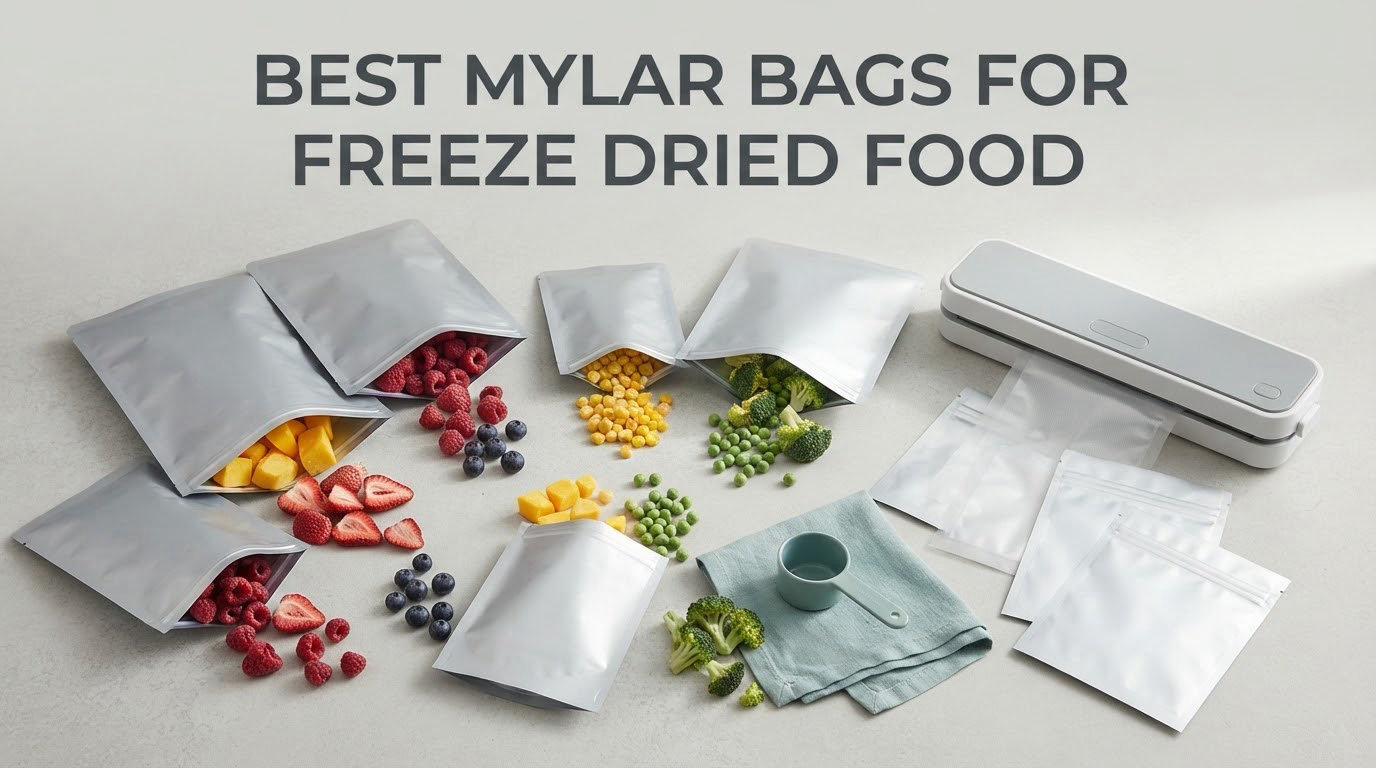
I freeze dry almost every weekend, and the part that used to trip me up was not the machine. It was the bag. If you pack a strawberry into a thin pouch with no absorber, you have made a very expensive bag of orange powder that smells like the inside of a freezer. Getting the best mylar bags for freeze dried food right comes down to three numbers: mil thickness, bag volume, and the cc rating of the oxygen absorber that goes inside.
Here is the direct answer before any brand names. Freeze-dried food wants 5 to 7 mil per side, which is 10 to 14 mil total, and one oxygen absorber sized to the bag volume. Freeze-dried food is already at 0 to 5 percent moisture, so unlike dehydrated fruit or vegetables it does not need a desiccant. Oxygen absorbers remove oxygen, which is the only thing still working against your food in a sealed bag.
That advice resolves the argument you will find in every forum. General preparedness pages say 5 mil is plenty. Freeze dryers say anything under 10 mil total feels flimsy in the hand and creases when you push fruit into it. Both are describing real bags, but they are solving for different food. A bag holding flour can sit still for a decade. A bag holding freeze-dried apples is bulky, sharp-edged, and gets handled constantly, which is why thickness and fill height matter more here than in any generic long-term food storage guide.
I compared the twelve kits below on the things that actually change how a bag performs after a season of use: total mil and the per-side number behind it, whether the film has an internal aluminum layer, how the absorbers are packaged, and whether the pouch is flat, gusseted, or built for boiling water. All twelve earn their place, but they are genuinely different tools, and picking the wrong one is how people end up resealing the same bag in month three.
Table of Contents
Top 3 Mylar Bags for Freeze Dried Food Storage (October 2026)
Three kits stand above the rest, and each solves a different problem. The Wallaby 10 mil bundle is the one I keep coming back to because it ships with bags, absorbers, and labels already matched together. The SHXWELL kit is the one I suggest when someone wants three bag sizes and a lot of absorbers in a single box. The Pleasant Grove Farm pouches are the pick when the bag has to hold boiling water and stand up on a camp table.

Wallaby 10 Mil Multi-Size…
- 10 mil total
- internal aluminum layer
- 100 bags with 100 400cc absorbers and labels
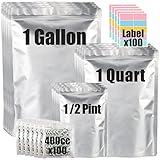
SHXWELL 12 Mil Three-Size Kit
- 12 mil total
- three bag sizes
- 150 vacuum-packed 400cc absorbers

Pleasant Grove Farm 7 Mil…
- 7 mil gusseted stand-up
- zip top plus heat seal
- built for boiling water
The Best Mylar Bags for Freeze Dried Food in 2026
Every bag in this table appears in the reviews below with the same mil rating and the same absorber story, so you can scan the whole lineup at once and then jump to the full write-up. Read the features column for the film construction, not the marketing word for it, because two of these kits advertise different mil numbers for different bag sizes inside the same box.
| Product | Specs | Action |
|---|---|---|
| Wallaby 10 Mil Multi-Size Open Top Kit |
|
Check Latest Price |
| SHXWELL 12 Mil Three-Size Kit |
|
Check Latest Price |
| Pleasant Grove Farm 7 Mil Zip Top Pouches |
|
Check Latest Price |
 Wallaby 15 Mil MRE Zip Pouches Wallaby 15 Mil MRE Zip Pouches |
|
Check Latest Price |
 FoodVault 16 Mil MRE Pouches FoodVault 16 Mil MRE Pouches |
|
Check Latest Price |
 SYMYNELEC 100-Pack Multi-Size SYMYNELEC 100-Pack Multi-Size |
|
Check Latest Price |
 Home Sensei 1 Quart 60-Pack Home Sensei 1 Quart 60-Pack |
|
Check Latest Price |
 ROYLO GLOBE 120-Bag Variety Pack ROYLO GLOBE 120-Bag Variety Pack |
|
Check Latest Price |
 Opalpros 70-Pack 14 Mil Kit Opalpros 70-Pack 14 Mil Kit |
|
Check Latest Price |
 BELLE KR 5×8 Pint Bags 300-Count BELLE KR 5×8 Pint Bags 300-Count |
|
Check Latest Price |
 Wisesorb 1 Quart 30-Pack Wisesorb 1 Quart 30-Pack |
|
Check Latest Price |
 Circloophs 5×8 Window Pouches 300-Count Circloophs 5×8 Window Pouches 300-Count |
|
Check Latest Price |
1. Wallaby 10 Mil Multi-Size Open Top Kit Is the Most Complete Freeze-Drying System
Wallaby 10 Mil Thick Multi-Size Open Top Mylar Bags, Absorbers (100-pack)
10 mil total
100 bags, 100 400cc absorbers, 100 labels
Open top flat, heat seal only
Pros
- Internal aluminum layer adds real puncture resistance
- Absorbers sealed in sets of ten stay potent
- Multi-size assortment handles fruit
- meat and pantry staples
- Everything ships together in one box
- Large pool of verified reviews
Cons
- Open top flat bags need a heat sealer and cannot be reopened
- Flat bags do not stand upright while you fill them
- Bags will not collapse like a vacuum bag
This is the kit I hand to friends who have just bought their first freeze dryer. You get 100 bags, 100 packets of 400cc oxygen absorbers, and 100 identification labels, and the quantities are already matched so you are not sorting small foil squares at the counter at midnight.
The film is 10 mil total with an internal aluminum layer, and that layer is the reason I keep recommending it. Freeze-dried pineapple and freeze-dried meat have edges, and a bag without a foil reinforcement develops pinholes exactly where the food presses hardest against the wall. Reviewers report hundreds of uses with no punctures or lost seals, and several mention repurchasing the same kit more than once.
One detail in the listing solves a question that panics almost every beginner. The manufacturer states plainly that these bags will not shrink down like a vacuum bag, because an absorber removes oxygen rather than air, and oxygen is only about a fifth of the volume. A bag that looks full after sealing is sealed correctly.
These are open top, flat bags, so plan on a heat sealer and skip the zipper entirely. The tradeoff is honest: you get a permanent seal that will hold for decades, and you give up the ability to pop open a single serving. For long-term freeze-dried harvest storage that is the right trade, and it is why this kit leads my list.
What a 400cc absorber actually covers
A 400cc absorber is sized for roughly a quart of bag volume, so one per bag works for the mid-size bags in this mix. If you pack a 10 by 14 inch bag with a light, bulky food like freeze-dried apples, use two. The rule is simple: match the absorber to the volume of the space you sealed, not the weight of the food.
When to choose something else
Skip this kit if you want to store single servings you eat straight from the bag, because an open top flat pouch cannot be reopened. For boil-in-bag meals, standing pouches, or quick-access snacks, the resealable gusseted options further down fit the job better.
2. SHXWELL 12 Mil Three-Size Kit Gives You the Most Bag Variety Per Purchase
100pcs Mylar Bags for Food Storage 12 Mil Thick with 150x400cc Oxygen Absorbers & Labels, 3 Sizes (1 Gallon, 1 Quart, 1/2 Pint) – Stand-Up, Resealable & Heat Sealable for Long Term Food Storage
12 mil total, 6 mil per side
1 gallon, 1 quart, 1/2 pint
150 400cc absorbers, 100 labels
Pros
- Heaviest gauge in this group with an added aluminum layer
- Three bag sizes in one box
- Absorbers arrive individually vacuum packed
- Color coded labels simplify sorting
- Widely compared favorably to established brands
Cons
- Absorbers carry no size marking so you sort them yourself
- No indicator to show whether an absorber is still active
- Heavy gauge needs more heat and care when sealing
This is the kit I recommend to someone who does not want to commit to a single bag size. You get 1 gallon, 1 quart, and 1/2 pint bags in the same box, which matches the way most people actually pack: a few large bags for bulk, a handful of quarts for meals, and a supply of small bags for fruit candy and single portions.
Thickness is 12 mil total, which works out to 6 mil per side, plus a separate internal aluminum foil layer for puncture resistance. That is the thickest film of the twelve kits here, and the three-layer construction is a PET, aluminum foil, and PE build. It is also the kind of film that fights you a little at the sealer, so expect to dial your heat up rather than down.
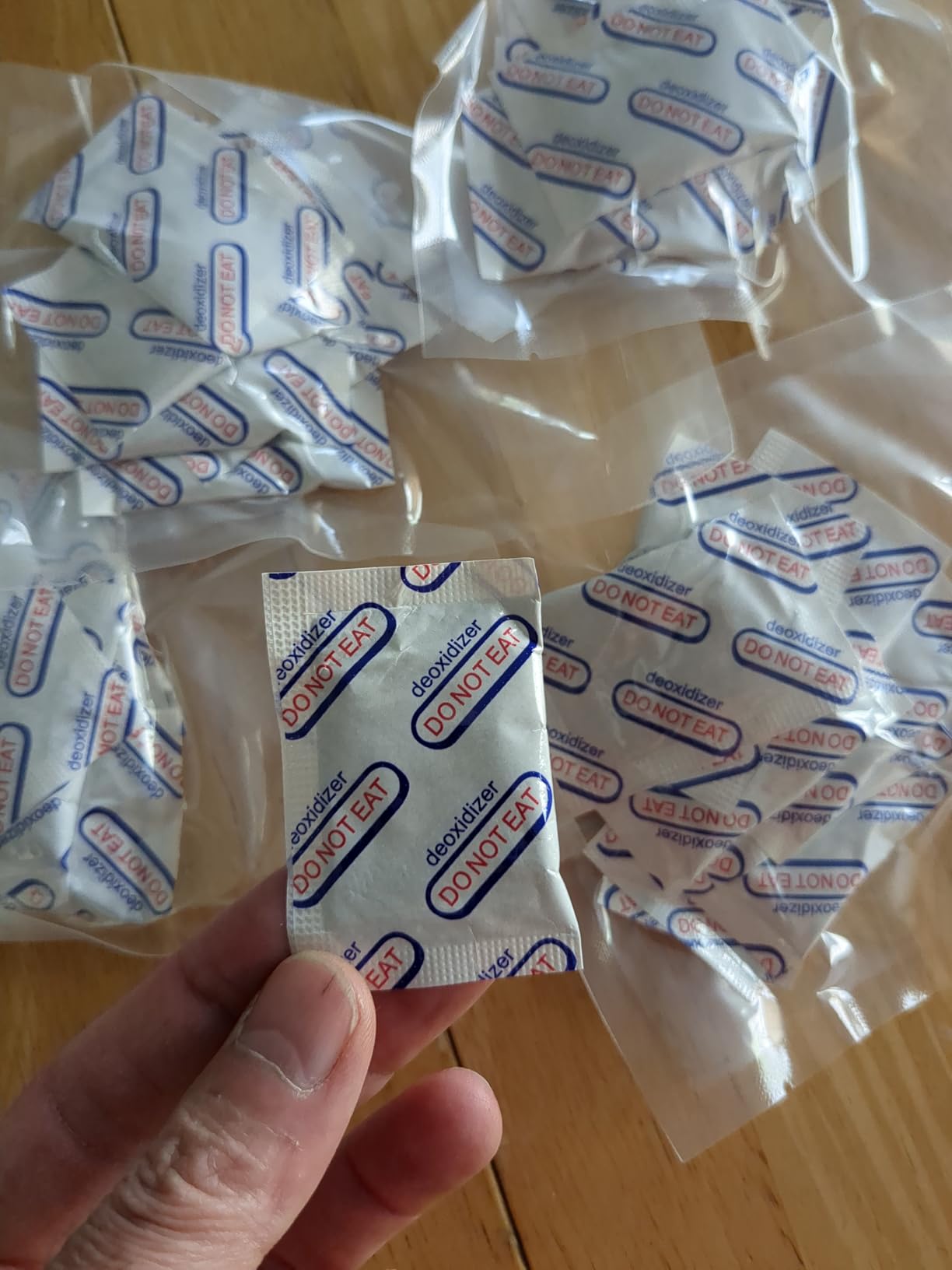
The absorber packaging is the detail I point out to anyone buying this. Each set of ten comes vacuum sealed in its own pouch, which means the absorbers sitting in the back of your cupboard for a year are not the same as fresh ones. Buyers with more than 100 bags of food to pack report working through the supply steadily rather than dumping the whole lot into a jar.
Watch one tradeoff before you buy: the absorbers are not marked by bag size. If you plan to pack a full box in one session, sort them into three containers first. Reviewers also note the heavy gauge wants a higher sealer setting and more attention to the seal line than lighter films.
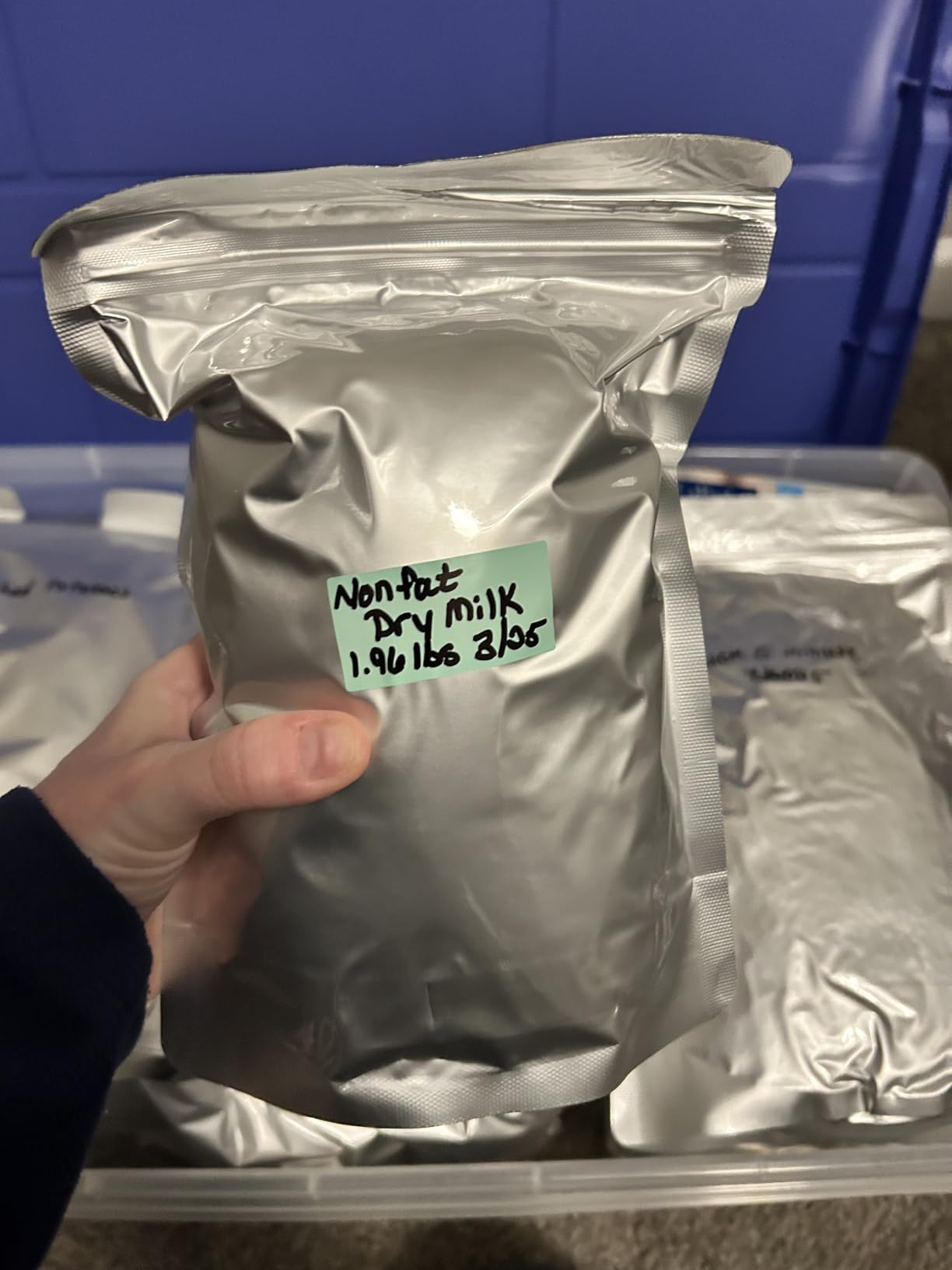
Does the zipper work for long-term storage
The zipper is for daily access, and the manufacturer is clear that you heat seal above it for storage. Think of the zipper as a temporary lid. I zip, fill, and then run the top through the sealer, leaving a generous strip above the zipper line for a permanent closure.
When to choose something else
Choose a different kit if you pack only one size of food, because the mixed assortment means you will accumulate small bags you may never fill. For boil-in-bag eating, the pouch shape here is not built for standing up under boiling water.
3. Pleasant Grove Farm 7 Mil Zip Top Pouches Are the Best for Rehydrating in the Bag
Pleasant Grove Farm 7 Mil Zip Top Mylar Bags Stand Up Gusseted Pouch in Multiple Sizes (50, 1 PINT 6 x 8)
7 mil mylar and foil
6 by 8 inch, 50 count
Gusseted, zip top plus heat seal
Pros
- Highest average rating in the group at 4.8
- Boiling water can be poured straight into the pouch
- 7 mil gauge handles hard items like scrambled eggs
- Zip top plus tear notches make refill cycles easy
- Food contact approved and BPA free
Cons
- Zipper ships closed and can be hard to open
- A few reports of the zipper tearing when forced
- Isolated reports of missing gussets or thin film
- Sharp pasta shapes have punctured a few bags
If your plan is to eat freeze-dried food on a trail with nothing but boiling water, this is the shape you want. The pouch is gusseted at the bottom so it stands on its own, and the film is engineered to withstand boiling water poured directly in. That combination is what lets you reconstitute a meal in the packaging instead of dirtying a pot.
The 7 mil gauge is described by the manufacturer as 40 percent thicker than 5 mil bags, and reviewers with home freeze dryers say it holds up against hard ingredients such as freeze dried scrambled eggs. At 4.8 average, this listing carries the highest rating of the twelve I tested, and the reviews are dominated by people who switched away from the bags bundled with their machine.
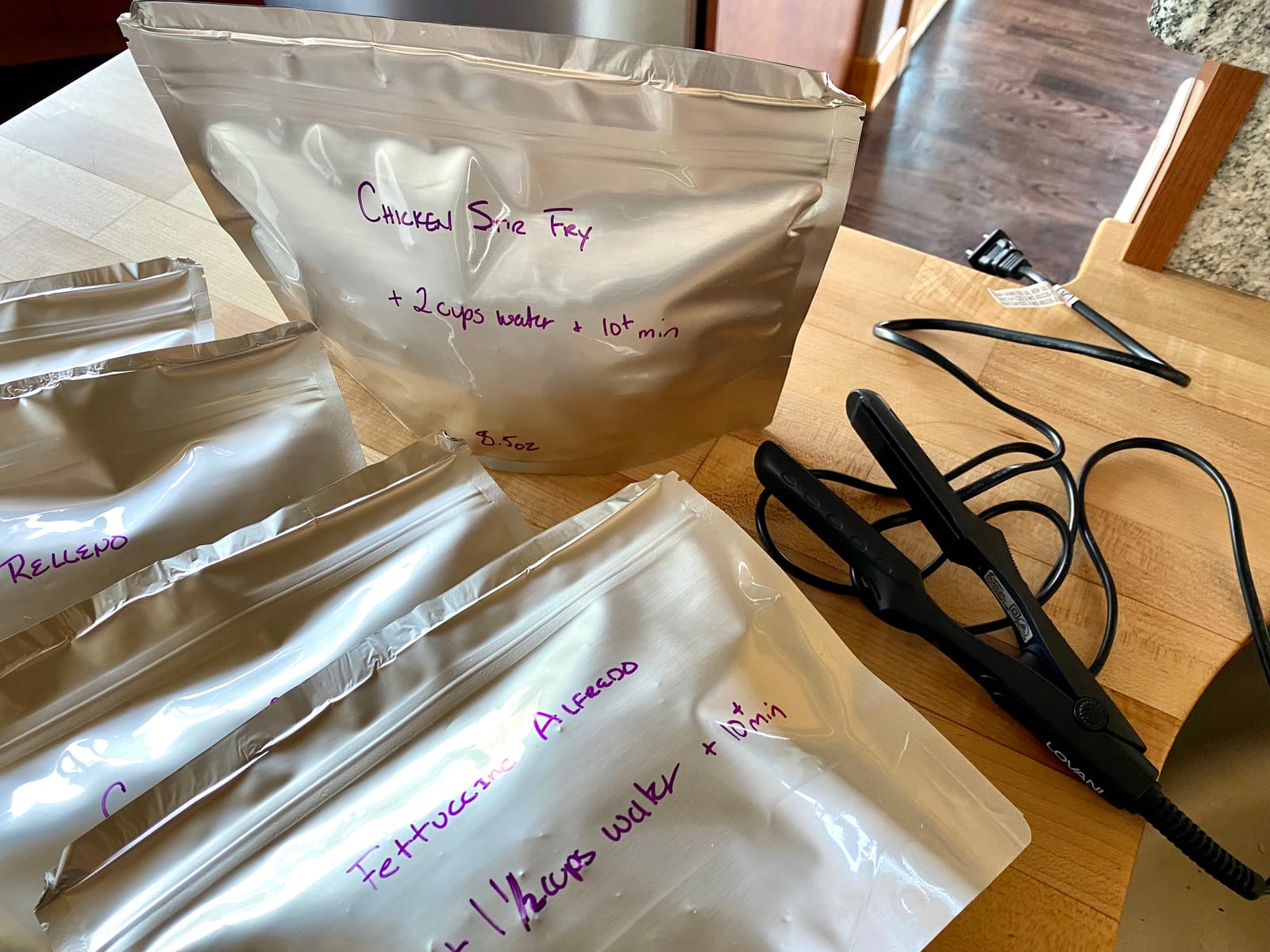
The zip top makes this a genuinely reusable pouch rather than a single-serving sachet. Fill, zip, and later top off a partial bag with couscous or seasoning, which is a habit that shows up constantly in the reviews. Multiple sizes are offered, including single-meal and double-meal formats, so you can standardize portions across your whole harvest.
One practical complaint appears more than once: the zipper arrives closed, and if you have limited hand strength you may find it difficult to open on the first attempt. A few reviewers also report punctures after rehydrating sharp shapes such as pasta. If either matters to you, open the zipper with a bag opener or a pair of kitchen shears rather than your thumb.
Will it work with a vacuum sealer
Yes, with a caveat. Reviewers run these through a vacuum chamber sealer on the moist setting for measured single servings, which gives you a tight portion and a short shelf life for a week of lunches. For two-decade storage, seal above the zipper with an impulse sealer instead.
How to test the seal before you trust it
Fill a test bag with a small amount of food, add a correctly sized absorber, and seal. Wait a few hours, then squeeze gently across the seal line. A bag that has hardened and shows no give has held; a bag that still feels soft and pillow-like at the seam did not seal, and a second pass is usually the fix.
4. Wallaby 15 Mil MRE Pouches Are the Safest Choice for Boil-in-Bag Meals
Wallaby MRE Meal 15 Mil Gusset Mylar Bags, Oxygen Absorbers (30-Pack)
15 mil with internal aluminum layer
8.5 by 6.5 inch, 30 count
Gusseted, zip top, absorbers and labels
Pros
- 15 mil film with an internal aluminum reinforcement
- Curved corner seals leave no crevices for food to stick
- Stands upright during in-bag rehydration
- Works with an iron or straightener for permanent seals
- Included labels survive a wash cycle
Cons
- The zipper strip blocks vacuum sealing machines
- The wide and short shape is harder to close when full
- A few pouches show surface impressions from packaging
Several long reviews on this listing read like meal-kit diaries, which tells you what this bag is for. People build homemade ready-to-eat pouches with oats, dried fruit, soup mix, and quick cooking rice, then pour boiling water in at camp and eat straight from the bag. For that workflow, the 15 mil gauge with an internal aluminum layer is the reason I trust it over lighter films.
The design detail I did not expect to care about is the curved corner seal. Straight square seams create crevices, and a rehydrated meal sticks in them, which means you are eating around the edges and washing the bag is more work. Reviewers single out the rounded corners as the reason these clean up well, and the gusset lets the pouch stand while you eat.
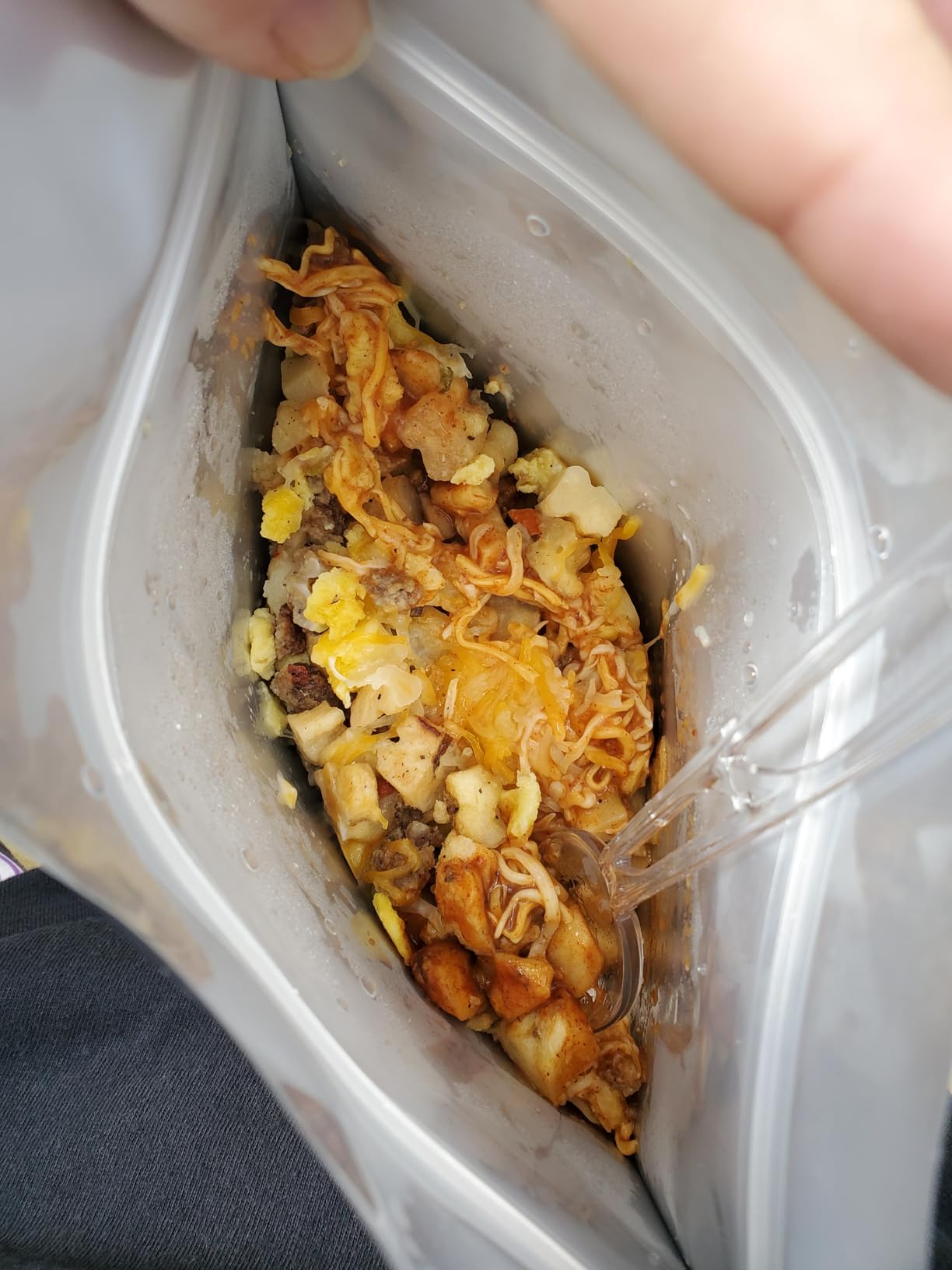
Fill amounts are adjustable, and the recurring pattern in reviews is a partial pouch topped off later with couscous or seasoning. Because the film is dishwasher safe, a pouched meal that gets opened in the field can still be rinsed and reused on a later trip rather than discarded after one use.
The real limitation is mechanical. The zipper strip occupies the width of the top, so this pouch will not run through a FoodSaver style vacuum chamber. Long-term users switch to an iron, a hair straightener, or an impulse sealer above the zipper, and that works reliably. Know which tool you will use before you buy.
How much food fits in one pouch
At 0.4 liters of stated capacity, a pouch like this is sized for a single serving plus enough headspace for water. Headspace matters more here than with flour, because boiling water displaces air as the food rehydrates and a completely full pouch will not have room to work.
When to choose something else
Pick a different bag if your priority is stacking compactly for a small pack. The wide and short shape packs a little awkwardly, and reviewers note that the top seal strip is narrower than on some competing pouches, which limits how much you can seal in one press.
5. FoodVault 16 Mil MRE Pouches Take the Heaviest Film in This Lineup
MRE Mylar Bags, 16 Mil Total Thickness, Stand-Up Resealable Pouches for Long-Term Food Storage, Freeze Dried Meals & Backpacking [50-Pack | 9″ x 6.5″ x 4.25″]
16 mil total, 8 mil per side
9 by 6.5 by 4.25 inch, 50 count
Stand-up, resealable, vacuum friendly
Pros
- Heaviest total gauge here at 16 mil
- Resists punctures inside a vacuum chamber
- Handles boiling water without delaminating
- Stands up and the wide mouth reaches the bottom
- Holds roughly 40 percent more than comparable pouches
Cons
- Shorter than most cook-in-bag meals so food bunches up
- Bottom seam is hard to clean thoroughly
- Top seal strip is narrow
- Oxygen absorbers are not included
This is the newest listing in my group, with the smallest review pool, and the ratings are still consistently strong. The 16 mil total figure is honest, which is rare in this category, and reviewers emphasize that the film is genuinely heavier than what they were using before and does not puncture in a vacuum chamber.
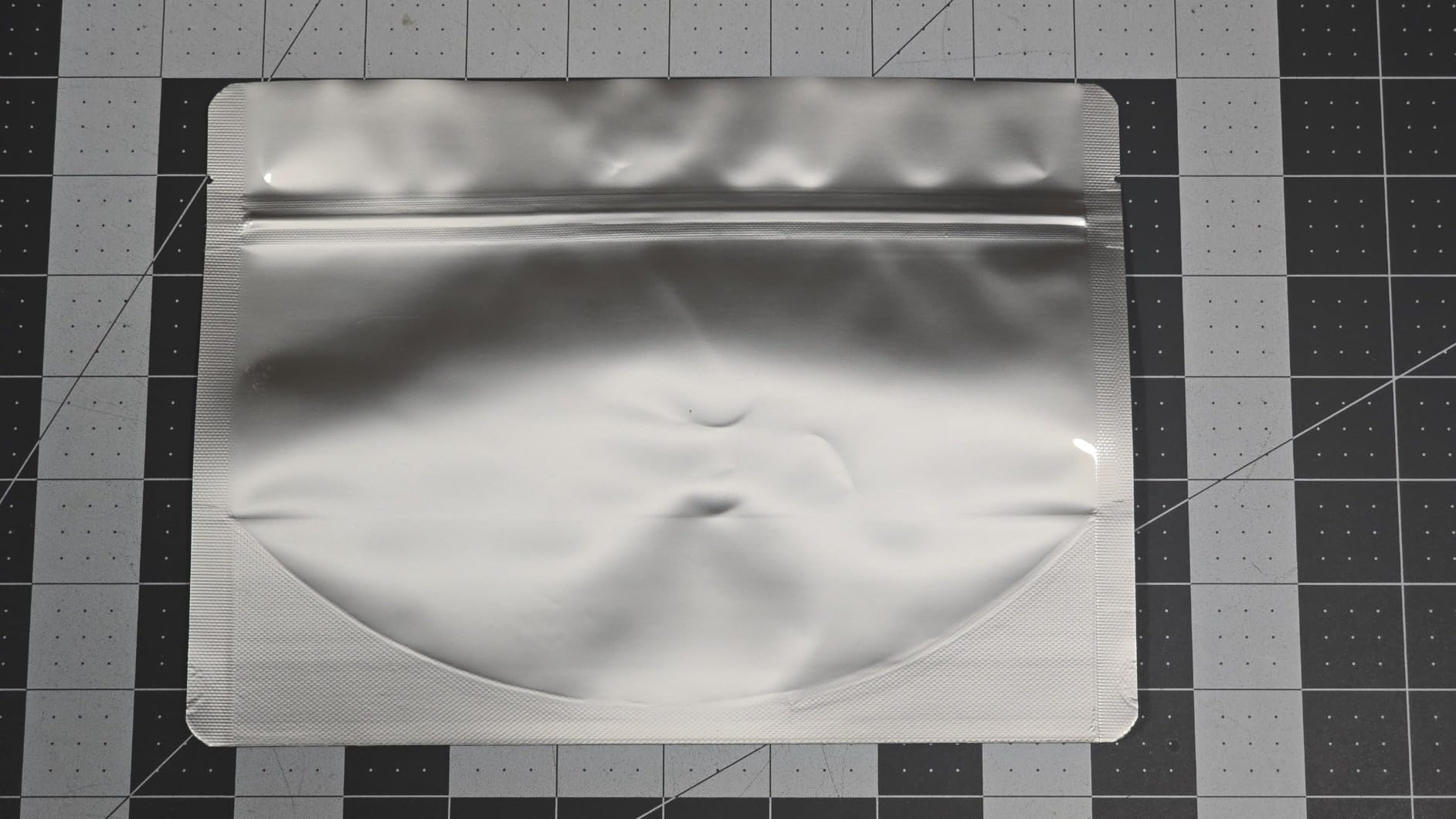
The wide mouth is the feature that changes the eating experience. A narrow pouch traps food at the bottom corners where a spoon cannot reach, and you end up shaking water around to get at the last of it. Reviewers note that spoons reach the bottom easily here, and the manufacturer states the pouch holds up to 40 percent more than other resealable mylar pouches of the same class.
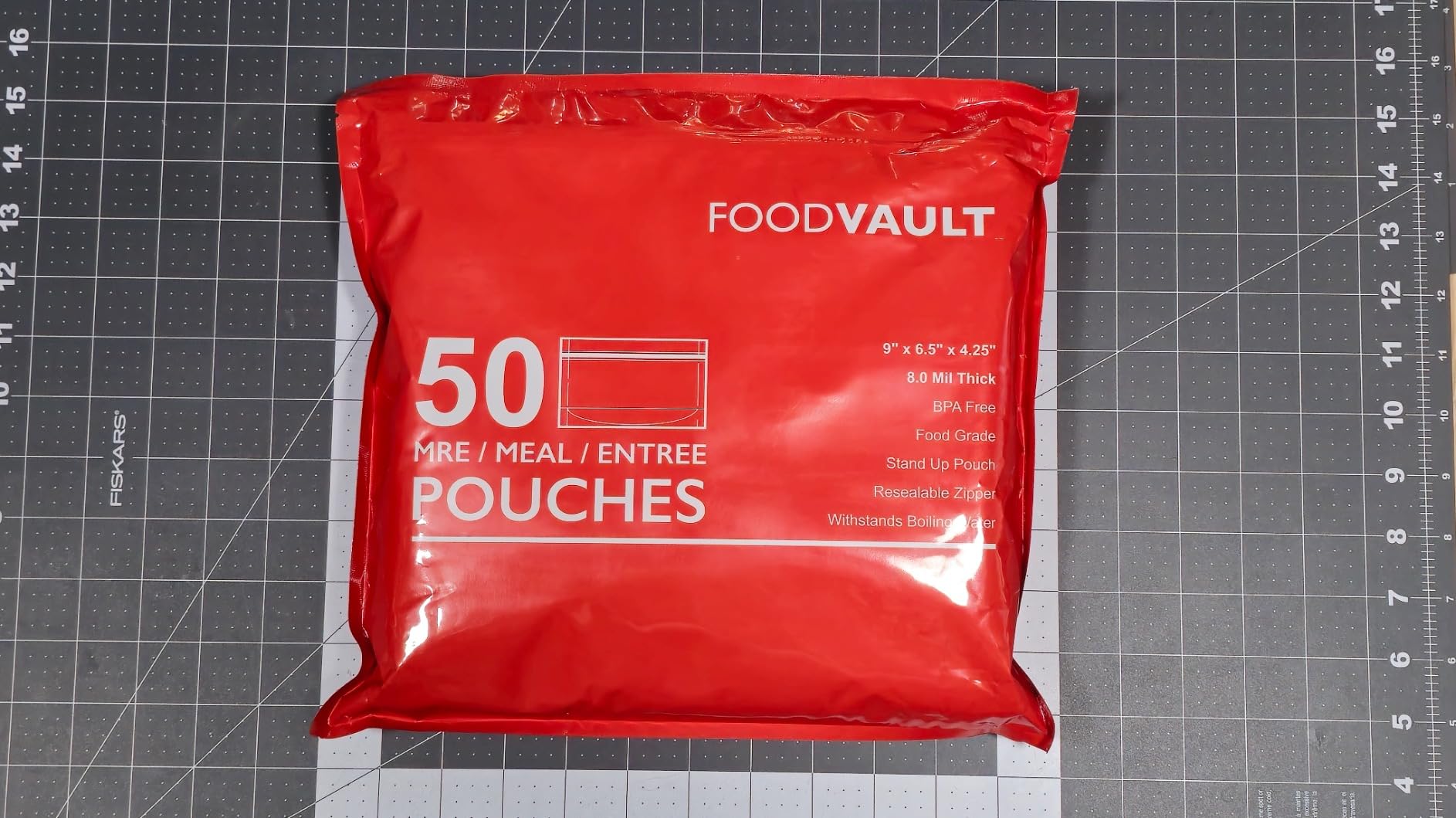
It is built for a boil-in-bag workflow: add water directly, wait for the meal to rehydrate, and eat from the pouch. The film is food grade laminated mylar and BPA free, and the listing positions it specifically for freeze dried meals and backpacking rather than for dry pantry goods.
Two things to plan around. Absorbers are not part of the pack, so buy them separately and size them to the pouch. And the geometry is wide but short, which means a full pouch of freeze-dried food bunches into a tube rather than packing flat, and the bottom seam resists a thorough rinse, so reuse in the field is limited.
Can you seal these with an iron
Yes. The zipper reseals for short-term access and the top can be heat sealed for long-term storage, and reviewers use a standard iron or straightener for the permanent pass. A dedicated impulse sealer is faster once you know where your heat setting sits, but it is not required.
What shelf life should you expect
The manufacturer ties the 16 mil film and a correctly sized oxygen absorber to a 25 to 30 year target for freeze-dried food in a sealed pouch. Treat that as a properly packed bag in a cool, dark location, not a bag sitting on a warm pantry shelf.
6. SYMYNELEC 100-Pack Covers Three Sizes and Lots of Absorbers
SYMYNELEC 100-Pack Mylar Bags with 400cc Oxygen Absorbers for Food Storage
11.8 mil on gallon bags
1 gallon, quart, and half pint
55 400cc absorbers, 112 labels
Pros
- Three bag sizes in a single pack
- Absorbers individually vacuum sealed in groups
- Food grade PET
- foil
- and PE construction
- Freezer safe and smell proof for coffee and seeds
- Stand-up design simplifies cabinet storage
Cons
- Long-term storage still needs a separate heat sealer
- Thickness varies by size so small bags are thinner
- Matching absorber strength across sizes takes judgment
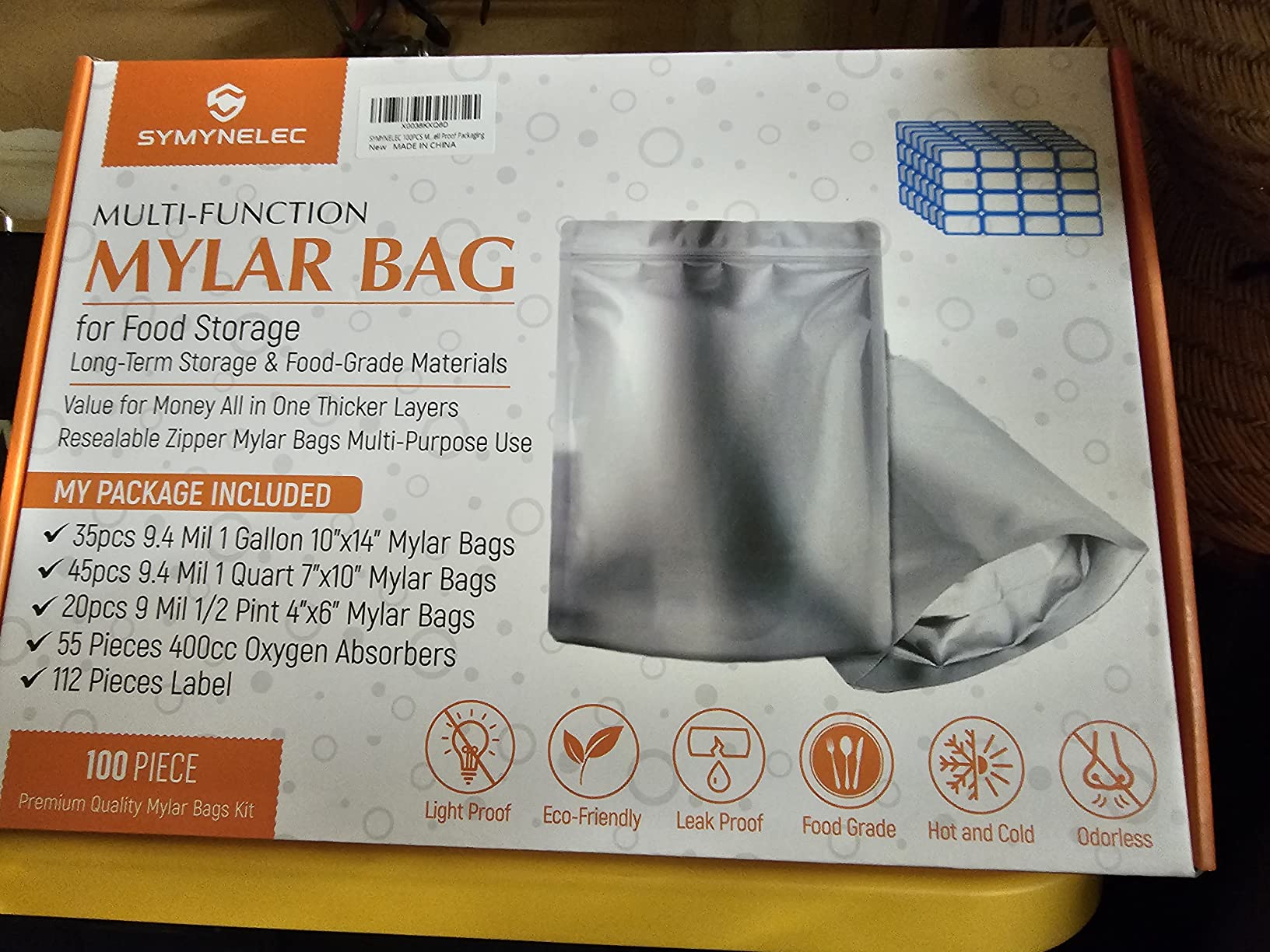
This is the kit most often bought alongside a separate sealer, and the reason is simple. Every bag in the pack has a zipper for daily use, and the listing is explicit that long-term storage requires a hot iron or a heat sealing machine. Nothing in the box makes a permanent seal on its own.
The size breakdown is where this kit earns its keep: 35 one gallon bags at 10.2 by 13.8 inches, 45 quart bags at 7.1 by 10.2 inches, and 20 half pint bags at 4.3 by 6.3 inches. For someone who packs a summer harvest in several passes, having all three on the shelf removes the guesswork.
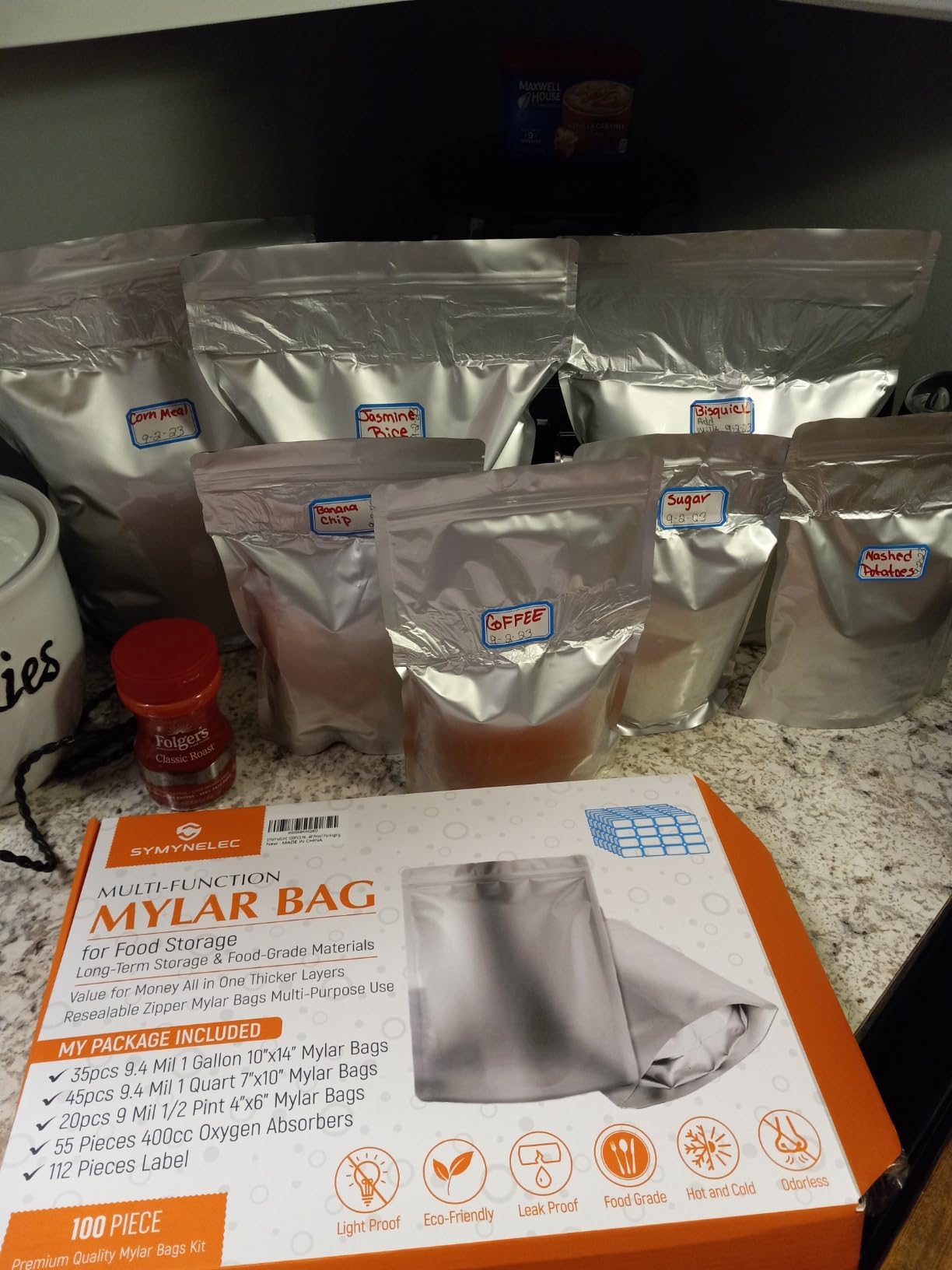
Check the thickness per size before you buy. The gallon bags are 11.8 mil total, or 4.7 mil per side, while the smaller sizes in the same pack are thinner. Reviewers who want maximum durability buy the larger bags and use the smaller ones for short-cycle items, which is a sensible way to think about it.
You get 55 individually vacuum-packed 400cc absorbers and 112 labels, and reviewers consistently mention that the label count lets them build a real inventory system. The material is BPA free, BPS free, lead free, PVC free, and phthalate free, which is a longer declaration than most competitors print on the listing.
How to size absorbers across three bag sizes
All of the absorbers in this pack are 400cc, so you will use one for the half pint and quart bags and two for the gallon bags, since a gallon pouch holds roughly three times the volume. If you regularly pack very bulky fruit into the gallon size, go to three.
What this kit is bad at
It is a bad match for a single-purpose freeze-dried harvest if you only ever pack one size, and it is a bad match for anyone hoping to avoid buying a sealer. The thinner small bags also mean less headroom, so oversized pieces of fruit need a wide mouth or a careful fill.
7. Home Sensei 1 Quart 60-Pack Is the Straightforward Choice for Bulk Packing
60pcs 1 Quart Mylar Bags for Food Storage – ExtraThick 10 Mil – Smell Proof Mylar 1 Quart – Stand-Up Zipper Pouches 7″ x 10″ – Small Bags for Food Storage – Heat Sealable
10 mil total, 5 mil per side
7 by 10 inch, 60 count
Gusseted stand-up with tear notch
Pros
- Most reviewed listing in the group at 3912 ratings
- Ten mil total holds up for long-term dry storage
- Stands upright so filling and organizing are easy
- Smell proof for coffee
- spices
- and freeze dried candy
- Freezer safe from 0F to 183F
Cons
- Some size variants include more bags than absorbers
- Absorber packet sizing is confusing across volume variants
With 3912 ratings, this is the most reviewed listing in the group, and the volume of feedback makes it a useful baseline. If you want to know what a mainstream 10 mil quart pouch does well, this is where the sample size is large enough to trust.
Construction is 10 mil total, 5 mil per side, across three layers of PET, aluminum foil, and aluminum reinforcement. At 7 by 10 inches with a gusset, it stands upright while you fill it, which matters more than it sounds when you are funneling freeze-dried strawberries into a bag and would otherwise be balancing it on a counter with one hand.
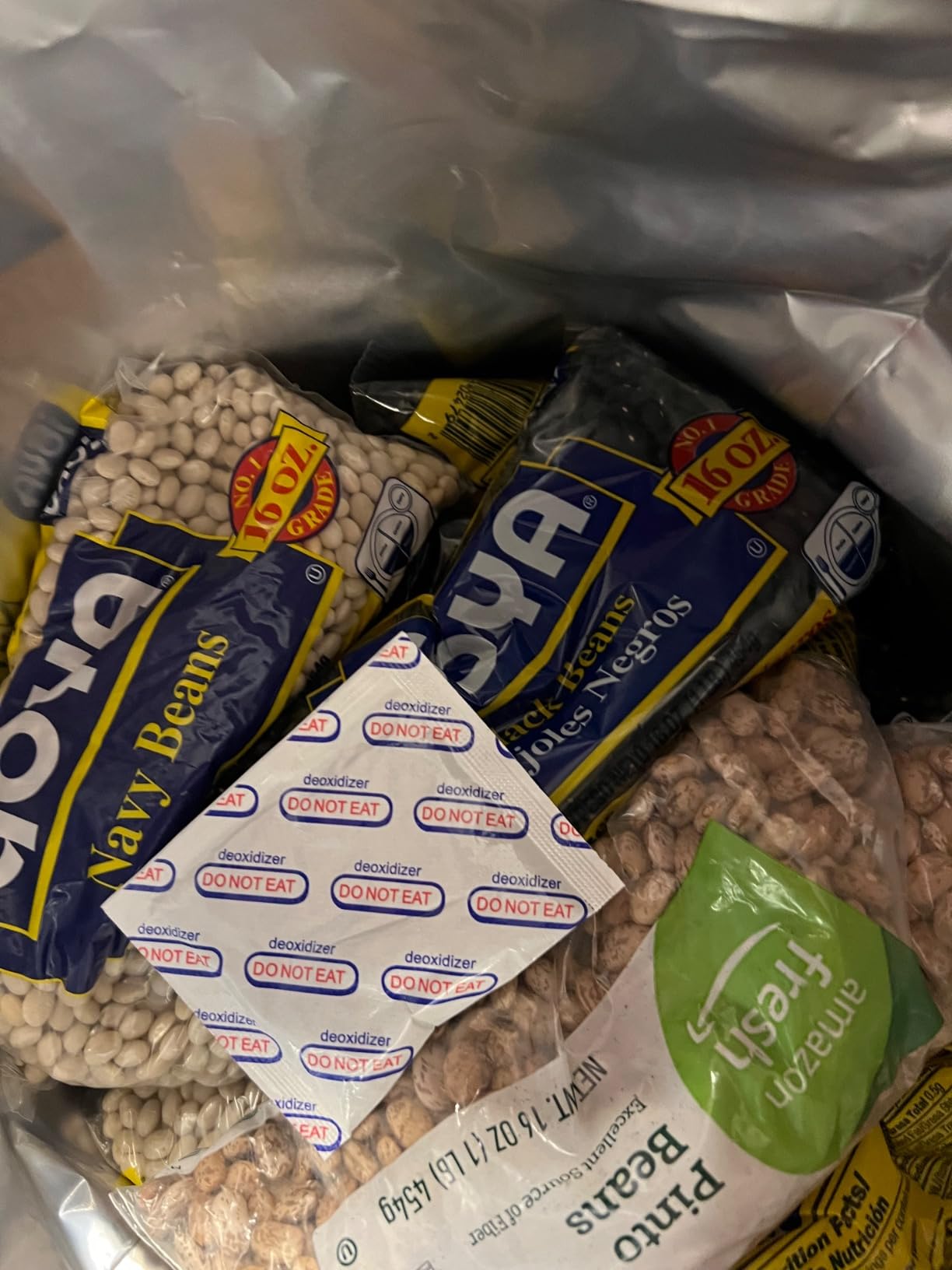
The tear notch is a small thing that gets used constantly. A U-shaped tear on the side lets you open the pouch without hunting for a corner and without tearing the seal on a portion you meant to keep. The zipper handles repeat access, and the top can be heat sealed when the portion becomes long-term storage.
One packaging quirk to know about: in some size variants of this listing, the number of bags exceeds the number of oxygen absorbers included, and the absorber packets are labeled by volume rather than by strength. Count before you start a big packing session rather than discovering it halfway through.
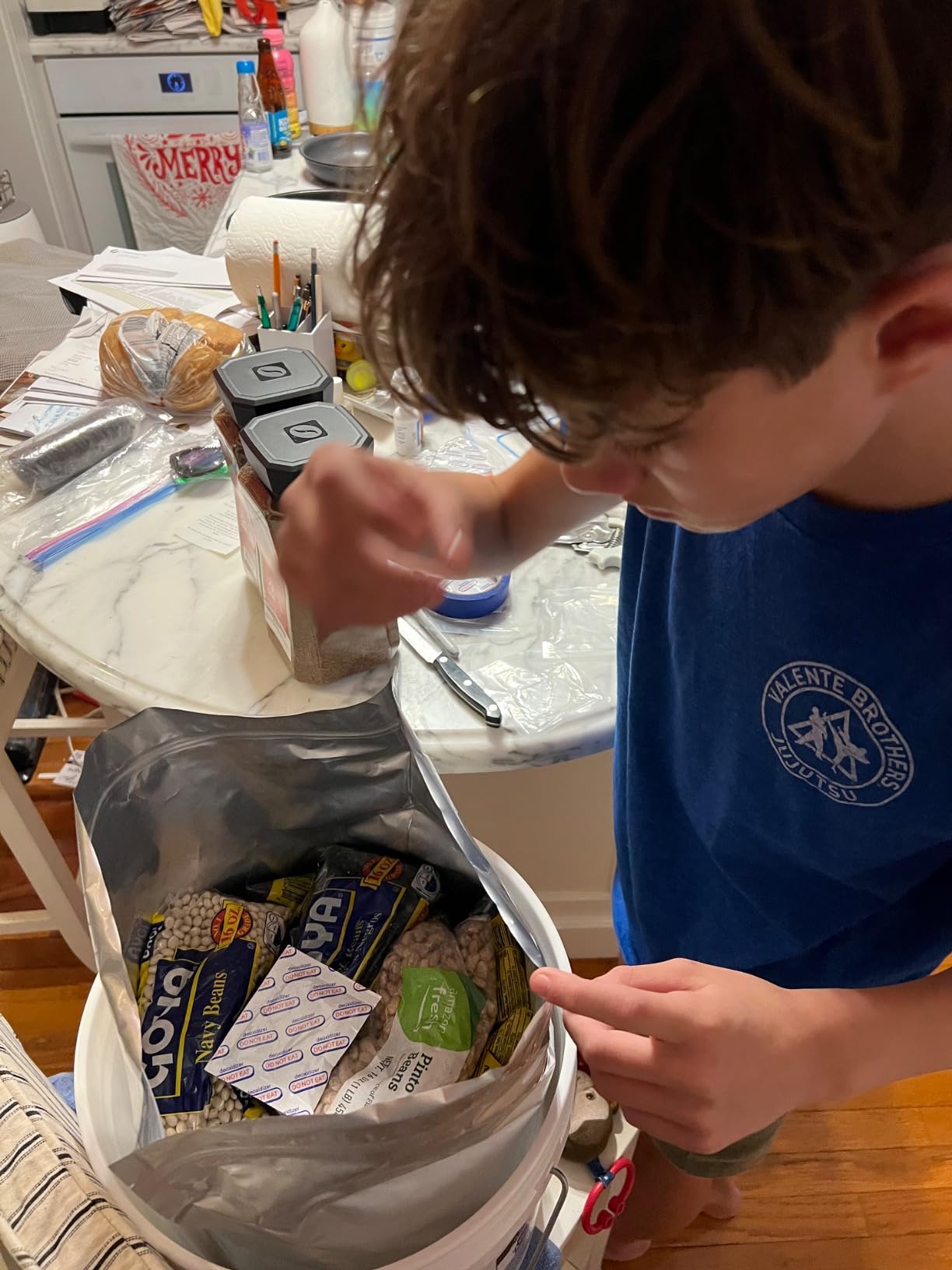
How much freeze-dried food fits a quart bag
Stated load capacity is 16 ounces, but for freeze-dried food think in volume rather than weight. Freeze-dried fruit is mostly air, so a quart pouch that holds 16 ounces of grain will look far fuller once you pack apple chunks into it. Fill to about four inches below the seal and leave room for the food to settle.
Why smell proofing matters more than it sounds
Airtight foil laminate does more than block oxygen. It blocks odor transfer in both directions, which is why reviewers use these for coffee, spices, and freeze-dried candy. A pantry where bags share shelf space will otherwise have every flavor migrating into every other bag.
8. ROYLO GLOBE 120-Bag Variety Pack Suits Households With Mixed Storage Needs
120 Mylar Bags with 150 Oxygen Absorbers-168 Labels & Stand-Up Reusable
Four sizes, 8.5 to 10.5 mil
120 bags, 150 absorbers, 168 labels
Stand-up with resealable zipper
Pros
- Four sizes cover spices through pantry staples
- Thickness stepped by size from 8.5 to 10.5 mil
- Large absorber count with 400cc and 500cc grades
- Clips and labels included for organization
- Stand-up design fills and dispenses easily
Cons
- Takes more heat than expected for a reliable seal
- A professional grade sealer is recommended over small models
- Bulky box takes more room than a smaller kit
Four sizes is more choice than any other kit here: 10.2 by 14 inches, 8.3 by 12.2 inches, 7.1 by 10.2 inches, and 5.5 by 7.5 inches. That range covers a bulk bucket liner down to a spice sized pouch, and the manufacturer steps the thickness to match, with gallon bags at 10 mil and the quarter pint at 8.5 mil.
The absorber mix is unusually thoughtful. You get 100 400cc absorbers and 50 500cc absorbers, so the larger bags have a heavier grade available without you having to buy a separate bag of 500cc packets. Reviewers treat the clips as a small but real convenience for closing bags during a packing session.
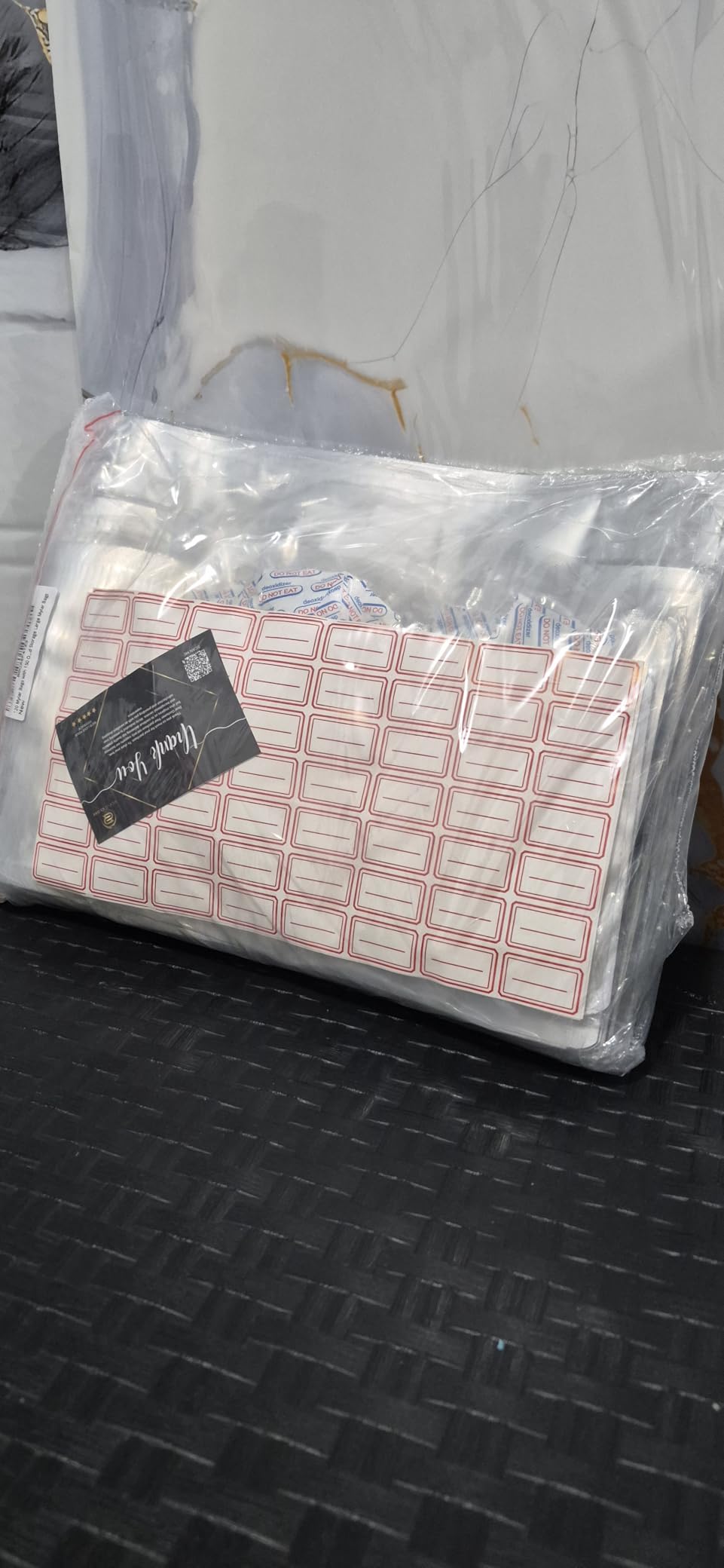
Sealing is the one point of friction, and the manufacturer says so directly. The listing recommends a professional grade heat sealing machine over small budget models and suggests adjusting the sealer temperature for the best result. Reviewers confirm that it takes more heat than expected, which is the honest signal that these bags are built for a proper sealer.
One reviewer reported food still tasting good at day 200 with no change in flavor, which tells you something about how the pack performs in ordinary pantry conditions. The zipper also means a partially used bag does not have to be thrown away the moment it is opened.
Is a small impulse sealer good enough
A small sealer can work, but this is the kit where reviewers most often report needing a stronger machine. If you already own a sealer, test a few bags on the slowest heat setting first. If you are buying a sealer as part of this setup, choose a wider jaw and a temperature adjustment rather than the smallest model.
What to do with the extra sizes
The small pouches are the most useful for freeze-dried meal components rather than whole meals, since a 5.5 by 7.5 inch pouch is a reasonable fit for a serving of cooked rice, a soup powder mix, or a handful of freeze-dried fruit pieces. Keep the two grades of absorber separate and match them to the bag you are filling.
9. Opalpros 14 Mil Kit Is the Clearest Choice on Absorber Sizing
70-Pack 14 Mil Mylar Bags with Oxygen Absorbers, Gusseted 1 Gallon(10), 1 Quart(20) & 1/2 Pint(30) Bags with 500cc, 300cc & 200cc OA – Resealable Mylar Bags for Food Storage with Colourful labels
14 mil total, three layer film
20 gallon, 20 quart, 30 half pint
Absorbers matched at 500cc, 300cc, 200cc
Pros
- Fourteen mil total is genuinely heavy duty and puncture resistant
- Absorber strength is matched to each bag size
- Absorbers packaged in sets of ten to stay fresh
- Zipper plus iron or straightener sealing works quickly
- Colourful labels and premium box packaging
Cons
- Multi-count absorber packets need resealing in a jar
- Some bags arrive with defects or a missing absorber
- Gusseted bags sit lower than flat bags inside a bucket
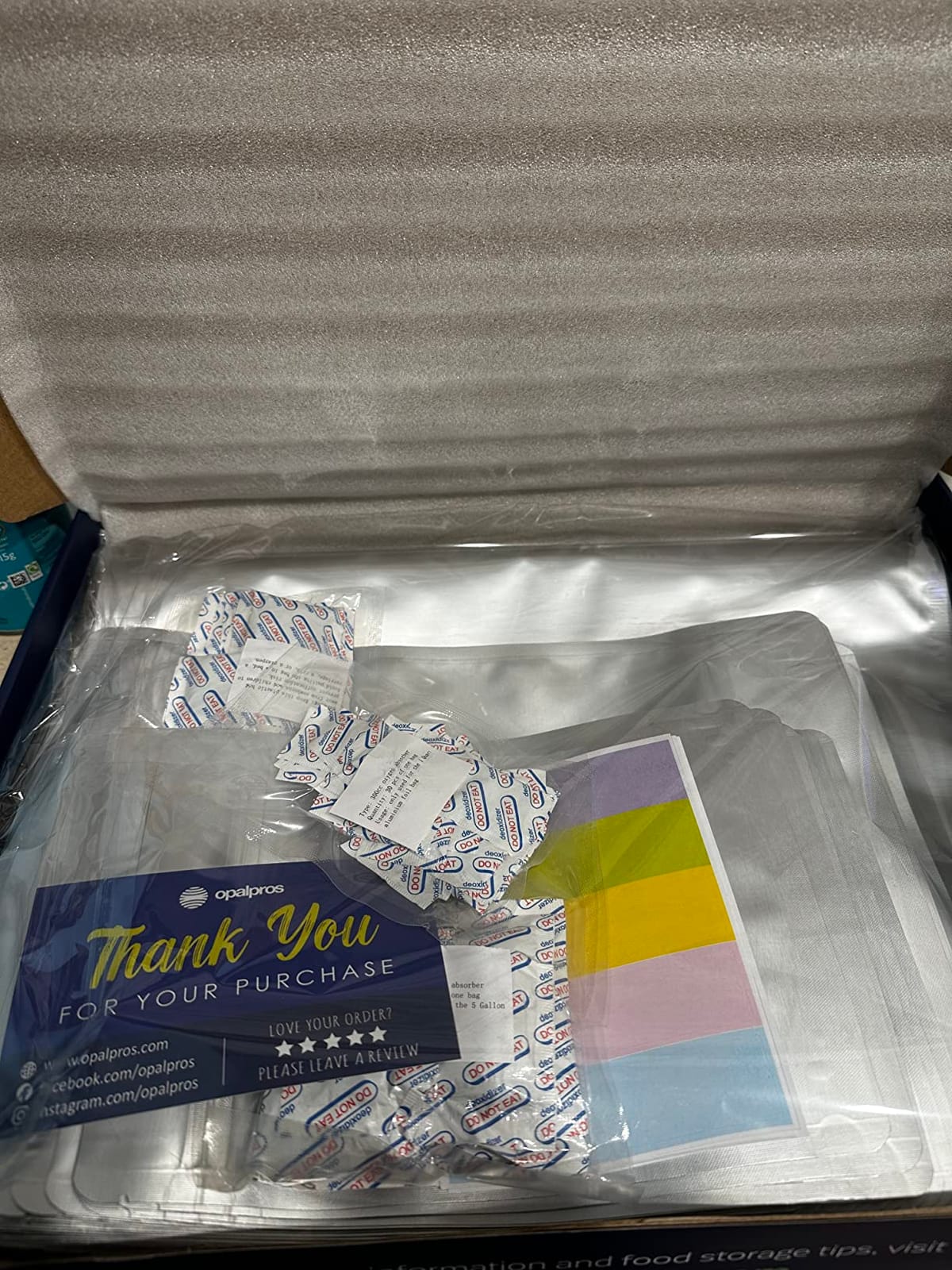
Absorber sizing is the most common point of confusion in this whole category, and this kit solves it before you have to think. The pack contains 20 gallon bags at 10 by 14 inches, 20 quart bags at 7 by 10 inches, and 30 half pint bags at 4.5 by 6.5 inches, with 500cc, 300cc, and 200cc absorbers supplied in quantities that match each size.
Thickness is 14 mil total across a PE, PET, and aluminum build, and reviewers repeatedly confirm it feels heavy in the hand and resists puncture. Buyers tend to come from a preparedness or bulk-buying background, and the 14 mil film is a step above the 10 mil kits they replaced.
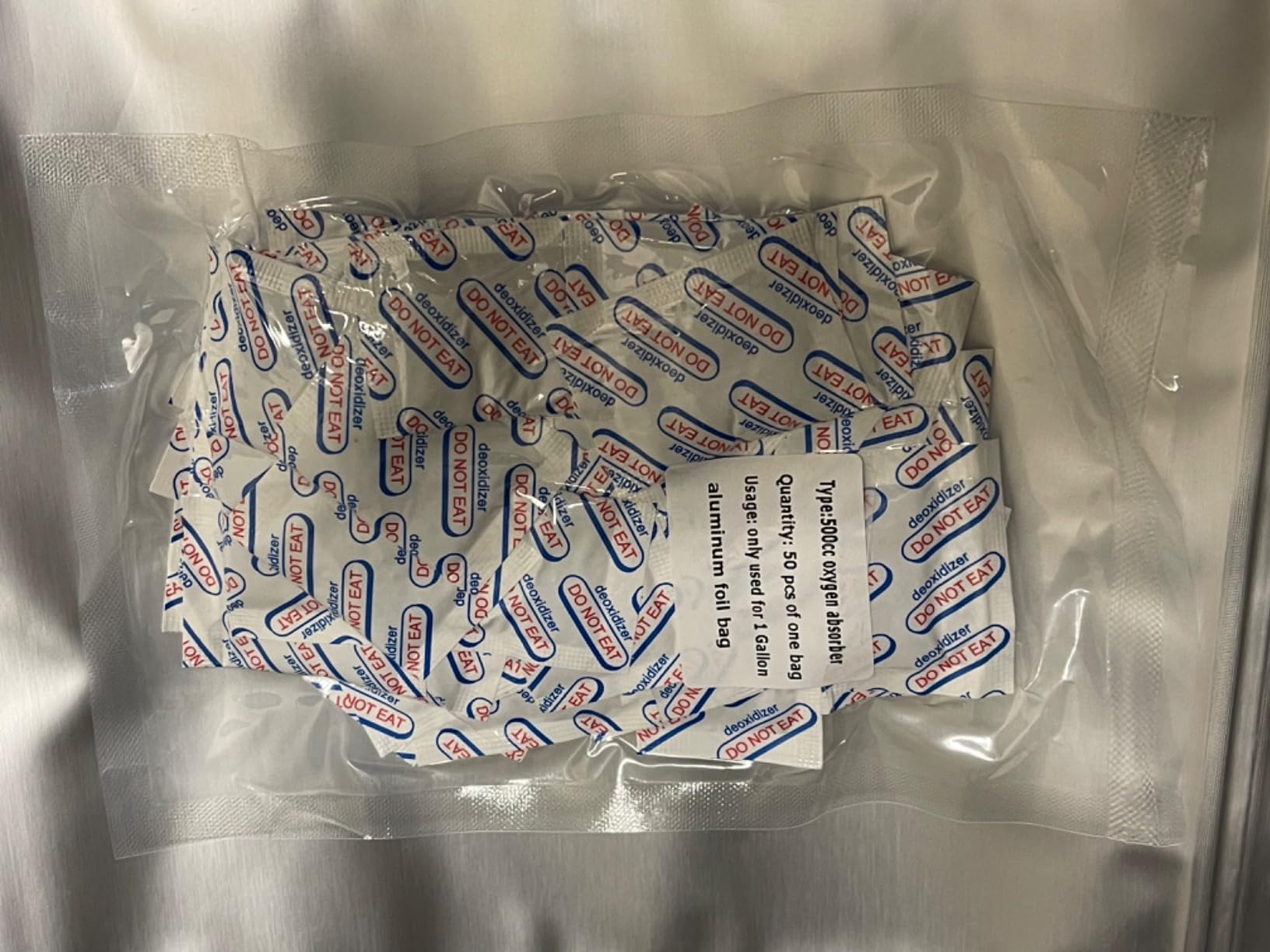
The absorber packaging is the standout feature. Rather than dumping every packet into one bag, each strength comes separately packaged in sets of ten, and one reviewer calls that design out explicitly as a good idea. The practical problem is that a partly used packet still holds ten or fifteen absorbers, so move the remainder into a sealed jar with a desiccant packet.
Two smaller complaints recur. Some bags arrive with minor defects or a missing absorber, which the seller replaces, and the gusseted bags sit a little lower than a flat bag of the same footprint, so they fit more snugly inside a standard bucket. Neither issue affects the quart or half pint sizes in this pack.
Why size-matched absorbers matter
An absorber is rated by the volume of air it can deplete. Too small and it is finished before the food is safe, and you end up with an unsealed-in-practice bag years later. Too large and you pay for unused capacity. Matching 200cc to a half pint bag and 500cc to a gallon bag is the simplest way to be right by default.
What about double bagging
For stacking or shipping, put each filled pouch inside a second bag of the same size. Double bagging costs almost nothing if you buy a hundred, and it protects against the single most common failure in freeze-dried storage, which is a pinhole from a sharp piece of food or a nail in a shelf.
10. BELLE KR 5×8 Pint Bags Make Small Batches and Candy Sales Easy
BELLE KR® Pint Mylar Bags for Food Storage – Pack Of 300-5×8-7.5mil Thick – Gusseted Bottom Clear Front Mylar Bags for Freeze Dryer – Labels Included
7.5 mil total, 3.75 mil per side
5 by 8 inch, 300 count
Gusseted with clear front and labels
Pros
- Three hundred bags makes per-batch cost very low
- Clear front shows contents without opening the bag
- Resealable zipper holds an airtight seal
- Stands upright while filling
- Label stickers make small batch labeling fast
Cons
- Some orders arrive in a plain shipping bag instead of the branded pouch
- A few buyers find the bags smaller than expected
- Per-bag cost is high compared with bulk kitchen options
For small batches this is the kit to look at. You get 300 bags at 5 by 8 inches, which is enough to label every single serving from a large harvest without rationing your packaging, and the price per bag works out low enough that it is rarely the limiting factor.
Film is 3.75 mil per side, so 7.5 mil total, with a gusseted bottom and a clear front window. The window matters more than it sounds, because in a pantry of fifty identical silver pouches you cannot tell strawberry from mango without opening each one. Reviewers praise thickness as sturdier than competing bags of a similar price and note the resealable zipper holds an airtight seal for reuse.
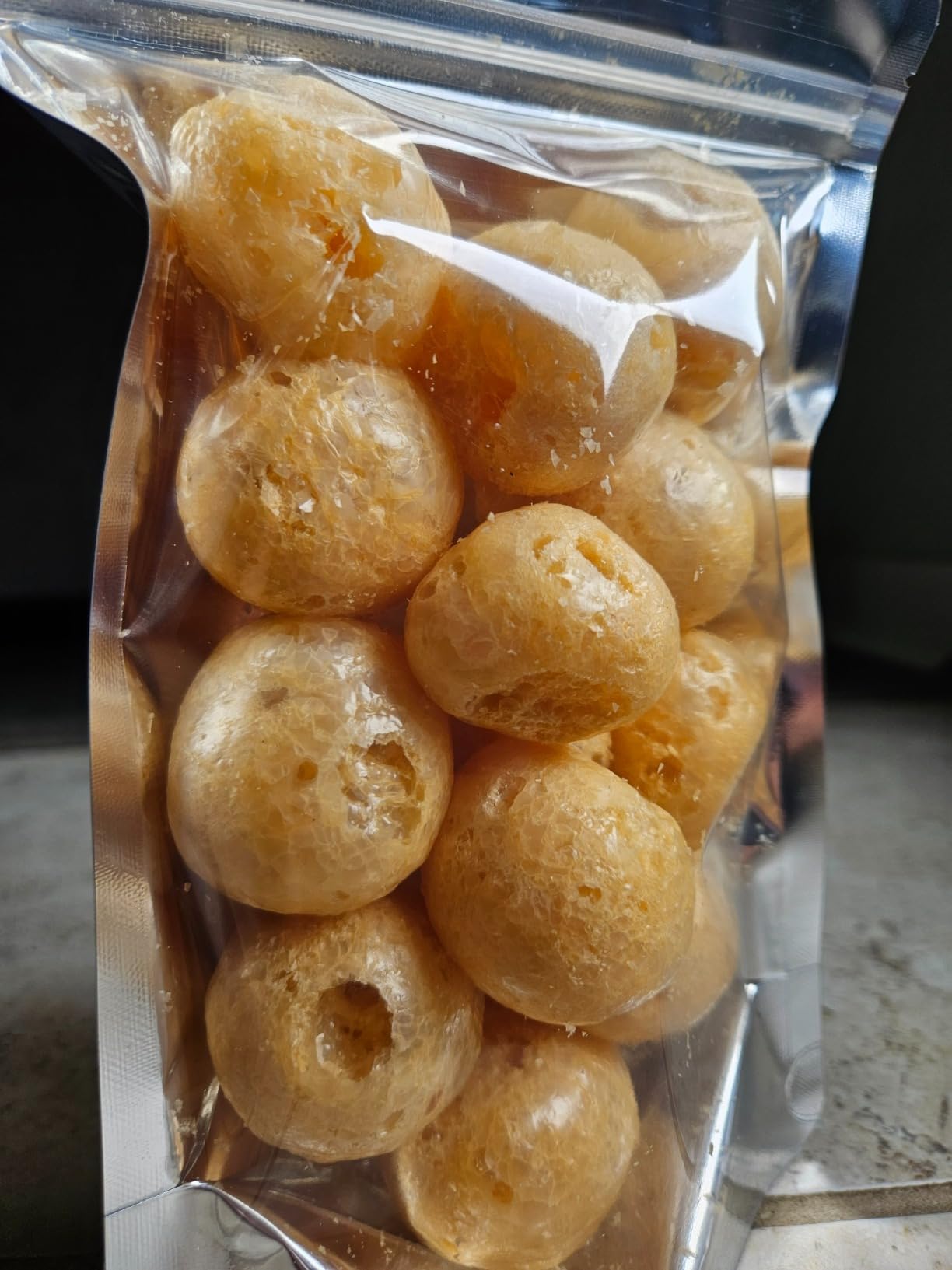
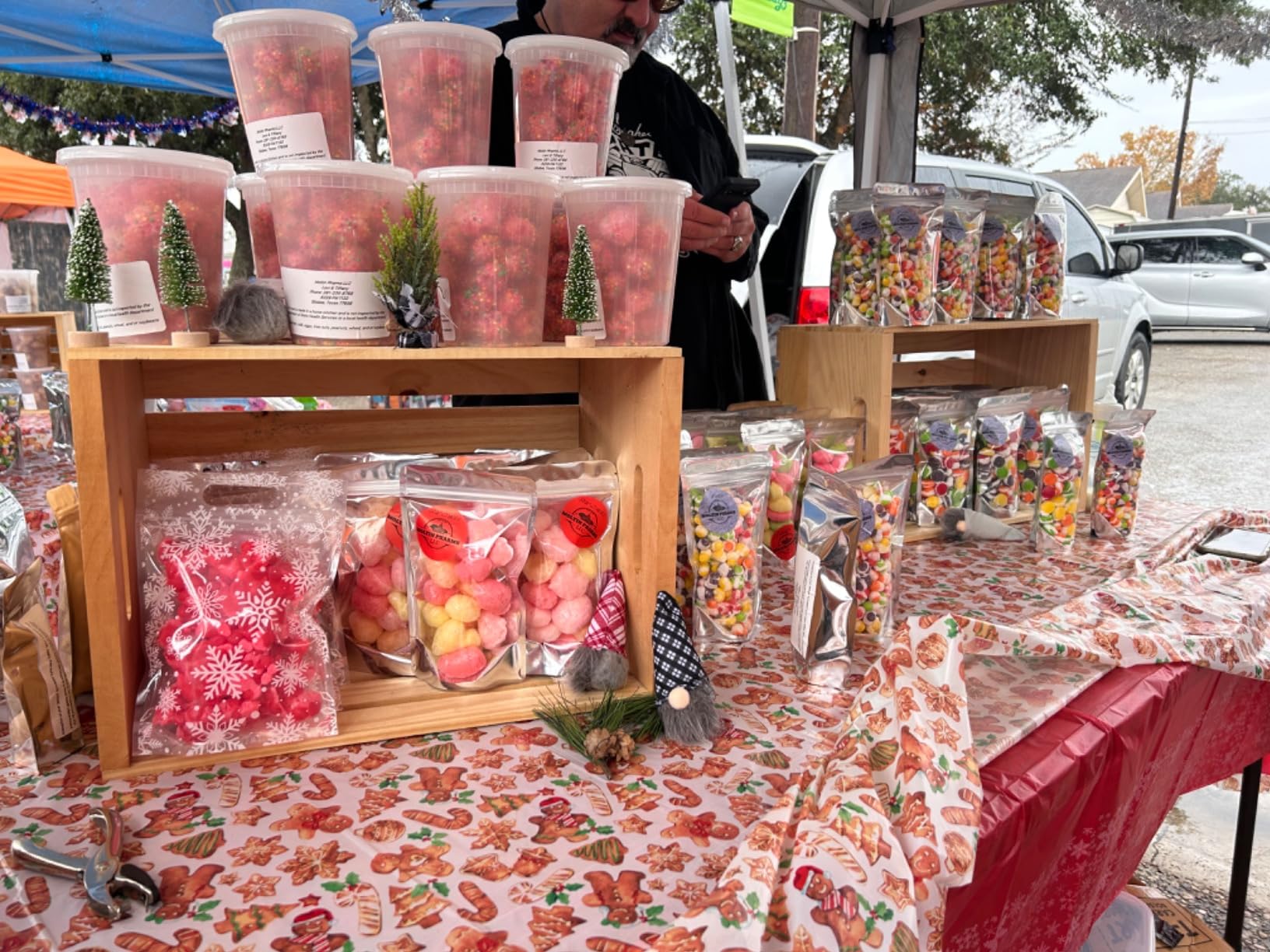
Freeze dryer owners use these for exactly the workload the size implies: single portions, snack packs, and sale units. The manufacturer pairs them with 400cc absorbers for best results, which is worth noting because absorbers are not part of this pack, and two sheets of 48 label stickers come in the box.
Some orders arrive in a plain clear plastic shipping bag rather than the branded resealable pouch, which reviewers mention often enough to check on arrival. And a few buyers find the bags smaller than the quantity suggests, so measure one before you commit a full harvest to this size.
How much fits a 5×8 pint bag
Stated capacity is one pint, which sounds generous until you remember how bulky freeze-dried fruit is. A pint bag holds a modest serving of apple slices or a small batch of freeze-dried candy, and for a full meal you will want a quart. Buy both sizes if you pack meals as well as snacks.
Is this film light-tight enough for long storage
The clear front is a deliberate tradeoff, and it does mean light reaches the food. For a short or medium cycle on colorful fruit, that is an acceptable exchange for instant identification. For a decades-long archive, choose an opaque pouch instead and rely on your label system to tell you what is inside.
11. Wisesorb 1 Quart 30-Pack Is the Practical Starter Pack
Wisesorb 1 Quart 30 Packs Mylar Bags for Food Storage, 7″x 10″ With Window, Freeze Dried Candy, Reusable Long Term Storage
10 mil total, 5 mil per side
7 by 10 inch, 30 count
Gusseted with a one-sided window
Pros
- Thicker and sturdier than the low price suggests
- Stands upright for easy filling and organizing
- Ziploc top also gives an excellent vacuum sealer result
- Clear window allows a quick contents check
- Washable and reusable for camping and travel
Cons
- Small 30 count pack means frequent repurchase for bulk
- Not sufficient alone for long-term storage without absorbers and heat sealing
- The window is one-sided so the back is opaque
This is the entry point I suggest to someone who has never packed a bag before and does not want to commit to a hundred. At 30 quart bags you can learn the sealing process, the absorber sizing, and the fill-height rule on a small run before you dedicate a whole harvest.
The film is 10 mil total, or 5 mil per side, with a 9 micron aluminum foil barrier layer. Reviewers are consistently surprised by how much bag they get for the money, and the general framing in the reviews is that this is a starting point that you build on with your own absorbers and a heat seal.
The zipper is attached well and is described as giving an excellent result in a vacuum sealer, which is unusual for a bag at this tier. Reviewers also note the bags are washable, so a pouch used for camping is not automatically a single-use item once you get home.
Set expectations honestly. Thirty bags will not carry a large harvest, and long-term storage still requires adding an oxygen absorber and heat sealing the top. Most people in the reviews use it to break a bulk purchase of freeze-dried food into single-serve camping portions, which is a genuinely good use of a 30-count pack.
Is it thick enough to skip a liner
For light, evenly shaped food such as freeze-dried powder mixes or uniform fruit slices, yes. For sharp-edged items like meat chunks or freeze-dried eggs, put the filled bag inside a second one. The extra layer costs almost nothing and removes the most common long-term failure mode.
When to upgrade instead
Move up once you have proved the workflow. If you are packing more than about 40 bags a year, a hundred-count kit with matched absorbers is less work per bag and gives you a stronger absorber grade for the larger sizes.
12. Circloophs 5×8 Window Pouches Are for Selling, Not for Storing
300 Mylar Bags for Food Storage 5X8 Mylar Bags with Window Candy Packaging Resealable Bags Black Stand Up Pouches Edible Packaging for Small Business Freeze Dried
5 by 8 inch, 300 count
Hand-closable zip strip, clear window
Stand-up, smell proof, no heat seal needed
Pros
- Clear window speeds up inventory checks
- Stand-up shape presents treats well for sales
- Hand closable so no sealing equipment is needed
- Large 300 count pack keeps packaging cost low
- Waterproof and smell proof for dry goods
Cons
- Listed as plastic rather than a true foil laminate mylar
- Hand-closable seal is not a substitute for a heat seal
- Black window pouches suit packaging better than bulk pantry storage
I want to be direct about this one, because the listing is popular and it is frequently mistaken for a storage bag. The material is listed as plastic rather than a true multi-layer aluminum mylar, and the top closes by hand. That makes it good for presenting freeze-dried candy and small business packaging, and unsuitable as your primary long-term storage solution.
Where it shines is presentation. Three hundred stand-up pouches with a transparent front window let a buyer see the contents, and the resealable strip means a customer who buys two ounces of a flavor can close the pouch again. Reviewers who run small treat businesses focus on exactly that use case, and the 300 count keeps the cost per pouch low enough that packaging never becomes the bottleneck when you are scaling a batch.
Can you store freeze-dried food in these
Not for long-term storage. A hand-closable plastic zipper will keep dust and smells out and is fine for a seasonal treat jar, but it will not deliver a decades-long barrier, and no absorber will change that. If you have food you intend to eat in five years, seal it in one of the foil pouches above first.
How to use them alongside real storage bags
Pack the food into a proper Mylar bag with an absorber, heat seal it for storage, then open one bag at a time and decant portions into these window pouches for gifting or sale. That is exactly the two-stage workflow the reviews describe, and it keeps the archive bags untouched.
What Mil Thickness Do Freeze Dried Bags Actually Need?
Freeze-dried food wants 5 to 7 mil per side, which is 10 to 14 mil total, and that single sentence resolves most of the confusion online. The reason it sits above the general food storage default is physical. Freeze-dried fruit and freeze-dried meat are bulky, brittle, and have hard edges, and they press against the film exactly where a thinner bag would crease and eventually perforate.
Mil means thousandths of an inch, and you will see listings that quote one number while the actual construction is a two-ply film, so the printed figure may already be the total. A bag advertised as 10 mil with 6 mil per side is quoting the per-side figure and the total together, which is the format you should look for. A single number with no breakdown is a reason to be cautious.
The tiers break down like this.
3.5 mil per side. Short-term cycles, less than a year, and light dry goods only. Not enough puncture resistance for freeze-dried fruit.
5 mil per side, 10 mil total. The sensible default for freeze-dried fruit and vegetables packed in small bags, and where most of the kits in this roundup sit.
7.5 to 8 mil per side, 15 to 16 mil total. Meats, hard eggs, and anything stacked, shipped, or stored in a bucket where the film may be scuffed.
10 mil per side and above. Bucket and tote systems where bags will be moved and restacked over the years. This is where freeze dryers who insist on thicker bags are coming from.
One more practical note: thicker film is sharper. Gloves are worth wearing when cutting 10 mil and up, and it is not a marketing warning, it is a handling warning.
Do Freeze Dried Bags Need Oxygen Absorbers or Desiccants?
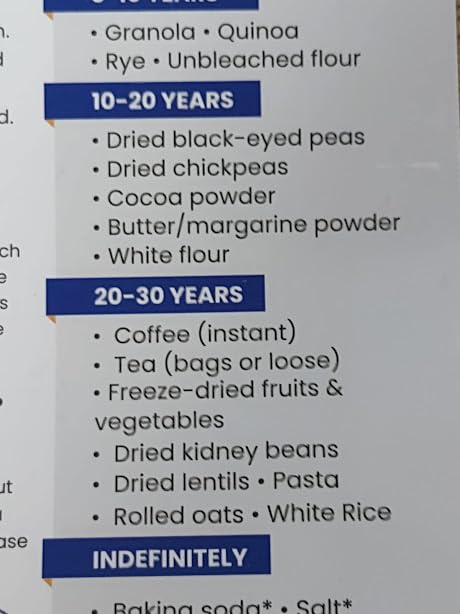
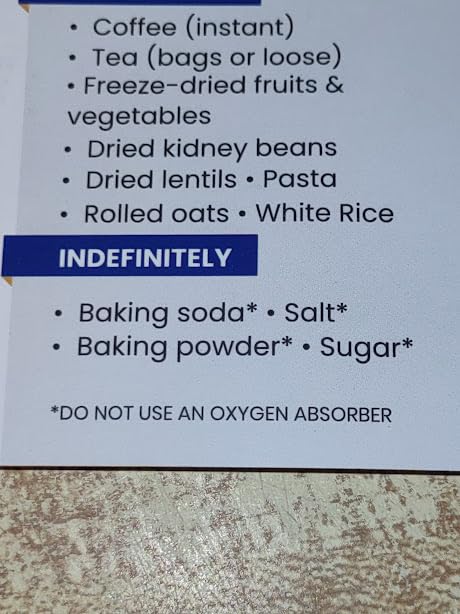
Freeze-dried food needs oxygen absorbers, and it usually does not need a desiccant. That is the single biggest difference between this guide and generic dehydrated food storage advice, and it comes down to moisture content. Freeze-dried food is finished at 0 to 5 percent moisture, which is why it snaps when you bend it, and there is essentially no free water for a desiccant to pull out.
An oxygen absorber contains iron powder, salt, and paper. Once air is trapped in a sealed bag, the iron oxidizes over roughly two to four hours and consumes the oxygen, dropping the level low enough to stop the oxidation that degrades flavor, color, and vitamin content. It does not create a vacuum. Oxygen is only about 21 percent of air, so the bag will look nearly as full as it did when you sealed it, and that is normal.
Sizing follows volume, and the grades you will meet most often are these.
200cc for a half pint pouch, roughly 4.5 by 6.5 inches.
300cc for a quart pouch around 7 by 10 inches.
400cc for a larger quart or a small gallon pouch. One 400cc absorber is what most kits ship with per bag.
500cc for a full 10 by 14 inch gallon bag packed with bulky fruit, where two 400cc absorbers is the safer equivalent.
Never pack a powered absorber directly against food, because it generates heat. Tuck it against the side of the bag or in a corner. And once the bag is open, the absorber is spent, so plan portions to be eaten in one sitting rather than assuming the bag will reseal indefinitely.
Mylar Bag Sizes for Bulky Freeze-Dried Food
Bag height matters more for freeze-dried food than for any other storage food, because the failure mode is not weight. It is a full bag tearing at the top seam when you try to funnel in the last of a batch. Choose a bag that looks half empty when the food is all in, then press the excess air out before sealing.
A 5 by 8 inch bag is a small batch or single snack portion, and it is the smallest size most listings carry regularly. Freeze dryers on the forums treat it as roughly a one cup volume and use it for fruit candy and tasting portions.
A 6 by 8 inch pint pouch is a comfortable single serving, and it is the size that works when you want to rehydrate a meal and eat it from the bag on a trip.
A 7 by 10 inch quart is the workhorse. It handles a serving of soup powder, cooked rice, a full portion of freeze-dried stir fry, and it is the size most of the kits in this roundup carry in quantity.
An 8 by 12 inch or 9 by 6.5 inch pouch suits a boil-in-bag meal or a larger single portion. The 9 inch shape is wide and short, so it eats well from but packs loosely in a small backpack.
A 10 by 14 inch gallon is for bulk: a whole batch of freeze-dried vegetables, a large cut of meat, or the base for building a five gallon bucket. Use a 500cc absorber or two 400cc units here.
Whatever the size, leave four to five inches of headspace. You are leaving room for the food to settle, for the oxygen to be consumed, and for you to test the seal line before it becomes permanent.
How to Seal a Mylar Bag Without a Vacuum Sealer?
An impulse sealer is the fastest and most consistent method, and a hair straightener or a household iron works perfectly well if that is what you have. The target range is 375 to 425F, and the technique is pressure plus a slow pass rather than heat alone. Heavy 10 mil and above needs a few seconds longer and a firmer press than 5 mil film.
The first step is to leave four to five inches of headspace above the food, which is where the absorber goes. Press the air out with your hands as you go, and do not compress the food itself, because crushed freeze-dried fruit rehydrates unevenly later.
Second, place the absorber in the bag against the side wall, away from the food, before the final seal. If you seal first and then add it, you have to open the bag and lose the seal you just made.
Third, lay the bag flat on the sealer jaw or on a clean cotton cloth if you are using an iron, and run the sealer across the full width in one pass. Lift and check the line. It should feel continuous, with no bubbles, no wrinkles, and no cool patches. A second pass over a suspect area fixes most failures.
Fourth, test it. Squeeze the bag gently across the seal a few hours later, once the oxygen is gone. A properly sealed bag will have firmed up and will not pillow at the seam. If it still feels soft at the top, the seal failed and you should re-seal rather than trust it.
Fifth, write the fill date, the food, and a rotation year on the bag before it goes into storage. For harvest batches, rotate oldest to front so you eat the first season first, and store the bags cool, dark, and off the floor.
Where to Buy Mylar Bags and How to Read a Listing?
The single most common buying mistake is assuming two listings from the same brand are the same bag. The same brand routinely lists a 5 mil and a 7.5 mil version, a 50 count and a 100 count version, and flat versus gusseted versions with nearly identical titles. Before you buy, confirm the total mil and the per-side mil, the bag dimensions, the count, and whether the film has an internal aluminum layer.
Buckets matter too. Bags in a five gallon bucket need to be flat, or a gusseted large bag will sit lower in the bucket and waste usable space. For a tote or a shelf, a gusseted bag is better because it stands up and shows you what is in it.
On sourcing beyond a single marketplace, the freeze drying community has long favored manufacturer direct sites, freeze dryer brands that bundle their own bags, and local restaurant supply houses. Bundled bags from your machine are often thinner than the kits here, which is why most people replace them after the first season.
A note on the question of marketplaces restricting these listings. There is no broad category ban on food storage bags, but individual listings change, sellers come and go, and duplicate near-identical titles are a known problem on large marketplaces. That is a reason to buy from a brand with verified reviews and a clear material declaration, not a reason to avoid the format itself.
On the microplastics question, the practical answer is to buy bags that declare food grade construction and name the layers, such as PET, aluminum foil, and PE. A listing that states the laminate and food contact approval is verifiable. A bulk marketplace bag with no material declaration is not, and vinyl and PVC pouches in particular deserve to be avoided for hot food contact.
Frequently Asked Questions
Can I store freeze-dried food in Mylar bags?
Yes. Mylar is a PET, aluminum foil, and PE laminate that blocks light, oxygen, and moisture, and it is the standard packaging for freeze-dried food. Fill the bag, add a correctly sized oxygen absorber, press out the air, and heat seal the top. Properly packed food in a cool, dark location is commonly counted in decades.
Do freeze-dried foods need oxygen absorbers or desiccants?
Oxygen absorbers, yes. Desiccants usually not. Freeze-dried food finishes at 0 to 5 percent moisture, so there is no free water for a desiccant to remove. An absorber sized to the bag volume, typically 200cc for a half pint up to 500cc for a gallon bag, keeps oxygen low enough to protect flavor, color, and nutrients.
How thick should Mylar bags be for freeze drying?
Aim for 5 to 7 mil per side, which is 10 to 14 mil total, and look for a film with an internal aluminum layer. Freeze-dried food is bulky and has sharp edges, so it needs more puncture resistance than flour or rice does. Thicker 15 to 16 mil films matter most when bags are stacked, shipped, or stored in buckets.
How long will freeze-dried food last in a Mylar bag?
A correctly sized oxygen absorber with a full heat seal in a cool, dark, stable location supports a 25 to 30 year target, and some manufacturers print that range on their listings. Bags opened and resealed with a zipper instead of being heat sealed are a different category, measured in months rather than decades.
What size Mylar bag is best for freeze-dried snacks and meals?
For a single snack portion or candy sample, 5 by 8 inches. For one rehydratable serving, a 6 by 8 inch pint pouch or a 7 by 10 inch quart. For a boil-in-bag meal, a wide 9 by 6.5 inch pouch. For bulk batches and bucket storage, a 10 by 14 inch gallon bag with a 500cc absorber.
Which brand of Mylar bags is considered the best for freeze-dried food?
It depends on the job rather than the logo. Kits that ship bags, absorbers, and labels together remove the most guesswork, gusseted zip-top pouches win when you rehydrate in the bag, and thicker open-top kits win for bulk archival storage. Compare the total mil and per-side mil, the film layers, and the absorber grades instead of the brand name.
Does Mylar give off microplastics?
The concern applies to any plastic food contact layer, and the practical safeguard is verifiable material declaration. Choose bags that name their layers, such as PET, aluminum foil, and PE, and state food contact approval or BPA free status. Avoid unmarked bulk pouches and anything listing vinyl or PVC, and do not pour boiling water into a pouch that has not been rated for it.
The Verdict on Freeze-Dried Food Bags in 2026
The Wallaby 10 mil multi-size open top kit is the one I keep on my shelf in 2026. It ships 100 bags, 100 packets of 400cc absorbers, and 100 labels already matched, the film has an internal aluminum layer, and 10 mil total handles the bulky fruit that thinner bags puncture. It is a permanent-seal kit, so reach for a gusseted zip-top pouch when you want to rehydrate and eat from the bag instead.
Whichever kit you pick from this guide of the best mylar bags for freeze dried food, the three numbers matter more than the logo: total mil and per-side mil, the film layers, and the absorber cc grade matched to your bag volume. Seal above the zipper for long-term storage, leave headspace, and check the seal line before you walk away from the sealer.