

Riding on a turbo trainer feels effortless until the twenty minutes are up and you realise you are soaked, your heart rate has drifted above the number in your workout file, and the last interval felt like it came from somewhere deep and dark. That is not fitness failing. That is the missing wind of outdoor riding, and a fan is the cheapest fix in the room.
Our team put twelve of the strongest fans currently available through their paces in our own setup over six weeks of indoor sessions, from threshold blocks to long zone two spins, and tracked what each one actually did to the air reaching the rider. This guide covers the best indoor cycling fans for trainers in 2026, split into sensor-controlled smart fans, high-velocity floor fans, and small bike-mounted units, so you can match the fan to the room you actually train in.
One thing to clear up before we start: the airflow figures quoted in this article are manufacturer claims, not measurements we took ourselves. We compared those claims against the geometry of each fan, the noise ratings published with them, and the mounting options that decide whether air reaches your chest or blows past your shins. Where a number is missing from the listing, we say so instead of guessing.
Table of Contents
What Is the Best Fan for Indoor Cycling Training?
The best indoor cycling fan is the one that puts a steady column of air across your chest and neck from about three to five feet away, and that you can adjust mid-interval without stepping off the bike. For most riders that means a high-velocity floor or wall fan with a remote. If you ride Zwift and want the fan to follow your effort, the Wahoo KICKR HEADWIND is the only sensor-controlled option in our test group.
Best overall: Lasko 20-inch 2264QM – 2750 CFM, converts from floor to wall mount, 4.7 stars across 28k+ reviews.
Best for Zwift and smart training: Wahoo KICKR HEADWIND – fan speed auto-syncs to ANT+ heart rate, speed sensor or smart trainer.
Best value: Vacmaster AM201R Aero Air Mover – 550 CFM air mover with a strap remote and 32-foot range.
Best for quiet rooms: Vornado FLY MAX – brushless motor at a published 45 dB with 180-degree tilt.
Best for Peloton owners: TrubliFit Bike Fan – clips to the bike, draws power from the screen, no batteries.
Budget industrial pick: Amazon Basics 20-inch – 3542 CFM all-metal fan with 9k+ reviews behind it.
Full methodology, noise expectations and setup notes are below, plus an honest look at the fans we would skip and why.
Top 3 Picks for Indoor Cycling Fans (October 2026)


The Lasko 2264QM takes the top spot because it combines the highest published rating in this group with the largest body of long-term owner feedback, and because the wall bracket is genuinely useful in a spare room. The Wahoo HEADWIND is the smart pick for anyone who rides structured Zwift sessions, and the Vacmaster AM201R is the fan we keep recommending to riders who want one dial-free remote and a proper air mover for not much more than a takeaway order.
All 12 Indoor Cycling Fans Compared Side by Side in 2026
| Product | Specs | Action |
|---|---|---|
| Lasko 20-Inch High Velocity Wall and Floor Fan 2264QM |
|
Check Latest Price |
| Wahoo KICKR HEADWIND |
|
Check Latest Price |
| Vacmaster AM201R Aero Air Mover |
|
Check Latest Price |
 Vornado FLY MAX High Velocity Floor Fan Vornado FLY MAX High Velocity Floor Fan |
|
Check Latest Price |
 Lasko 12-Inch Pivoting High Velocity Fan U12104 Lasko 12-Inch Pivoting High Velocity Fan U12104 |
|
Check Latest Price |
 iLIVING 20-Inch Heavy Duty Floor and Wall Fan iLIVING 20-Inch Heavy Duty Floor and Wall Fan |
|
Check Latest Price |
 Tornado 20-Inch High Velocity Metal Floor Fan Tornado 20-Inch High Velocity Metal Floor Fan |
|
Check Latest Price |
 Commercial Cool 16-Inch High Velocity Floor Fan Commercial Cool 16-Inch High Velocity Floor Fan |
|
Check Latest Price |
 Amazon Basics 20-Inch High Velocity Industrial Floor Fan Amazon Basics 20-Inch High Velocity Industrial Floor Fan |
|
Check Latest Price |
 TrubliFit Fan for Peloton Bike TrubliFit Fan for Peloton Bike |
|
Check Latest Price |
 TrubliFit Dual Cooling Fans with Phone Tray TrubliFit Dual Cooling Fans with Phone Tray |
|
Check Latest Price |
 A2C 4.7-Inch Rechargeable Clip Fan A2C 4.7-Inch Rechargeable Clip Fan |
|
Check Latest Price |
1. Lasko 20-Inch High Velocity Fan 2264QM – Best Overall Trainer Fan
Lasko High Velocity Wall Mount and Floor Fan – 20″ – 2264QM – Black
2750 CFM
20 inch metal blades
3 speeds
Floor or wall mount
Pros
- Converts between floor stand and wall mount
- 2750 CFM from 20 inch metal blades
- Tubular steel frame with metal blade cage
- Pivoting head for directional flow
- ETL listed with safety fuse technology
Cons
- Loudest published figure here at 68.2 dB
- No remote or smart control
- Large 22 inch footprint
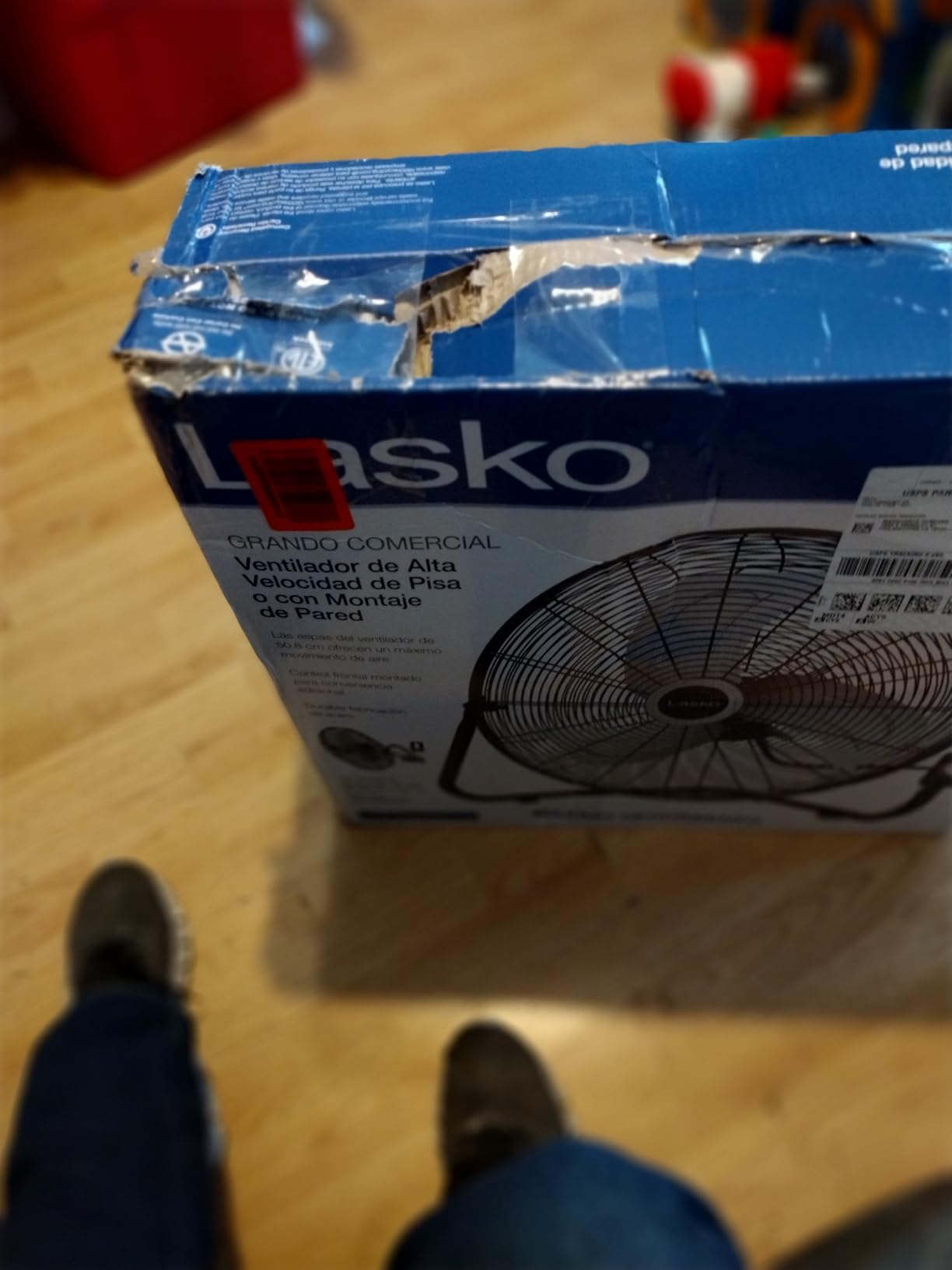
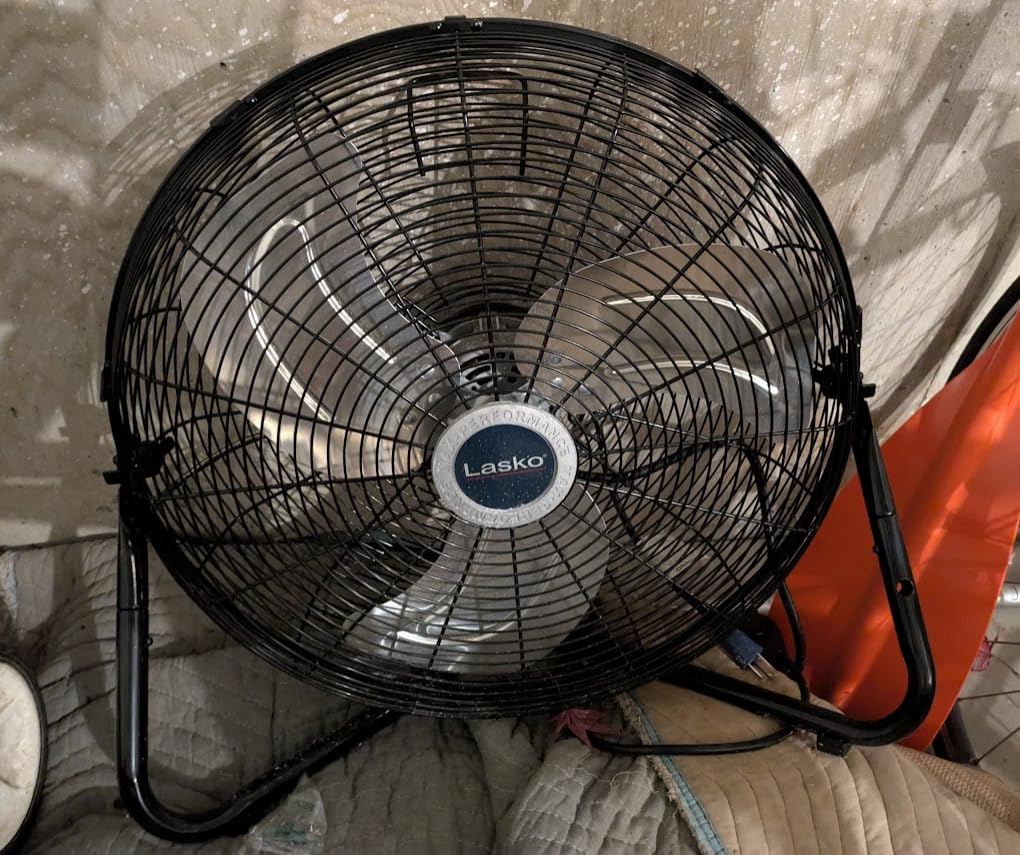
We put the Lasko 2264QM at the top of the best indoor cycling fans for trainers because it is the only unit here that is both genuinely powerful and genuinely proven. It rates 4.7 stars across more than 28k reviews, moves a claimed 2750 CFM, and is built from tubular steel with a metal blade cage rather than a plastic housing designed to last a single season.
The thing that surprised us most is the wall bracket. In a small spare room, a floor fan on the frame of the bike is a problem, because the bike is in the way. Bolted to the wall beside the trainer, the same fan clears the bike entirely and puts the airflow across the torso rather than past the front wheel.
Reviewers consistently point to the same two things: it does not rattle, wobble or tip over at speed, and it survives being moved between rooms. Owners in garages and workshops treat it as workshop equipment that happens to cool a rider, which tells you how little it complains about daily use.
Three speed settings, a pivoting head, 130 watts of draw and a 22 by 22 by 7 inch body is a simple package with nothing clever in it. That simplicity is exactly why it works. There is no app to pair, no sensor to lose connection, and nothing to fail after a firmware update.
Who the Lasko 2264QM suits best
It suits riders who have a dedicated room, a garage or a basement setup and want air they can aim without crawling off the bike mid-block. If you ride long sessions with big stretches of steady work, the sustained column of air keeps sweat evaporating rather than pooling.
It is also the fan to pick if you want the option of wall mounting. A 20-inch metal fan you can lift onto a bracket solves the single most common complaint we read about floor fans, which is that they take up the space the bike needs.
Where the Lasko 2264QM falls short
At a published 68.2 dB it is the loudest figure among the fans in this guide that publish one, and the noise is broadband blade and motor sound rather than anything musical. In a flat with thin walls you will be turning your trainer audio up to compete with it, which is not a workable setup for evening sessions.
Control is a wall-mounted push button on the unit, meaning a change of speed means a walk across the room. If your sessions are structured intervals where the fan should track effort, this is the wrong tool and a remote-equipped air mover will serve you better.
2. Wahoo KICKR HEADWIND – Best Fan for Zwift and Smart Training
Wahoo KICKR HEADWIND Heartrate/Speed Controlled Cycling Fan for Indoor Bike Trainers, Stationary/Spin Bikes, Cross Training, Black
Over 30 mph wind
Sensor based speed control
Body-shaped airflow
Pros
- Fan speed syncs to heart rate
- speed or power
- Airflow pattern shaped for a riding position
- Bluetooth app control plus manual presets
- Works across the KICKR ecosystem
Cons
- Large floor standing footprint
- Smart features need a Wahoo or ANT+ device
- Highest cost in the group
The HEADWIND is the only fan in this roundup that changes its own speed. Pair an ANT+ speed sensor, heart rate monitor or smart trainer to it and the fan ramps with your effort, so warm-up spins get light air and the final threshold rep gets the full blast without you touching anything.
Manual presets cover riders who do not want automation, and the Bluetooth connection to the Wahoo app lets you change speed from the phone on the bar. Wind output is rated at over 30 miles per hour, and the outlet is shaped to match the torso of a rider rather than spreading air across a whole room.
In our sessions the automatic ramping was the feature that changed behaviour rather than comfort. Riders stopped thinking about the fan, which sounds trivial until you remember what forum threads about indoor cooling are actually full of: complaints about stopping mid-interval to cross the room and immediately losing power on the next effort.
Wahoox forum members describe it as powerful and fairly quiet, while also calling out the cost as the sticking point for them. That is the honest summary. The sensor control is a convenience layer, and the raw cooling it delivers can be matched by a well-placed high-velocity floor fan for a fraction of the spend.
Who the KICKR HEADWIND suits best
It suits Zwift and virtual riding, where workouts are structured and effort changes are known in advance. It also suits anyone who hates reaching for a remote, because the fan follows the same signals your watch does.
If you already own other KICKR hardware, the fit is natural. Riders with a Wahoo ecosystem tend to describe the fan as the piece that makes the rest of the setup feel considered rather than assembled.
Where the KICKR HEADWIND falls short
At roughly 29 by 42 by 46 inches, this is a large floor-standing unit and it is not going into a cupboard. In a small spare room the footprint is the first thing you notice every time you walk past the bike.
The automation only pays for itself if you have something for it to pair with. Without a Wahoo or ANT+ device in the mix you are left with manual speed settings and a phone app, which is a thinner proposition than the price difference implies. Riders on the BikeForums trainer threads have been blunt that they could not justify the premium for the convenience alone.
3. Vacmaster AM201R Aero Air Mover – Best Value Air Mover
Vacmaster AM201R Aero Air Mover and Fitness Fan With Remote Control 550 CFM
550 CFM
32 mph air speed
Remote with strap
61 dB
2-year warranty
Pros
- Real air mover design with 32 mph exit velocity
- Remote works from 32 feet away
- Tilt indexed at 0
- 45 and 90 degrees
- Compact body that is easy to reposition
Cons
- Remote uses a non-standard L828 12V cell
- 110V only
- Loudest on the top setting
An air mover and a household fan are not the same thing, and this is the cheapest example of the difference we tested. A centrifugal outlet concentrates air into a narrow, fast column rated at 32 miles per hour, which is why riders report feeling it from across the room rather than merely noticing it near the cage.
The remote is the reason this ranks so high with cyclists specifically. A 32-foot range with a strap means you can wear it on your wrist or stick it to the bar, and change speed between intervals while staying in the saddle. Three speeds, plus a rear dial if you want to set it and forget it.
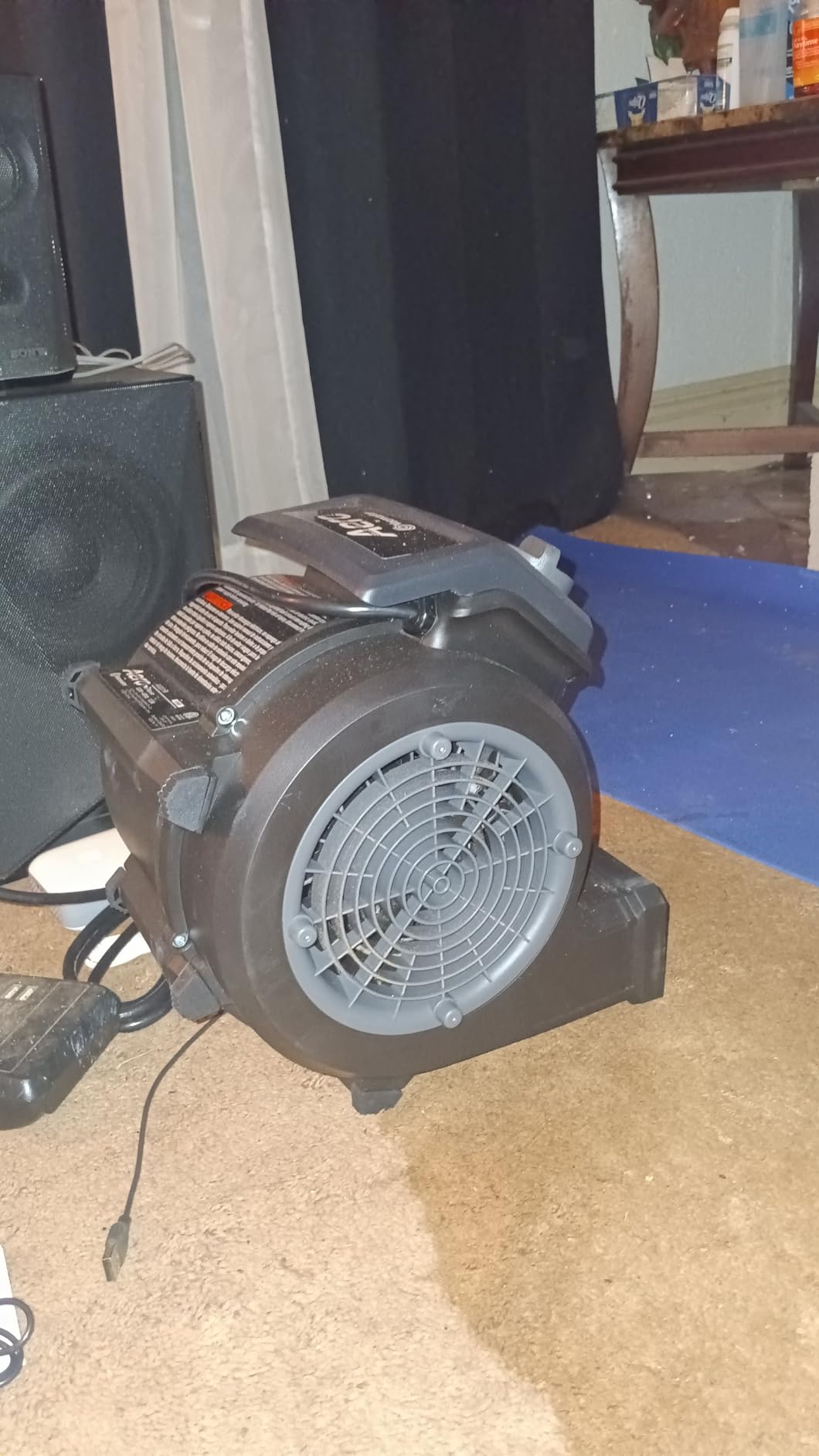
Tilt is indexed at 0, 45 and 90 degrees, which sounds like small print until you are trying to get air onto your chest instead of your knees. The click positions are deliberately coarse because riders need repeatable aim, not fine adjustment. The body is only about 13 inches on its longest side and weighs little enough to move between a garage and a bedroom.
The most repeated complaint across 2k reviews is not the fan, it is the remote. Several buyers received a remote with a dead non-standard L828 12V cell, and replacing one means opening the case with a small screwdriver. Worth knowing before you rely on it mid-interval.
Who the Vacmaster AM201R suits best
It suits riders on a budget who still want a proper air mover with remote control rather than a plastic pedestal fan. The 550 CFM figure and the multi-year manufacturer warranty are the strongest of that combination in this list.
It also suits anyone training in a space where the fan has to be moved. The footprint is small, the tilt is positive rather than continuous, and the airflow is focused enough to work from a corner of a room.
Where the Vacmaster AM201R falls short
The fan is 110V only, which is a real problem for anyone outside the United States and has already caused at least one buyer failure. Check your supply before you commit.
On the top setting it is genuinely loud, and the 61 dB figure is measured at maximum output. In a quiet evening session that pushes you to run audio louder than you would like, so most riders settle on speed two for steady work and reserve the third for threshold blocks.
4. Vornado FLY MAX – Quietest Fan for Indoor Cycling
Vornado FLY MAX High Velocity Floor Fan, 4 Speed Settings, 180° Adjustable Tilt, Remote Control, 2300 FPM, Powerful Airflow, Fitness Cooling for Gym, Workout, and Training, Black
2300 CFM
45 dB brushless motor
4 speeds
180 degree tilt
Pros
- Lowest published noise figure in the group at 45 dB
- Brushless motor
- 180 degree tilt plus pivoting head
- Remote with magnetic cradle and straps
- 5 year replacement guarantee
Cons
- Only 162 reviews of owner history
- Built for 120V use in the United States
- Smallest review base of the high velocity fans
The FLY MAX has the lowest published noise figure of any fan in this guide at 45 dB, and that single number is why it earns a place on a list full of big industrial blowers. A brushless motor is the reason, and it makes a measurable difference to how the fan sits alongside music or an instructor during a class-length session.
It also carries the highest rating in the group alongside the Lasko, at 4.7 stars. Airflow is rated at 2300 FPM across four speed settings, and the head tilts through 180 degrees with a pivot on top of that, so you can point air at the chest from a low or a high position.
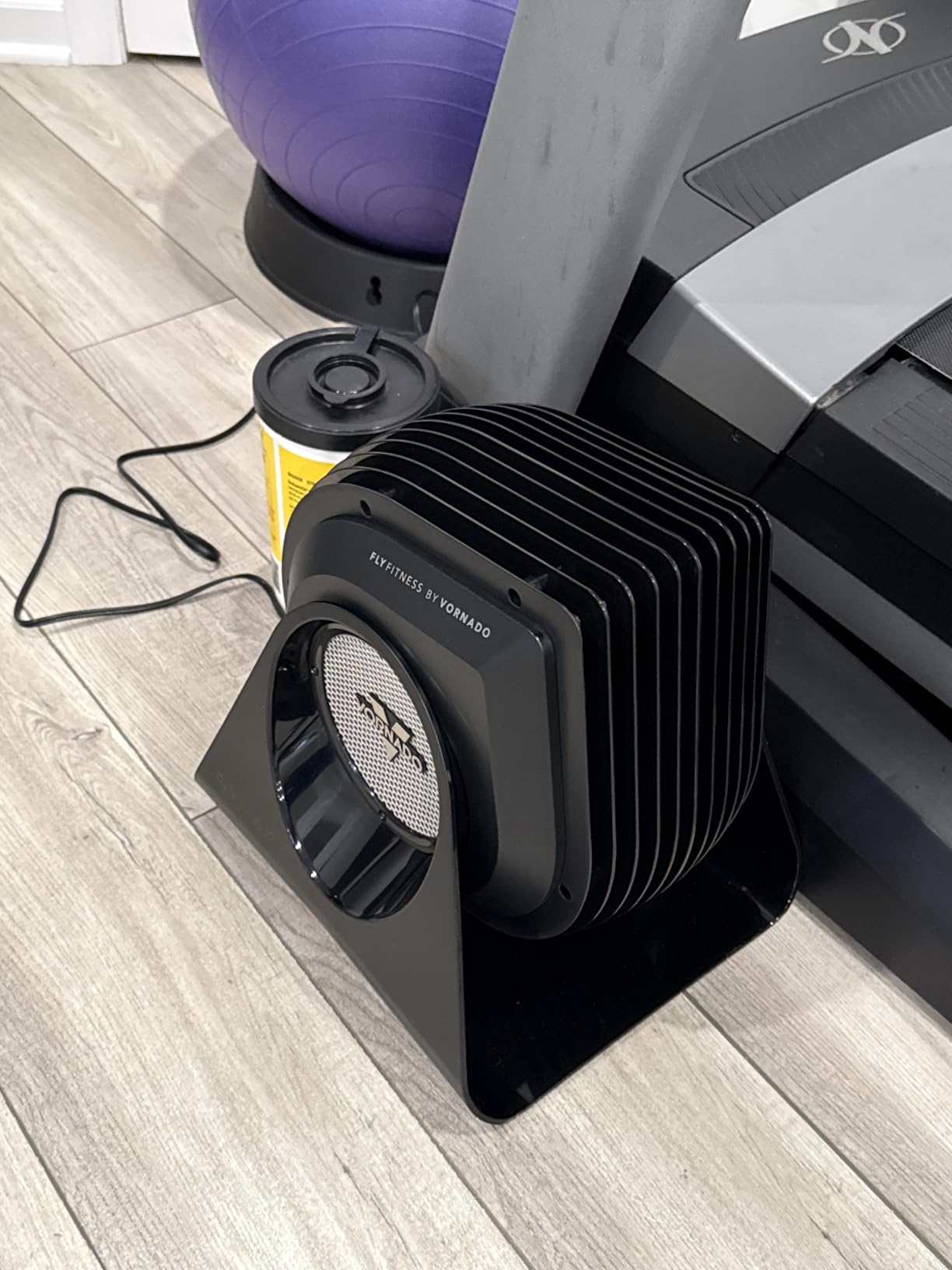
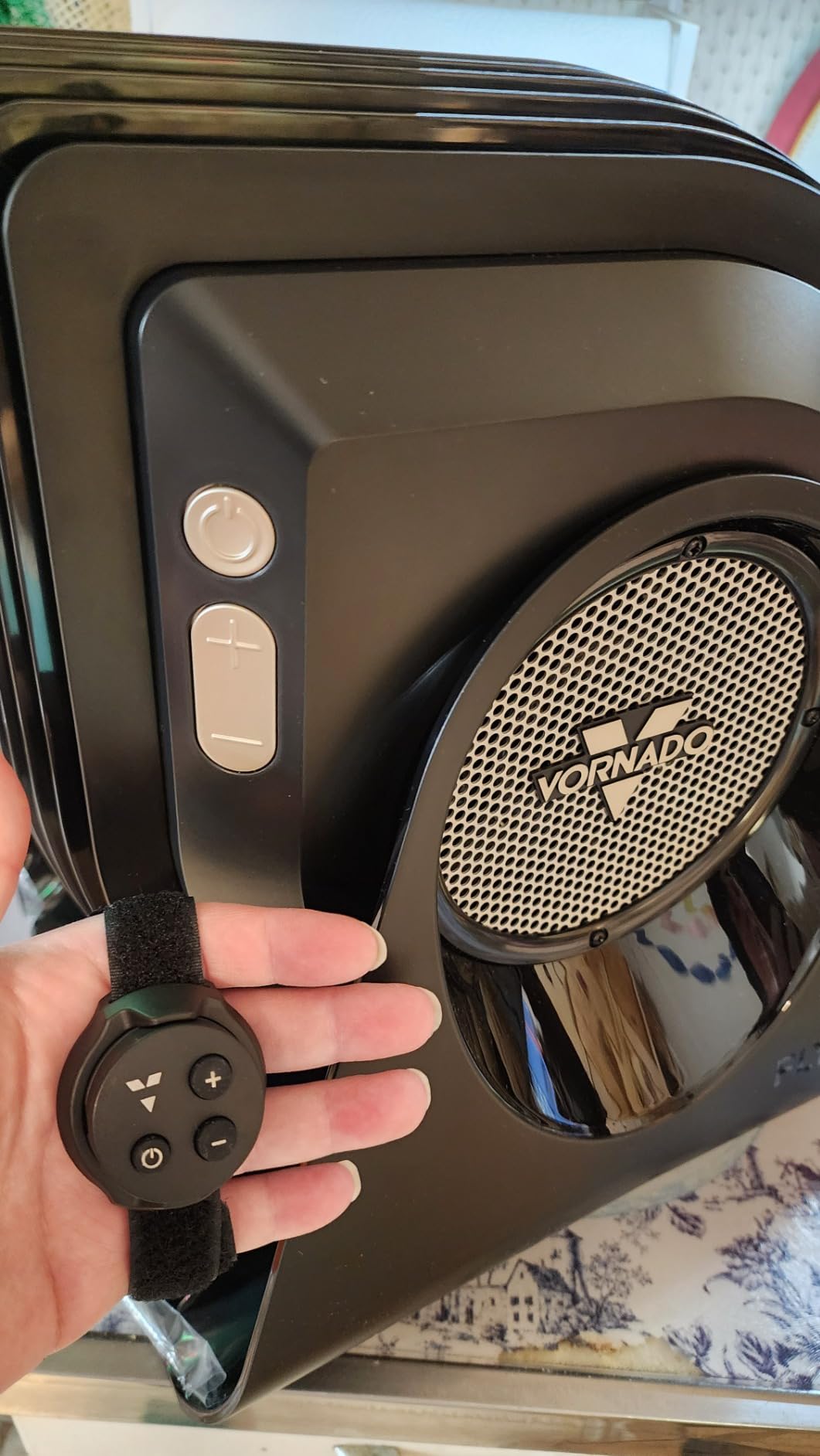
The remote is unusually thoughtful for a floor fan. It comes with a magnetic cradle and equipment straps, which means it can live on the handlebar or the stem rather than on a table across the room. Owners mention not dropping it during intervals, which is a small thing that tells you how much thought went into the mounting.
Being newer, it carries less long-term history than the Laskos. One hundred and sixty-two reviews is a thin sample when you are judging a motor that is expected to run for a decade, and the multi-year replacement guarantee is the main thing offsetting that.
Who the Vornado FLY MAX suits best
It suits anyone in a flat, an upstairs unit or a shared room where a 68 dB fan would be antisocial. Forty-five decibels is quiet enough to train with audio on at a normal level, which is the metric that actually matters in a shared space.
It is also a good fit for a spare room where floor space is tight. The body is around 13 inches on its longest dimension, so it tucks into a corner that a 20-inch industrial fan would block.
Where the Vornado FLY MAX falls short
The rating is excellent but the sample is small, and this is the fan in the group where long-term reliability is least proven. If you want decades of owner feedback to lean on, the Lasko models have it.
It is built to 120V and certified for use in the United States only, so the same supply warning applies as with the Vacmaster. It also carries one of the higher wattages in the group for a fan of this size, so it is not the choice if electricity cost is the priority.
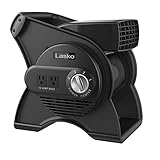
5. Lasko 12-Inch Pivoting High Velocity Fan U12104 – Best for Small Spaces
Lasko Pivoting High Velocity Portable Utility Fan – 12″ – U12104 – Black
289 CFM
12 inch blades
270 degree pivot
2 built-in outlets
Pros
- More than 24k reviews of long-term ownership
- Rated #2 in Floor Fans
- Compact and light at 7.5 pounds
- 270 degree pivot for easy aiming
- Two built-in grounded outlets
Cons
- 289 CFM is the lowest published output here
- No remote or smart control
- Loud on the top setting
We want to be straight about this one, because the numbers matter. The U12104 moves a claimed 289 CFM, which is the lowest published airflow figure of any floor fan in this roundup, and it is why we recommend it as a second fan rather than your primary trainer headwind. What it does have is more than 24k reviews, a #2 rank in Floor Fans, and a track record longer than anything else on this list.
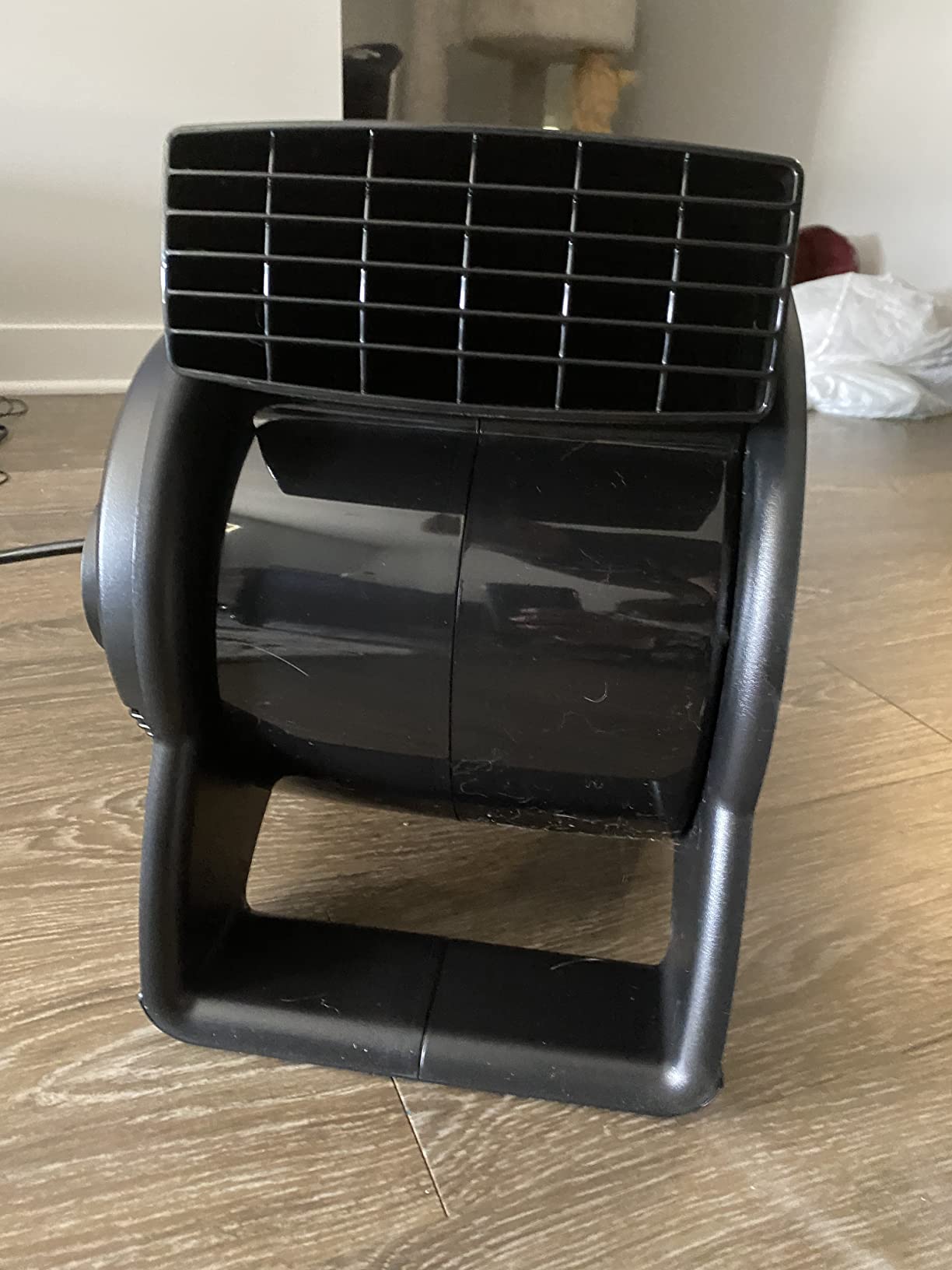
Physically it is the most practical unit here for a small space. Seven and a half pounds, a 12-inch body, and a 270-degree pivot that covers up, down and across in one movement. Two grounded outlets are built into the base with a 10-foot cord, which is genuinely useful when the bike is not near a wall socket.
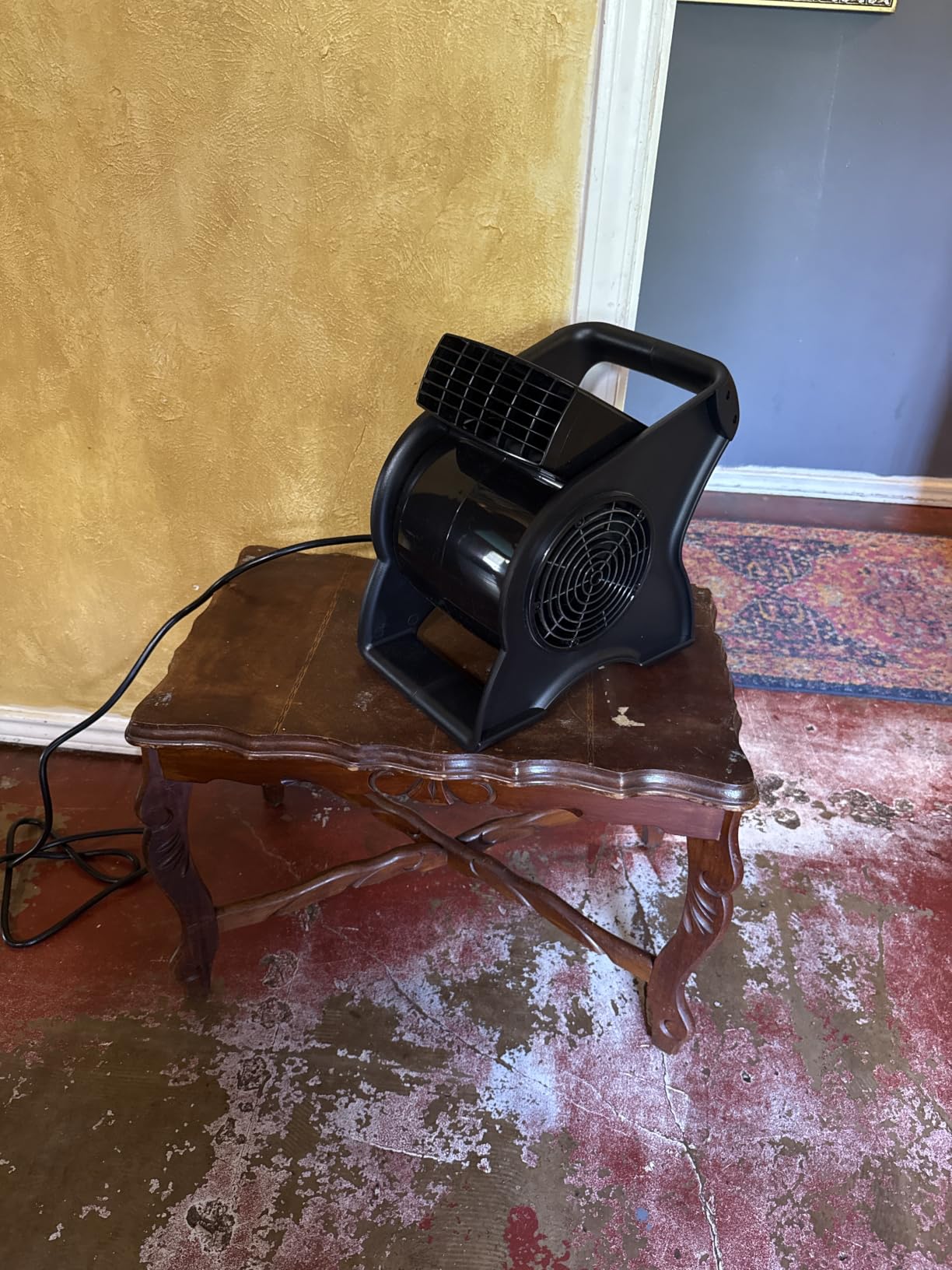
Buyers use it in garages, basements and shops as much as in home gyms, and the resettable circuit breaker is a sensible level of protection for a device that gets moved around. The published noise figure sits between the Vacmaster and the industrial blowers.
Because airflow is broad rather than concentrated, a single U12104 at full tilt will cool a whole room comfortably without delivering the hard column of air over the chest. In our view that is a perfect job for a second fan or for recovery spins, where you are not chasing watts.
Who the Lasko U12104 suits best
It suits anyone who wants a dependable utility fan to complement a primary trainer fan, and anyone who is still deciding. With that many reviews, a low purchase risk and a compact body, it is the easiest recommendation we can make to a first-time indoor rider.
It also suits recovery riding and long zone one sessions where cooling is about comfort rather than performance. Run it on low and point it at the room, not at the rider.
Where the Lasko U12104 falls short
It has no remote, so changing speed means walking to the unit. On a dial-only control that is a real interruption during an interval, and it is the single biggest reason we did not place it higher.
It is corded with a 10-foot lead, so it has to live near an outlet rather than clipped to the bike. And on the top setting owners note it competes with music or class audio, so it is not the fan for a late evening in a quiet building.
6. iLIVING 20-Inch Heavy Duty Fan – Best for Garages
iLIVING 20 Inch Heavy Duty Floor & Wall Mount Fan – 5750 CFM High Velocity, 120-Watt, 3-Speed, Industrial Cooling for Garage, Workshop, Office, Home – UL Listed, Black
5800 CFM
20 inch aluminium blades
120 watts
3 speeds
Wall mountable
Pros
- Highest published airflow figure in the group at 5800 CFM
- Floor standing or wall mounted
- Three speeds with 360 degree tilt head
- UL and cUL listed
Cons
- Lowest rated of the large fans at 4.3 stars
- Tenth of its reviews are one star
- Motor noise reported over time
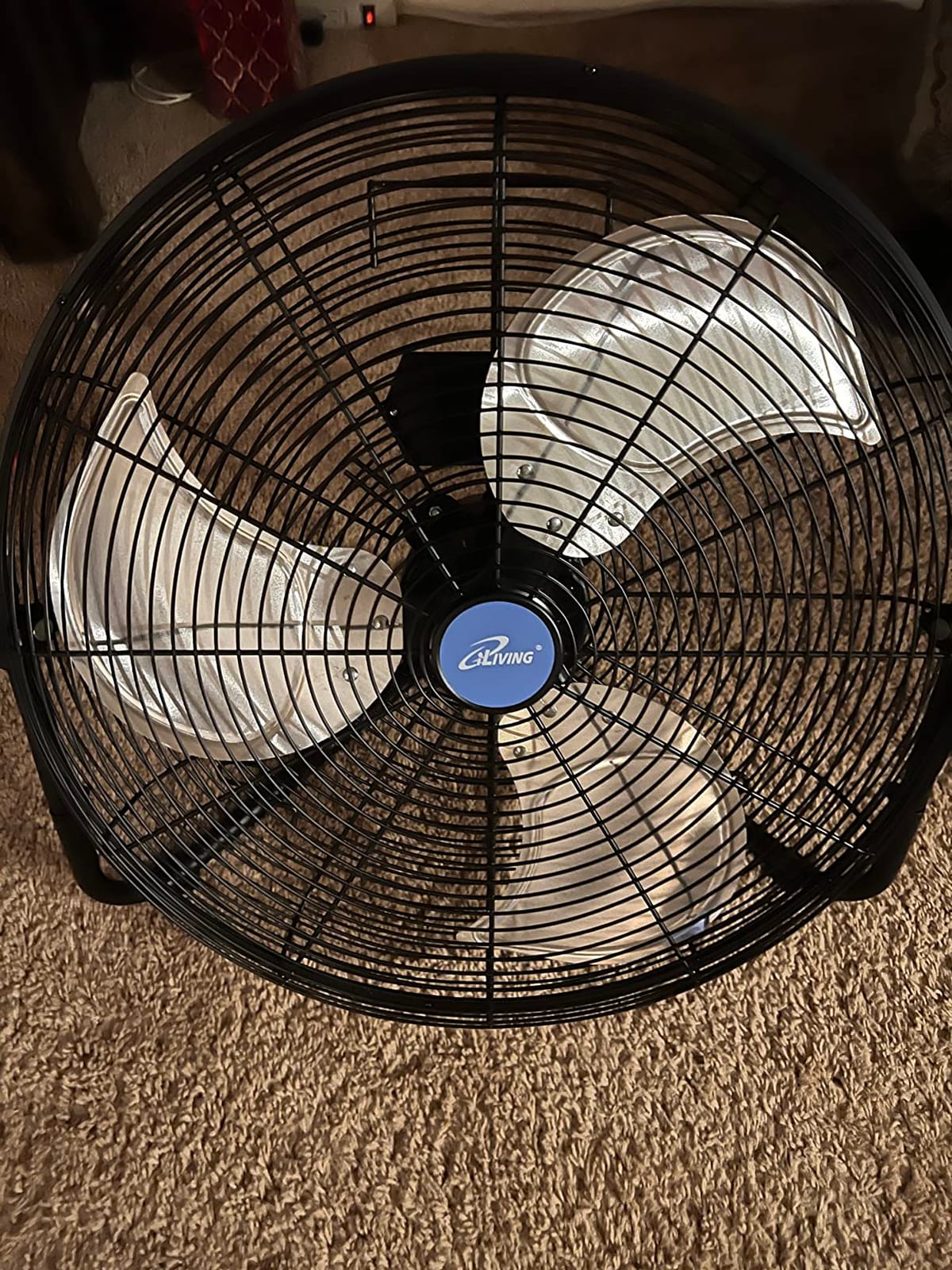
If your training room is a garage, a workshop or a converted shed, airflow volume matters more than refinement. This fan moves a claimed 5800 CFM, the highest figure in the roundup, off a 120-watt motor, and it is the one we would choose for clearing heat out of a genuinely hot space.
It can stand on the floor or be wall mounted with the included hardware, and the head tilts through 360 degrees so you can sweep it across a bench or a workbench. The wall mount is the detail that removes the usual objection to industrial fans, because it gets a 20-inch unit completely clear of the bike.
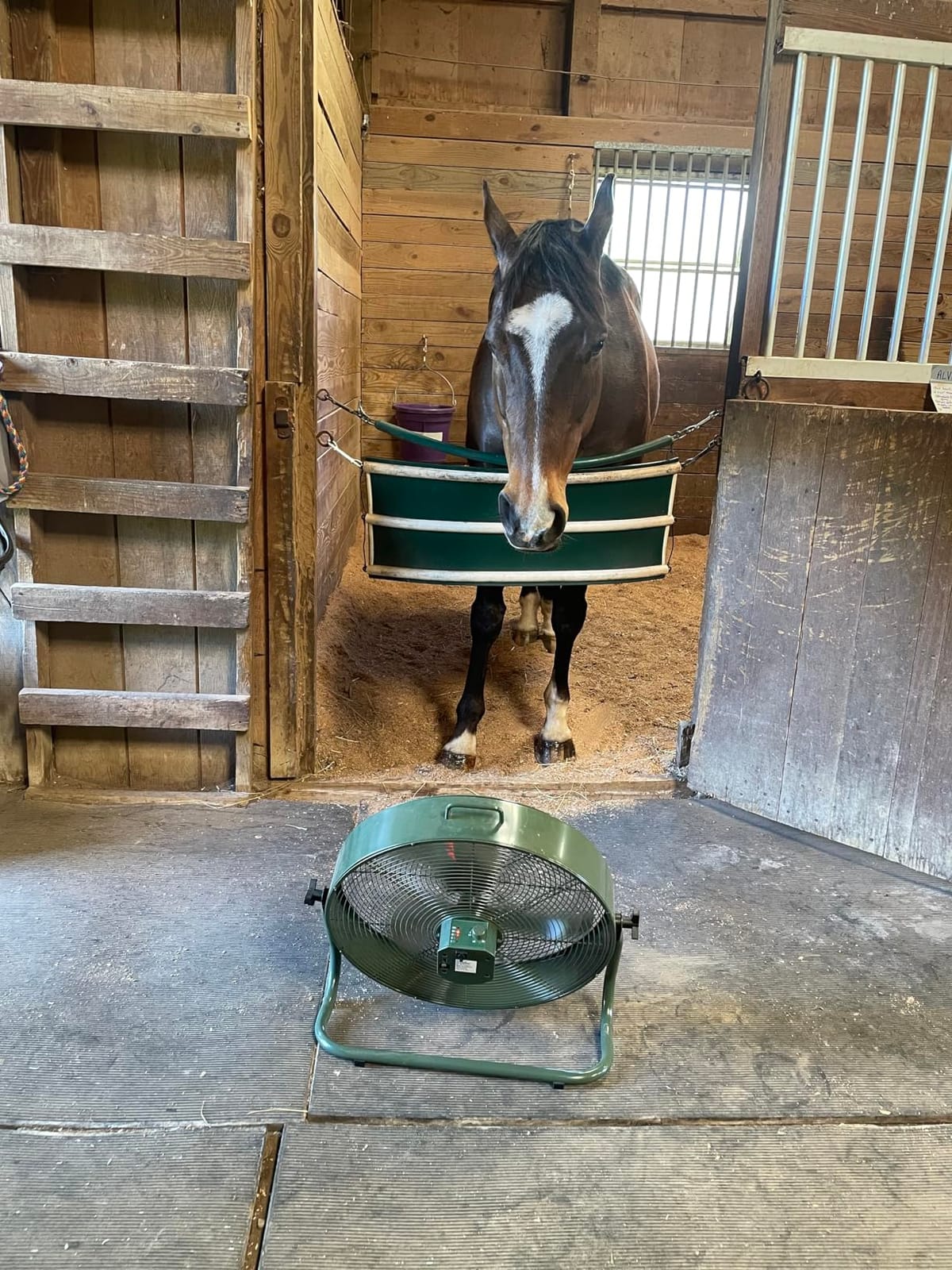
At a published 64 dB it sits in the middle of the pack, louder than the Vornado and the Vacmaster, quieter than the 20-inch Lasko. Aluminium blades and reinforced front and rear grilles make it a workshop-grade tool, and it comes with a one-year limited component warranty.
The 4.3 star average is the lowest of the big floor fans here, and the reason is visible in the review spread: about one review in ten is a single star, with motor noise and long-term reliability the recurring theme. At this airflow volume, you are asking a lot of a brushed motor, and the failures cluster around it.
Who the iLIVING 20-Inch suits best
It suits garage and basement riders who start sessions in a space that is already hot, before any fan has been running for ten minutes. A room-filling blast gets the air moving in a way a focused air mover cannot.
It also suits anyone whose trainer lives in a space where floor area is precious. The wall mount gets a 20-inch fan with 5800 CFM completely out of the way of the bike.
Where the iLIVING 20-Inch falls short
It is the least refined of the large fans in this list. Control is a button panel rather than anything app-driven, and there is no smart or sensor-based control, so you set the speed and it stays there.
The single-star reviews are not vague. Owners report motor noise developing over time, which suggests the motor is the weak point rather than the blades or the frame. If your priority is a quiet ride rather than a cooled room, the Vornado is a different proposition.
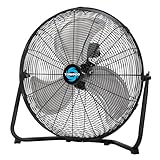
7. Tornado 20-Inch High Velocity Metal Fan – Best for Workshop-Grade Durability
Tornado 20 Inch High Velocity Metal Floor Fan, 3-Speed Powerful Cooling, 120° Adjustable Tilt, 6.0 FT Cord, UL Safety Listed for Industrial, Commercial, and Home Use, Black
4750/4200/3800 CFM
20 inch aluminium blades
120 degree tilt
UL listed
Pros
- Three published airflow figures across three speeds
- All-metal body with aluminium blades
- 120 degree vertical tilt
- Carry handle and tool-free setup
- UL safety listed
Cons
- Blade noise reported on the highest setting
- Only 390 reviews so far
- Not remote controlled
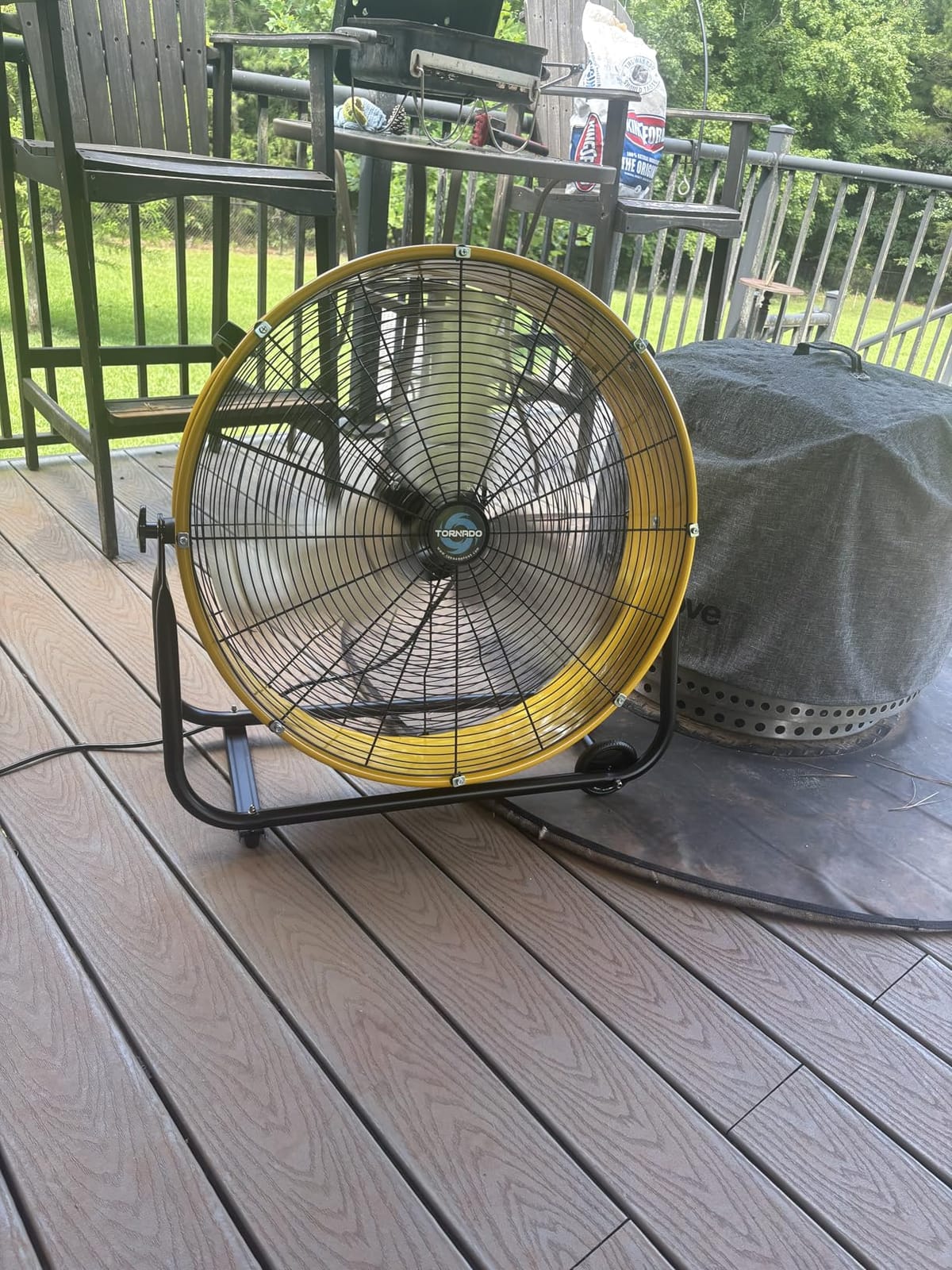
The Tornado is the one to pick if you want industrial airflow in a build that looks like it will survive being knocked about. Powder-coated steel body, aluminium blades, a rust-resistant grille and an open-air over ball-bearing motor, rated UL for industrial, commercial and home use.
It is also unusually honest about its output. Instead of one headline figure, the three speeds are published as 4750, 4200 and 3800 CFM, which is rare and lets you match a speed to a session instead of guessing. The head tilts through 120 degrees vertically, enough to sweep from the floor up to a rider on a raised trainer.
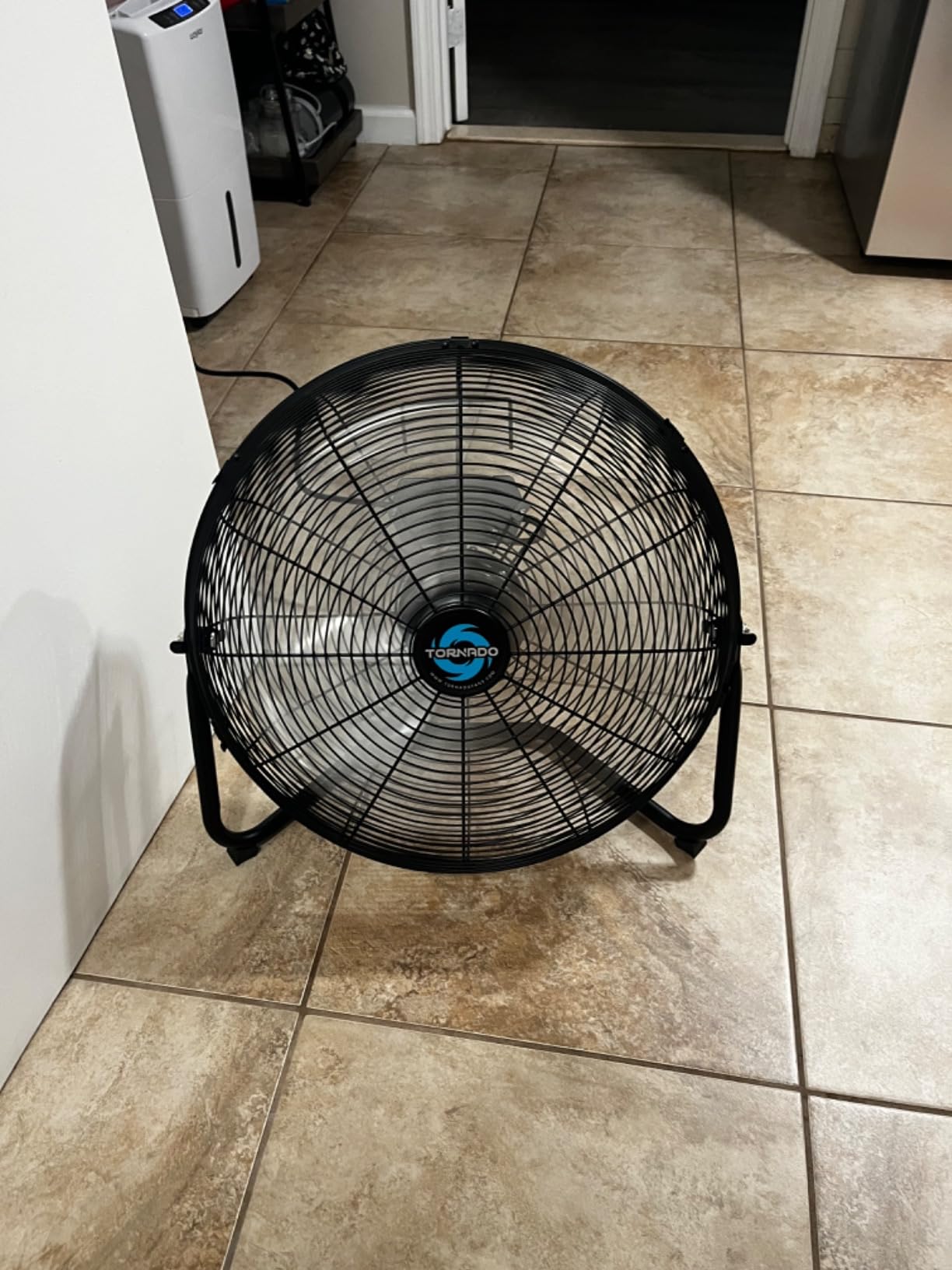
At 66 dB on the highest setting it is quiet for an industrial fan, though owners do mention blade noise creeping up at the top speed. At 145 watts and 1500 rpm it draws more power than anything else in the guide except the 20-inch Lasko, which is worth remembering in a hot garage where cooling is the priority.
There is no remote. Control is a rear button panel, and with 390 reviews this is the newest large fan in the group, so its long-term record is shorter than the Lasko units it competes with on paper.
Who the Tornado 20-Inch suits best
It suits riders who train in a workshop, garage or covered patio and want a fan that handles dust, heat and being moved around. The carry handle and tool-free setup mean you can reposition it between sessions in seconds.
The three-speed airflow ladder makes it a good match for zone-based fan control, which is how experienced riders think about it: low for recovery, middle for steady work, high for the threshold block.
Where the Tornado 20-Inch falls short
There is no remote, so speed changes mean walking to the unit. In a garage that is a short walk, but in a dedicated indoor room it breaks the session rhythm.
Its 390 reviews mean it has the shortest ownership history of the industrial fans here. It may well be the better built machine, but if you want years of field reports you will find them on the Lasko models instead.
8. Commercial Cool 16-Inch High Velocity Floor Fan – Best for Dorm Rooms
Commercial Cool 16 Inch High Velocity Floor Fan, Black, CFF16B
16 inch blades
3 speeds
5.5 pounds
5.5 pound body
Pros
- Over 1300 reviews at 4.6 stars
- Light at 5.5 pounds and easy to carry
- Rear speed control with off
- low
- medium and high
- Works as a floor
- desk or table fan
Cons
- No published CFM figure
- Plastic blades rather than metal
- No remote or tilt adjustment beyond the knob
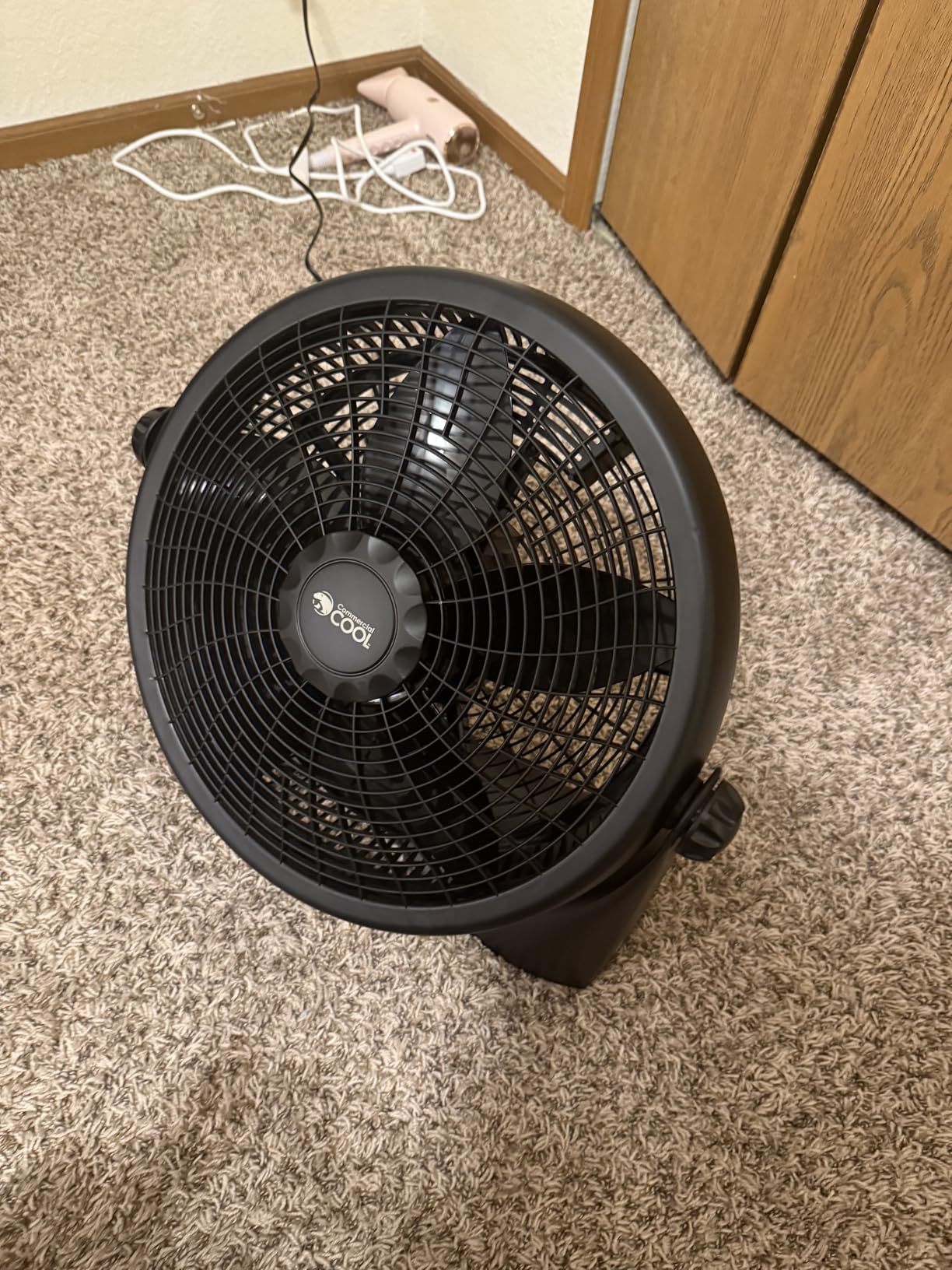
Sometimes the correct fan is the one that fits the room rather than the one with the biggest headline number. This 16-inch floor fan weighs 5.5 pounds, runs off a 52-watt motor, and can be carried from a bedroom to a study in one hand between sessions.
The rear control knob has four positions including off, which is the old-school advantage: no app, no pairing, nothing to reset. It is marketed across a wide range of uses from dorm rooms to attics, and at 16 inches it sits neatly under a desk or beside a turbo trainer without dominating the space.
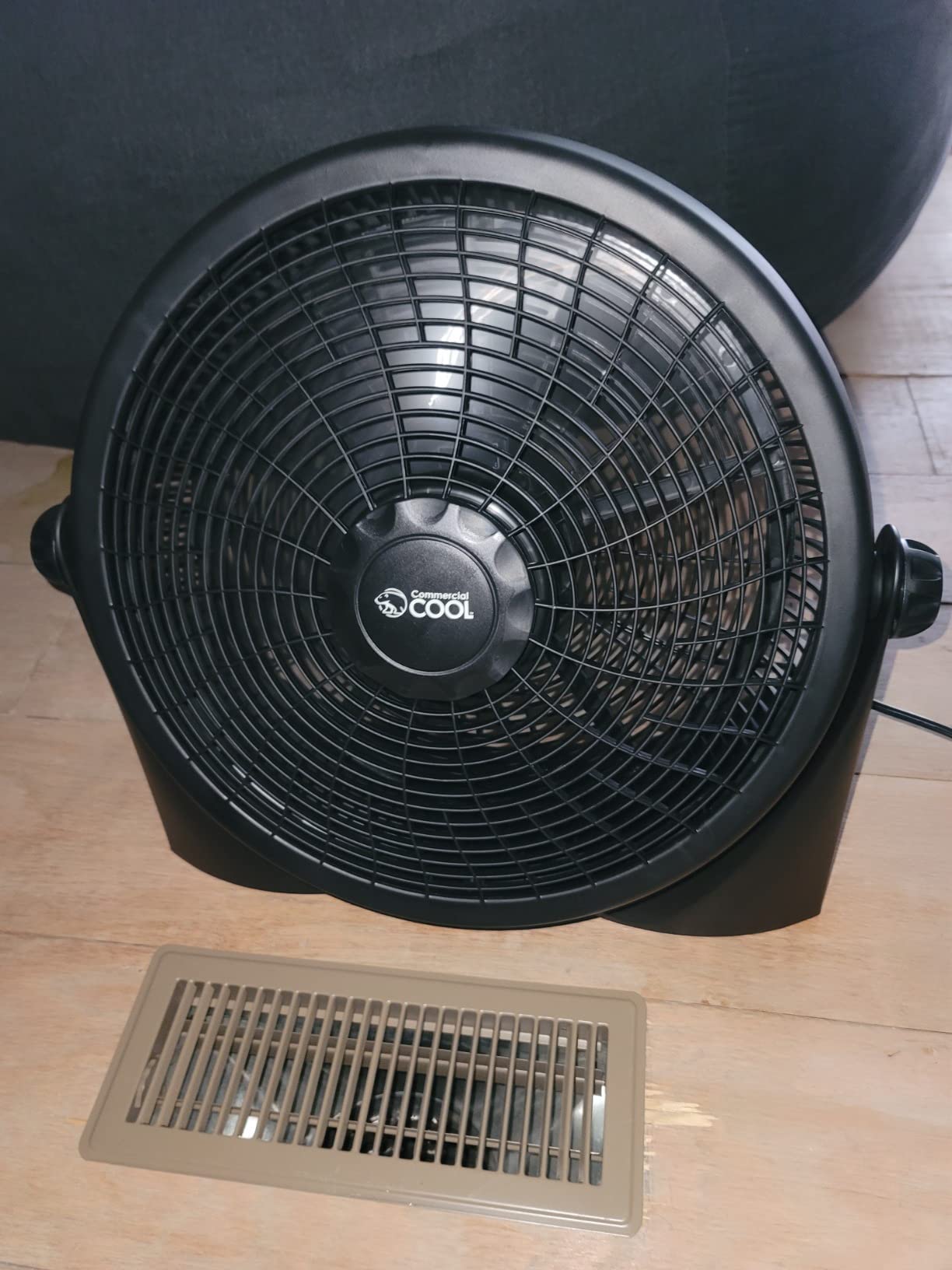
The trade-off is specification. There is no published CFM figure, and the 16-inch plastic blades are a step down from the metal blades on the 20-inch models. Reviewers raise noise at the higher settings, which is expected from a motor of this size.
The 1,342-review average of 4.6 stars is a solid, well-established record with 75% of reviews at five stars. It is a low-stakes purchase, and that is exactly the point when the room is small and the alternative is a fan you will regret sitting in front of the bike.
Who the Commercial Cool 16-Inch suits best
It suits students and riders in a dorm, a small bedroom or a study where space and noise budget are both tight. A 5.5-pound fan you can move easily is worth more in that setting than maximum CFM.
It is also a sensible first fan for someone building a first indoor setup. Nothing to configure, nothing to pair, and a price that does not demand research.
Where the Commercial Cool 16-Inch falls short
Without a published CFM figure you are buying on size and brand history rather than data, and for threshold work we would want more certainty than that. Sixteen-inch plastic blades also mean less durability than a metal-bladed industrial model.
There is no remote and no tilt beyond whatever the housing allows, so you set it and forget it. If your sessions need mid-ride adjustment, that limitation will show up on the third interval.
9. Amazon Basics 20-Inch High Velocity Floor Fan – Most Versatile
Amazon Basics 20″ High Velocity Industrial Cooling Floor Fan with 3 Speeds, Tilt Head, ETL-Listed Safety Compliance, Metal Housing and Blades, for Commercial Space/Garage/Gym, 125W, Black
3542 CFM
20 inch aluminium blades
3 speeds
125 watts
ETL listed
Pros
- Over 9k reviews showing a durable pattern
- 3542 CFM from aluminium blades
- Tool-free assembly
- ETL listed for safety
- Metal housing rather than plastic
Cons
- Lowest rating here at 4.2 stars
- Rotary knob control only with no remote
- Free standing with no wall mount option
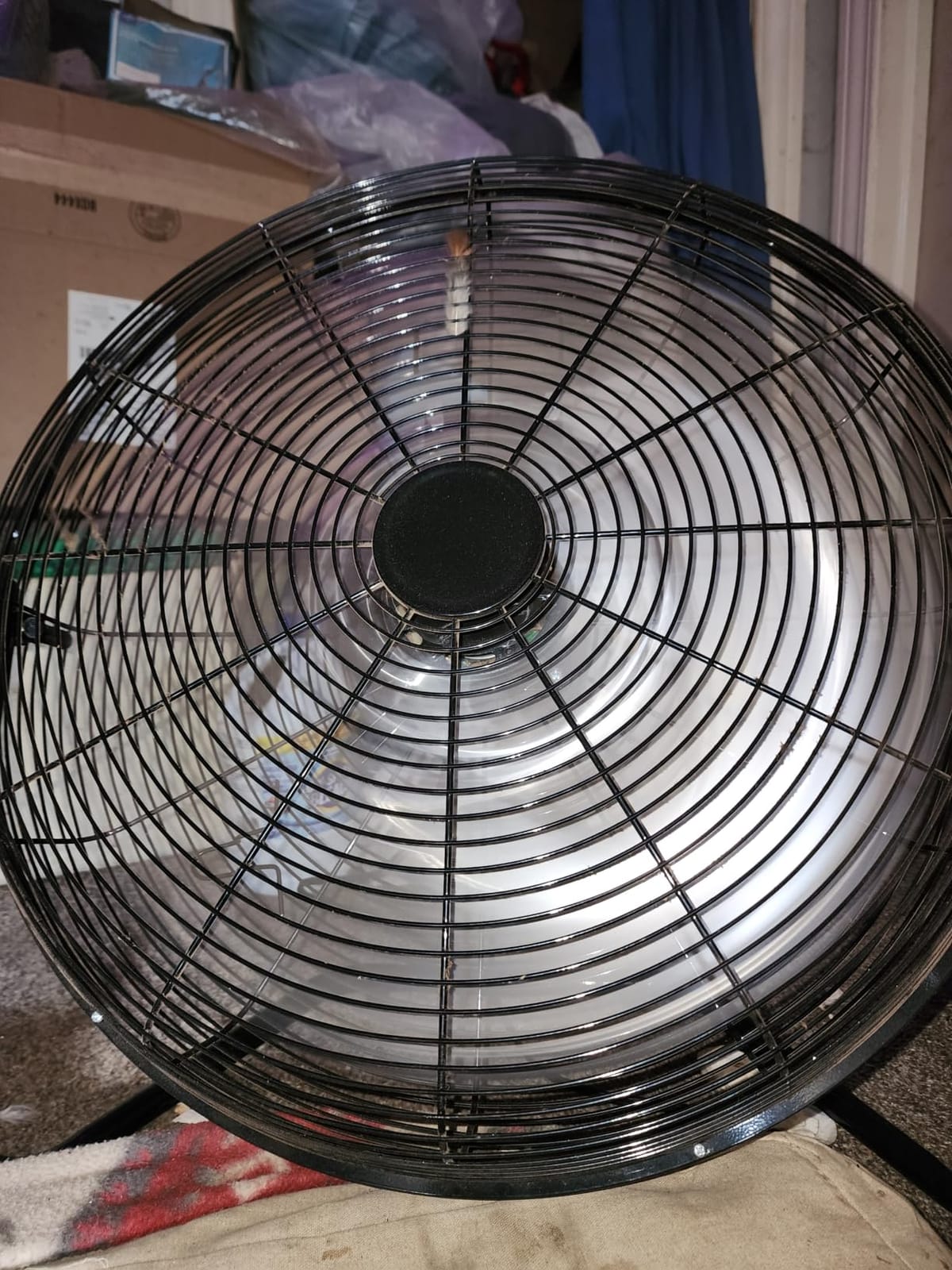
The Amazon Basics 20-inch is the reason we can recommend a 20-inch aluminium-bladed fan to a first-time indoor rider without hesitation. It claims 3542 CFM, uses commercial-grade metal construction with three heavy-duty aluminium blades, and is ETL listed.
With 9,018 reviews at a 4.2 star average, the review spread is the story. Seventy-two percent of reviews are five stars, but twelve percent are one star, and the complaints cluster on controls and mounting rather than on the fan failing. That is a favourable pattern: people like the machine, they just wish it had a remote.
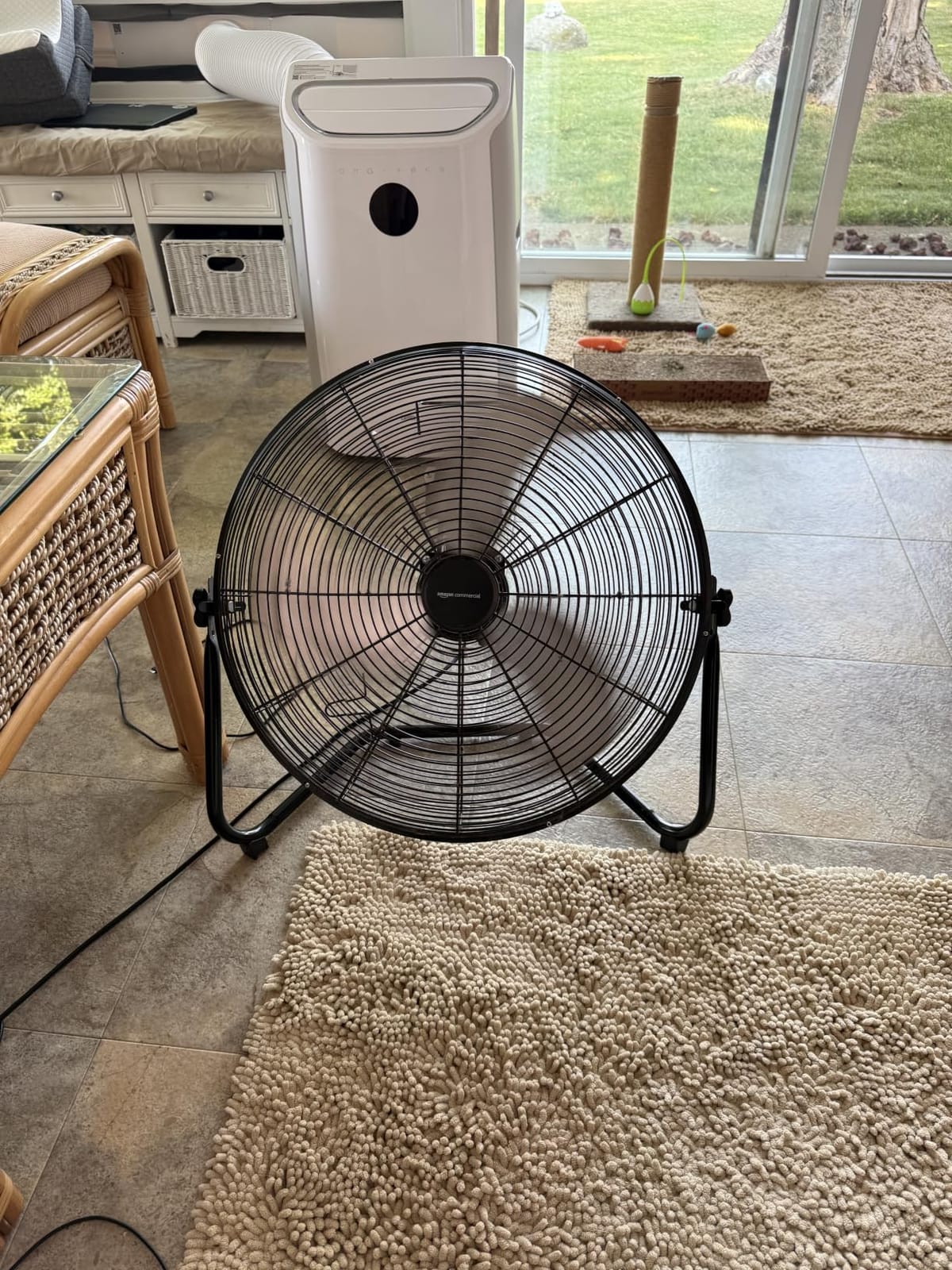
Control is a rotary knob switch, which is the least convenient interface on this list. There is no remote, and there is no wall mount option, so it stands on the floor where you put it. At 125 watts and 10.2 pounds it is a substantial unit that stays where you leave it.
Tool-free assembly gets it running in minutes, and the tilt head plus pivoting mechanism distributes air across the room rather than concentrating it. That makes it a better room-cooling fan than it is a chest-level trainer fan, though plenty of riders use it as exactly that.
Who the Amazon Basics 20-Inch suits best
It suits anyone who wants industrial airflow and metal durability without moving up to a premium brand. The 3542 CFM figure puts it in the same class as much more expensive units, and the review volume suggests it holds up.
It is a good garage and basement companion where the priority is moving hot air out of a room rather than aiming a precise column at a rider.
Where the Amazon Basics 20-Inch falls short
The rotary knob is the main issue. Changing speed means walking to the fan, and owners single that out as the feature they would change first. If mid-interval control matters to you, spend a little more on a remote-equipped model.
It is free standing only, so in a tight room you lose the wall mounting option that makes the Lasko 2264QM so flexible. And 3542 CFM is below the 4750 and 5800 figures of the other 20-inch models here.
10. TrubliFit Fan for Peloton Bike – Best for Peloton Riders
TrubliFit Fan for Peloton Bike & Peloton Treadmill – Accessories for Peloton – Fits Original, Bike+ or Tread – No Batteries or Charging Required
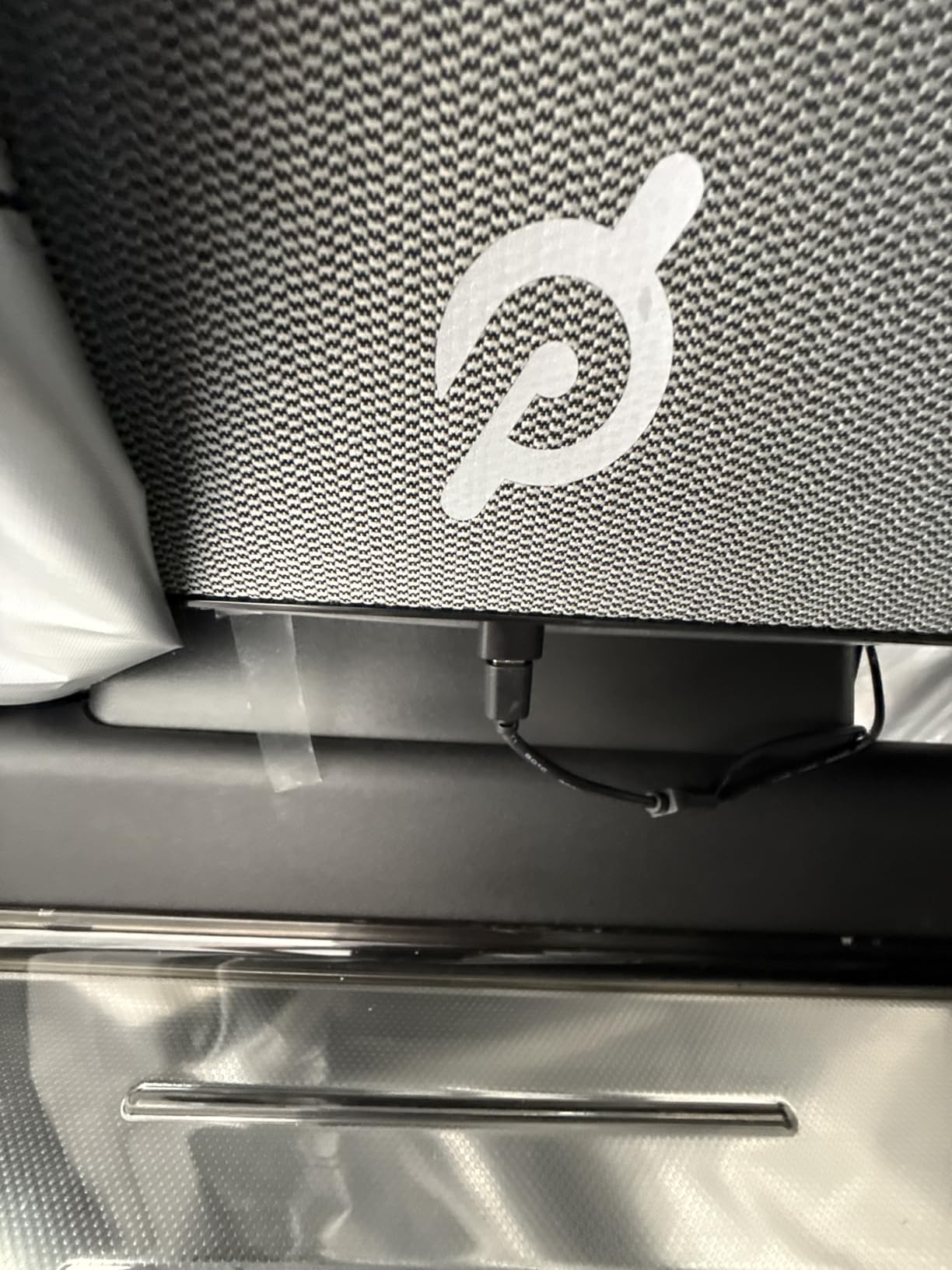
Plugs into the bike screen
No batteries
3 speeds
4.16 ounces
Pros
- Powers from the Peloton screen with no charging
- Very quiet so it does not fight the instructor
- Mounts centrally out of the grip and screen line
- Over 1500 reviews at 4.4 stars
Cons
- Not enough airflow alone for hard sessions
- Short cord conflicts with a swivelling screen
- Only fits Peloton bikes the Tread and the Row
- Two effective speeds despite listings
The TrubliFit is a different category of product from everything else in this guide, and it solves a different problem. It is not an air mover or a floor fan; it is a small three-blade fan that plugs into the accessory port on a Peloton and sits at the centre of the bars.
That means no batteries, no charging and no cable to run. Owners consistently single out how quiet it is, which matters more on a Peloton than on a turbo trainer because the instructor audio is the session. A loud fan there genuinely breaks the class.
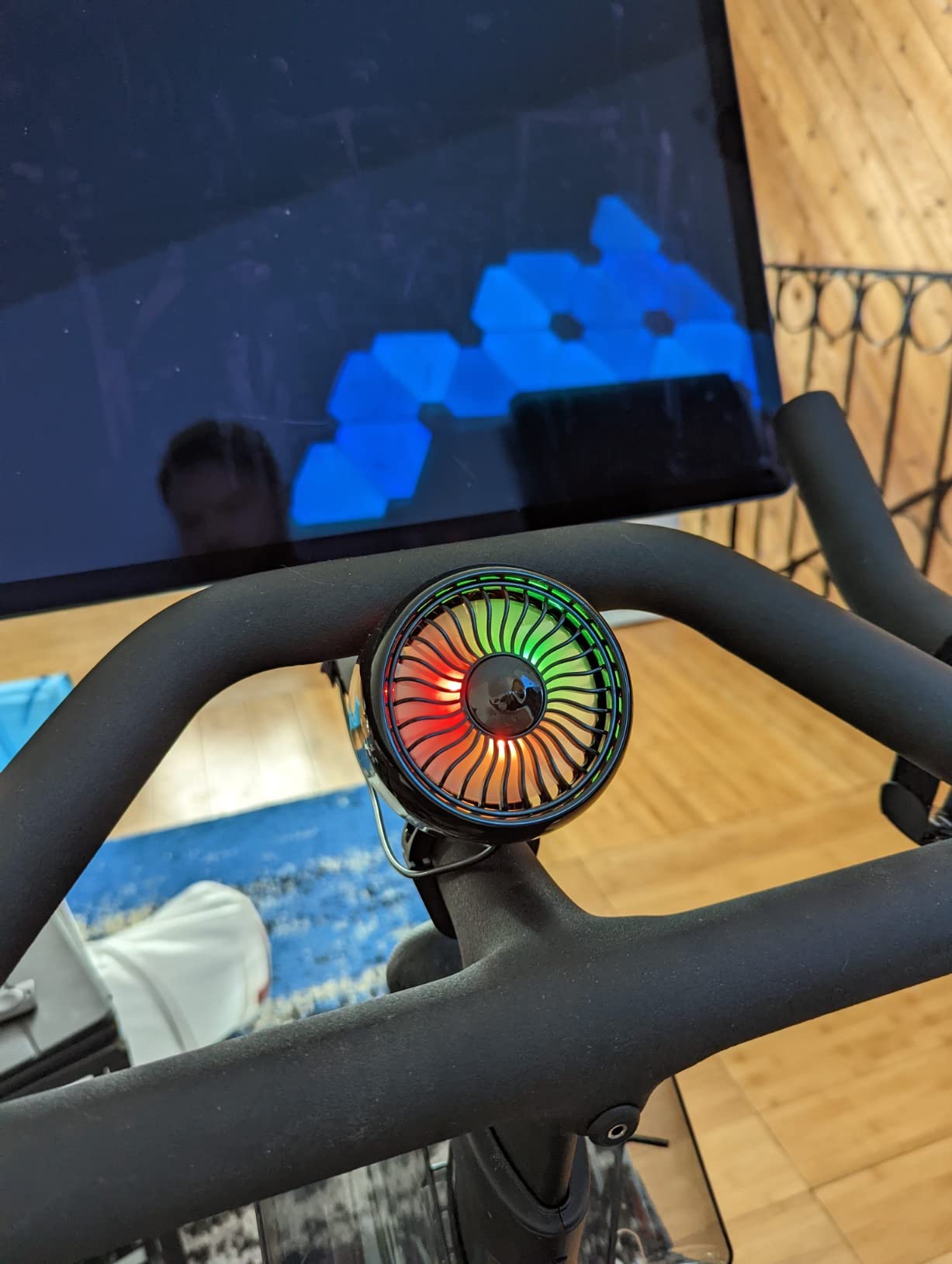
It mounts centrally so it stays clear of both the screen view and your hand position, and at 4.16 ounces you would not notice it. It also works on the Treadmill and the Row, not just the bike.
The honest limitation is airflow. Reviews describe it as a face-level breeze rather than something that challenges a hard effort, and plenty of owners pair it with a second fan. Listings show three speeds but owners report two that make a real difference, and the short cord is a problem if your screen swivels.
Who the TrubliFit Bike Fan suits best
It suits Peloton owners who ride classes in a shared room and need airflow that does not make the instructor inaudible. A floor fan in a studio is a louder proposition than most people expect once the music is mixed properly.
It is also a good low-effort addition for someone who already owns a proper floor fan and just wants a personal breeze during follow-along sessions.
Where the TrubliFit Bike Fan falls short
It only fits the Original Peloton Bike, the Bike+, the Tread and the Row. If you train on a turbo trainer, a spin bike or any other platform, this is not for you, and the mounting bracket is model-specific rather than adjustable.
It cannot deliver enough air for threshold work on its own, and the tilting joint is a thin plastic hinge that has snapped for at least one owner. Treat it as an accessory, not as your primary cooling strategy.
11. TrubliFit Dual Cooling Fans with Phone Tray – Best for Follow-Along Classes
TrubliFit Dual Cooling Fans with Phone Tray for Peloton Bike, No Batteries
Two fan heads
Built-in phone tray
USB powered
3 speeds each
Pros
- Two fans roughly double the air of a single clip-on unit
- USB powered from the display with no batteries
- Phone tray keeps your device secure and visible
- Quiet operation owners appreciate
- Stable mounting once fitted
Cons
- One owner reported an electrical fault in their bike
- Does not fit the Cross Training Bike+
- Phone tray is required for mounting
- Instructions take a moment to work out
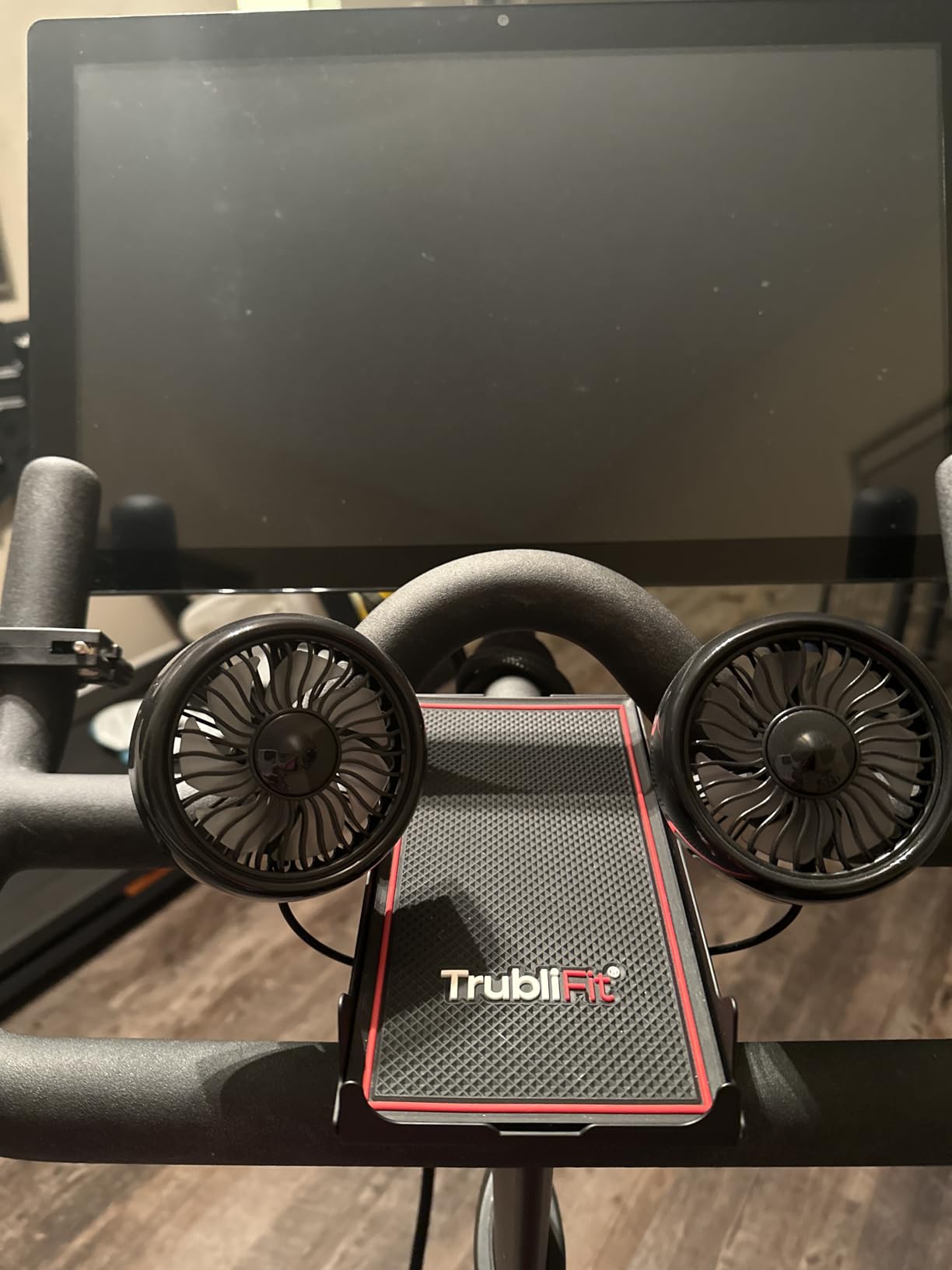
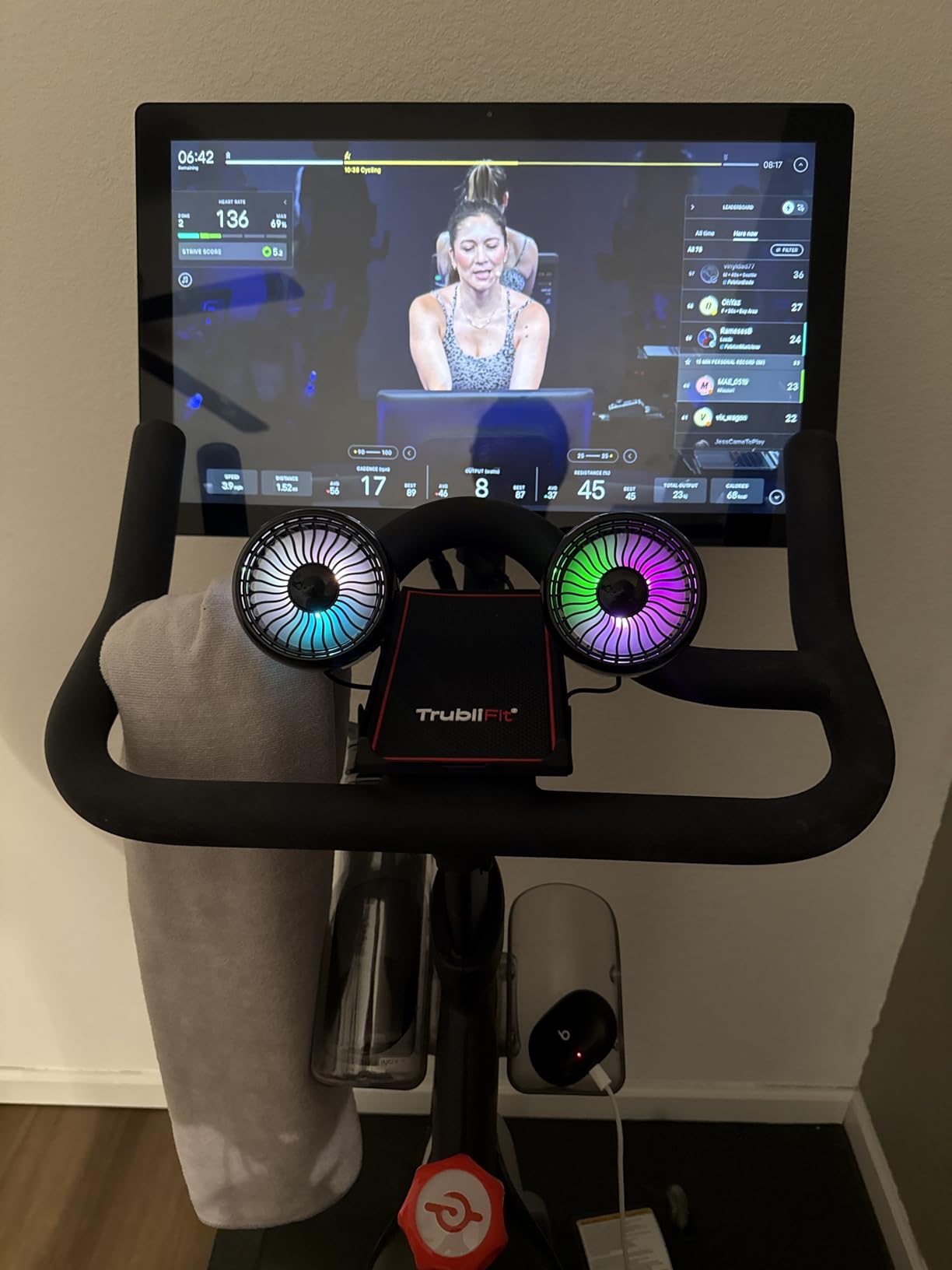
The dual version of the TrubliFit exists because one clip-on fan was not enough. Two three-blade heads roughly double the air reaching the rider, and with both running you get something closer to a usable personal breeze during a hard interval than the single unit delivers.
The integrated phone tray is the feature that converts it from a fan into a mounting system. Your device sits at eye level for follow-along classes, the fans clip either side, and everything draws USB power from the bike display. Three speeds per fan, no batteries to manage.
At 4.3 stars across 246 reviews the average sits below its single-fan sibling, and the reason is a specific and serious one: at least one owner reported an electrical fault in their bike after using the display power, with repair costs in the hundreds. That is a single report, but it is the kind of detail worth knowing before you wire accessories into a display.
It also does not fit the Cross Training Bike+ despite looking similar, and because the phone tray is part of the mounting structure it is not optional, which some riders find limits where they can put their hands on long sessions.
Who the TrubliFit Dual Fans suit best
It suits Peloton riders doing follow-along classes in a quiet room where a floor fan would be too loud. Two small quiet fans beat one big noisy one in that specific situation.
The phone tray is a genuine bonus for class riders. Many people prop a phone against the console or buy a separate mount, and this handles both jobs in one piece of hardware.
Where the TrubliFit Dual Fans falls short
The display power draw is the risk to weigh. If your bike is under warranty, or you simply do not want accessories drawing from the screen, this is not the product for you. A rechargeable clip fan is the safer alternative.
It remains a small fan. Even doubled, it does not approach a floor fan for hard efforts, and the fit list is narrower than the single-fan version, which at least covers the Tread and the Row.
12. A2C 4.7-Inch Rechargeable Clip Fan – Best for Riding Without an Outlet
A2C 4.7″ Rechargeable Fan for Peloton Bike & Exercise Bike – 4000mAH
4000mAh battery
4000 RPM brushless motor
360 degree pivot
Strap and magnet mount
Pros
- Cordless with up to 6 hours on low
- Two mounting options with silicone strap and magnets
- 360 degree ball head for precise aim
- Compact 4.7 inch diameter fits tight bars
Cons
- Modest airflow next to any floor fan
- One owner reported a total failure after two weeks
- Magnets are small and could be stronger
The A2C is the answer for anyone whose training spot has no usable outlet: a camper van, a hotel room, a conservatory, or a bike stored away from the wall. A 4000mAh battery gives up to six hours on low and four on high, with a five-hour recharge and the option to run it while plugged in.
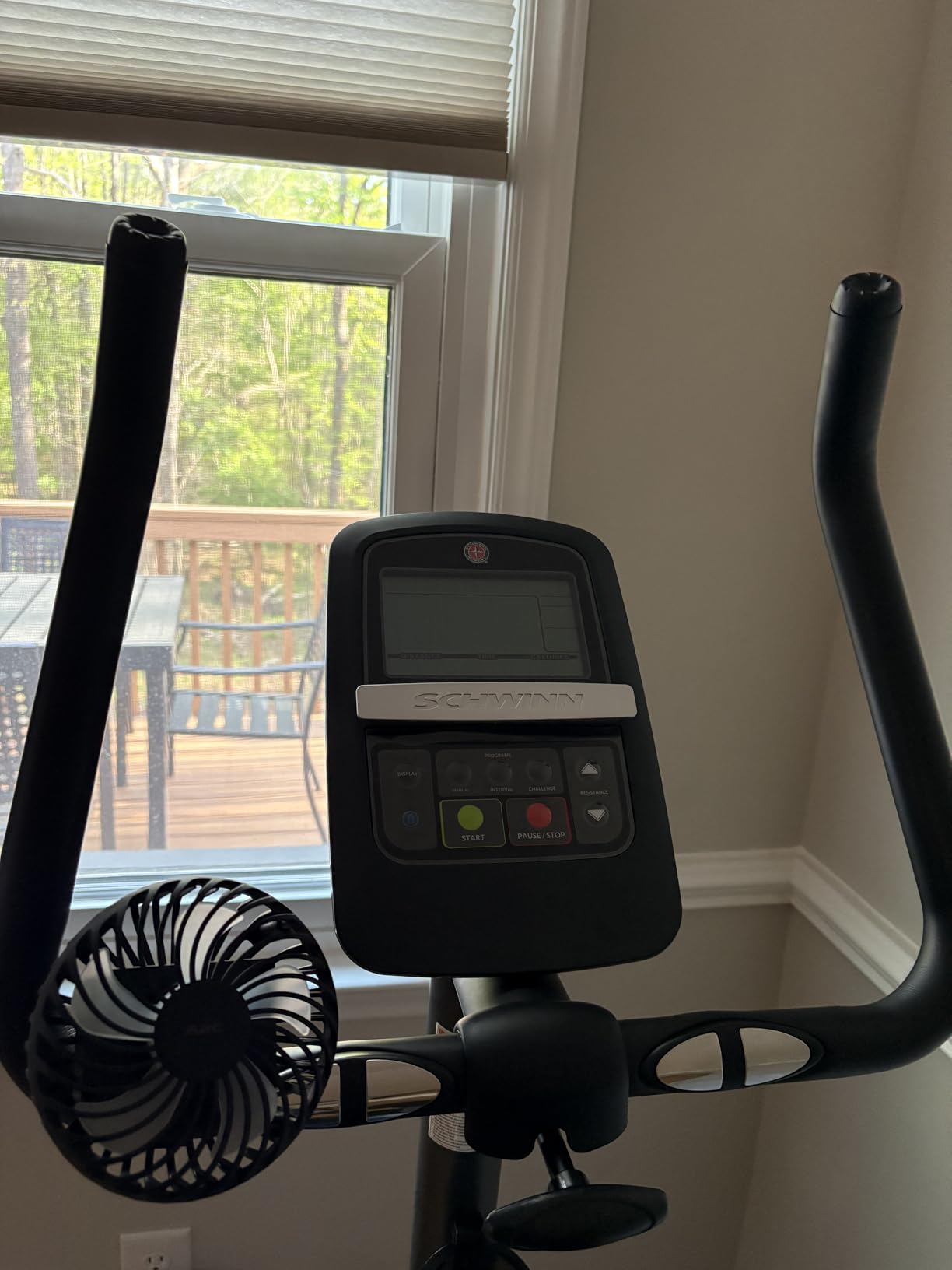
Mounting is where it beats most clip-on rivals. A flexible silicone strap fits handlebars from about half an inch to 2.1 inches in diameter, and built-in N54 magnets give a second secure option on any steel frame. Riders report the strap as more reliable than clamp-style competitors, which is the usual failure point.
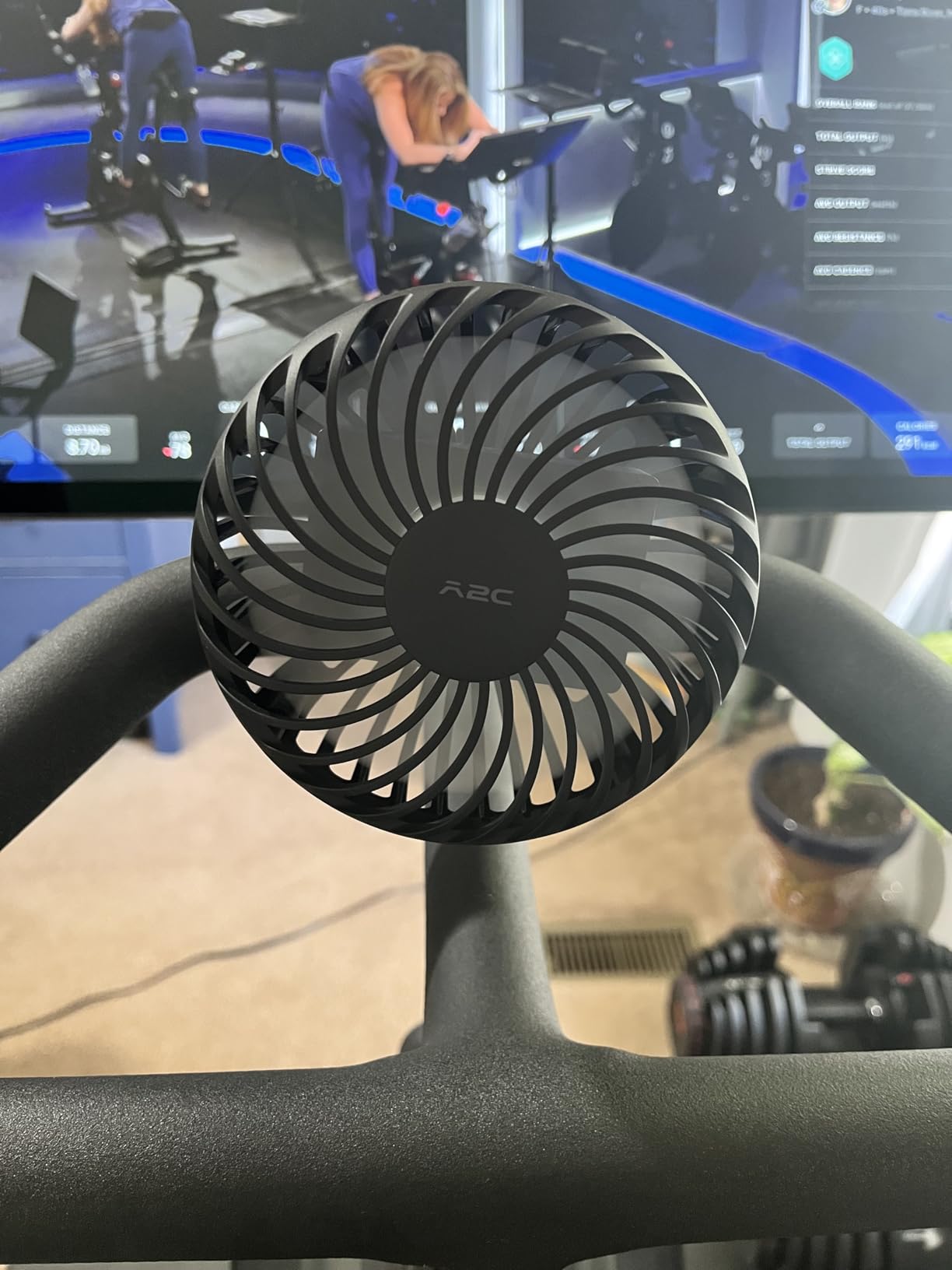
The 4000 RPM brushless motor pushes air at 13.2 feet per second across three speeds, and the ball-head pivot rotates through a full 360 degrees so you can aim it at your face, chest or the bar-mounted phone. At 11.68 ounces and 4.7 inches across, it disappears on a handlebar.
Two caveats. Airflow at any setting is modest next to a floor fan, so this is a personal breeze rather than a training aid. And one owner reported a unit that stopped powering on after about two weeks and would not recover even plugged in, which is a small sample but the main reliability flag in the reviews.
Who the A2C Rechargeable Fan suits best
It suits riders who train away from a socket, and riders who want a personal fan for warm-up and cooldown periods. The dual strap and magnet mounting means it works on a spin bike handlebar as well as a trainer frame.
It also doubles as an everyday fan. Owners use it on strollers and golf carts, and at that level of expectation a 4000mAh battery is genuinely useful.
Where the A2C Rechargeable Fan falls short
It will not cool a hard interval on its own. No 4.7-inch fan will, and reviews are honest that the airflow is modest next to a floor model. If you are chasing performance, this is an addition to a proper fan rather than a replacement.
With 143 reviews there is not much long-term data, and the single reported failure was not fixable. Requests for a longer strap and stronger magnets also come up, so check your handlebar diameter before you commit to the silicone band.
How to Choose an Indoor Cycling Fan: Airflow, Noise, and Control
How much airflow do you actually need?
Roughly 2,000 to 3,500 CFM for a single rider doing steady work, and more for threshold and VO2 max sessions. Below about 1,500 CFM you will stay warm, particularly on the legs and torso, no matter how well aimed the fan is. Most of the 20-inch models in this guide publish figures at or above that band; the small 12-inch Lasko and the clip-on fans sit well below it.
CFM measures the volume of air a fan moves, while miles per hour or feet per second measures the speed of that air at the outlet. For cooling a person, velocity at the chest matters more than room-filling volume, which is why air movers with narrow outlets can outperform much larger fans with wide ones.
What is an air mover, and does it matter?
An air mover uses a centrifugal blower to push a narrow, fast column of air across a distance, rather than sweeping a broad gentle breeze through a room. The Vacmaster AM201R and the Wahoo HEADWIND are the clearest examples in this group. If your problem is cooling one rider at 3 to 5 feet, an air mover is the right shape of machine.
Remote, app, or smart: how do you control it mid-interval?
A remote is the single most repeated recommendation in every indoor cycling forum we looked at, and it is the feature riders refuse to compromise on. Without one, changing speed means stopping, and stopping costs you the start of the next effort.
Smart control goes further. The Wahoo KICKR HEADWIND is the only fan here that pairs to an ANT+ heart rate monitor, speed sensor or smart trainer and ramps itself, which is why it is the natural choice for Zwift and structured sessions. If you have no such device, that automation is wasted.
For a DIY route, a smart plug or a fan speed controller can bring remote control to a fan you already own, and there is an active community project on r/Zwift for controlling a fan from Zwift itself. Expect to do your own wiring and firmware work rather than buying a finished product.
How much noise can you live with?
Published figures in this group run from 45 dB on the Vornado FLY MAX to 68.2 dB on the Lasko 2264QM, with the Vornado and the smaller Lasko the two most apartment-friendly options. A turbo trainer is already loud, so the fan is rarely the only source of noise in the room.
The practical test is what you do with your audio. If a fan forces you to turn the trainer volume up to an uncomfortable level, the fan is too loud for the room. Garage and basement riders rarely have that problem and can prioritise airflow over decibels.
Where to point the fan, and how far away to place it
Aim at the chest and neck, not the legs. The torso is where sweat evaporation matters most for holding a steady heart rate.
Place it 3 to 5 feet from the front of the bike, slightly offset so the flow crosses the body rather than hitting it head-on.
Set the height near torso level, using a wall mount or a tall stand for taller riders and a low floor fan for shorter setups.
Tilt downward from above or upward from the front so the column travels along the body rather than over the head.
Match the speed to the zone: low for recovery spins, middle for steady endurance work, high for threshold and VO2 max blocks.
Cross-check by feel within a minute. If your face is cool but your chest is soaked, the angle is wrong, not the fan.
That zone-based pattern is exactly how experienced riders describe running a pain cave on r/cycling, and it is more useful than any single speed setting. One fan behind the bike and one at the front, as riders on the Escape Collective community describe, works well when a room allows two units.
One big fan or two small ones?
One large, well-aimed fan generally beats two small ones for a single rider, because the column of air stays concentrated and reaches the chest. Two small fans are worth it when you want to cover a room, when the bike sits in a corner, or when you want air at two heights at once.
Two small clip-on fans are a different case again. Doubling a small fan gives you a better personal breeze, but you will not reach threshold-work output, which is why owners of the TrubliFit single fan so often pair it with something larger.
What not to buy
Neck fans and small desk fans are the most common disappointments. The flow dissipates before it reaches your torso, so you cool your skin without reducing the heat your body is producing. Bladeless fans cannot tilt upward, which leaves taller riders with nothing but a gentle draught.
Also watch for fans with no published CFM figure at all. You are then buying on blade diameter, which correlates poorly with the velocity your chest actually experiences.
Cooling beyond the fan
A fan cools you, it does not lower the temperature of the room. In a small space, moving that much air raises humidity, so keep a window cracked or a door open where possible and ventilate between sessions.
Hydration, a moisture-wicking baselayer, a towel across the bars and a sweat guard with a mat underneath the trainer all matter as much as the fan. Riders on r/Zwift consistently recommend buying a decent fan before upgrading anything else, because sweat that does not evaporate still ends up on your floor and your kit.
Frequently Asked Questions
What is the best fan for indoor cycling training?
The best fan for indoor cycling is a high-velocity floor or wall fan that puts a column of air across your chest and neck from 3 to 5 feet away, with a remote so you can change speed without leaving the bike. In our testing the Lasko 20-inch 2264QM led on combined airflow, mounting options and owner history.
How much airflow (CFM) do I need for indoor cycling?
Aim for roughly 2,000 to 3,500 CFM for one rider, and more for threshold and VO2 max work. Below about 1,500 CFM you will stay warm through hard efforts no matter how well you aim the fan. Most 20-inch floor fans in this guide publish figures inside or above that range.
Is the Wahoo KICKR HEADWIND worth it?
It is worth it if you ride Zwift or structured workouts and own an ANT+ heart rate monitor, speed sensor or smart trainer, because the fan then ramps itself with your effort. If you have no device to pair and mainly ride steady sessions, a high-velocity floor fan with a remote delivers comparable cooling for far less.
Are indoor cycling fans loud?
Most are. Published figures in this group run from 45 dB on the Vornado FLY MAX to 68.2 dB on the Lasko 2264QM. The practical test is whether the fan forces you to turn your trainer audio louder than you like, which is the point at which it becomes a problem in a flat or shared room.
Can you control a fan without getting off the bike?
Yes, if the fan has a remote. Options range from a handheld remote on a strap, as on the Vacmaster AM201R, to a cradle-and-strap mount that lives on your handlebars, to full sensor control that ramps with heart rate or power. Fans with only a rotary dial force you to stop mid-interval, which costs you the start of the next effort.
Will two small fans work as well as one big one?
For one rider, one large well-aimed fan usually wins because the column stays concentrated on the chest. Two small fans make sense when you want air at two heights, when the bike is in a corner, or when you want to cool a whole room. Two clip-on fans improve on one clip-on fan but will not reach threshold-work output.
The Verdict: Best Indoor Cycling Fans for Trainers in 2026
The Lasko 20-inch 2264QM is our pick for the best indoor cycling fans for trainers in 2026. It leads on the combination that actually matters: 2750 CFM, a metal build rated for years, a wall mount that solves the small-room problem, and more than 28k reviews of long-term ownership behind it. If noise in your building is a constraint, take the Vornado FLY MAX instead for its 45 dB brushless motor.
For Zwift and structured work, the Wahoo KICKR HEADWIND is worth the premium because it ramps with your heart rate or power, and for riders who want one remote and a proper air mover, the Vacmaster AM201R is the value answer. Clip-on fans such as the TrubliFit units and the A2C are additions for quiet rooms and outlet-free setups, not replacements for real airflow.
Aim whatever you choose at your chest from 3 to 5 feet away, keep a remote within reach, and pair the fan with a sweat guard, a mat and more water than you think you need. That combination will do more for your indoor numbers than any other single purchase in the room.