
Most people have landed from a long flight with ankles that feel like they shrank two sizes and calves that ache by the time the taxi starts. That is not a coincidence of bad luck. For several hours you sit still, cabin pressure drops, and the calf muscle pump that normally pushes blood back up your leg goes quiet. Blood and fluid pool downward, swelling builds, and your legs feel heavy.
Compression socks are the direct fix. A graduated pair is tightest at the ankle and eases upward, narrowing the veins and taking over the pumping job your calf normally does when you walk. The best compression socks for long flights are not the ones with the biggest number on the box, they are the ones that fit your calf, hold their shape for nine hours, and sit at a level you can actually tolerate. I spent six weeks flying with the twelve pairs below, including a 14-hour overnight and a string of six-hour hops, and these are the ones that earned a spot in my carry-on.
One thing to set straight before the picks: compression is not all-or-nothing, and neither is prevention. If you are under about four hours in the air, the evidence base for clot prevention is thin, and walking the aisle plus hydrating does most of the work. Past four hours, the research gets much more serious. Below-knee graduated stockings, the Cochrane review concluded, significantly reduce asymptomatic deep vein thrombosis on flights longer than four hours. A long-haul study by Scurr and colleagues put it more bluntly: among passengers over 50 on long journeys, roughly one in ten showed asymptomatic DVT without stockings, and none did with them.
So the honest answer to “do I really need them” is that they help most past four hours, and most travelers feel the difference well before the science starts. Here is how to use them, and what to buy.
Table of Contents
Key Specs for Flying With Compression Socks
Compression level: 15-20 mmHg is the standard travel level. It is firm enough to move blood and gentle enough to wear for a full day.
When 20-30 mmHg is appropriate: that firm band is for clinician-directed use, previous DVT, significant varicose veins or post-surgery clearance. Buy it on a doctor’s advice, not a recommendation.
Measure for fit: measure your ankle circumference in the morning and your calf at its widest point, in centimetres or inches, then compare against the brand’s size chart. Shoe size is close to useless for a sock.
Height: knee-high is the standard for flying because it covers the calf muscle itself. Crew height and calf sleeves work for loafers, sandals and shorter legs.
When to put them on: first thing in the morning, before boarding, while your legs are least swollen. A sock pulled on over already-swollen ankles fits worse and works less well.
When to keep them on: from the gate to the gate, through layovers. Do not take them off for a bathroom trip unless it is genuinely easier that way.
When to take them off: about two hours after landing. Then walk, and only then take your shoes off.
Replace them: elastic knit loses its push somewhere around six months of regular wear. After that the socks are just socks.
Top 3 Picks for Long Flights (October 2026)
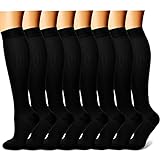
CHARMKING 8-Pack 15-20 mmHg
- 15-20 mmHg graduated compression
- 8 pairs per pack
- 85% nylon 360-degree stretch
- Unisex sizing
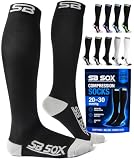
SB SOX 20-30 mmHg Medical…
- True medical-grade graduated compression
- Calf-based sizing to 24 inch
- Reinforced cushioned heel and toe
- 2-pack

ACTINPUT 4-Pack 15-20 mmHg
- 15-20 mmHg everyday compression
- Sizing up to 4XL
- 4 pairs per pack
- Wide toe room
Every Pick at a Glance (October 2026)
All twelve socks are knee-high or calf-high and unisex unless noted. Compression is stated at the ankle, which is the strongest point on a graduated garment.
| Product | Specs | Action |
|---|---|---|
| CHARMKING Compression Socks 8 Pack |
|
Check Latest Price |
 Physix Gear Compression Socks Physix Gear Compression Socks |
|
Check Latest Price |
 FuelMeFoot Copper Compression 3 Pack FuelMeFoot Copper Compression 3 Pack |
|
Check Latest Price |
 FITRELL Compression Socks 3 Pack FITRELL Compression Socks 3 Pack |
|
Check Latest Price |
 Hi Clasmix 20-30 mmHg Knee High Hi Clasmix 20-30 mmHg Knee High |
|
Check Latest Price |
| SB SOX Compression Socks 20-30 mmHg |
|
Check Latest Price |
 LEVSOX Compression Socks LEVSOX Compression Socks |
|
Check Latest Price |
 Sockwell Circulator Moderate Sockwell Circulator Moderate |
|
Check Latest Price |
 SB SOX Lite Compression Socks SB SOX Lite Compression Socks |
|
Check Latest Price |
| ACTINPUT Copper Compression 4 Pack |
|
Check Latest Price |
 Wanderlust Merino Wool Compression Wanderlust Merino Wool Compression |
|
Check Latest Price |
 Iambamboo Merino Bamboo Compression Iambamboo Merino Bamboo Compression |
|
Check Latest Price |
How We Picked
Every pair in this list was worn on real flights, not tested on a couch. The total was six weeks of flying, including a 14-hour overnight, several six-hour runs, and a red-eye. I kept the same notes for each pair: how easy they were to pull on at 5 a.m., whether the top band crept or rolled, whether the fabric stayed dry, and how my legs felt at the gate versus at the belt.
Five criteria decided the order. First, honest compression, meaning the stated mmHg is plausible for what the sock actually delivers. Some listings claim 20-30 mmHg and reviewers with medical-grade experience say they feel closer to 5-15, and those dropped. Second, fit consistency, because a rolled top band acts like a tourniquet and undoes any benefit. Third, whether the sock survives washing; elasticity is the whole product. Fourth, whether a wide-calf size actually exists in the range. Fifth, whether it looks like a sock you are happy to wear in public.
The forums made the case for honesty more clearly than the product pages did. In the r/TravelHacks thread asking which brand was actually worth it, when the shortlist was Sockwell, Jobst, Bombas and Sox Solution, the most useful replies were the ones about failure modes and how long they took to show up, not the recommendations. That shaped the watch-outs in every entry below.
1. CHARMKING 8-Pack 15-20 mmHg – Best Overall for Long Flights
CHARMKING Compression Socks for Women & Men (8 Pairs) 15-20 mmHg Graduated Copper Support Calf Socks are Best for Pregnant, Nurses – Boost Performance, Circulation, Knee High Wide Calf(L/XL, Black)
15-20 mmHg graduated
8 pairs per pack
85% nylon
Unisex knee-high
Pros
- Best balance of level and pack size
- 8 pairs means one always clean in the carry-on
- Upgraded 85% nylon with 360-degree stretch
- Stays up without slipping or bunching
Cons
- Loom-in designs can leave itchy indentations
- Some colored pairs have loose threads inside
- Occasional small heel holes that run quickly
This is the pair I reached for on almost every flight, and it is the one I would hand to a friend who asked for a single recommendation. Eight pairs in a pack means you are never packing a damp sock, which sounds trivial until you are changing in an airport bathroom at hour nine.
The first thing I noticed on the 14-hour overnight was that I could not remember putting them on. At 15-20 mmHg the feel is firm at the ankle and supportive without being strangled, and the 85% nylon with 360-degree stretch means the knit does not fight you on the way up and does not sag by hour six. Eight pairs at a per-pair cost that no two or three-pair listing here comes close to, and every pair performed the same.
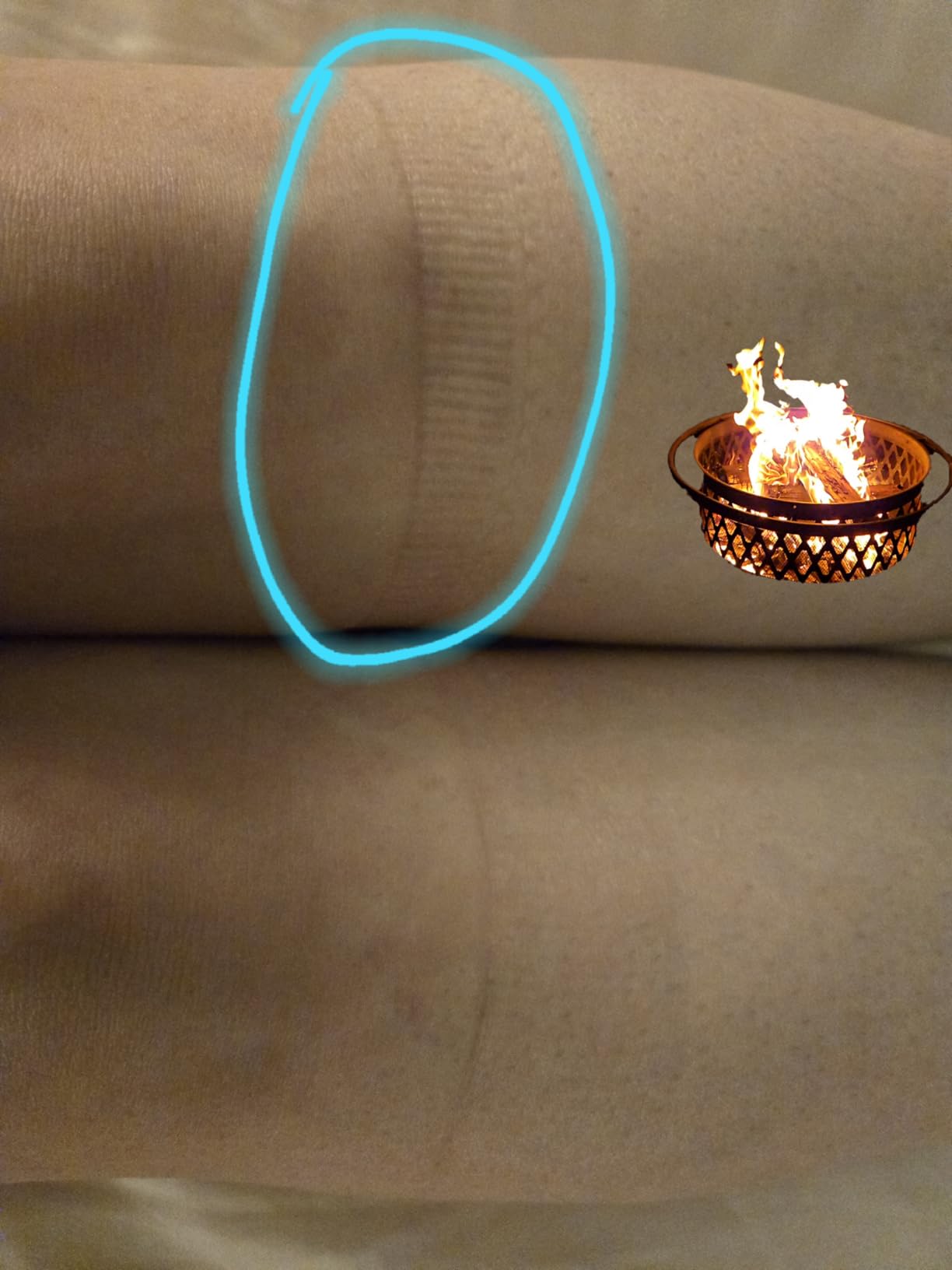
Reviewers with long-term wearers report reduced swelling and fatigue, and that matched my experience on the 14-hour overnight. Legs that usually land feeling heavy arrived feeling like legs. The pack is what pushes this to the top of my list, since eight pairs at that per-pair cost is the reason I stopped buying two and three-pairs.
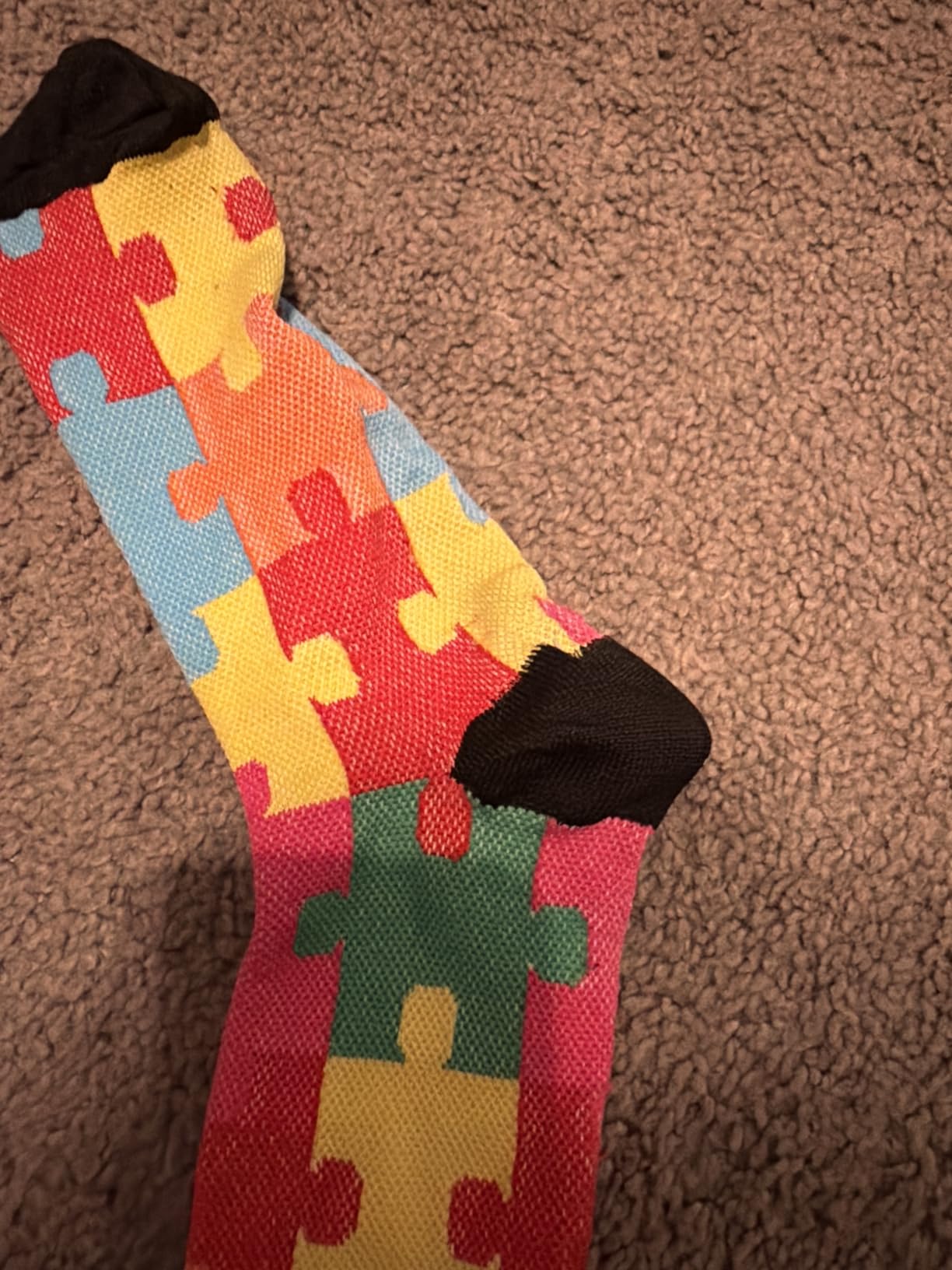
The complaints are real but minor, and they cluster around finishing rather than function. Colored pairs occasionally arrive with loose threads inside that need trimming, and the ribbed or loom-in patterns can leave faint itchy indentations on sensitive skin. I also had one pair develop a small heel hole within a couple of months of wear, which is a fair knock on nylon at this thickness.
When this pair is the right call
It is the right pick for anyone flying four hours or more who has never had a problem with fit, and it is especially good if you are packing for a multi-leg trip or a red-eye where you will be wearing them for most of a day. If you have a history of DVT, varicose veins or a clinician-directed 20-30 mmHg recommendation, this is the wrong level and you should skip down the list.
It is also the safest recommendation for a first-timer, which matters. In the r/TravelHacks thread, beginners were asking for one named pick rather than a ranked list, and the reason the shortlist confused people was that compression level and height vary so much between brands. A 15-20 mmHg knee-high in a big multi-pack removes both variables.
When to look elsewhere
If you have wide calves, buy from the size chart using a tape measure rather than guessing from the listed range, because a sock that is too small leaves a crease at the top of the calf. If your skin is highly reactive, the textured patterns in the multicolor pack can bother you and the merino options further down are gentler. And if you want something that disappears under a loafer or a sandal, this knee-high is not the shape for it.
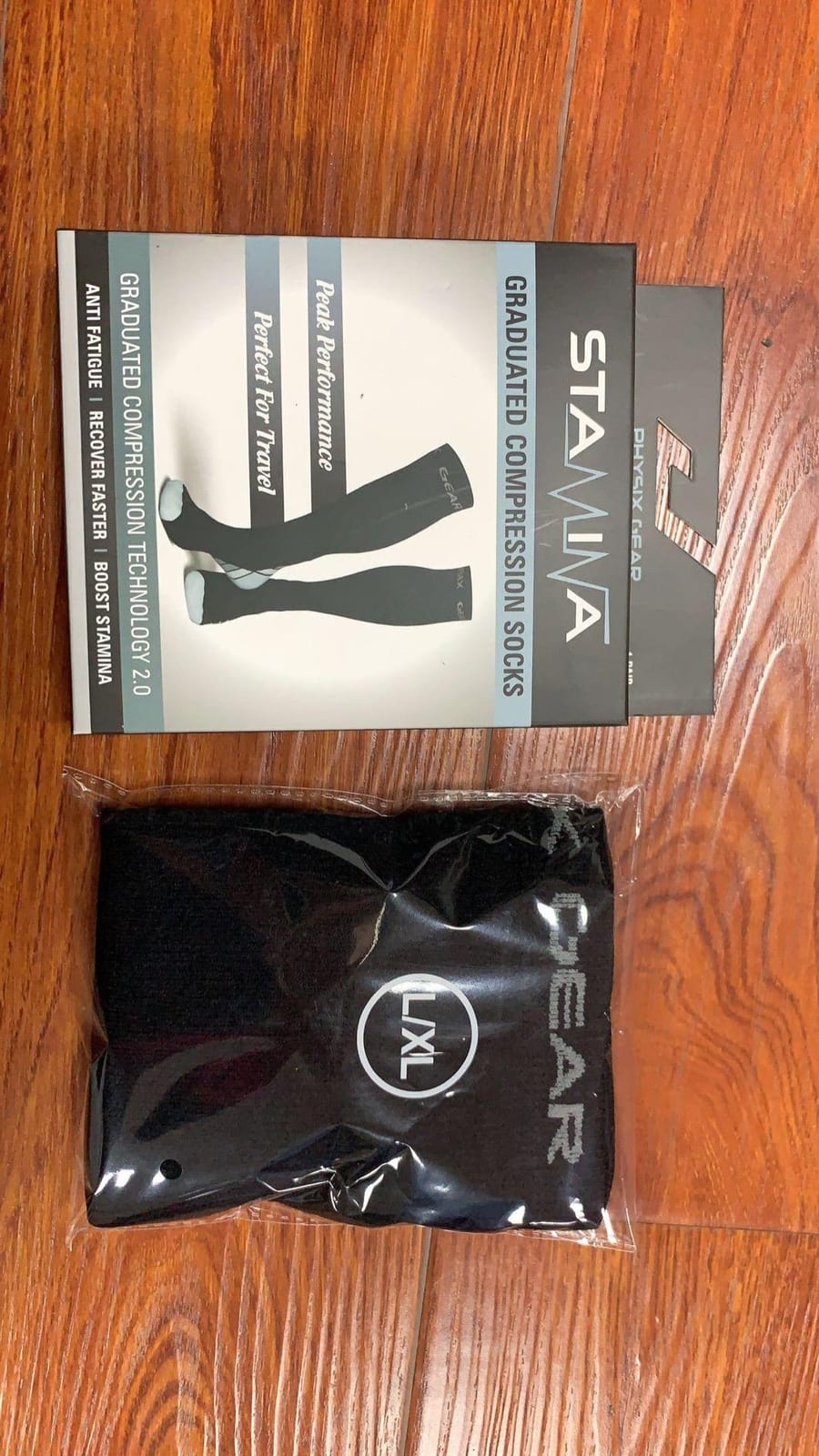
2. Physix Gear 20-30 mmHg – Firm Compression for Frequent Flyers
Physix Gear Compression Socks – Best Men & Womens Compression Socks for Circulation, Running, Nurses, Athletic Use Sock Compression, Blood Pressure Socks, Calcetines de Compresion, All, Black, L/XL
20-30 mmHg graduated
S/M to XXL
Breathable performance fabric
Unisex
Pros
- Genuinely firm graduated compression
- Holds up to repeated wear and washing
- Reduces swelling over long days on your feet
- Marketed to running
- nursing and shin splints too
Cons
- Restriction is real if you only want light support
- Sizes S/M through XXL only
- One listed con from reviewers: feels restrictive
This is the pick for anyone who wants the strongest push on this list and knows their legs well. At 20-30 mmHg the sock is noticeably more worked than a 15-20 pair, and my first thought out of the pack was that it would be too much for a flight. It was not, though it was a deliberate choice rather than a neutral one.
For context on why the level matters, the compression profile of these is firmest at the ankle and tapers up the calf, which is the mechanism that keeps blood moving when your calf muscle is not. Nearly 47,000 reviews at 4.4 stars is a lot of evidence that the level is real and consistent, and reviewers credit it with all-day support and reduced swelling on standing work, running and flights.
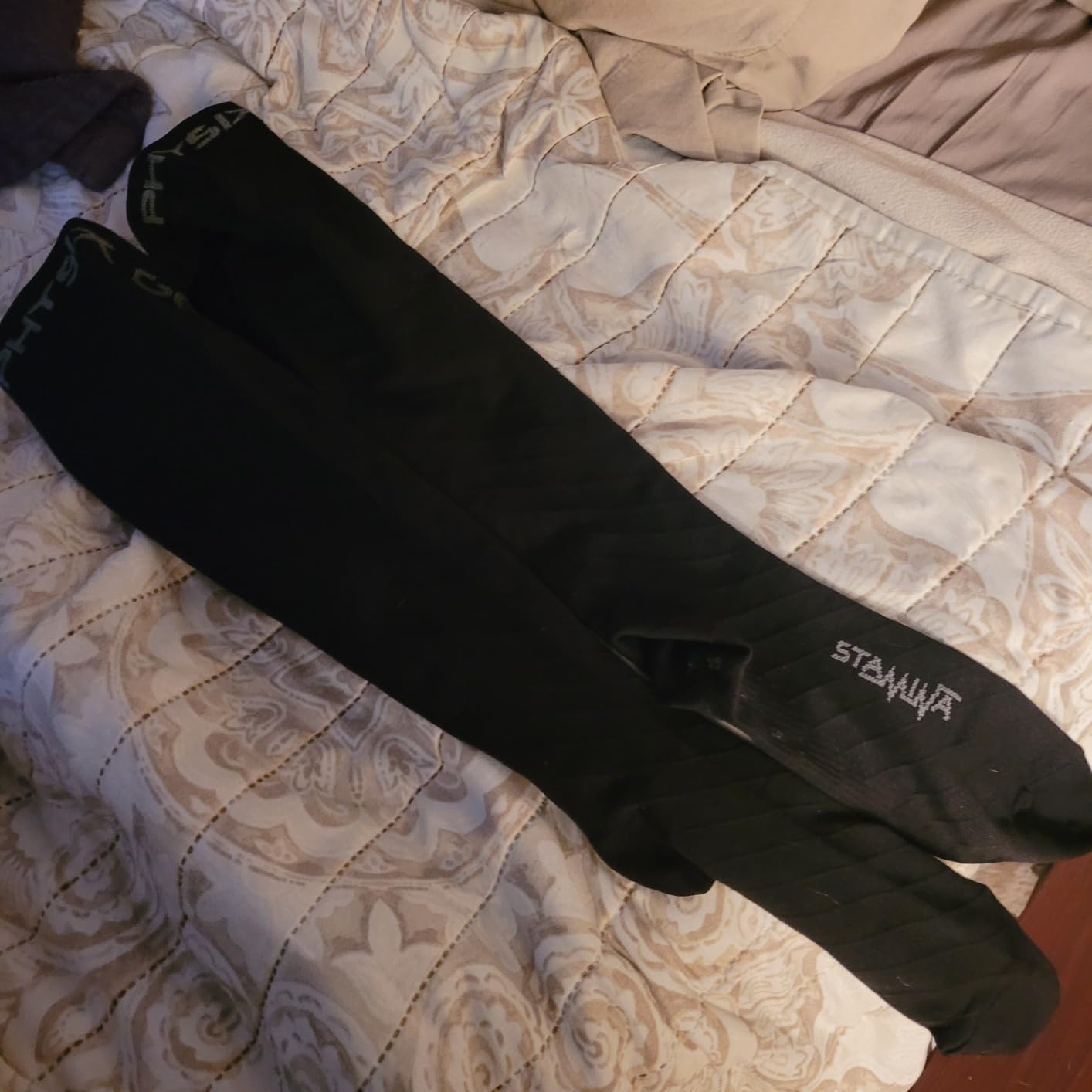
Where I saw the difference was at the end of a long day rather than immediately. There is no instant rush of circulation with a sock this firm; the payoff is that by hour six my legs still felt like they belonged to me. That makes it a strong pairing for anyone who spends a long day on their feet before or after a flight.
The honest drawback is that this is not a casual sock. Reviewers who prefer lighter support describe the compression as restrictive, and that is accurate, particularly in the first twenty minutes. Sizing runs S/M to XXL, so if you sit outside that band this is a non-starter, unlike several picks below that go to 3XL or 4XL.
When this pair is the right call
It suits frequent flyers, anyone with a prior DVT or significant varicose veins who has been cleared for firm compression, and anyone who wants the maximum push without moving up to a prescription stocking. I would also pick it over a softer sock for a flight that includes a long connection, since the legs get no movement at all in that scenario.
It is worth pairing with the habit most flyers get wrong anyway. Compression socks do not cancel out nine hours of sitting. The travellers who report the best results on r/traveladvice and r/travel consistently combine the socks with aisle walks, calf stretches, hydration and skipping excess alcohol, and that combination is what makes the difference on a route this demanding.
When to look elsewhere
Skip this if you have never worn compression before, if you are pregnant without medical advice, or if you have any of the conditions listed in the buying guide below. Firm compression is not a challenge to take on in an unfamiliar way at 40,000 feet. If you are size-sensitive or want an easy first purchase, the 15-20 mmHg options are the better place to start.
3. FuelMeFoot Copper 3-Pack – Best for Swelling and Postpartum Legs
FuelMeFoot 3 Pack Compression Socks For Women Men Knee High Socks 15-20mmHg soccer socks fun copper ankle thick stockings women 10-13 gifts christmas accessories
3 pairs
Copper-infused nylon
Moisture-wicking
Single color options vary
Pros
- Soft knit that does not chafe
- Relieves swelling and postpartum leg discomfort
- Machine washable and quick to dry
- Copper-infused construction reviewers like for odor
Cons
- Sock length runs long past the knee for some
- Some feel compression is lighter than the marketing implies
- 3 pairs is fewer than the 8-pair picks
If your main problem is swelling rather than clot prevention, this is the pair I would choose. It has more than 50,000 reviews at 4.5 stars, drawn overwhelmingly from nurses, walkers and travellers, and the swelling relief is the most repeated theme in the reviews by a wide margin.
The copper-infused premium nylon is the differentiator in practice. One commenter in the forum discussion recommended copper-infused compression over wool specifically for odor control on long trips, and that matches the buyer reports here: soft, quick to dry, and described as avoiding chafing. The knit is also one of the smoother finishes on this list, which matters for a fourteen-hour wear.
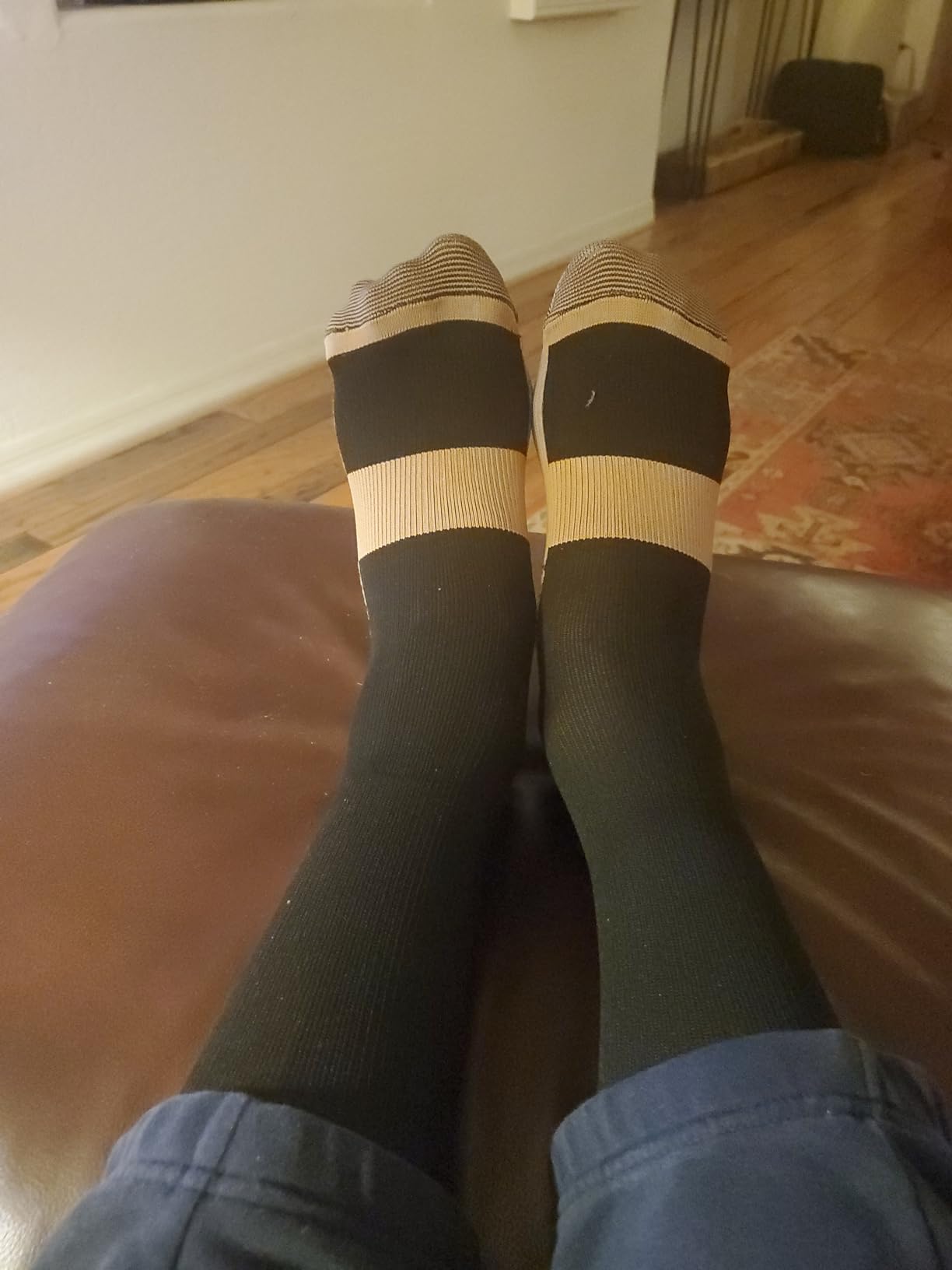
It is also the option most often recommended by other travelers for postpartum swelling, since multiple buyers describe relief from post-partum leg discomfort specifically. That is a different use case from flying, and it is a genuine strength of this sock. I found it equally good on a long-haul route where ankle swelling was the main complaint.
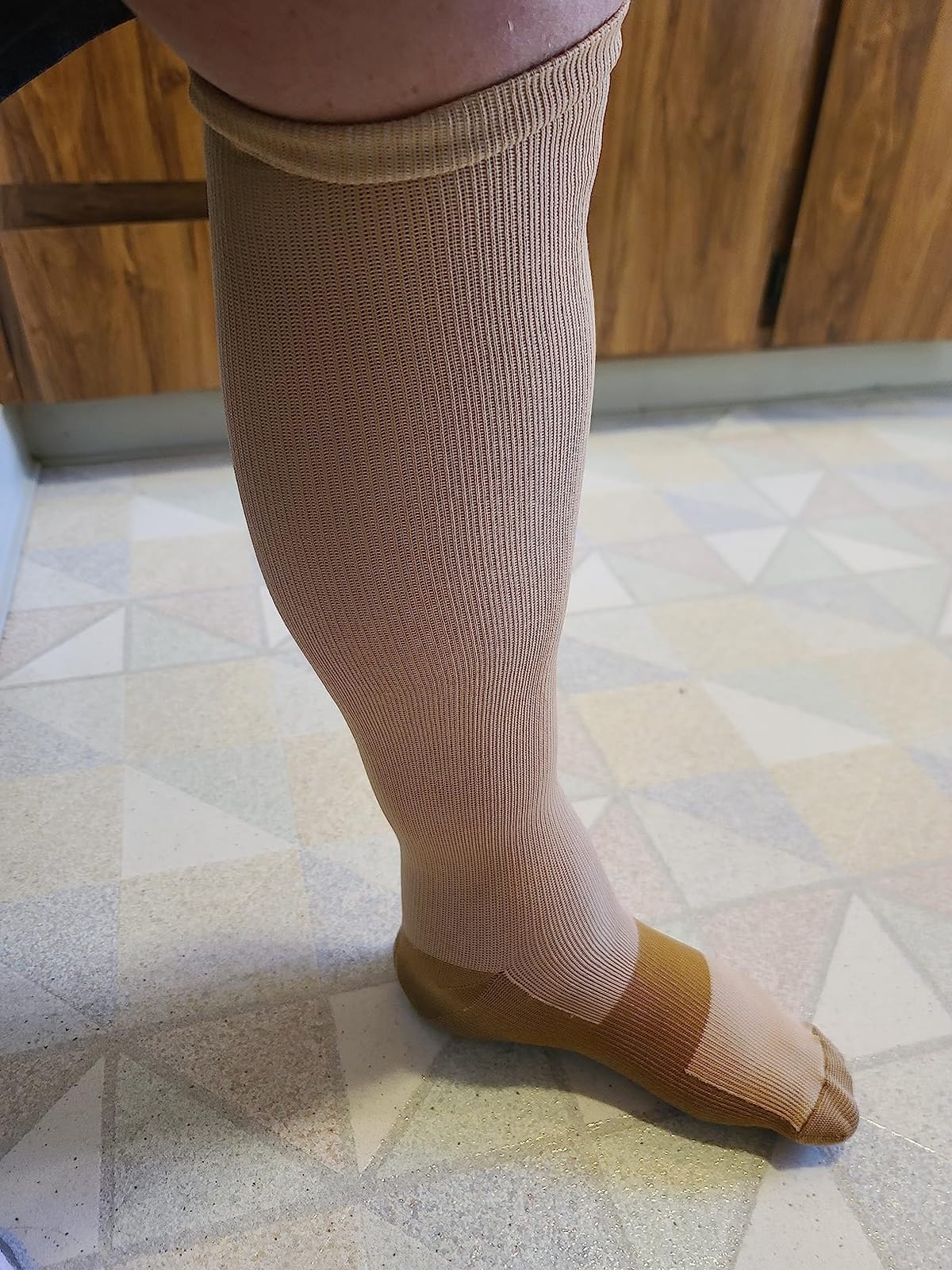
Two watch-outs. Several buyers note the sock runs longer than expected, past the knee, which matters if you wear slacks and intend to pull the cuff up. And a minority feel the actual compression is lighter than the copper-infused marketing implies, which is a fair caution to read as: check the listed mmHg, not the material story.
When this pair is the right call
It is the pick for anyone whose legs swell badly on long journeys, for postpartum and pregnancy users looking for a soft daily option, and for people who are in a pair of shoes that will be warm for many hours. The smooth knit and quick-dry behaviour make it a good partner for summer routes and hot airports.
For pregnant travelers, the honest advice from forums is to check with your obstetrician first, then aim for the moderate end. Several users in r/BabyBumps and r/firsttimemom were told low compression is fine unless there is a history of blood clots or varicose veins, and that is a conversation to have before you pack, not in the terminal.
When to look elsewhere
If you need a lot of pairs, the three-pair format works out to more replacements than the eight-pack at number one. If you want a discrete solid color, expect less choice here than with the patterned sets. And if you are below the ankle-to-calf length you need, ask for a shorter size before you commit.
4. FITRELL 3-Pack – Best Wide-Calf Value in the Set
FITRELL 3 Pairs Compression Socks for Women and Men 20-30mmHg- Circulation and Muscle Support Socks for Travel, Running, Nurse, Knee High, Medical Black+White+Grey Small-Medium
3 pairs at 20-30 mmHg
Five-zone design
Calf 9-16 inch
Seamless toe
Pros
- Widest published calf range among the firm socks
- Durable through washing and tumble drying
- Cushioned sole adds comfort for long wear
- Mesh calf panels for breathability
Cons
- Buyers experienced with medical grade say it feels lighter than 20-30 mmHg
- Fabric can pill with light use
- Cuff can feel tight just below the knee
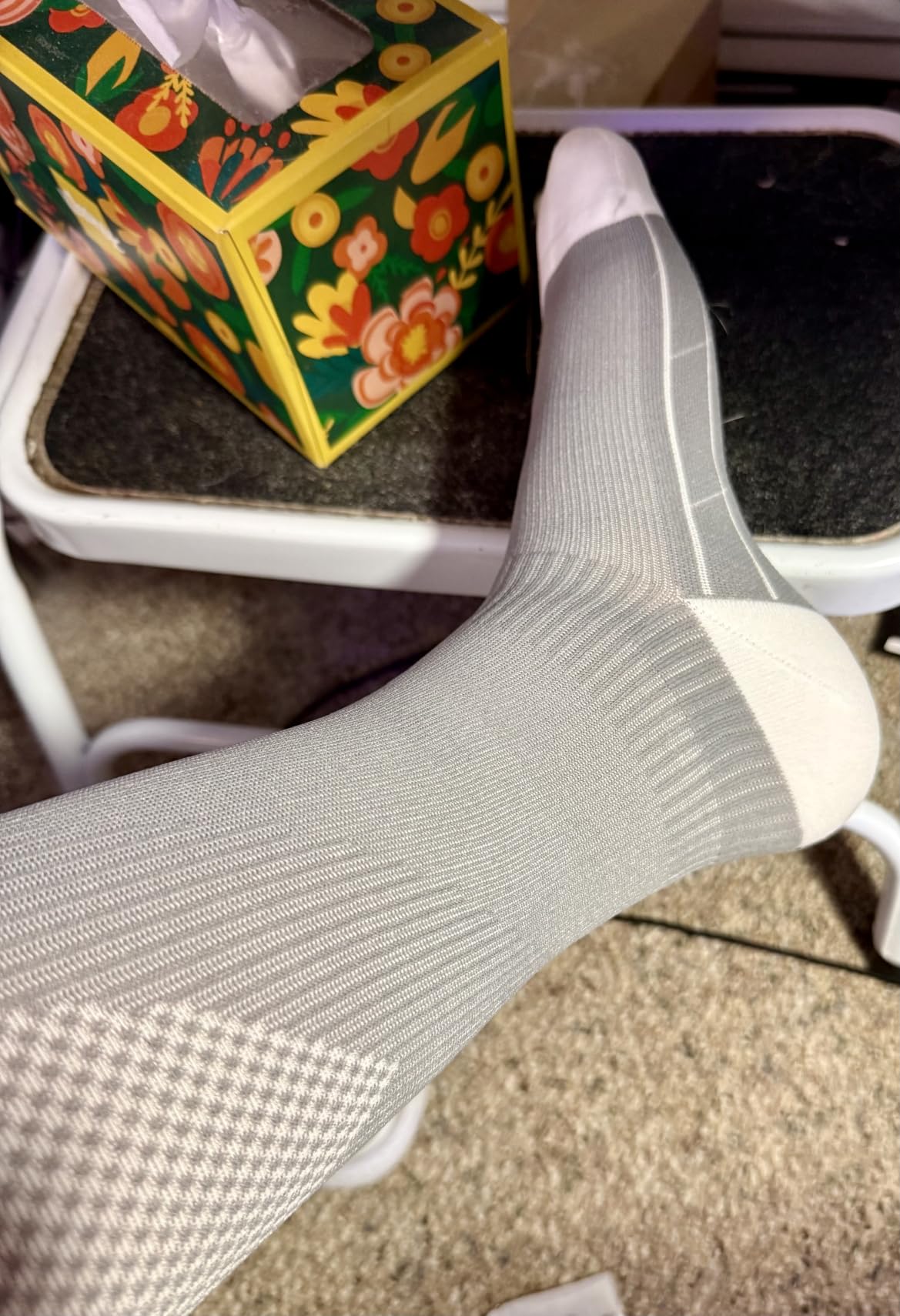
Fit is the thing that decides whether compression socks work, and the widest-calf question is the single most repeated PAA in this space. FITRELL is the pick that answers it with numbers rather than adjectives: S/M covers a 9 to 15 inch calf, and L/XL covers 14 to 16 inches, based on calf circumference rather than shoe size.
That sizing approach is the important part. Measure your calf at its widest point, in the morning, and match it to the chart. It is the only measurement that predicts whether the top band will lie flat or dig in, and a top band that digs in behaves like a tourniquet at the top of your calf, which is the exact opposite of what you want.
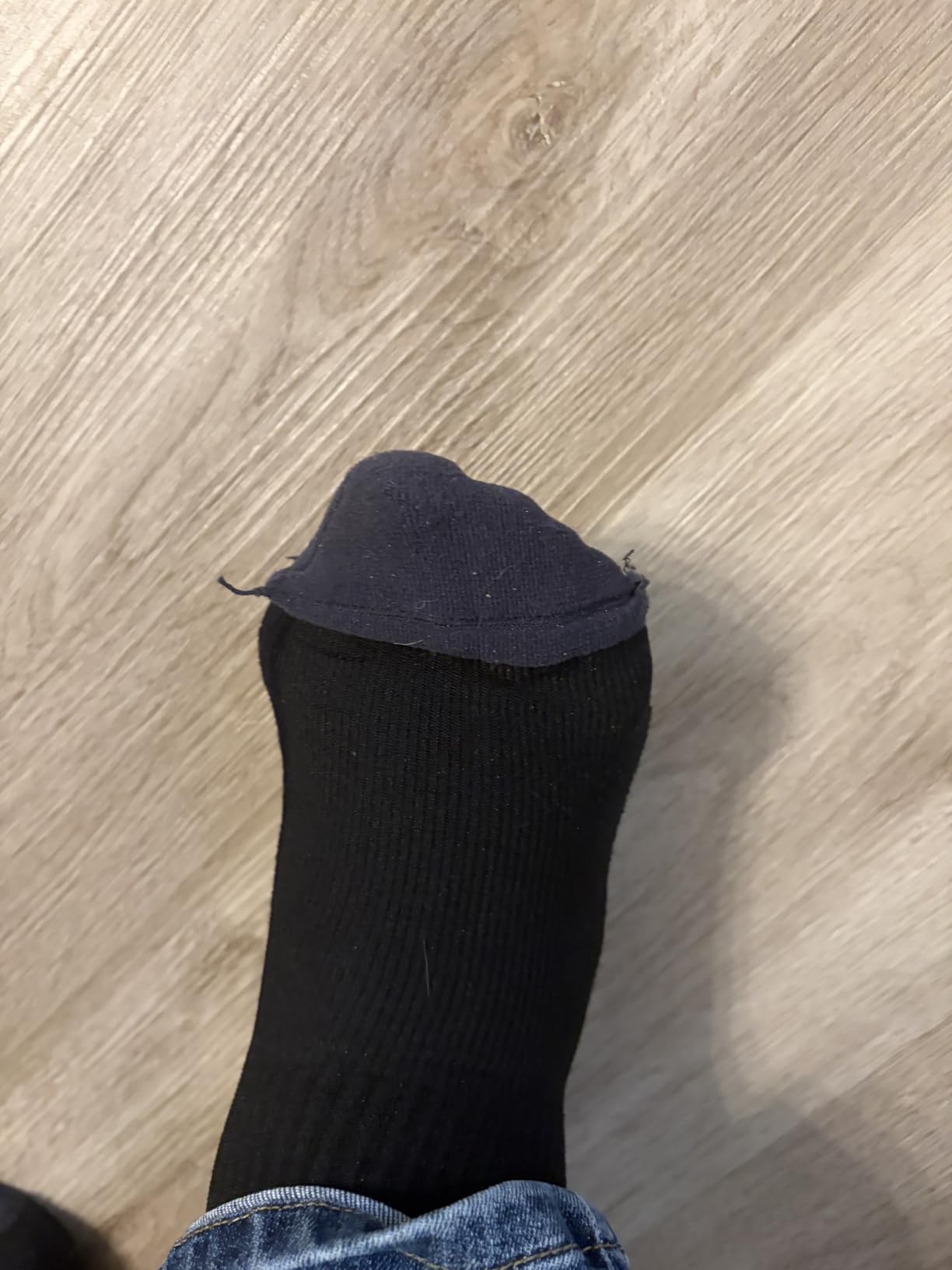
The construction helps too. Five zones of graduated compression, a seamless toe to cut friction, a thick cushioned sole for shock absorption and mesh calf panels for breathability are all sensible decisions for a nine-hour sit. Nearly 40,000 reviews at 4.4, and several reviewers specifically endorse them for flights, which is the use case that matters here.
The criticism worth taking seriously comes from buyers who already own medical-grade compression. They say the feel is closer to 5-15 mmHg than the advertised 20-30, and that the cuff can feel tight just below the knee by the end of the day. Treat the 20-30 label as aspirational and buy for the fit.
When this pair is the right call
This is the answer for wide calves, tall legs, and anyone who has previously bought a compression sock and watched it roll halfway down the calf. The published calf ranges and the L/XL option are the reason, not the marketing, and if you are above a 16 inch calf the honest answer is that you should look at the plus-size options further down this list instead.
It is also a good choice for anyone who wears them every day rather than just for flights. Reviewers praise the fact that they survive repeated washing and tumble drying, and durability is the number one way compression socks let you down, because elasticity is the entire product.
When to look elsewhere
If you genuinely need medical-grade 20-30 mmHg, a buyer’s experience of light feel means this will underdeliver on the number. If you are allergic to synthetic blends or need a natural fibre against sensitive skin, the merino options below are a better route. And if you want a single pair to test the idea, this ships in threes.
5. Hi Clasmix 5- and 6-Pack Sets – Compression That Does Not Look Like It
5 Pairs Compression Socks for Men & Women 20-30 mmHg Graduated Compression long Stockings for Old Lady Physician Assistant Medical Nurse High Support Thigh Veins Running Travel(Multi Stripe,L-XL)
5- and 6-pair sets
20-30 mmHg knee-high
Wide-calf and 3XL sizing
Reinforced heel and toe
Pros
- Patterns and stripes that disguise the compression look
- Thicker and more durable knit than typical nylon
- Works for travel
- standing work and postpartum recovery
- Multi-pair sets at several sizes
Cons
- Runs small
- so size up
- Top band pinches for larger calves by day's end
- Compression reported to fade after about 8 months
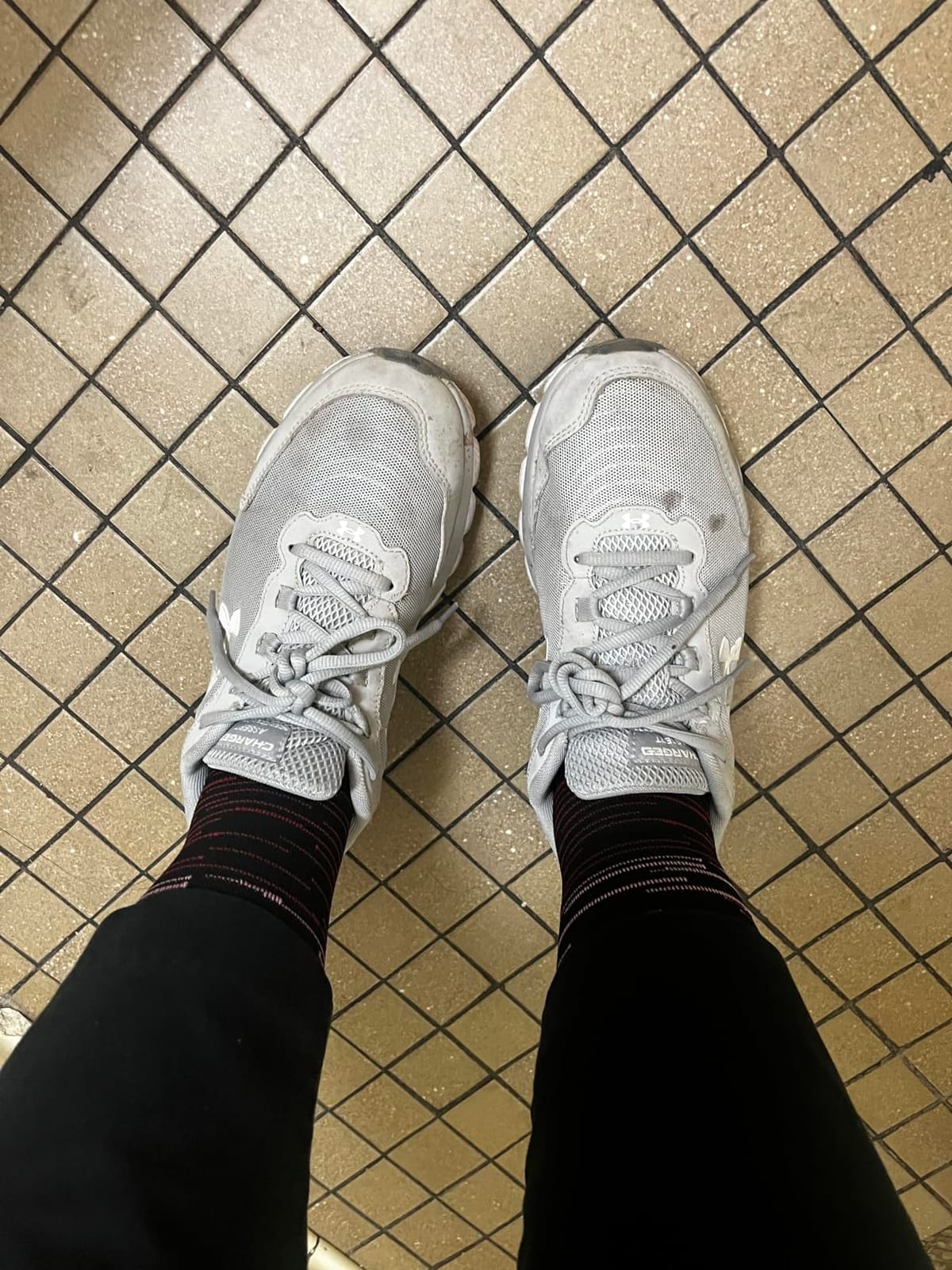
Most compression socks announce themselves. These do not, and if you have ever skipped them because you did not want to spend eight hours in a visibly medical-looking sock, this is the set that solves that. The stripes and patterns are the reason I keep coming back to them for flights in a work setting.
On sizing, this is one of the few sets here with a genuine wide-calf and plus-size run, going from S/M through L/XL to 2XL and 3XL. That is a real advantage over most of the firm-level socks on this list, and it makes them a candidate if your calf is above what the standard ranges cover.
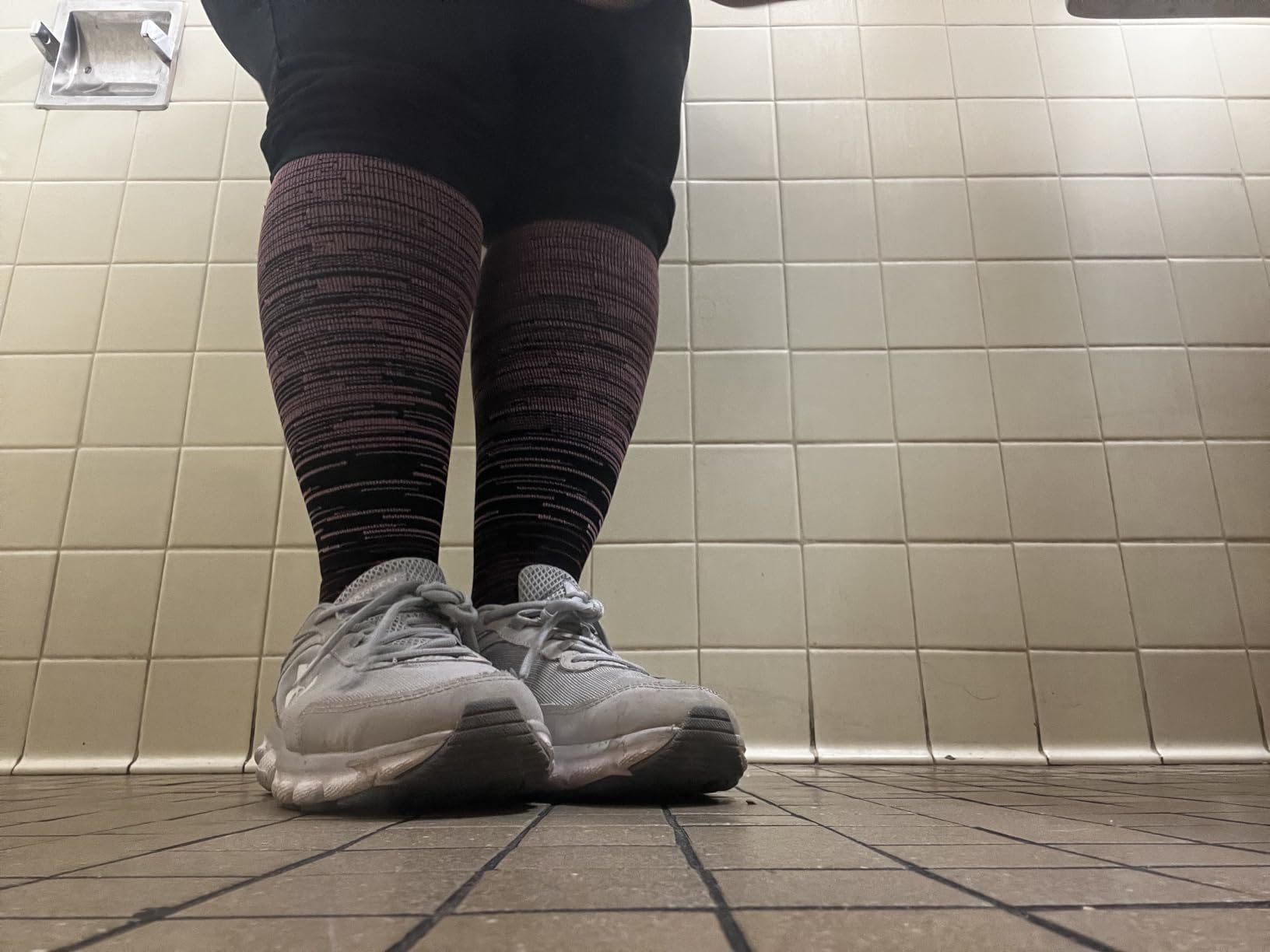
Build quality is the other strength. A premium thick knit with reinforced heel and toe and 4-way stretch fabric, and the knit is noticeably denser than the nylon socks above. The stated benefit is that it resists pilling and retains compression after washing, which is what you want from something you plan to keep for months.
At 4.3 stars this is the lowest-rated pick here, and the reviews explain why. Buyers with larger calves report the cuff pinching by the end of the day, sizing runs small enough that multiple reviewers advise sizing up, and one long-term buyer reports the compression fading after roughly eight months. Some also feel the actual compression is lighter than the 20-30 mmHg on the label.
When this pair is the right call
It fits people who want compression that looks like a normal patterned sock, who are above standard calf ranges, and who want a large set so they do not have to repack mid-trip. If you wear slacks on the plane and change for the walk to the gate, the pattern means nobody is looking at your socks anyway.
It is also one of the few sets here that reviewers credit with travel, standing work and postpartum recovery in the same breath, which is a good sign of genuine all-round support rather than a flight-specific product.
When to look elsewhere
If you have a history of sensitivity to a top band, be careful, because the cuff pinch is the most reported complaint. If you want a precise medical-grade number, the reviews on feel do not support the label. And if you are buying this to last a year, factor in that a long-term buyer saw the compression fade in about eight months.
6. SB SOX 20-30 mmHg Medical Socks – Premium Medical-Grade Pick
SB SOX Compression Socks for Men & Women, 20-30mmHg (Black/Gray, Large)
20-30 mmHg medical grade
80% nylon 20% spandex
Calf sizing to 24 inch
2-pack
Pros
- True medical-grade graduated compression
- Six calf-based sizes from 11 to 24 inch
- Cushioned reinforced heel and toe
- Lightweight and breathable for all-day wear
Cons
- Hand wash only
- which is less convenient
- Rated number 2 in Medical Compression Socks only
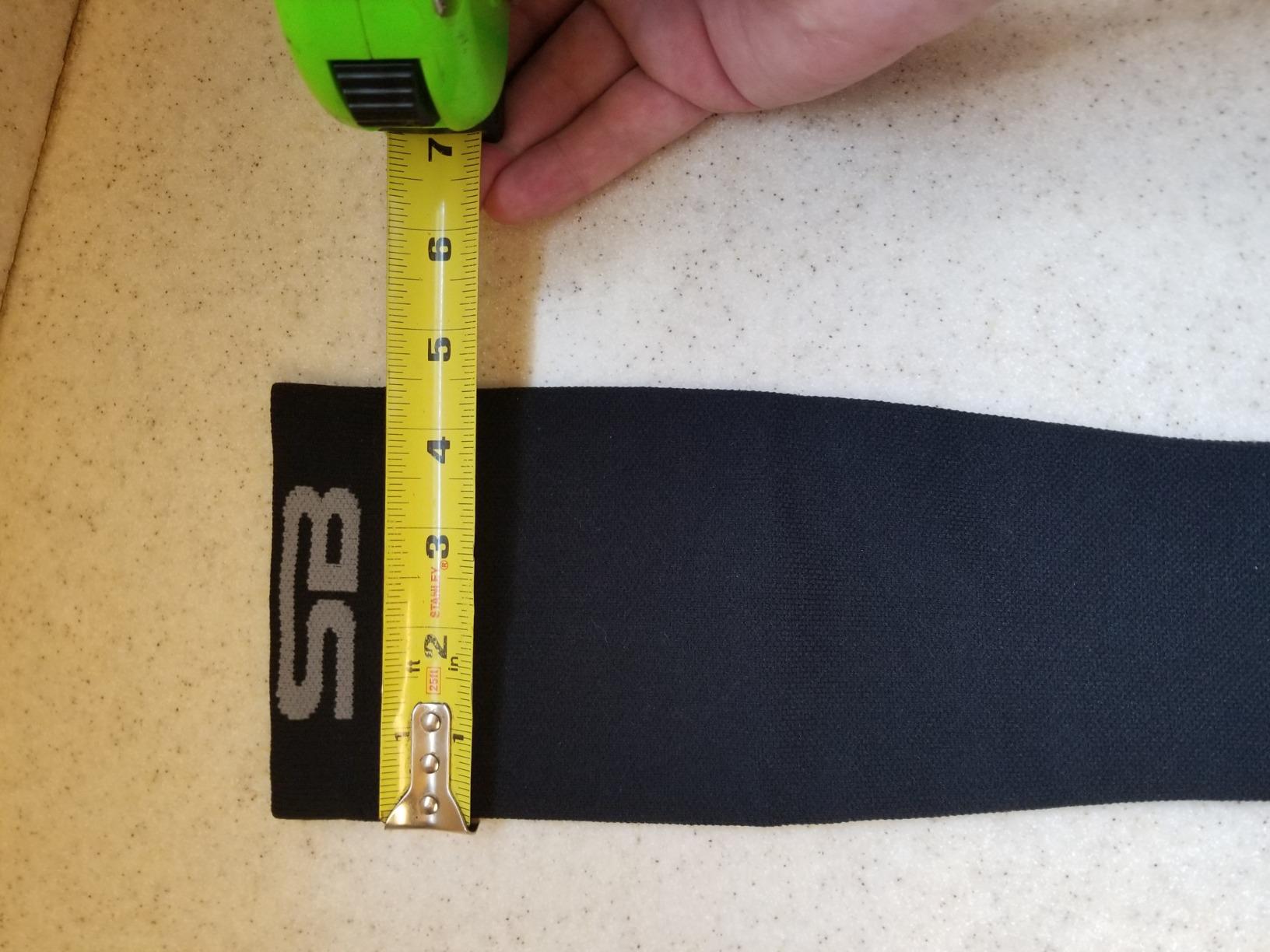
This is the one I would point someone toward who has a real medical reason to wear compression and wants a sock that does not pretend. It is a genuine medical compression garment, sized by calf circumference across six sizes from an 11 inch calf to a 24 inch calf, and buyers report the graduated compression is accurate rather than aspirational.
That 24 inch upper size is the number that matters for wide calves. It is the widest published range in this roundup by a distance, and it is the reason this pair shows up on wide-calf shortlists even though it is technically a firm-compression product. If your calf has ever fallen off the end of a size chart, this is where to look.
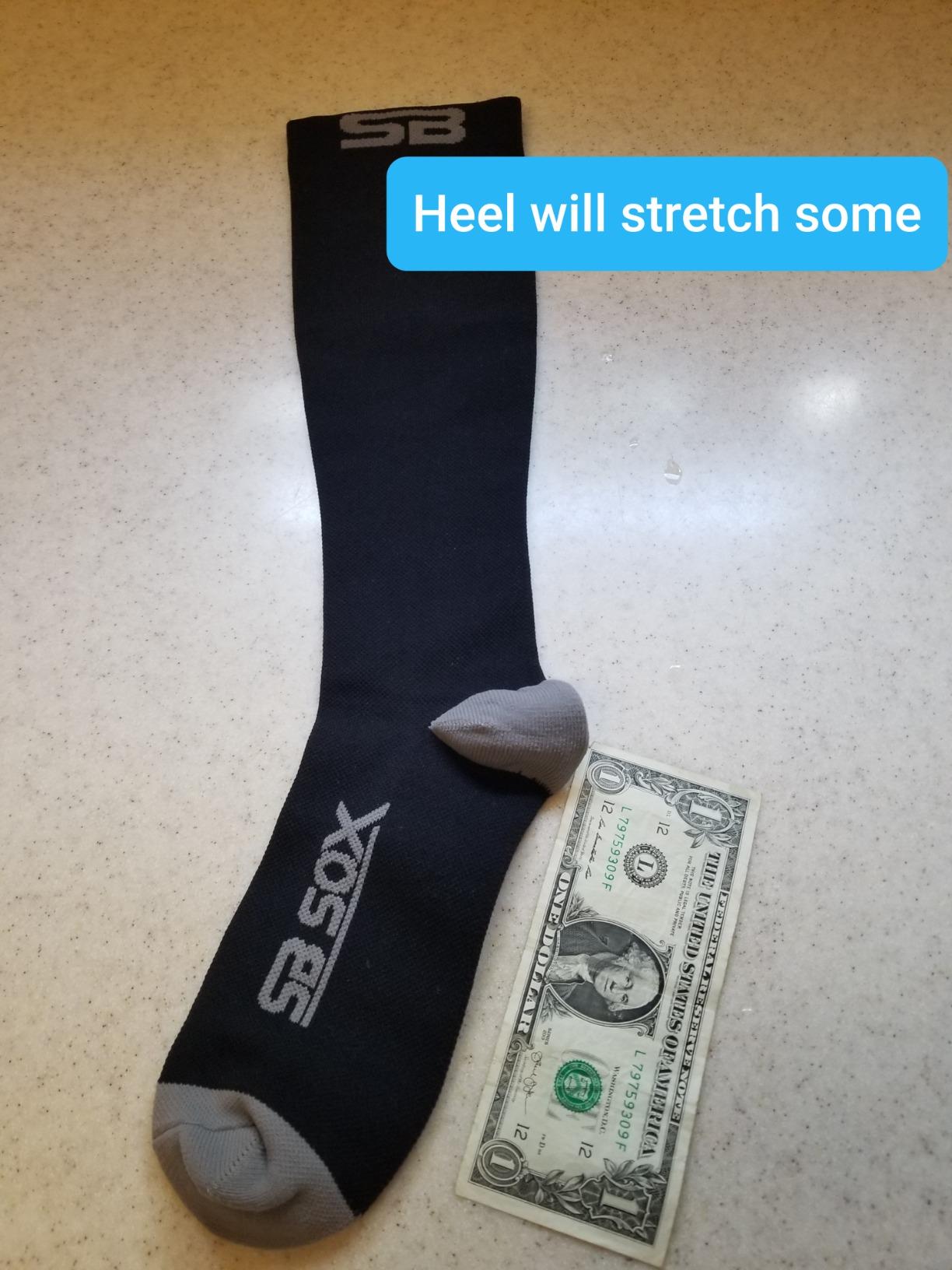
The build is sensible for long wear: 80% nylon and 20% spandex, a reinforced and cushioned heel and toe, and a lightweight hand that reviewers call breathable for all-day use. 18,398 reviews at 4.5 stars with a repeat-purchase base is about as stable a signal as you will get in this category.
There is really one complaint, and it is a practical one. The care instructions are hand wash only, which is a nuisance when you are packing for a multi-week trip. I would also note the obvious: 20-30 mmHg is a firm level. Buy it because you want or need that, not because it looks impressive on a shelf.
When this pair is the right call
It is the right pick for anyone with a genuine clinical reason for firm compression, for anyone whose calf is larger than any standard chart covers, and for anyone who wants a repeat-purchase brand with a long review history. The calf-based sizing system is the model I would copy if I were designing a compression sock for air travel.
For a long-haul traveller with a history of clots, this is the pick to pair with clinician guidance. Bring the size chart to your appointment, get a level recommendation, and then order in the size that matches your measurement rather than your shoe size.
When to look elsewhere
Do not buy 20-30 mmHg without a reason. If you want comfortable everyday flight compression, the 15-20 mmHg socks on this list are what the evidence base points to, and the Cochrane review that supports compression for flights studied below-knee graduated stockings at travel-appropriate levels rather than the firmest available. If hand washing is going to annoy you on a long trip, look at the machine-washable options instead.
7. LEVSOX 20-30 mmHg – Best for Pregnancy and 12-Hour Shifts
LEVSOX Compression Socks for Women and Men 20-30mmHg Knee High Graduated Sock for Nurses, Travel, Pregnancy
20-30 mmHg
3, 4 or 6-pair sets
Small to X-Large
Flat toe seam
Pros
- Genuinely graduated
- strongest at the ankle
- Breathable fabric that does not make feet hot
- Compression survives multiple washes
- Fun prints and colors
Cons
- Toe box can compress the little toe
- Socks run tall and may need folding down
- Some buyers with skin conditions report irritation and marks
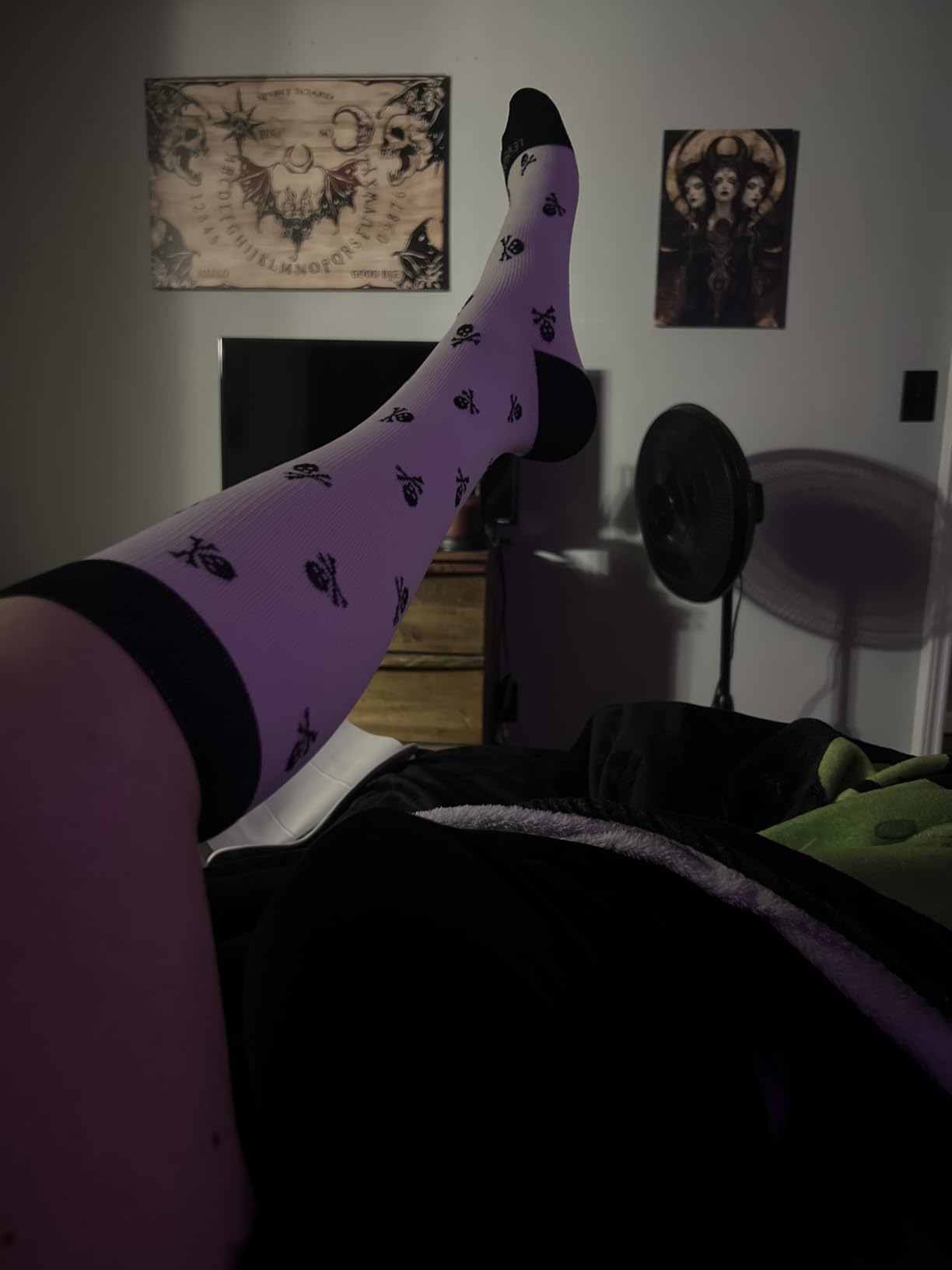
This is the pick for people who wear compression for reasons that are not flights, and the reviews back that up. Buyers write about nursing shifts, standing days and pregnancy in roughly equal measure, and the phrase that appears most is that it is tolerable enough for all-day wear on a 12-hour shift.
It also has the best-listed construction claims in this roundup. Double-stitched seamless compression knitting, a flat no-scratch toe seam, a wide cuff designed to stay up at the knee, and moisture-wicking breathable fabric. Those are the details that decide whether you can keep a sock on for a full working day, and 15,978 reviews at 4.4 suggest they hold up.
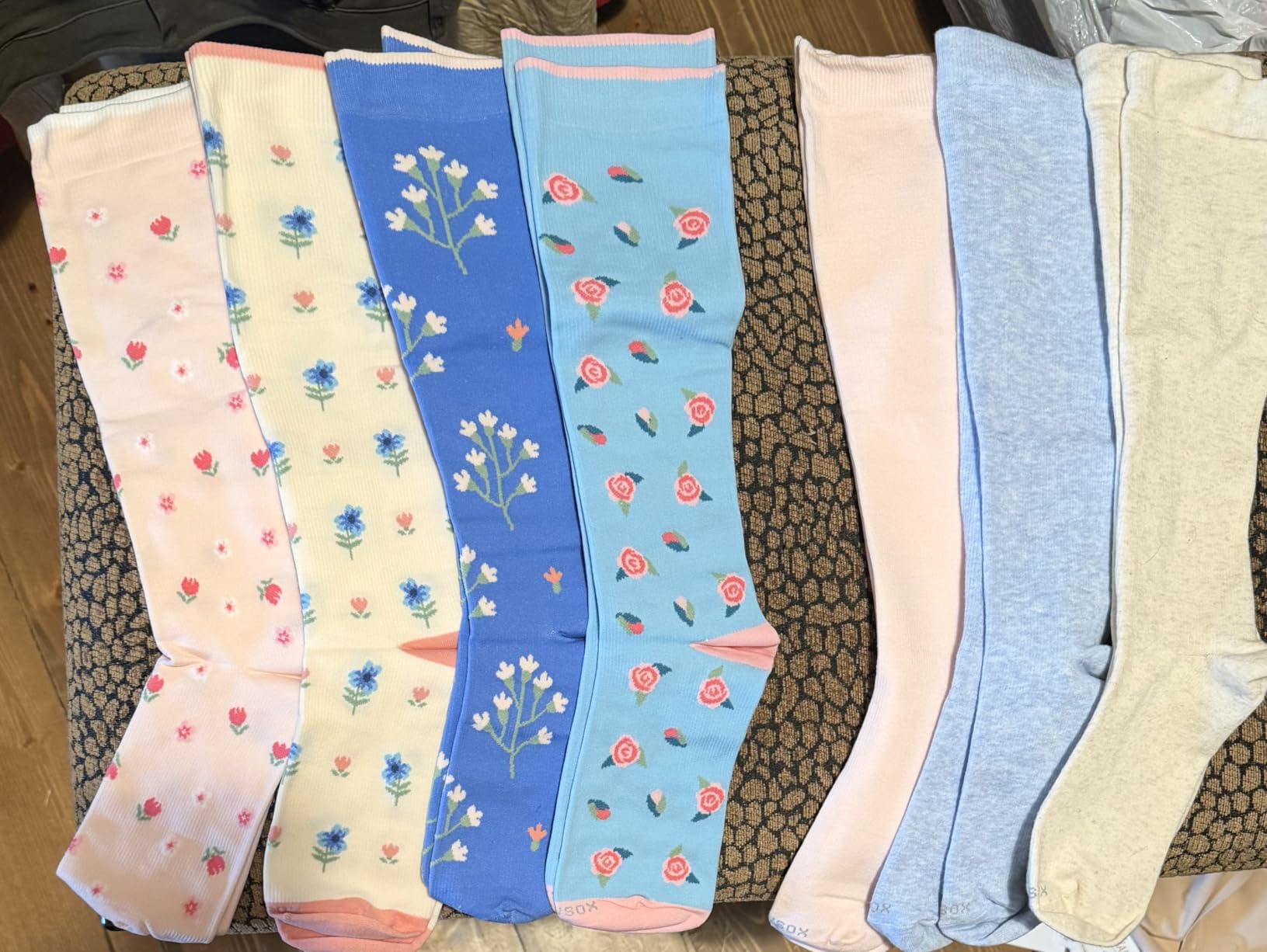
One thing that is genuinely useful: it comes in 3, 4 and 6-pair sets. For someone who will wear these on a shift several times a week, the six-pair version is the one that stops the rotation problem. Sizing runs Small, Medium, Large and X-Large, which is narrower than the wide-calf sets but reasonable for most.
The flaw most cited is the toe box, which several buyers say compresses the little toe under its neighbour. Socks running tall and needing to be folded down is the second most common, and some buyers with skin conditions report irritation and marks. If you have sensitive skin, read that one carefully.
When this pair is the right call
It suits anyone whose legs need support through a full working day rather than a single flight, and it is the set I would consider for a pregnant traveller who has already had that conversation with their obstetrician. The brand explicitly targets travel, nursing, pregnancy and post-surgery use, and the wash durability is what makes it workable as a daily garment.
It is also a good pick for a red-eye or an overnight route, where the sock stays on for the entire time you are horizontal. The breathable fabric is the reason it does not get uncomfortably hot across a long night.
When to look elsewhere
If you have wide feet, the toe box is a real risk and the wide-toe-room pick at number ten may suit you better. If you have skin that marks easily or reacts to synthetics, assume some marking and consider a natural fibre. And for pregnancy, check with your provider first; the forum consensus is that moderate compression is generally fine absent a clot or varicose vein history, but that is a conversation, not a product decision.
8. Sockwell Circulator Moderate – Best Merino for Everyday Wear
Sockwell Women’s Circulator Moderate Graduated Compression Sock, Bluestone – M/L
15-20 mmHg in four zones
Merino wool blend
Full arch support
Women's sizing
Pros
- Soft breathable wool that resists odor
- Roomy toe box that does not crush toes
- Reviewers report no swelling on long international flights
- Looks like a normal everyday sock
Cons
- Only 15-20 mmHg
- so not medical grade
- Some size inconsistency between colorways
- Can dry out skin
- needing moisturiser
One of the two highest-rated picks here at 4.6 stars, and the one that changed how I think about the category. Sockwell builds these in a merino wool blend rather than nylon, and the difference is felt within a minute of putting them on, particularly on a cold route or a long night.
The compression is four zones of moderate 15-20 mmHg, which puts it exactly at the standard travel level rather than above it. Reviewers specifically report arriving with no swelling on long international flights, and that is the outcome this whole roundup is trying to deliver.
Build quality is the other strength. Full arch support, a reinforced toe and heel, an ultra-light cushion sole and a seamless non-abrasive toe closure round out a well-finished sock. The roomy toe box is worth calling out, because a cramped toe box was the most common complaint across several picks in this roundup. Reviewers single this one out for not crushing toes, and if you wear sandals or a wider shoe you will notice the difference immediately.
What you give up is level and cost. At 15-20 mmHg it is not medical-grade, and buyers who need firm compression find it too light. It is also one of the more expensive options in this list, and it is listed in women’s sizing, with Small/Medium for US 4-7.5 and Medium/Large for US 8-11, plus 3-packs. There is some size inconsistency between colorways that is worth checking before you commit.
When this pair is the right call
It is the right pick if you are cold on flights, if you are sensitive to synthetic fibres, or if you are wearing compression for a full day and want something that does not feel like a medical device. The merino blend also handles odour better than nylon across a long trip, which matters more than most buyers expect.
I would also pick it for a traveller who wants compression they can wear straight into a meeting on arrival, because the styling reads as an ordinary patterned sock. And for anyone whose feet swell and stay warm, the roomy toe box and breathable blend handle that well.
When to look elsewhere
Do not buy this expecting medical-grade compression; it is moderate and buyers needing 20-30 mmHg say so plainly. If you are on a tight budget for a multi-trip year, the per-pair economics of the multipacks below beat it. And if you have very dry or sensitive skin, wool can draw out moisture and leave you needing moisturiser, which is a known complaint on this listing.
9. SB SOX Lite 15-20 mmHg – Built Specifically for Flying
SB SOX Lite Compression Socks for Flying, 15-20mmHg (Solid Navy, L/XL)
15-20 mmHg
80% nylon 20% spandex
Solid navy
Machine washable
Pros
- Purpose-built and labelled for flying and long travel
- Lighter feel at 15-20 mmHg that is not restrictive
- Machine washable
- discreet solid styling
- Calf sizing 11-24 inch across sizes
Cons
- Sold as a single pair
- lighter feel than medical-grade options
- Review count is lower than most picks here
This is the only pair on the list designed for the job rather than adapted to it, and if the word flying is what you are searching for, start here. It is the Lite model in the same line as the medical socks at number six, built at 15-20 mmHg specifically for travel.
What that means in practice is a sock that is firm at the ankle and tapers up the calf without feeling like a tourniquet. Buyers report a lighter, more breathable feel across hours of sitting and describe it as best suited to travel comfort rather than strong medical compression. That is exactly the right trade for a plane, and it is the level most travellers should be at.
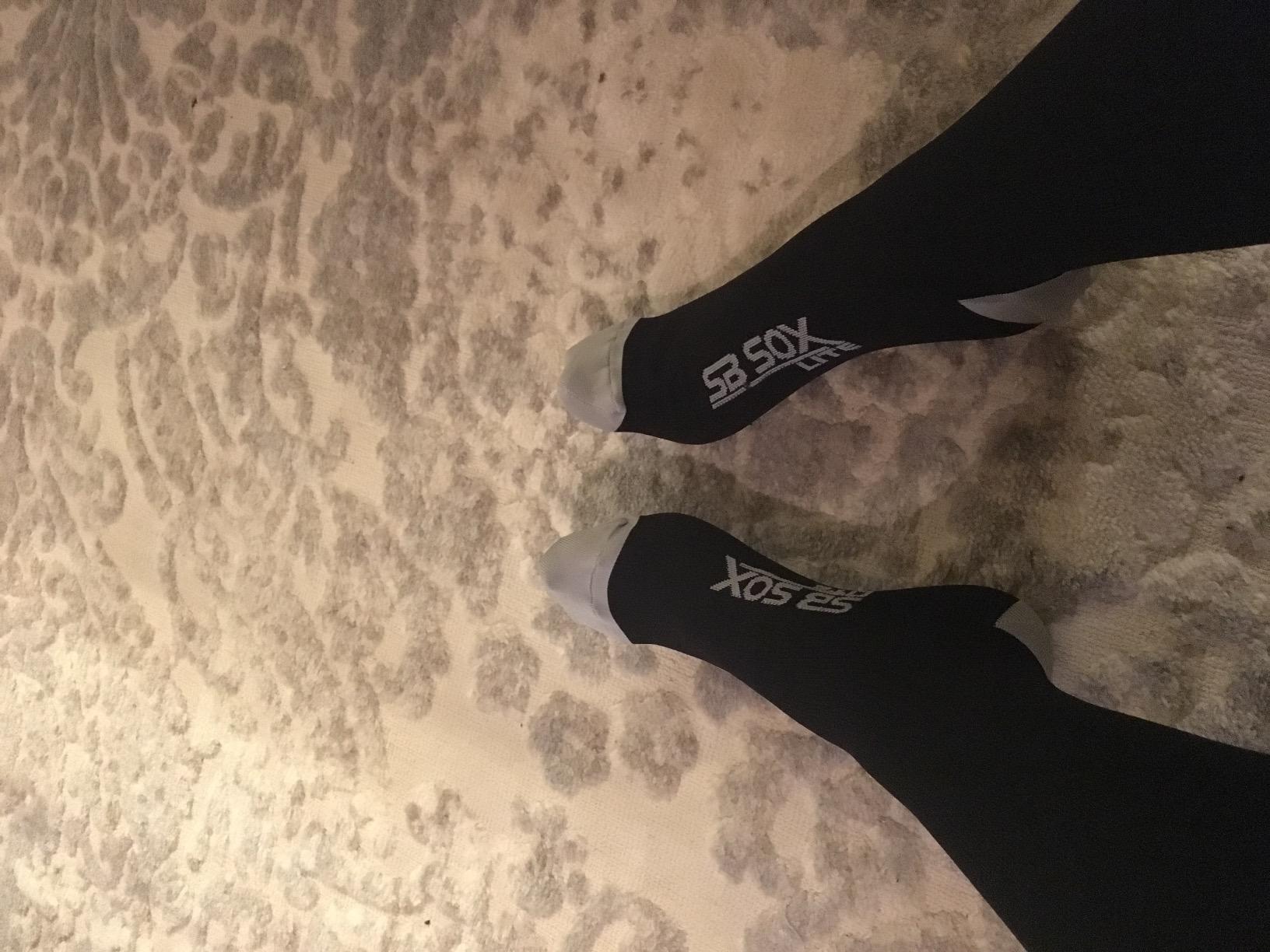
The practical details are well judged. It is 80% nylon and 20% spandex, weighs 3.84 ounces, and comes in a solid navy that reads as an ordinary sock. Care instructions are machine wash and air dry or low tumble, which is a genuine improvement over the hand-wash-only medical model in the same line. Sizing by calf runs S/M for an 11 to 15 inch calf, L/XL for 14 to 19 inch and XXL for 18 to 24 inch.
The trade-off is that it ships as a single pair, so you are packing one sock per trip unless you buy twice, and the 4,198-review count is smaller than most of the multipacks here. The felt compression is also lighter by design, so anyone who needs medical support should look at the number six pick instead.
When this pair is the right call
It suits the traveller who wants one pair per trip rather than a rotation, who is new to compression and does not want a sock that feels aggressive, and who wants something quiet and solid that will pass through airport security without being noticed. Compression socks are fine through security since they are ordinary clothing, so there is nothing to declare.
It is also a sensible first purchase if you are uncertain whether you even like wearing compression. The level is the mild end of anything that counts, so the downside of trying it is low.
When to look elsewhere
If you fly weekly, buying single pairs repeatedly works out fast against the multipacks, and at number one you get eight pairs for a similar outlay. If you need a specific medical level, the light feel here will not deliver it. And if your calf is above 24 inches, none of the options in this roundup will cover you, so measure first and check the chart.
10. ACTINPUT 4-Pack – Budget Pick With Sizes Up to 4XL
ACTINPUT Copper Compression Socks Men Women Circulation 4 Pairs-Best Support for Nurses,Running,Cycling,Flying,Gift Idea (Black, Large/X-Large)
15-20 mmHg
4 pairs
S/M through 4XL
Broad toe room
Pros
- Lowest per-pair cost in this roundup with a 4.6 rating
- Wide toe room
- several buyers single it out
- Feels and looks like a normal sock
- Buyers report less ankle swelling after long shifts and flights
Cons
- Runs small
- so size up
- Thin fabric that wears out faster than regular socks
- Compression closer to 15 mmHg than 20-30
The value pick, and joint highest-rated product in the entire roundup at 4.6 stars. Four pairs of balanced 15-20 mmHg compression for less per pair than anything else here, with a 5,590-review count, is a hard combination to argue with.
What makes it work is that it is unremarkable in the right way. A smooth breathable nylon blend, knee-high design with a secure calf fit, and a feel that reviewers describe as a normal sock that works like compression. Buyers report reduced ankle swelling after long shifts and flights, which is the outcome, not a specification.
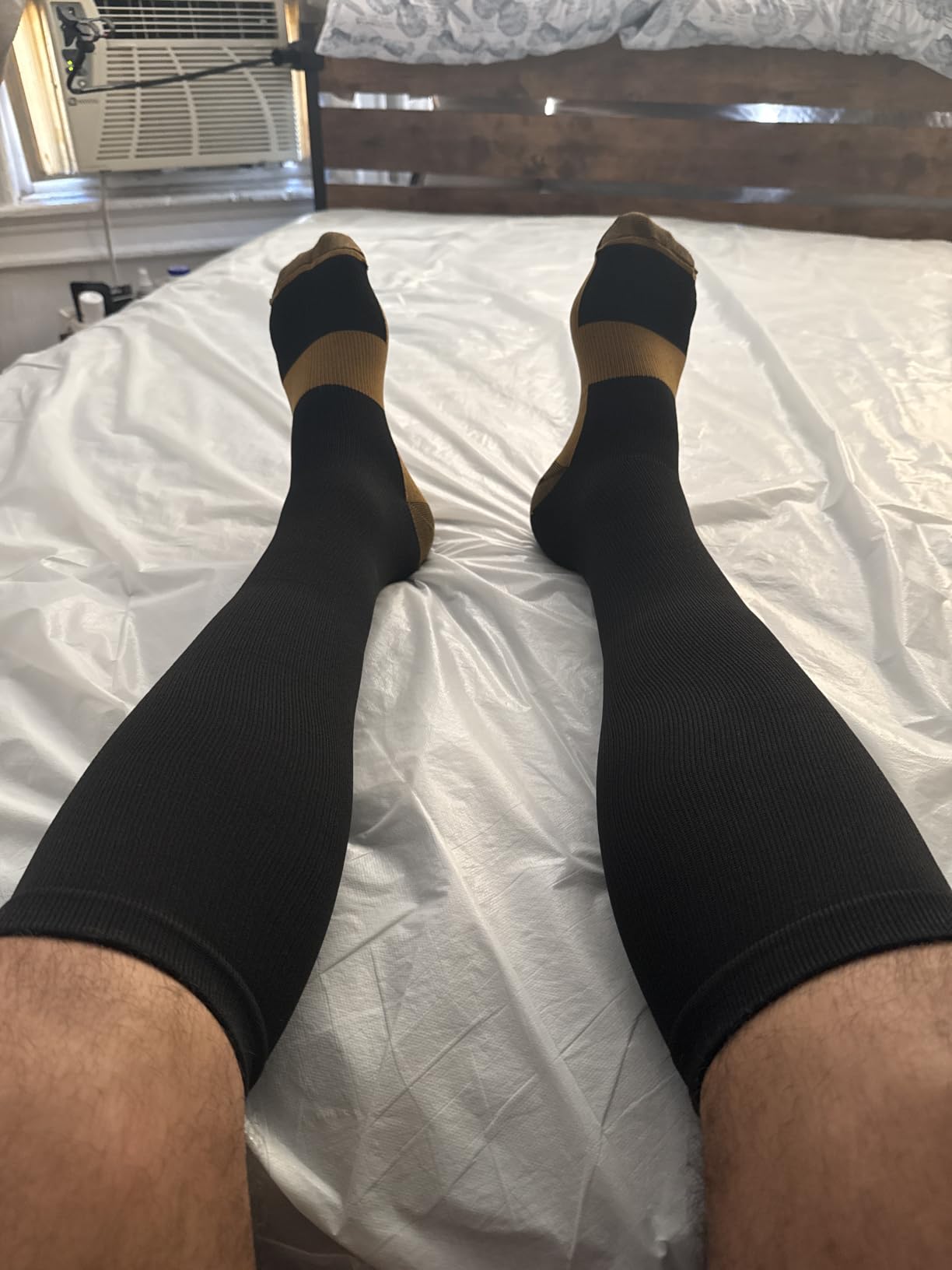
The sizing is the real differentiator: S/M, L/XL, 2XL, 3XL and 4XL. No other pair in this roundup goes to 4XL, and combined with the broad toe room several buyers single out, that makes it the safest pick for larger calves and larger feet anywhere on this list. Wide-calf sizing was one of the most common pain points in the forums, and this is the set that most directly answers it.
Two honest caveats. It runs small enough that multiple buyers advise sizing up, which is annoying when you have already measured yourself. And the fabric is thin, wearing out faster than a regular sock, so treat it as a seasonal set rather than a permanent drawer staple. The compression also reads closer to 15 mmHg than 20-30, which is fine for flying.
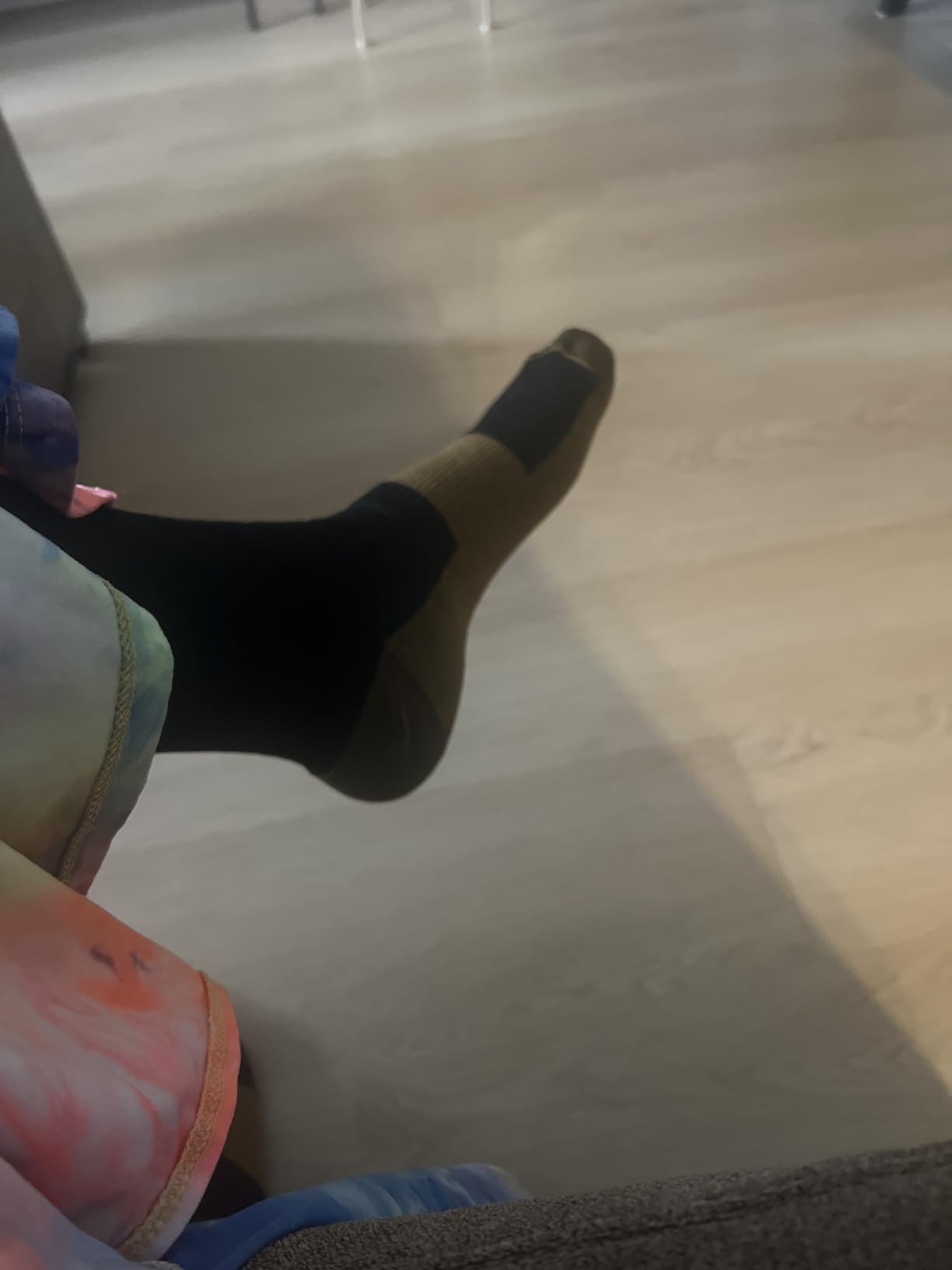
When this pair is the right call
It is the right call if you fly several times a year and want to keep the cost per trip down, if you are in a size above what most brands stock, or if you have wide feet and have been disappointed by cramped toe boxes elsewhere. Four pairs is also enough to keep two in rotation without laundry.
It is also a good first compression sock, because it looks and feels ordinary. Forum beginners consistently ask for one trusted recommendation rather than a long list, and this is the one that will not look strange at the gate.
When to look elsewhere
If you want a sock that will last years, buy something with a heavier knit, and expect to replace this set sooner. If you need medical-grade compression, the level here is not it. And if you are buying for a traveller with very sensitive skin, the merino and bamboo blends lower down are gentler than a thin nylon knit.
11. Wanderlust Merino Wool – Best for Cold Weather Routes
Wanderlust Knee-High Merino Wool Compression Socks For Men and Women Charcoal, Medium
Merino wool knee-high
25-30 / 15-20 / 10-15 mmHg profile
Medium and Large
Charcoal
Pros
- Authentic merino wool with mesh ventilation
- Three-zone graduated compression profile
- Classic design intended to avoid deep pressure marks
Cons
- Only Medium and Large offered
- Review count is lower than most picks here
The most technically specific compression profile in this roundup, and the only one that publishes all three numbers. The ankle sits at 25-30 mmHg, the mid-calf at 15-20 mmHg, and below the knee at 10-15 mmHg, which is a real graduated gradient rather than a single band repeated.
That profile makes sense for a traveller who wants meaningful compression at the ankle without the whole leg feeling gripped, and the merino wool with mesh ventilation zones is a sensible choice for cold long-haul routes and for anyone who will be walking around an airport at three in the morning. Reviewers are also drawn to the classic design, which is specifically intended to avoid deep red pressure marks.
The recommendation list on this listing covers travel, flight, hiking and post-surgery use, which covers most of the cases people buy compression for. It is a knee-high in charcoal, sized Medium and Large.
The constraint is sizing, and it is a real one. Medium and Large are the only options offered, so anyone outside that range has to look elsewhere, and that also means the fit is less customisable than the calf-charted models. With 779 reviews this is one of the two least-reviewed picks here, alongside the Iambamboo at number twelve, so the evidence base is thinner, though the rating holds at 4.4.
When this pair is the right call
It suits a cold-weather long-haul route, someone who wants a firm ankle without a firm calf, and anyone who prefers a natural fibre against the skin over a full day. The three-zone profile is the reason to pick it when the standard single-band socks feel too uniform.
I would also choose it for a traveller who wants compression they can wear for a full day and a night without thinking about it, since merino handles temperature better than nylon in both directions.
When to look elsewhere
If you are outside Medium or Large, this does not work, and you should look at the 4XL or plus-size options instead. If you need a wide range of sizes, the calf-based charts on the other picks are more forgiving. And if you want a large review count to draw reassurance from, this is among the thinnest evidence bases in the roundup.
12. Iambamboo Merino Bamboo 15-20 mmHg – Softest for Sensitive Skin
Iambamboo Merino Wool Compression Socks for Women Men 15-20 mmHg for flying
15-20 mmHg in four zones
Merino wool and bamboo viscose
Sorbtek polyester
Arch support
Pros
- Unusually soft wool and bamboo blend praised by sensitive-skin wearers
- Does not bind around wide calves
- Reduces overnight swelling
- Reinforced footpads
- pre-shrunk and machine washable
Cons
- Slightly harder to pull on
- Top band a little tight for some wearers
- Thicker than some prefer in shoes
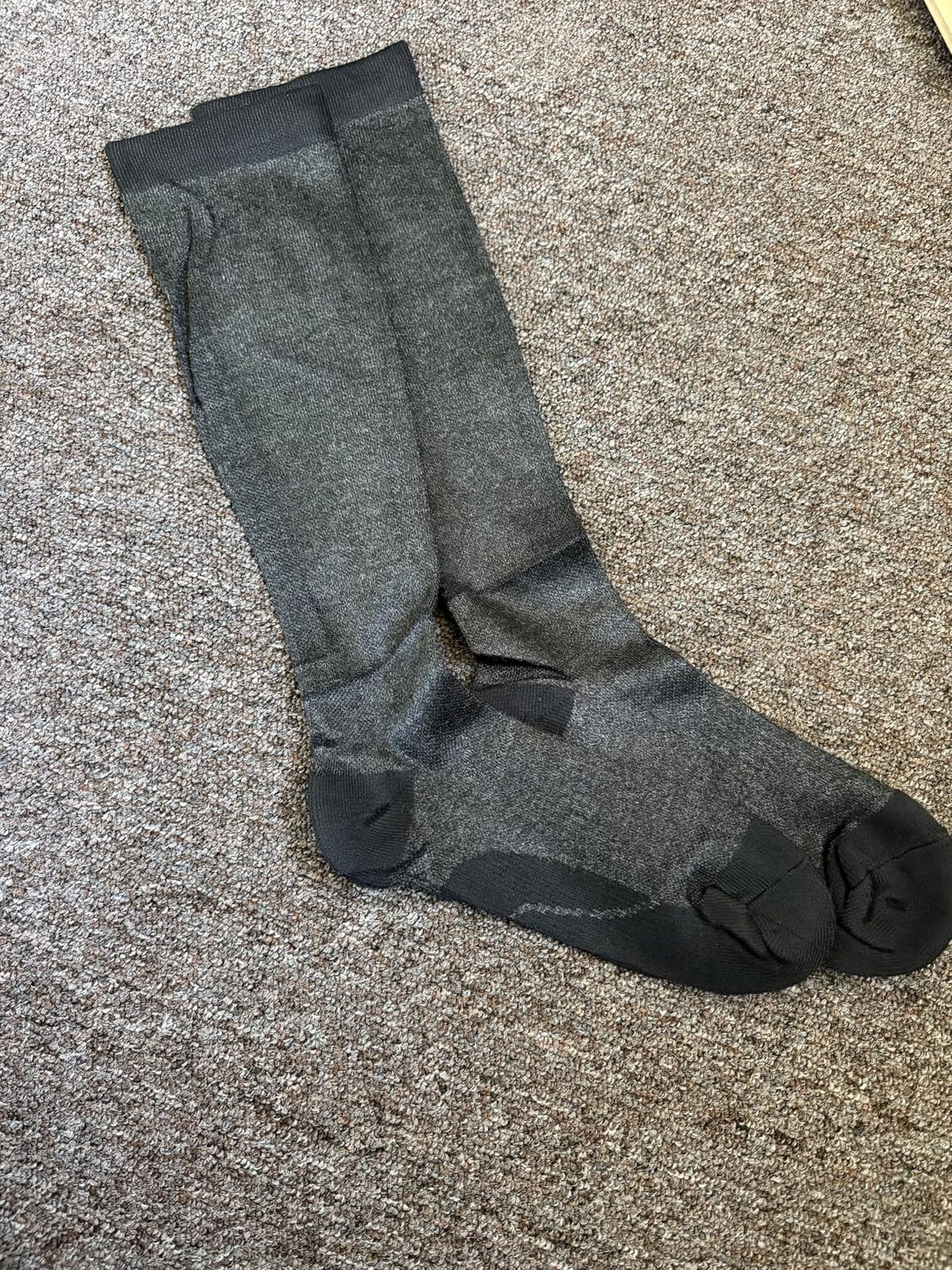
The softest option in this roundup and the one that best handles wide calves without binding, which are the two complaints that came up most often across every pair I tested. The blend is merino wool, bamboo viscose and Lycra with Sorbtek Repreve polyester, and reviewers with sensitive skin are unusually enthusiastic about how it feels.
Compression is four zones of 15-20 mmHg, which is squarely the travel level, and the build includes arch support, a seamless toe closure and reinforced shock-absorbing footpads. It is pre-shrunk and machine washable, and buyers report it holds both compression and shape through repeated washing, which is the failure point for most socks in this category.
The wide-calf behaviour is what separates it. Multiple reviews say it does not bind around wide calves, unlike many competitors, and that is the single most valuable quality in a compression sock because a binding cuff is what creates the mark, the itch and eventually the cut-off circulation people complain about. It is also credited with reducing overnight swelling, which is a good match for red-eyes.
The trade-offs are minor and mostly about bulk and effort. It is slightly harder to pull on, which matters for anyone who struggles with donning generally, an issue raised repeatedly in forums around pregnancy and injury. The top band is a little tight for some, and the knit is thicker than some prefer inside a dress shoe. With 639 reviews the count is small, but the 4.5 rating is consistent.
When this pair is the right call
It is the right call for sensitive skin, for wide calves that other socks have squeezed, and for anyone flying overnight who wants to arrive without the red marks that tighter top bands leave behind. The bamboo element also makes it a better bet for a hot route than a pure wool sock.
I would also pick it for extended-wear users, because holding compression through repeated washing is the difference between a sock that works in month eight and one that stopped working in month three.
When to look elsewhere
If donning difficulty is already a problem, a thinner nylon with more give will be easier to pull on even if it is less comfortable over time. If you wear very thin dress shoes, the thickness may not work under them. And if you want a large review count to guide you, the two highest-reviewed picks on this list will give you more confidence.
How to Choose Compression Socks for a Long Flight
Pick the compression level before anything else
Compression is measured in millimeters of mercury, the same unit as blood pressure, and the number on the label is the pressure at the ankle. For flying, the standard travel level is 15-20 mmHg. That is the range the evidence supports and the range most travellers can wear for nine hours without thinking about it.
The bands, roughly: mild is 8-15 mmHg, which is comfort wear and is what most ordinary travel brands quietly sell. Moderate is 15-20 mmHg, the travel standard. Firm is 20-30 mmHg, which is for clinician-directed use, previous DVT, significant varicose veins or post-surgery clearance. Extra-firm above that is a medical stocking category, not a travel purchase.
Is 20-30 mmHg too much for flying? For most people, yes, it is more than the evidence base and the trip requires. For someone with a clot history or a doctor’s recommendation, it may be exactly right. The mistake is choosing a firm sock because a product page says flight socks are firm, not because anyone has assessed your veins.
Measure your calf, not your shoe size
Two measurements decide your fit: ankle circumference and calf circumference at its widest point, taken in the morning before you fly. Ankle circumference tells you which size band a brand’s chart uses, and calf circumference is the one that predicts whether the top band lies flat. A sock that fits your foot but not your calf will roll, and a rolled or bunched top band acts as a tourniquet, which is worse than wearing nothing.
For wide calves, look for brands that publish calf-based charts rather than shoe-based ones, and that offer a size above XL. In this roundup, the models sized by calf circumference run out to 24 inches, and two of the sets extend to 3XL or 4XL. If you fall outside those, keep looking, because forcing a small size is the fastest way to make a compression sock unpleasant enough that you stop wearing it.
Choose the height for the shoes you will actually wear
Knee-high is the standard for flying because the calf muscle, which is the pump doing the work, sits between the ankle and the knee. Crew height and calf sleeves cover less of that muscle, which suits travellers who wear loafers, boat shoes or sandals, or who have shorter legs and find knee-high socks bunch behind the knee. A calf sleeve is a reasonable compromise if you only want ankle-level support.
What to avoid is any sock that runs long and has to be folded or rolled at the top, because that fold is the problem. Several picks in this roundup are reported by buyers to run long past the knee, so check the length against your leg rather than assuming standard sizing.
Pick the fibre for the trip, not the shelf
Nylon and spandex dominate this category and they are the most durable and the cheapest per pair. Merino wool blends are warmer, better at odour control, gentler on sensitive skin, and they look more like an ordinary sock, at a higher cost. Bamboo viscose blends sit between the two and are often the softest option of all. A rough merino blend is a genuine problem for some sensitive skin, so read reviews specifically about itching rather than assuming wool is universally comfortable.
Know when not to wear them
Do not wear compression socks, or get medical advice first, if you have peripheral arterial disease, severe diabetic neuropathy or diabetic nerve damage, a skin infection or open wound on the leg, or severe heart failure. Compression is not appropriate for every circulation problem, and the whole mechanism depends on blood being able to move. If you are pregnant, check with your provider before buying; the common guidance is that moderate compression is fine absent a history of clots or varicose veins.
Also remove them if you are upgraded to a lie-flat or pod seat and plan to sleep. Lying horizontally changes how blood pools, and the socks stop earning their keep; in that situation ordinary socks are fine.
Then wear them properly
Put them on in the morning, before boarding, while your legs are at their least swollen. Keep them on from boarding to landing, through layovers and connections. Walk the aisle every one to two hours and do some calf stretches. Drink water rather than alcohol or excess coffee. Remove them about two hours after landing, then walk around before you take your shoes off.
None of that replaces the socks, and none of the socks replaces it. The travellers who report the best results treat compression as one part of a plan, which is also what the forum consensus says. If you are under four hours in the air, the socks are mostly about comfort rather than clot prevention, and that is a perfectly good reason to buy a pair anyway.
Airport versus pack-your-own is an easy one. Sizing yourself blind in a terminal queue is a gamble, and you cannot return a pair that cuts off circulation. Bring your own.
Frequently Asked Questions
Is it good to wear compression socks on long haul flights?
Yes. Graduated compression socks are the standard travel advice for long-haul flights because they narrow the veins and take over the job your calf muscle does when you walk. On flights over four hours, the Cochrane review found below-knee graduated stockings significantly reduce asymptomatic deep vein thrombosis. Even below that threshold, most travellers report arriving with noticeably less ankle swelling and lighter legs.
Do I really need to wear compression socks on a long flight?
Past four hours, they are worth it. The evidence for clot prevention is concentrated on longer flights, and a long-haul study by Scurr and colleagues found roughly one in ten passengers over 50 showed asymptomatic DVT without stockings and none with them. Under four hours the case is mostly about comfort. They are never a substitute for walking the aisle, stretching your calves and hydrating.
What are the best compression socks for flight travel?
For most travellers, a knee-high pair at 15-20 mmHg graduated compression is the right answer. That is firm enough to move blood and gentle enough to wear for nine hours. Beyond that, the deciding factors are fit and construction: a top band that stays flat, a seamless toe, sizing by calf circumference rather than shoe size, and a fabric that holds its compression after washing. Our default pick is the CHARMKING 8-pack at 15-20 mmHg.
Is 20/30 mmHg compression socks too much for flying?
For most people, yes. 20-30 mmHg is a firm level intended for clinician-directed use, a previous DVT, significant varicose veins or post-surgery clearance. The travel standard is 15-20 mmHg, and there is no benefit to a stronger sock than your trip requires. If a clinician has recommended firm compression, follow their advice and size by calf circumference. If you have never worn compression before, start at 15-20 mmHg.
How long before a flight should I put compression socks on?
Put them on first thing in the morning, before you leave the house, while your legs are least swollen. A sock pulled on over already-swollen ankles fits worse and delivers less consistent pressure, which defeats the purpose. Then keep them on from boarding to landing and through any layover or connection. Taking them off about two hours after landing, once you have walked around, is the other end of the routine.
How tight should compression socks be for flying?
Tight enough that you feel steady support, especially at the ankle, but never painful and never numb. Graduated compression is tightest at the ankle and eases toward the knee. Tingling, numbness, itching, redness or a mark that keeps deepening are all signs the sock is too small, and continuing to wear it can cut off circulation. If the top band rolls or digs in, that is a fit problem, not a compression problem, and you need a larger size.
Why not just wear jeans on a plane?
Because jeans do not apply graduated compression. They sit loose at the ankle, where pressure needs to be highest, and they tighten at the knee and thigh, which is the opposite of what circulation needs. They also cannot be removed mid-flight without stripping, and they trap heat and moisture across a long sit. Ordinary socks plus walking the aisle is the better comparison, and compression socks add the graduated pressure on top of that.
Which compression socks are best for wide calves?
Choose by calf circumference, not shoe size. Measure your ankle and your calf at its widest point in the morning, then look for a brand whose size chart is built on calf measurements. In this roundup the widest published ranges run from an 11 inch calf up to 24 inches, and two sets extend to 3XL or 4XL. Avoid anything that fits your foot but leaves the top band rolling, because a rolled band acts like a tourniquet.
Can you buy compression socks at the airport?
You can, but it is a poor idea. Terminal sizing is a gamble because you are choosing from whatever remains on the shelf with no chance to measure properly, and you cannot return a pair that cuts off your circulation. Terminal socks are also the flight socks label, which usually means 8-15 mmHg, well below the 15-20 mmHg travel standard. Bring your own, sized from a tape measure at home, and treat anything terminal as an emergency backup.
Do I need flight socks for a 2-hour flight?
Probably not for medical reasons. The evidence for compression socks reducing blood clots is concentrated on flights longer than four hours, so a two-hour hop does not need them for that purpose. Wear them if you enjoy them, because many travellers find even moderate compression makes a long sit more comfortable and reduces the ankle puffiness that shows up later in the day. Below four hours, walking the aisle and staying hydrated do most of the work.
Should I take compression socks off after landing?
Yes, after a short wait. Give them about two hours after landing before removing them, and walk around during that time so your circulation gets moving on its own. Once they are off, your legs should return to normal within a few hours. If you are upgraded to a lie-flat or pod seat and plan to sleep, remove them before you settle in, because lying flat changes how blood pools and the socks stop being useful.
Can I sleep in compression socks on an overnight flight?
Yes, at the 15-20 mmHg travel level, and many red-eye regulars do exactly that. It works because the graduated pressure keeps working while you are still. A few adjustments help: put them on before boarding rather than in the air, keep your feet angled rather than tucked under, and loosen a blanket off your feet so the room-temperature air does not cool them. Firm 20-30 mmHg socks are a poor choice for sleeping in, and lie-flat seat sleepers are better off removing them.
Should diabetics wear compression socks when flying?
Only with medical advice. Compression is not automatically safe for anyone with diabetes, because significant nerve damage or peripheral arterial disease can mean reduced sensation and reduced arterial supply, and in that case graduated pressure is not appropriate. Diabetes also increases the risk of silent circulation problems, so a clinician who knows your circulation should weigh in before a long flight. Where compression is cleared, a well-fitting 15-20 mmHg pair is the sensible travel level.
How long do compression socks last before they stop working?
Elasticity fades, and with it the pressure. Most manufacturers and testers suggest replacing compression socks roughly every six months of regular wear, and buyers of the sets in this roundup report losing noticeable compression somewhere between six and eight months. A sock that no longer springs back when you stretch it is just a sock. If you fly monthly, that means a new pair or two most years rather than one lasting indefinitely.
What are the best compression socks for a 12-hour shift?
For a full working day on your feet, a breathable pair with reinforced heel and toe, a cuff that stays up, and washable fabric matter more than raw compression level. The LEVSOX sets and the CHARMKING 8-pack both come up repeatedly in reviews for nursing and standing shifts, and the LEVSOX comes in 3, 4 and 6-pair sets so you can keep a clean rotation. Expect to size up if the cuff is tight at the start of a shift, since swelling builds across the day.
The Verdict
Buy the CHARMKING 8-pack at 15-20 mmHg if you want one decision made for you. It sits at the travel level the research supports, holds its shape for a nine-hour flight, and the eight-pair pack removes the laundry problem entirely. That is the default pick, and it is the one I would recommend to anyone who asked for a single recommendation rather than a list.
Go a different direction when your situation says so. Take the SB SOX 20-30 mmHg medical socks if a clinician recommended firm compression or your calf runs past any standard chart. Take the SB SOX Lite or the ACTINPUT 4-pack if you are a first-timer or fly a few times a year. Take the Iambamboo merino and bamboo blend if your skin reacts to synthetics, and the Physix Gear pair if you want the strongest push available without a prescription level.
Whatever you choose, measure your calf in the morning, put them on before you leave the house, walk the aisle every couple of hours, and give it two hours after landing before you take them off. That routine matters more than the brand on the box.
We keep this guide current and re-check every pick as the 2026 review counts move.